Software
Houzz Logo Print
bostonbull

Dracaena Marginata questions

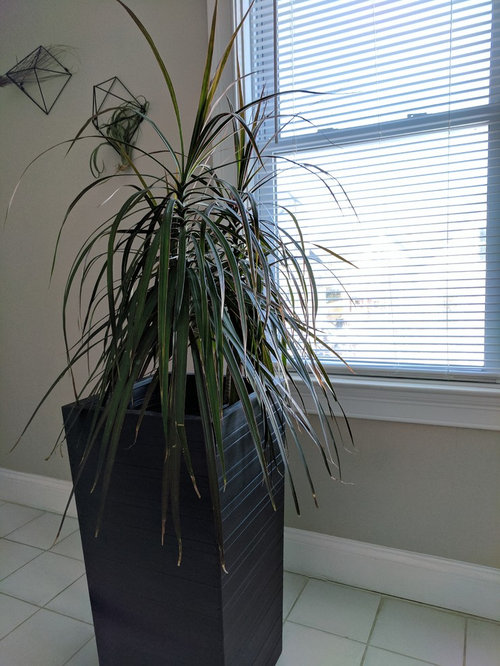
I've had this plant for almost 2 years. It has always been in a bright room, and now lives close to a north facing window in my bathroom. Always puts on new growth, and seems happy.


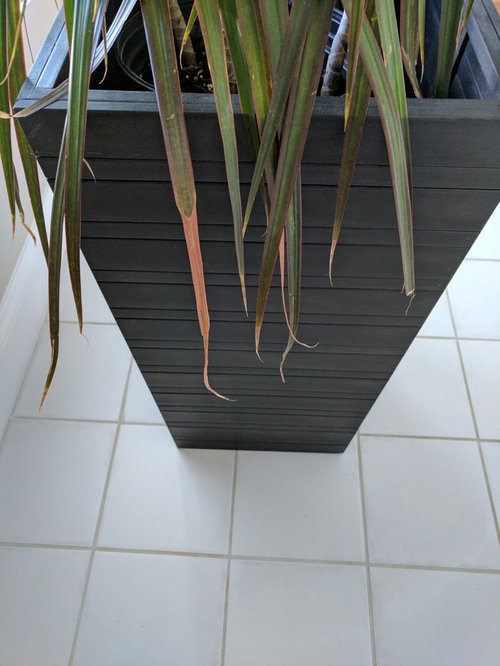
What is causing the brown tips?

When will I know to repot it? And what is best practice? Soil? Etc

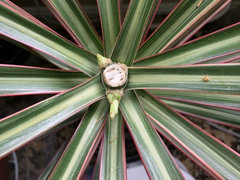
There are 3 stems, can I split these and make three plants out of one?


Comments (44)

  • 9 years ago
    last modified: 9 years ago

    Bring up names? Huh?

    Not going to waste my time arguing with you, Matt. There's always someone like you that comes along to butt heads.

    Youve stated your watering issues with the soils you use. You may not call them issues, but they are.

    When you have a soil that you cannot flush and are watering every 30-60 days, you have a soil that holds too much water.

    I don't go off books. I go off experience. I think you should give that a try.

    "If the plant has been in the pot for 2 years, there's no reason to change the soil." You do understated that soil breaks down, right?

    That is all.

  • 9 years ago
    last modified: 9 years ago

    Ha. Nice jab with the peace lillies. My favorite to grow are ficus and schefflera.

    My girlfriend loves peace lillies so I got those for her.

    I have no issues. You gave some questionable advice and I wanted to give another opinion.

    I still think you need to do some reading up on some of Taplas threads. It would really open your mind up and your plants would benefit from it too.

    i push the 5:1:1 mix, what time of year to repot, and anything else I've pushed because I've seen it work firsthand. I saw how limiting standard potting soils can be and how you can really do better for your plants, if you care enough to do so.

    This back and forth is not helpful to the op or anyone for that matter.

  • 9 years ago

    Matt: what the hell are you talking about? You want him to put it in a pot 5-10 inches bigger using the same soil it in now? And you point out in the end that brown rips could be "numerous things?" Well, let's start with the simplest, which doesn't involve telling someone to sink a plant to a swamp of potting mix where the roots will commit mass suicide within days.

    also 511 mix does hold water.

    Ridiculous.

  • 9 years ago
    last modified: 9 years ago

    absolutely not true if done properly.

  • 9 years ago

    I started not to post, because I really, really, really hate to butt heads with a Know-It- All!

    1. You changed the light. 2. You haven't repotted in 2 years. 3. I bet you are using tap water, dracena do not like the chemicals in tap water.

    1. Move it back to the light it likes. 2. You don't have to use gritty mix, but you do need to put something in to loosen up the potting mix (perlite - bark - grit). 3. Start using botttled or filtered water. 4. After it starts recovering, GRADUALLY change the light. If it is in the house, all of the dracenas like very bright light.

  • 9 years ago

    You may have always had good luck with tap water and your water plant has changed their procedures.

  • 9 years ago

    So, Matt deleted everything he said. At least the bad advice is no longer there.

  • 9 years ago

    By the way, thanks for making an account and commenting, Sherry.

    All good points and good advice to the original poster.

    I strongly agree about the tap water. Im willing to bet money that's the reason for the brown tips.

  • 9 years ago
    last modified: 9 years ago

    you are rude as hell and it was not bad advice

  • 9 years ago

    What the heck did I miss?!


    Anyone have actual advice for me, or are we going to argue?


    If I use tap water, which is less than a handful of times per year, I let it sit out open air for a day or so. I mainly use distilled or spring water by the gallon.


    Can we hit reset now ladies and gentleman?

  • 9 years ago
    last modified: 9 years ago

    Boston,

    give a throrough flush of the soil so 15-20% of the volume of water exits the drain hole. Do it in a tub if possible.

    the pot has a drain hole?

    After that, try watering with collected rain water or distilled water.

    Your issues likely stem from chemicals in the tap water and probably a build up in the soil.

    if you're interested in repotting, a quick draining mix will only do your plant favors.

    youll eventually want to fully bare root the plant and place it in a fresh mix. June will be the best time to do this as the plant will have as much energy built up as possible.

    Have a look at this link. It'll help you understand how water behaves in a container.

    http://forums2.gardenweb.com/discussions/2842847/container-soils-water-movement-and-retention?n=8

  • 9 years ago

    I think it's almost certainly related to tap water plus not being flushed enough, I use tap water, hard tap water, in my dracena marginata and my spider plants, but I flush the soil frequently, so not many brown tips.

    I would take the occum's razor route and try that first, and then plan on repot as suggested for the near future.

  • 9 years ago

    Thank you both!

    One size up only, right?

    What mix should I use? I've been using Coast of Maine and fertilizing with Neptune's Harvest.... I'm guessing you guys have thoughts on this. :)

    I'm here to learn, and thank you for the help.


    Next time it needs a drink, it goes in the tub and gets flooded.


    Collecting rainwater is tough, I live in an apartment. Open to ideas on how to make his happen though.....

  • 9 years ago

    Well, I've been told that these plants like to have a bit of snugness around the roots, as overwatering is easy. But if you use a loose, fast draining mix, you could bump the pot size up a lot. Just to be on the safe side, I'd go with the recommended 1-2 inches up. I just repotted mine and went up one inch and almost rotted the roots.

    others will jump in with probably better and more precise responses to your questions. I hope that helped a bit....

  • 9 years ago

    Do you have any interest in making your own mix?

    if so, you should reslly look into the 5:1:1 mix.

    Check out the container gardening section of this forum. Lots of into there.

    Using a less water retentive soil will give you a bit more freedom with pot size. I'd still keep it at an inch or two larger than current.

    As far as fertilizing, most around here use Dyna Gro Foliage Pro 9-3-6. It's one of the best out there.

  • 9 years ago

    Very open to making my own mix, no problem. I was a certified arborist for 7 years and have a decent grasp on the science side of the plants.


    Any non synthetic fertilizers out there? I never used them outdoors and would like to not use them indoors.


    Can I separate the three stems, drop down in pot size and have three plants? Will I risk killing them all by doing this?

  • 9 years ago
    last modified: 9 years ago

    You can separate the three. I'd do so in mid to late June. They'll have the best chance at recovery during that time.

    Just be carful with the roots and make sure you keep the misted and wet while they're out of the soil.

    You can also chop their tops off if you want to make them back bud and grow a couple branches from the main stem. Just an option.

    whats the issue you see with foliage pro? Just curious. it really has everything plants need and is one of the best, if not the best fertilizer you can use.

  • 9 years ago

    Boston: my other dracena are in the 511 mix and they really love it. I actually do not use peat in those mixes, so they are just bark and perlite. They responded well to the more frequent waterings and have grown freely since being put into that mix,

    I've not put the marginata in one yet, so I can't comment specifically on that one.

  • 9 years ago
    last modified: 9 years ago

    Mine has been in the 5:1:1 for about a year.

    Roots fully colonized the mix quickly and the plant took off and grew more than it ever had before.

    I recently chopped of the top to make it branch out.

  • 9 years ago

    Any direct links to the 511 mix? I can wait until June. Why June though? Just the height of growing season?


    I don't like using synthetic fertilizers, and prefer IPM over chemicals. Synthetics are too harsh on the plants, environment, my breathing air, etc. I'm a fan of the practice - feed the soil biome and let it naturally and slowly feed the plant. If you feed the plant synthetically, you're creating an addict that won't know what to do once that quick hit of food is gone and you're often times killing off parts if the biome. A healthy soil biome is the key. Which is why I chose fish emulsifier fert, and compost based soil.


    Maybe I'm dead wrong?! Are house plants that much different? Their natural habitat has no synthetic fertilizers, and only is fed by what the soil biome releases.

  • 9 years ago
    last modified: 9 years ago

    Unfortunately, since house plants are just that, house plants and in pots, there's just no way to give them exactly what they'd get in nature.

    And if you tried, you'd likely end up with a mix that never drains and a bunch of rotting matter on top, bugs, etc and the plant would likely suffer.

    How water behaves outside in soil is nothing like how it behaves in a pot.

    I do like the way you think, but that's just not practical and youre going to end up with a plant that develops deficiencies.

    im not sure how foliage pro would harm you in anyway. It's not a pesticide.

    June offers the longest days of the year which is when the plant would have the most stored energy.

    The 5:1:1 mix is 5 parts screened pine bark fines (1/8"-1/4" or so with dust screened out) 1 part perlite, 1 part peat and some dolomite lime.

  • 9 years ago

    Thank you Dave!


    What is wrong with the fish emulsion I am using as compared to the Foliage Pro?


    Any links to more info on the 511? How much is some lime? Which plants of mine can I use this mix for and which should not get the 511?

  • 9 years ago

    The foliage pro offers everything the plant needs. The fish emulsion doesn't.

    check the container gardening section of this forum. There should be lots of links.

    I'm not sure of a plant that wouldn't benefit from this mix. Any tropicals will do great.

  • 9 years ago

    Dave can you be more specific? I'm not looking to argue!! (as seems common here) I want to learn and that's why I finally decided to post questions. Teach me.


    I don't see anything that's "missing". Maybe different ratios, but nothing is missing. What I do see is a synthetic salt based fertilizer vs a naturally derived fish and seaweed based fertilizer.


    Can I use this 511 mix for my Sansevieria, Sago Palm, Ponytail palm, and Euphorbia Milii?


    No links at all? Just go browse another forum and hope to find what I need....

  • 9 years ago
    last modified: 9 years ago

    The NPK ratio of fertilizers is very important.

    The fish emulsion your using has an NPK of 2-3-1. You want higher % of N and K than P.

    The ratios are off and not as easy for the plant to use.

    9-3-6, 24-8-16, 12-4-8 are ratios your plants would benefit from.

    You can use the 5:1:1 mix for all of those.

    http://www.gardenweb.com/gardenweb/query/5%3A1%3A1/topic=contain/sort=popular

    sorry I don't have any particular links saved.

  • 9 years ago

    That's more nitrogen than I'm willing to give anything other than a vegetable. And I'm not willing to dump that amount of synthetic on anything.


    Thank you for the link, and I'm happy to hear you're of the mindset that all my plans will benefit from. The same universal mix... Makes life easier. I was worried the succulent especially wouldn't do well in this mix.

  • 9 years ago
    last modified: 9 years ago

    The succulents will do better in this than a standard mix. That's for sure. Gritty mix would do them even better.

    Why do you have an issue giving your plants nitrogen?

  • 9 years ago

    Boston, tap water has chlorine and chloramines in it now. Years ago, you could just let the tap water sit for 24 hours and it was good for fish and plants. The water systems have changed the way they treat water and while the chlorine will disappear, the chloramines will not. I have to treat all of my fish water to remove the choramines. There are several plants that are sensitive to chloramines as well. As long as it is once, (on plants), (on fish and you have dead fish). You may not notice, but let it go on several days in a row and you will. You can pick up the treatment for water for fish and it will be fine for plants also. I use Tetra and it is 8 to 10 drops per gallon of water. I just use an empty gallon water bottle, marked fish water.

  • 9 years ago

    Im not against nitrogen! I'm against the amount and type of nitrogen in that bottle

  • 9 years ago

    Sherry -

    I've used tap water maybe 4 or 5 times in a year. I go to the store and buy distilled or spring water 99% of the time. I don't drink tap water myself, unless it's filtered, why should my little guys? :)

  • 9 years ago

    Boston,

    i don't understand. But to each their own.

    Foliage pro 9-3-6 is the best thing you could give your plants.

    If you don't want to, I won't force it on you.

  • 9 years ago

    Well, the plant will not take up all of the nitrogen. I am unsure of the logic you are using to decide when to use a non organic fertilizer. That is, you seem to be drawing the line at a certain amount of nitrogen without considering the other nutrients a well balanced plant fertilizer contains. The 3-9-6 , which is, I think, foliage pro, is not high in nitrogen at all, btw.

    With regard to tap water, if you do decide to use a 511 mix, which allows for very free drainage, you might find that tap water is less of a problem. The water flushed through the mix. You will go through a good amount of bottled water with 511 mix. By the same token, water does not stay in the mix, so salts can't accumulate and cause damage to the plant. One reason I use 511 is that I live in the desert where the water is hard as cement. I have too many plants to use bottled water and it doesn't rain enough to collect rain water. So, 511 mix allows me to water freely from tap water.

    I'm just offering up some food for thought. There is a fantastic thread on the forum about fertilizers. I don't have the link, but if you search, it will pop up. It is instructive and informative and very long with helpful comments.

    dave: your dracena is a beauty. I may put mine in 511 mix too now.

  • 9 years ago

    Oops, I forgot: in response to your question, yes, you can use 511 mix for most plants. I think that someone who seems to appreciate an organic approach to plant care as you do might find it appealing.

  • 9 years ago

    Dave, tell me why it's so much better please? "because" doesn't educate me enough to trust you and make the change..... I'm curious by nature and need the "why" not the just the "what" and "how".


    No, I don't draw the line at high nitrogen, lol. The high N numbers Dave threw out as examples are too much for most plants unless you're starting a lawn, or growing veggies... In my opinion. I don't need that much growth. I'm of the mindset that slow and low builds strong structure, from my experience.

    I don't want to use a salt based fertilizer is all, I prefer a more natural approach. Plenty of my ex colleagues didn't care about soil biomes, feeding the "herd" or the fact that synthetic fertilizers and synthetic PHC approaches killed off soil "herd". I do care.


    Now if someone can tell me the "why" my fertilizer shouldn't be used, more so than it's bad, I'll listen. I'm here to learn from all of you great folks!!!

  • 9 years ago

    BIGGER QUESTION


    is this 511 so good that I should plan to mix a big batch and transfer all my little guys into this in June?! Even if not going up in a pot size.

  • 9 years ago
    last modified: 9 years ago

    Boston,

    I hope Al (Tapla) will see this thread and reply to you about the foliage pro 9-3-6 and tell you why it's so much better.

    He would tell you in a way that is much better than how I can word it.

    And yes, make a big batch of 5:1:1. First, you need a good pine bark source. You need to get the particle sized down. Thats the most important part of the mix.

  • 9 years ago
    last modified: 9 years ago

    Well, I can't tell you why what you are using is not good. Fish emulsion is used by many people with good results. I think the conversation began because you asked for organic recommendations and the general response was why not try an inorganic one?

    as Dave pointed out, a well balanced fertilized will give the plants ALL of the nutrients is needs. Fish emulsion does not. So, that kind of answers the question.

    if you are ethically opposed to using inorganic fertilizers then that is that. There is no need to continue to debate about it or try to convince you. I cannot, however, recommend an organic one because I don't use them, so you will have to look elsewhere for the info you need.

    I do hope that someone else, particularly al, but anyone, will jump in and offer you more information.

    ETA: re the nitrogen numbers--did you not see the very low numbers of the foliage pro? Dave included a range of numbers.

  • 9 years ago

    I saved Al's 5-1-1 recipe awhile back, and it specifies that the pine bark pieces be 3/8" or smaller. What's the reason for that? I don't think any places around here sell pine bark that small.

    Boston, I use Houseplants Alive fertilizer, and my plants like it. Houseplants Alive

    Deanna

  • 9 years ago

    My understanding is that Pine Bark in that range guarantees that your overall mix will have the greatest degree of aeration and drainage characteristics that it can, all while maximizing its water retention properties as well (if you use smaller bark=you'll water less frequently; larger bark=you'll water more often).

  • 9 years ago

    Also, if you have big peices of bark, chances are all the the peat will sink to the bottom and you won't end up with an even mix.

  • 9 years ago

    In a pinch, I use reptibark, which is really a bit larger than is recommended. If you sift the perlite to get larger pieces and mix it really well, you can get a workable mix. The peat can collect as Dave points out at the bottom, but if you mix really well and dampen the mix, you might be okay.

    my first batches of the mix were with bigger pieces of reptibark and it worked okay. It takes longer to get the plants established, though. Now that I've made a batch with bark fines, the results are more satisfactory and the roots acclimate to it easier.

    what I've found is that plants with larger established roots can go into a bark mix with larger pieces and do okay. However, plants with fine roots or unestablished roots need the proper mix with the smaller bark fines.

    either way, the plants will probably adjust. And you could probably get away with leaving the peat out of a mix for a dracena.

    I know this is not the proper way to do things, but I am trying to offer solutions that work with what is available to you.

  • 7 years ago
    last modified: 7 years ago

    Coming late to this thread - I just got Dracaena Fragrans (Corn plant) seedlings. They were growing in a huge Dracaena pot in my swimming pool and the staff let me take them.

    I do want to pot them in 5-1-1. I have my own mix with Repti bark, Miracle Grow Perlite (Sifted for dust), some peat based soil and a bit garden lime. My concern though is that Perlite contains Flouride, and I understand Dracaena is very sensitive to Flouride. I do use Reverse Osmosis water though, so that might help. Any thoughts?

  • 7 years ago

    I am also coming in late to this party. But if I can, I'd like to offer some further explanation on the issues of fertilizing.

    First, it is important to understand that container culture is very different from growing plants in the ground and the rules/guidelines that apply to one seldom apply to the other. This is the primary reason it is strongly advised that garden soil, compost or other outdoor gardening amendments not be used for container gardening. They are too dense, too finely textured or too easily broken down that they cannot provide the fast drainage and good aeration under the restricted conditions that occur with a container. They slow drainage, impede root development and lead to high PWT's (perched water table) that can encourage root rots.

    The best container potting mixes are soil-less mixes comprised of highly textural and durable components that don't break down readily, maintain necessary porosity and aeration yet retain sufficient moisture to keep the plants happy and healthy while minimizing the PWT. Like the 5-1-1 or gritty mixes.

    For the same reasons the soils one uses in container gardening are different from inground gardening, so are the best/most efficient fertilizers. Organic or natural fertilizers - which may work great in real 'dirt' - seldom are effective for the soil-less media best for containers. Organics require the activities of large populations of soil organisms to convert them into plant usable forms - soluble salts (that is how all plants access required nutrients regardless of source - via soluble salts). These are just not present in anywhere near sufficient quantity in a decent container media to allow organics to be effectively converted and absorbed.....most are wasted and flushed out with watering. There is NO soil biome to be fed not do you necessarily want to encourage one. Even most of the 'organic' liquids like fish emulsion, which is not fully water soluble (look up definition of 'emulsion'), are greatly less effective in delivering the goods than any water soluble synthetic.

    Synthetic products like Foliage Pro (which I also highly recommend) are fully water soluble, so are immediately accessible. They offer the primary macronutrients (NPK) in the ratio best suited to the needs of the plant plus they offer a full range of required trace elements or minor nutrients necessary for health plant growth. These tend to be lacking from most ferts as they are used in such small amounts and are generally present in the soil already. That's garden soil - not container soil. The container gardener needs to supply these trace elements, just as they need to supply the majors (NPK). In addition to the fact that organic fertilizers are not able to be properly utilized by containerized plants, they also do not offer the full range of the 20 or so different micronutrients and trace elements necessary for healthy plant growth. That's why products like Foliage Pro are so darn effective for container gardening - they are formulated specifically to address these needs.

    This may sound harsh but if you want to be fully organic and 'natural', grow your plants in the ground. By definition, container culture is not 'natural' and does not lend itself well to organic practices. It goes back to my very first statement - container gardening and inground gardening are two very separate growing conditions requiring different approaches and you cannot successfully apply the methodology of one to the other.

    As to the 9-3-6 FP providing excessive N, this is a product that will be diluted before use, like virtually any other liquid fertilizer product. If you are following the label directions properly, you will never be supplying more than the plant needs or can use. And because of the frequency containerized plants get watered, what nutes might remain in the soil mix after application are systematically flushed out and will need to be replaced.

    Typically, the brown tips found on dracaenas are the result of water additives - chlorine and fluoride - which are found in nearly all tapwater and to which the plant is overly sensitive. Spring or most bottled waters or reverse osmosis should eliminate those. If using these and the situation persists, then the brown tips are most likely attributed to uneven watering....allowing the mix to dry excessively in between waterings.

    Ittai Baratz, try flushing/rising your perlite thoroughly before using. That should eliminate most the potential fluoride issues.