Software
Houzz Logo Print
hzdeleted_35844888

Sinking trees

9 years ago
last modified: 9 years ago
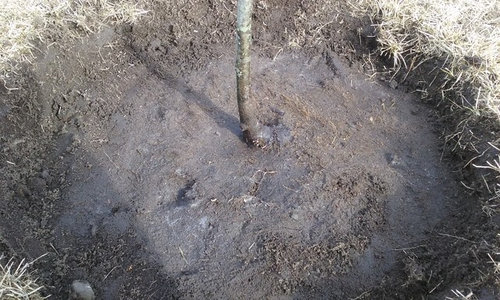
Hi, I have 4 smaller trees planted 3-4 years ago that haven't been putting on hardly any annual growth. I was checking root flare depth and the 3 three deciduous of the four are about 3-4" below ground level. I had already posted about the one conifer in a different thread a couple of weeks ago and one suggestion was to put a 'ring' around the tree to keep the dirt and mulch away, instead of digging up the tree and I assume disturbing or damaging the roots. But I wonder, would that be a viable solution? Would the root flare increase in height as well as diameter? and eventually be at a greater height above the ground? Or would I always have a hole around the tree? I planted these trees before I learned about root flare from you experts and to be honest, I never had trouble on my old place that was mostly light sand and mostly pine trees, that all grew great. The trees I planted last summer all look good too, so I must have learned something hanging around you guys. :-)

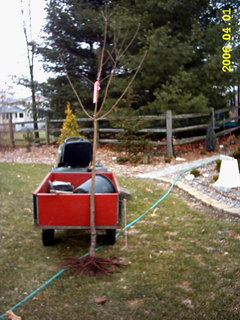
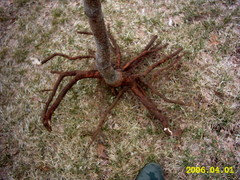
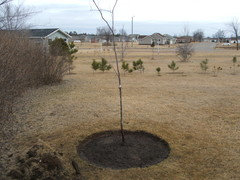
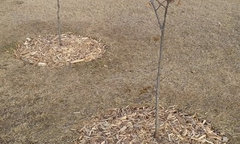
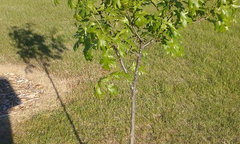
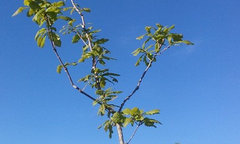
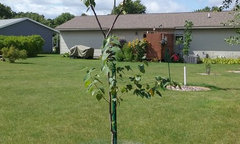
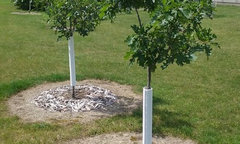
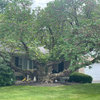
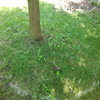
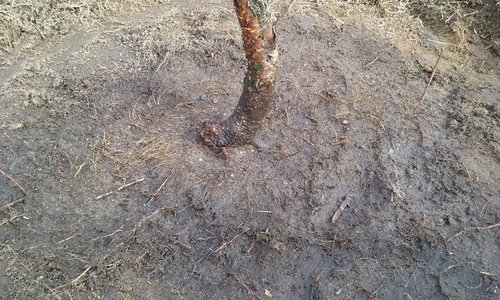
Here's some pics. I have all the sod off and have the root flares exposed. But do I dig them up and raise them? Or will the ring trick do the job? They are not that big of a tree but I hate to start all over by tearing up the roots. But maybe that's not such a big deal in the case of 4-5 foot high trees.? They seem like they are rooted pretty good. The first two are either Red Oak or Pin Oak, not sure.


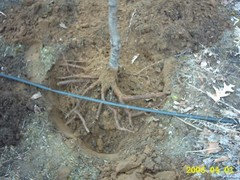
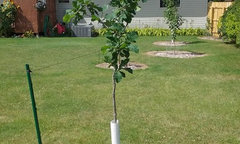
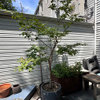
This one is a White Birch. About 6-7 feet tall. This has been in the ground the longest and is a good 4" down, so probably the most difficult to deal with, with all the shallow roots.

Comments (18)

  • 9 years ago
    last modified: 9 years ago
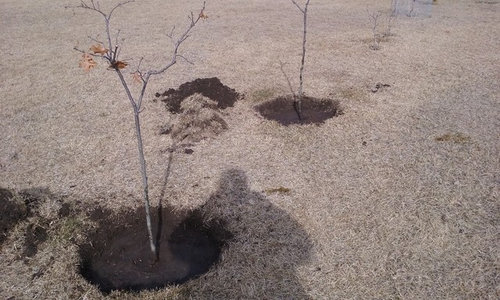
    But I wonder, would that be a viable solution?

    ==>>> yes.. that was why it was offered ...

    but i think your past tree lore.. and into psyche issues ... lol ...

    its the perfect time of year to dig them up.. and replant..

    do it soon.. or your head will explode ... lol

    below is a pic of how it can be done .. in april.. in my MI .. thats all you need .. dont make it a bigger job than need be ... when timing is perfect .. review planting guide also.

    https://sites.google.com/site/tnarboretum/Home/planting-a-tree-or-shrub

    ken


  • 9 years ago

    It is desirable to loosen the soil well beyond cut root ends so that new roots will be presented with soft, well aerated ground.

    User thanked Embothrium
  • 9 years ago

    "=>>> yes.. that was why it was offered ..."

    But how about the root flare growing higher? Would I eventually be able to level off the dirt back to the original height? Will the flare increase in height as well as width (in a few years)?

    I'm just thinking that if I don't have to cut the roots, the tree will start putting on new growth immediately, instead of having to wait until it can re-grow new roots. Or is it the six of one and half dozen of the other with this kind of thing?

    Thanks Embo! I'm glad you reminded me of that.

    I can't dig yet, the ground is still froze at about 5" down but if I decide to re-dig the trees, I'll remember to make the area larger than it needs to be.

    Right now, it's thawed enough so I could check the root flares and get the sod off. I thought if I was going to raise them, it would be easier to manipulate/wash bare soil using a stream of water.

    Good part is, it's only 4 trees out of about 30+ that I brought in from the woods. The rest look good.

  • 9 years ago

    Unofficially I will say trees tolerant of real flooding are 10% less likely to be killed by being too deep.

    User thanked Toronado3800 Zone 6 St Louis
  • 9 years ago
    last modified: 9 years ago
    Thanks Toronado, I've wondered about trees like the Birch and Balsam Fir. They stand in water for long periods at certain times of the year. So why wouldn't they tolerate the root flare not 'breathing' better than a highland tree? But that's just my brain working overtime again. :-)

    And again, when I lived in the sandy sand, the pines I planted didn't seem to bother if they were an inch or two too deep. But that soil dried rather quickly and was more porous so it's understandable that it may have not been as critical as this heavier loam that I have now.

    That said, I may have dug the holes too deep on these trees and then didn't tamp the dirt that I put back as fill like I should have and that caused them to sink a couple inches more.

  • 9 years ago

    , it's only 4 trees out of about 30+

    ==>> yes.. thats a great success rate.. even for the professionals ... ken

    User thanked ken_adrian Adrian MI cold Z5
  • 9 years ago

    Thanks! Being these trees are still small enough, I think I'll dig and raise them. The root balls should be denser than when they were first moved so hopefully they'll take this move well.

  • 9 years ago

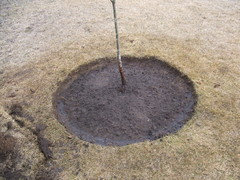
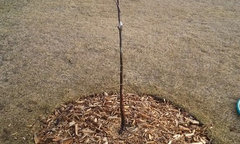
    Just posting a picture of the Birch tree I believe is Betula papyrifera. I dug a larger than ordinary circle around the tree (18" radius), a good 12" down. There were a few diagonal roots but most everything was in the 12" of depth. I couldn't believe how dense the root ball was, compared to when I had planted it. I managed to tip the whole root ball up at an angle and stuff ~4" of sod & dirt underneath the center part. Tipped it back and took the garden hose and soaked the root ball to soften things up and wash dirt down underneath. Ended up with a nice dome tapering down from the root flare to the outside of the excavation. It was loaded with tiny feeder roots so I added a few inches of loose black (native) dirt on top of everything, tapering the dirt up to the root flare so as not to cover it any deeper. So the root flare is about an inch above the surrounding lawn. Like ken_a says, 'it's not a baby' and 'don't make it any harder than it has to be'. :-)) This tree was planted spring of 2013 and should have had a white trunk by now but has grown so little, there has been hardly no expansion of the bark, maybe even a little damage. So we'll see if this fixes things.

    Thanks again!

  • 9 years ago

    Progress report: I got the two red oaks raised yesterday. They're 'not babies'. :)


    Today I moved the Bur Oak. It was planted a year ago last fall and was starting to get pretty well rooted with new tap roots going down. The dirt was still fairly loose so that helped. I should've taken more pics of the root flare. Once I washed away the dirt, you could actually see circling roots forming near the surface of the soil, all around the tree trunk. And this was only planted about 2" too deep.

    I think I'll raise the Sugar Maple an inch or so too. It was just put in last fall so probably not too rooted yet anyways. I've learned that "too deep" is too deep, whether it's 1" or 6"

  • 9 years ago

    Here's the Birch:

  • 9 years ago

    Here's an update on the twin red oaks, They seem to have responded to the 'lift". The new growth on the right one, this season, is many times more as the first 4 seasons put together. Don't know if that's the reason or not.

    The left one didn't do quite as good but something had eaten off the top leader after it had first budded but it still has excelled way better than over the last several seasons.

    The birch is doing better but still struggling compared to the red oaks. I may wait and if it doesn't recover by later this summer, I may cut the damaged trunk off and let it grow from the bottom as a 'clump'. It has already sprouted several shoots at the bottom already.

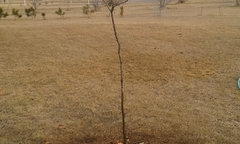
    The burr oak is all leafed out and doing okay but this tree starts weeks later than the other trees so I won't judge this one for another month or two. Bur oak:

    Been a cool season so far with highs only in the 50's and a few 60's.
    Temps near 80's next few days so hope to see some progress on these. :)

  • 9 years ago
    last modified: 9 years ago

    Many of my planted trees "sunk" alittle (w/no apparent harm) because I loosened the soil in the hole deeper than the bottom of their roots. Loosened soil is slowly going to compress & subside. So my latest plantings are done w/soil loosened only as deep as their roots, or planted purposely higher to account for the eventual subsidence.

    User thanked bengz6westmd
  • 9 years ago

    Thanks beng!

    It was a lesson learned and caused me to be a bit more diligent on how I plant. I now use a straight edge (board) across the top of the hole, to determine the level of surrounding ground relative to root flare, and If I do add soil back into the bottom of the hole, It gets a thorough packing. :)

  • 9 years ago

    Update: Late summer assessment.

    The burr oak did okay even though it was in the ground the previous year and moved, raised and mulched last spring. Even sent out a second flush of leaves and the leaves were almost normal sized compared to the first flush. (windy so blurry).

    The birch didn't do as good but did send out good growth for the season. May not look too good yet but compared to the 'almost dead' look it had last year, it looks like it wants to recover. This one was 'raised only' and mulched, same location as original. Might let it go another season before deciding.

    The twin red (pin?) oaks were great, putting out over a foot of new growth in the spring then another 10" later in July. Considering they grew very little the first 3 or 4 years in the ground. These were also only 'raised' and mulched.

    So even though most of the trees in the neighborhood put on exceptional growth this year, I'm still convinced that raising these trees was the reason for the improvements I've seen. Like I say, the birch was almost dead and the red oaks were barely growing an inch a year and I think they should have done much better than that even though they were still establishing themselves.

    The Sugar maple didn't do much but did leaf out and still has green leaves so I'll have to assume it's establishing at a slower rate than the rest. After all, it was a 'new move' from the woods last fall so has to be behind the others that have been in the ground a few years.

  • 3 years ago
    last modified: 3 years ago

    Very helpful conversations.

    I planted a little tangerine tree around April (in Houston area). It is noticeable sinking about 2 to 3 inches. The soil is clay type. Before planting the tree, we dug the area about tree feet deep and amended it by gypsum. At the time, the area had big rain fall so the big hole (3 x 9 feet? planed for two trees) full of water. I also made a compost pile at the spot of the planting. When we put the tree down, the compost became black and smelled bad. I added some top soil + cow manure over the pile then put the little flowering tree down. The tree is growing well, and flowers became small fruit nodules... However, I worried if the incomplete compost may harm to the tree roots, or the tree is buried too deep. Should I consider to raise it by adding soil beneath its roots in this fall?

  • 3 years ago

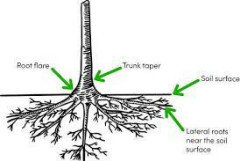
    Generally speaking, too deep is too deep. Period (see diagram below).


    I've learned when I plant a tree, never dig the hole deeper than what you need to put the root flare at the correct height, a little high is better than too low.


    And if you do need to put soil back into the hole to raise the root ball, make sure that soil is tamped well to prevent settling.


    There's a 'How to plant a tree or shrub' link around here, maybe ken can post it.


  • 3 years ago

    As Bill noted, you never want to dig a planting hole any deeper than the actual rootball depth and slightly less deep is advised. When you disturb the soil deep in a planting hole - under were the tree would normally sit - that disturbed soil will settle in time and compact and the tree will sink or drop below grade.

    With a clay based soil, it is even more important to plant high. You also do not want to add any amendments to an individual planting hole - what comes out of the planting hole is all that goes back in. If working with a clay based soil, this is even more critical. Adding amendments will alter water percolation and the planting hole will act like a bucket, holding that moisture laden amended "improved" soil too long and encouraging root rots.