Software
Houzz Logo Print
lh69017

Are Cold Frames Worth It?

9 years ago

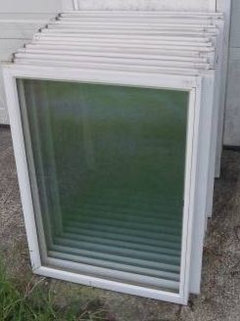
I'm picking up 4 double pane window sashes today for $5 each. I was going to build 4 cold frames. But are they really worth it?

I live in zone 7a / 7b depending on who you ask...
I am starting my tomatoes, peppers, collards and broccoli seeds all indoors under LED grow lights. I have 3 raised beds - 76 sqft in total.

I know that cold frames can extend my season, but I'm not going to fit tomatoes/peppers/cucumbers/etc under them, unless my cold frames are 7 ft tall...

I guess they could be used for leafy greens in the fall and hardening off in early spring?


What are your thoughts?

Cold frame or no cold frame?

My yard is pretty small so every sqft matters.

If I don't really need them, I'll probably build another raised bed instead and save the windows for another project.

If cold frames will drastically improve production for my spring crop, then I'll build some this weekend!


Comments (22)

  • 9 years ago

    Agree. Season extension isn't just for fall. It works for spring too IF you can be there to monitor it or if you can make it automated venting (which is easy to do) and in warmer zones, great for winter.

    So "worth it" all depends on where you live and how you'd choose to use it.

    Dave

  • 9 years ago

    Should I bury my coldframes or build them ground level/off the ground a few inches?

    It would be really cool to hang them off my patio - and it's south facing...

    I'll look into automatic openers too, thanks!

  • 9 years ago

    Hanging them off you balcony would decrease the efficiency considerably. Much of the benefit of the cold frame overnight is the warmth coming from the soil below which is trapped by the frame.

  • 9 years ago

    I had lettuce, arugula, and spinach all winter with just two layers of Agribon fabric over some bent pvc. I imagine your results will be even better as the windows will allow more light. Just make sure the structure you build has the ability to circulate air when too hot, and be as close to air tight when cold.

  • 9 years ago

    What kinds of greens can be grown over winter in zone 7? And how about zone 6? Could regular leaf lettuce be grown, or just hardier greens like kale?

  • 9 years ago
    last modified: 9 years ago

    My kale survived this winter with no cover at all. I did pile up shredded leaves around each plant by hand fully covering the stems going up about 4-6 inches above the soil line. Under cover, just two layers of Agribon cloth held up over the plants with u bend pvc pipe about 3.5' above the plants in a raised bed, I grew, Jericho lettuce, Oak leaf lettuce, Bloomsdale spinach, Savoy spinach, Tyee Spinach, and Arugula. My cover was not air tight as Agribon can breath, and rain can fall through. I did roll up and clip the ends of the tunnel, and buried the sides under wood chips to hold them down. I never watered throughout the winter. As of today, everything survived and some are starting to bolt. We did have a relatively mild winter, but still had many nights in the 20's.

  • 9 years ago

    Oh yes. Separating a cold frame from the ground is NOT a good thing. The thermal ballast of the ground is largely what stabilizes the temperature inside of it. If you allow air to flow all the way around the cold frame, the temperature inside of it will just track the air temperature, especially if it isn't sunny.

  • 9 years ago

    Cool! Aside from using old windows for the top of the cold frame, what other clear materials would people recommend? Some of the automatic vent openers I've looked at in the past have a weight limit.

  • 9 years ago

    The recipe for a cold frame is transparent sealed top that can be opened to allow air circulation. Clear plastic in a pivotable frame would work fine. Glass in window frames is certainly a weighty option. You don't even have to pivot the transparent sealed top. Just be able to open vents on the side as the temperature increases.

  • 9 years ago

    Of course the OP is going to use glass, and that's a good choice for cost and the opportunity to repurpose existing materials, but there are materials that can be used for cold frames (and greenhouses for that matter) that are specifically made for their insulating qualities. Polycarbonate is such an example, and it comes in insulated, 'double walled' options.


    The choice comes down to your conditions, climate, and budget.


    As mentioned, glass is fine in some areas, but for places expecting huge amounts of snow, glass breaks. Nothing beats glass for ease of cleaning, and there are insulated glass options. But... as mentioned, you have to consider your plans. To make glass lids 'lighter', you could use a trick from old-style double hung windows. Just sink PVC tubes down into the ground behind the frame and rig weights on cables with pulleys. When lifting, the weights will go down into the tubes, relieving the weight.


    Anyway, there are many options (even just simple plastic film) that fit the conditions and abilities.

  • 9 years ago

    Now that I have multiple people telling me I could have lettuce and spinach all winter long, I'm seriously considering building a cold frame this summer for fall and winter use.

    Logan, how large are your windows? I'll keep an eye on Craigslist this spring as people are cleaning out and posting things. But I may have to go with a polycarbonate panel for the top. I hate to have to order online and pay shipping, but HD or Lowe's only sell the corrugated polycarbonate I think, and I'd want flat.

  • 9 years ago
    last modified: 9 years ago

    these are the windows I found: (hopefully that photo came through?)

    They are 36" x 26" supposedly. I'm picking them up after work.
    I'll probably build one cold frame for each window. The frames are also wooden, so I might router the edges and weather strip them, or build new frames for the glass with rabbets on the end to allow for a tighter fit when closed.

    If all else fails, I'm out $20!

    Best of luck with your search!
    You could even post a wanted ad on craigslist, or call a contractor in your area and ask if they have some from a renovation job. Usually these things go to the dump; I'm all for up-cycling when possible.

  • 9 years ago

    Yep, the photo came through and those look great! How tall do you think you'll make yours? I think it would be nice to make one that's almost tabletop height for ease of access, but that would be a lot of soil to fill from the ground to 36" up.

    I never thought about calling a contractor and asking for windows. That's a great idea!


    Let us know how your cold frames turn out!

  • 9 years ago

    not sure about height yet... I can get topsoil at about $30 a yard if I pick it up myself by the truck load. But that would still be almost a yard per cold frame which is a lot of soil!

  • 9 years ago

    Maybe you could do kind of a lasagna bed method to take up space toward the bottom? Like layer some small sticks and leaves and thin layers of grass clippings for the bottom foot and then put topsoil next and then a lighter raised bed mix? The bottom layers would eventually decompose. Just an idea.

  • 9 years ago

    that's actually how I've filled my 12" beds. For the areas where my first year carrots are going, I filled with quality soil down to 16" (dug in another 4" below the bottom of the bed).
    If I ever got 14-16" carrots, I'd be shocked!
    But I want deep root development!


    This is my first year gardening... I'll be happy if anything makes it to harvest! hahaa

  • 9 years ago

    Your carrots are going to be very happy, I bet!

  • 9 years ago

    The further you are off the ground the more ground heat you lose. The taller you make the sides the more heat you lose. The greater the area of exposed sides the more heat you lose. As Dan said above, the effectiveness of a cold frame is its direct ground contact. It is the ground that is the source of your temp control.

    So no you do not want it to be tabletop height and you do not want insulating filler material between the ground and the growing mix. You'd defeat the whole purpose of it. For cold frames to work you plant directly in the ground and set the cold frame on top of the planted area.

    Just look at all the cold frame pics on Google Images - they are all low to the ground and in direct contact with it.

    Dave


    Cold frames

  • 9 years ago

    Ohhhh ruh roh, my bad. Great info, Dave! Thanks for your help!

  • 9 years ago

    LOL our son does replacement window installation for a local small building supply. They have several carpenters who subcontract for them. Never thought to ask what happens to the old windows but I bet they go right into a dumpster.

  • 9 years ago

    Can a cold frame be as effective sitting in a raised garden bed? It would still contact the soil all the way around. Just got one for Father's day and trying to preplan where it will go in the fall and what will go in it.

Sponsored
J.Holderby - Renovations
Average rating: 5 out of 5 stars4 Reviews
Franklin County's Leading General Contractors - 2X Best of Houzz!