Software
Houzz Logo Print
roseseek

Which is which?

9 years ago
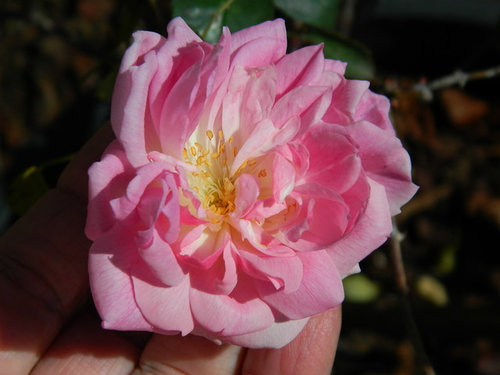
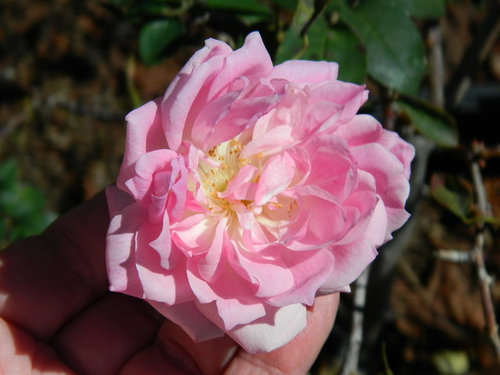
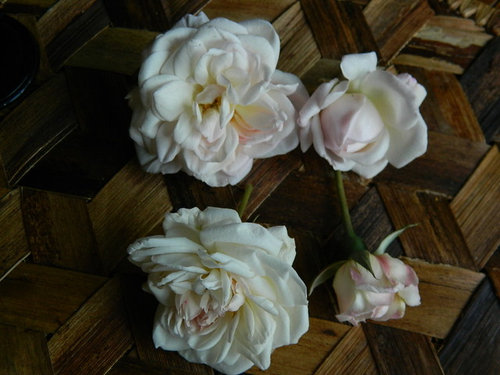
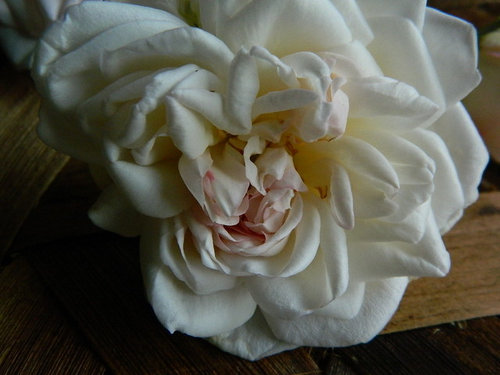
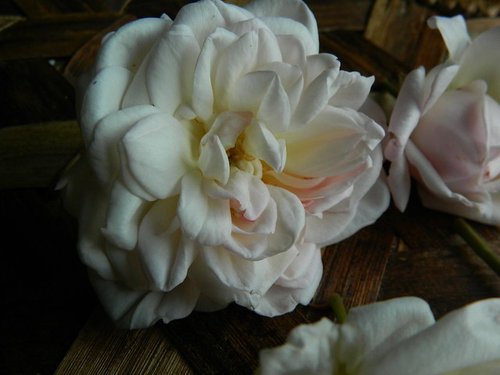
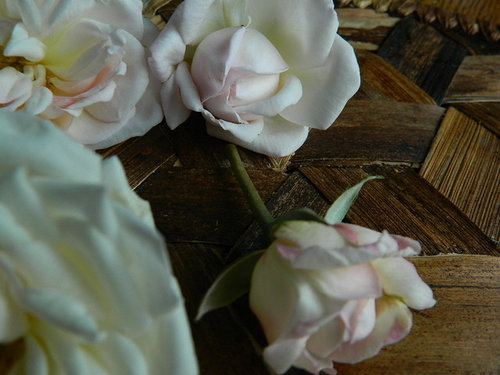
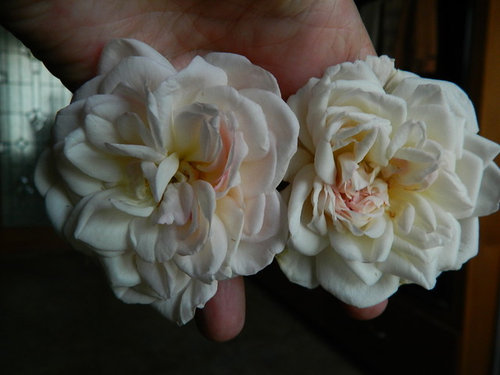
We've been having a bit of a discussion about the Cemetery Mlle de Sombreuil and George Washington Richardson after GWR flowered VERY pink this spring. None of the historical reports about Sombreuil mention how pink it can appear, though from observation, it would seem someone SHOULD have mentioned it. Below are shots of how GWR flowered a few weeks ago, followed by photos of both varieties from today. What do you think?

Then, today. Which is which is at the end.

First image, the Cemetery Mlle de Sombreuil on top, GWR below.

Second image, George Washington Richardson.

Third image, Cemetery Mlle de Sombreuil.

Fourth image, Sombreuil upper, Richardson lower.

Fifth image, Sombreuil on the left, GWR on the right.

Comments (14)

  • 9 years ago

    I've gotta say that the comparison photos are- to my inexpert eye- indistinguishable. If not the same, they must be very closely related.

    Did Mlle de Sombreuil put forth any pinker-than-usual fleurs, or did the flowers come after the odd weather that encouraged "GWR" to blush?

    Beautiful blooms,

    Virginia

    roseseek thanked User
  • 9 years ago

    I've compared all the plant parts and they are identical. MdS wasn't flowering when GWR produced those two pink flowers, but when they are flowering at the same time, there isn't any difference between them. Thank you, Virginia!


  • 9 years ago

    Sherlock Holmes has nothing on rosarians! I wonder if roses can sport canes/stems with "potential color change abilities" as they can sport canes/stems with visible color differences. In other words, could the GWR cuttings have been taken from a mother MdS but have a sometimes hidden ability to turn blush-pink while other MdS cuttings not-so-much? Like the way cuttings of a mother plant can sport a different color and those cuttings produce plants of the new color while others taken from taken from other parts of the mother plant display the original color? In GWR's case, the color change is more unstable and weather dependent but a "sport" nonetheless. Probably a crazy genetic idea, I know. Just thinking out loud. Carol

  • 9 years ago

    There is no telling, Carol. They certainly do whatever it is they want to.

  • 9 years ago

    Don't you love how serendipitous they are? Your apricot-orange Hoag House Cream sounds beautiful! Thank you!


  • 9 years ago

    Kim, this is probably a thought for another posting, so my apologies for straying into left field, but the reason I mentioned my wandering thoughts above is because I've encountered a few roses grown from cuttings which mysteriously varied in color presentation under certain shared conditions. Over the years, I've acquired several roses in multiples in order to grow them to maturity and pass them along. Although the roses were cutting propagated cultivars ordered in bulk from reputable nurseries, once in awhile, under certain conditions, a "genetically identical" plant exhibited anomolous characteristics while growing side by side with its siblings in my potted nursery. For example, one Marie Pavie consistently bloomed a deeper blush in cool weather. I'm no geneticist, and although at one point I attempted to research rose genotype/phenotype articles, I never discovered any satisfying explanations. When you posted your GWR/MdS photos, I flashed back to my own mysterious experiences and my stabs at explaining the anomolous cuttings. Do you have any insight into this phenomenon? Carol

    roseseek thanked portlandmysteryrose
  • 9 years ago

    I love white roses that have some color in cooler weather. These are completely pink!

    roseseek thanked kittymoonbeam
  • 9 years ago

    Nothing "scientific", Carol. But it is completely common for plants propagated from the same plant, same batch of cuttings or even bud sticks, to vary a bit from one another. Patchwork Sport was one of my first discoveries of this. The nursery had several dozen bud and bloom, five gallon canned Patchworks, but that one was heavily striped, so I bought it. Of course it was likely viral (they were ALL badly virused) but the variegated flowers "spoke my name". Wandering through nurseries which stock large quantities of the same variety, you will often see this kind of variation. Sometimes it's in growth, like Iceberg sporting to varying degrees of climbing, but more frequently, it's varying degrees of color shift. Some varieties do it more than you would think. Others are remarkably stable. But, that's how sports are usually discovered. Propagate hundreds to thousands of a variety and you're sure to find something that isn't "usual" or "normal". They sport much more frequently than you might imagine. It's just most are either overlooked or dismissed as just a weather variation.

  • 9 years ago

    It may be the difference in location and weather, but my Mme. de Sombreuil has never come even close to being that pink even though we also had a very rainy winter here. However, we've already established that roses do whatever they want to do.

  • 9 years ago

    I think heat has a lot to do with it, Ingrid. It wasn't that pink in Encino, either.

  • 9 years ago
    last modified: 9 years ago

    Thank you for the explanation, Kim. I wonder if your GWR is MdS sporting to pink (since no one has mentioned MdS actually turning pink)? Or if GWR is a seedling or sibling of MdS? I suppose half the fun is the uncertainty and air of mystery. GWR sure does look like a ringer for MdS...except for the pink. Of course Catspa's Hoag House Cream is currently apricot, so maybe weather is the key after all.

    I had a Spray Cecile Brunner that was fond of producing foliage shaped like maple leaves. Years ago, when I received my band of Queen of Denmark from Heirloom, the first bloom was white. The subsequent blooms have all been spot-on mid pink. Truth is, I get a kick out of all the surprises as well as reading about possible identities for found and rustled roses. Carol

  • 9 years ago

    You're welcome, Carol. I don't think it's sporting, but simply expressing pigmentation it can express given the resources and conditions it encountered. Had it been a sport, it should have continued flowering much more pink than it has. As you've seen, the two are as "identical" as they can be, so I doubt it's a mutation. Oh, yes, the maple shaped foliage on Spray Cecile is characteristic of it.