Software
Houzz Logo Print
joss_delage

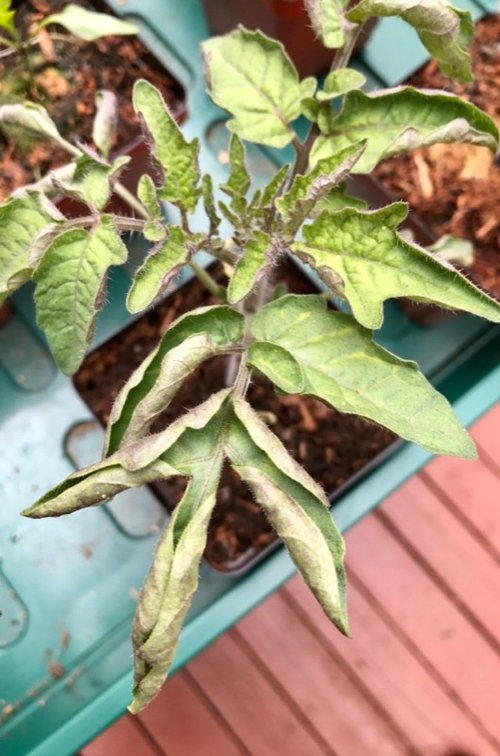
Tomato seedlings w/ purple, rolled up leaves

9 years ago
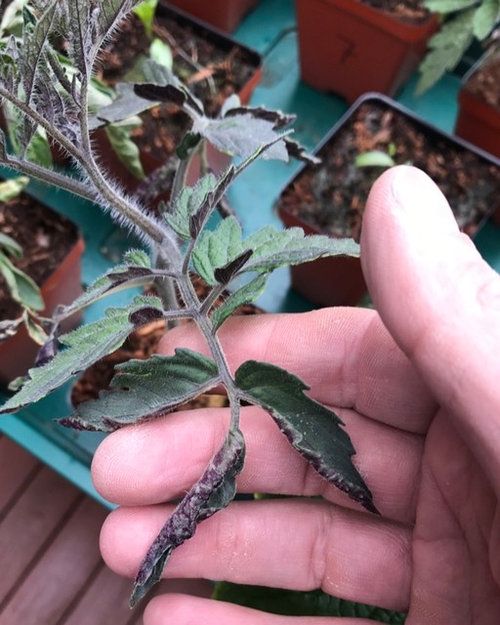
I'm a beginner gardener in Seattle. Some of my tomato seedlings are looking funky, with some leaves rolling and turning purple:


The seedlings are in 3.5" square pots, under LED growing lights indoor. I've been trying to harden them outside 30mn or so a day. They were last watered yesterday, from the bottom. They're planted in a mix of coir, commercial compost, & worm castings. What am I doing wrong?

Comments (11)

  • 9 years ago

    Thank you. I admit I'm a little unclear as to when to up-pot a seedling. They're in 3.5" pots, and they're about 6" tall right now. I've given them nutrient diluted in water a few times, but not recently. Of course I'm torn between not over watering and feeding them (a diluted solution).

  • 9 years ago

    What is the "nutrient" you've been giving them?

  • 9 years ago

    GardenRich's Root & Grow 4-10-3 liquid fertilizer, diluted 1/4 and then 1/2 recommended strength.

  • 9 years ago

    Seedlings' biggest need is usually nitrogen, and sometimes they get deficient in Mg. Overwatering leaches out those nutrients and causes sickly, yellowing plants that don't thrive. A purple tinge from Phos deficiency is common for seedlings, even without deficiency in the growing medium, as roots have chronic difficulty managing P when underdeveloped and/or in small containers, and it corrects itself as the plant develops a good root system once planted out in a big container or in the ground.

    The product you're using doesn't seem to provide much N and mentions nothing about Mg.

    I wouldn't go futzing around with it now since you're close to plant out. Many a beginning gardener tries to correct a problem immediately that plant-out will solve only to overshoot and end up damaging seedlings further or killing them.

    Just make sure plants have nutrients after plant-out. I usually mix in some general-purpose organic granular into the soil around the planting hole (something like Espoma Garden-Tone or even Plant-Tone) or give one good dose of fish emulsion a few days after plant out, depending on what I have on hand. Once plants start flowering, I start feeding a tomato-specific fertilizer routinely. Tomato formulas will have comparatively lower N and more P and K than general-purpose fertilizers. Too much N later in the season results in huge, lush plants that just want to grow leaves and not flowers or fruit, but early in the season, plants benefit from some more N to give them a good start, especially if they're showing signs of deficiency at plant-out.

    A soil test to determine exactly what your soil needs is the most conscientious approach, of course, but if your plants don't show signs of nutrient problems once in the ground, it's probably fine to go with a balanced formula specifically for tomatoes once your plants start setting fruit. It sounds like you might be attracted to a more organic approach, so something like Espoma Tomato-Tone or Jobe's Organic Tomato fertilizer has served me very well in the past, and these are readily available at many common retailers.

  • 9 years ago

    Thank you. I have a quick follow up question: should I plant now? I have bought enough 'wall-o-water' cloches that I could cover all the plants. I'm in Seattle; we're not at risk of a frost but of course the plants are still small.

  • 9 years ago

    What is your zip code?

  • 9 years ago

    98112


  • 9 years ago

    OK, well, you're WELL past your last frost date.

    Your 10 day forecast shows fine temps for planting out.

    https://weather.com/weather/tenday/l/98112:4:US

    Night temps are a tad on the cool side, but it won't hurt your plants. The worst that will happen is that they'll grow slowly until the soil warms up more. IMO, they'll be much happier that way than sitting hungry and cramped in their pots.

    You might want to wait until after the storms forecast for Thurs. depending on how severe they're supposed to be. But that's the only thing I'd be concerned about. Personally, I'd plant them out as soon as they were hardened off.

  • 9 years ago

    Ok. I'll do that this w-e. Is there a way to know when a plant is hardened? I'll use the waal-o-water cloches anyway.

  • 9 years ago
    last modified: 9 years ago

    Hardening off means that you leave the plant in the sun a little longer every day. As said earlier, it doesn't mean leaving the plant out in the sun for 30 minutes every day. It means the first day you leave it out in mostly shade. The next day, you give the plants an hour or two of morning sun. Each day, increase the amount of sun exposure by an hour or two (depending on intensity/time of day). When you get to the point where you've left the plant out in the sun all day, it's hardened off.

    The process generally takes about a week, sometimes a few days longer if you have to account for cloudy/rainy days. If you get a few small spots of sunburn here and there, it's no big deal and fairly normal. The goal is to avoid sunburn, etc. over large areas of the plant, which kills off a lot of leaf area and sets plants back or can even kill them because it compromises the plant's ability to perform photosynthesis.

    If you can't be around to move plants in and out of the sun, you could put up a few layers of shade cloth over them. Every day or two, remove a layer of the shade cloth until they don't need the shade cloth anymore.

Sponsored
More Discussions