

Compost Tumbler Take 2
9 years ago
Featured Answer
Sort by:Oldest
Comments (6)
 9 years agolast modified: 9 years ago
- 9 years ago
Related Professionals
Columbus Landscape Architects & Landscape Designers · Lansing Landscape Architects & Landscape Designers · Kalispell Landscape Architects & Landscape Designers · Annapolis Landscape Contractors · Rolla Landscape Contractors · Vicksburg Landscape Contractors · Willmar Landscape Contractors · Brooklyn Landscape Contractors · Las Vegas Landscape Contractors · Athens Stone, Pavers & Concrete · Longview Stone, Pavers & Concrete · Oshkosh Stone, Pavers & Concrete · Victorville Stone, Pavers & Concrete · Salem Stone, Pavers & Concrete · Spokane Stone, Pavers & Concrete- 9 years ago
- 9 years ago
- 9 years ago
Related Stories
GARDENING GUIDESGet on a Composting Kick (Hello, Free Fertilizer!)
Quit shelling out for pricey substitutes that aren’t even as good. Here’s how to give your soil the best while lightening your trash load
Full Story
GREEN BUILDINGWhere to Hide the Kitchen Compost Bin
Enriching your soil doesn’t have to mean staring at a countertop pile of decomposing food scraps
Full Story
DECORATING GUIDESPalm Trees Take Interiors on a Tropical Vacation
Conjure a sultry vibe or bring welcome life to modern rooms. Whatever your interior design style, palm trees are the ticket to enhancing it
Full Story
KITCHEN STORAGETake Your Recycling Station From Blah to 'Ahhhh'
Revamp an eyesore setup or just improve recycling efficiency with pullout drawers, stylish containers and innovative solutions
Full Story
GARDENING GUIDES13 Risks to Take for True Garden Rewards
Go ahead, be a rebel. Breaking rules in the garden can lead to more happiness, creativity and connection with the earth
Full Story
SHOP HOUZZHouzz Products: Take the Party Anywhere
Celebrate summer with impromptu outdoor gatherings anywhere you like. These finds make it easy
Full Story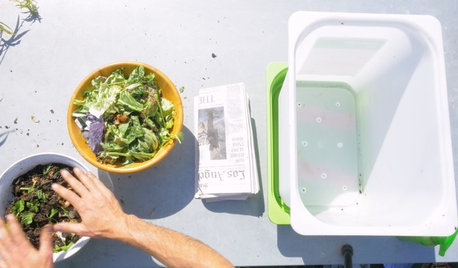
GARDENING GUIDESHouzz TV: Make a Worm Bin for Rich Soil and Happy Plants
A worm-powered compost bin that can fit under a sink turns food scraps into a powerful amendment for your garden. Here’s how to make one
Full Story
GARDENING GUIDESWhat to Do This Fall to Build Healthy Garden Soil
Take advantage of the cool season to improve soil texture and replenish nutrients
Full Story
KITCHEN SINKSThe Case for 2 Kitchen Sinks
Here’s why you may want to have a prep and a cleanup sink — and the surprising reality about which is more important
Full Story
PORCHESA Peek at 2 Prettily Dressed Fall Porches
Pumpkins, fall flowers and flea market finds help two Ohio porches get into the seasonal spirit
Full Story
Joss Delage