Software
Houzz Logo Print
ashley_goletz92

Lady palm, what am I doing wrong?

9 years ago
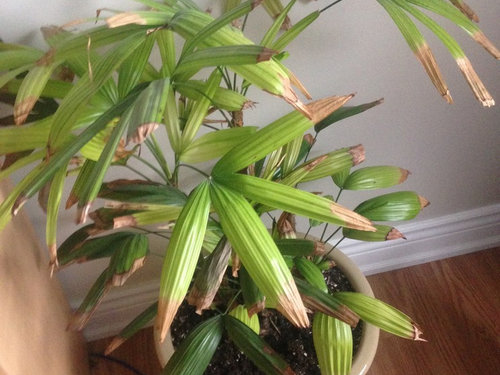
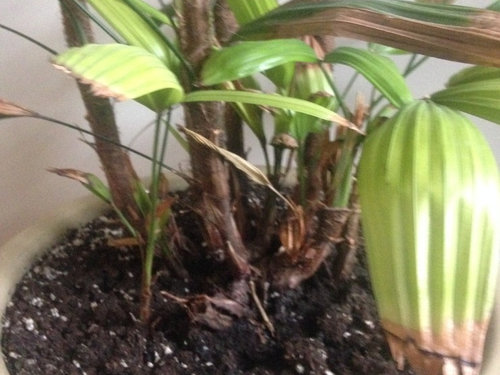
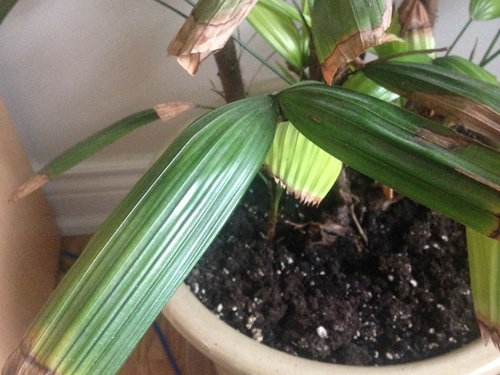
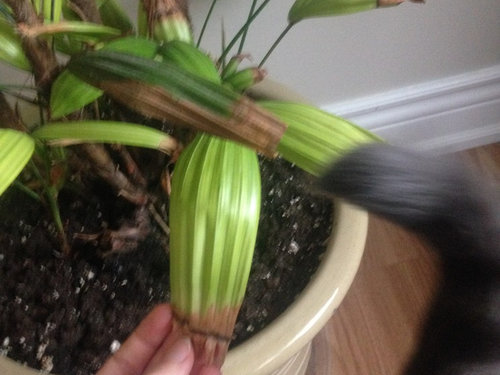
Hello, I got this lady palm for free at a garden centre because of how unhealthy it was. The leaves haven't changed and I've had it for a hear and a half now.


The leaves have this green-yellow look to them. I have reported it when I got it and I made the error of going too large of a pot size because of how pot bound it was but apparently they like it like that. Anyway, the leaves have not turned that deeper shade of green as you can see in the older leaves.

I've been watering every 2 weeks because of the large pot size but the leaves still look like it has been too dry from the look of the leav tips.

I feel like I'm doing something wrong.


Any suggestions?


Comments (17)

  • 9 years ago

    Thank you, I'll try that. Since I live in Toronto we don't have palm fertilizer so I've been using:

    https://www.amazon.com/Schultz-Purpose-10-15-10-Plant-4-Ounce/dp/B002PY3PPQ


    It has added iron and magnesium as well. This should work fine, right?

  • 9 years ago
    last modified: 9 years ago

    Be very careful with fertilizers and indoor palms... it is Ssooo easy to overdose them and kill them. Use only a fraction of what you 'think' you should and you should be fine. Have had several of these in the same pot and soil for over 10 years without any added fertilizer and they tend to look perfect... add fertilizer and if you don't flush the heck out of the soil, they can look terrible soon after.

    Also try using water that has been sitting out a while and let the salts leach out, and the chlorine evaporate off. Or better yet, use distilled water. Lot of brown tipping can be from too much salts or chlorine in the water. Best of all is rain water, if you are lucky enough to live in a climate where it rains. Here in California, it rains maybe 3-4 months of the year, so rain water is hard to come by. Nothing makes a palm look happier than getting rain water... that brown tipping will not happen with rain water, either, and nearly impossible to overwater with rain water.

  • 9 years ago
    1. Light level might be too high at certain times of the day? Move someplace with a more indirect light, or adjust light in another way.
    2. Chlorine in water (brown tips)? Let water sit in a container overnight with no cap (uncovered). The water from your tap might be very cold so that would take care of that also if so. If they're using chloramines instead then you might need to do something different, check water supplier website. Don't over water, a moisture meter can be very helpful. Sometimes you can tell just by the weight of the pot (especially plastic pots).
    3. Fertilizer too strong? Just use a quarter solution and not at all during Winter. Increase concentration gradually if plant is not growing.
  • 9 years ago

    So I do not believe its too much light, i have it in bright indirect light so no actual sun is beating down on it. However, i'm getting palm fertilizing shipped from the US here so I'll start using that. I plan on cutting the recommended dose in half because they grow so slow.


    I use aquarium water for the most part to water it so the only time I use tap water is when i'm doing my bi-yearly deep flush where i run water through it to flush salts out at the beginning of the summer and end of summer. But that could be enough to burn the leaves. Possible in combination with underwatering it too...


    Fertilizer I got:

    http://www.homedepot.com/p/BGI-10-lb-Palm-Fertilizer-FPALM10/203029591

  • 9 years ago

    this plant likes to be evenly MOIST neither wet nor dry, slightly drier in winter.

  • 9 years ago

    Also,Ashley- fish water has dissolved salts in it. I once got great growth out of a indoor Schefflera when I used fish water from an aquarium that had big fish in it..at first great,deep green...then..the leaves started to get black edges. Salt burn.

    So the fish water has to be from guppys or on occasion.

  • 9 years ago

    Bigger pot (won't dry out as quickly) & better drained soil. In my 10 yr experience with palms I have discovered, with much failure and heartache, that palms are hardier than people think. Don't fuss over them too much. However, they do enjoy some basic ingredients. Each palm family has different environmental requirements of course. But if you follow the soil recipe below, you shouldn't have too much issue.

    For indoor, transplant into a bigger pot. Mix 2 handfuls of perlite per 9 litre bucket of general potting mix. Then mix handful of dried chicken manure + handful of blood & bone per bucket (don't forget gloves!!). Do not position the "Rhapis" near a window with direct sunlight - the leaves will burn. In a well lit position. In their natural habitat, Rhapis love a part shade or speckled sunlight spot. Most palms hate their roots becoming soggy. There are exceptions - Mangrove Fan Palm for example. Rhapis are relatively slow growers - be patient & enjoy.

  • 9 years ago
    last modified: 9 years ago

    They may hate soggy but Rhapis are also very intolerant of excessive dry/drought..., more so than most palms. Otherwise, they are really quite easy and make terrific house palms (among the top five in my opinion). I put mine outside in dappled sun from April through October (in Zone 7).

  • 9 years ago

    Correct

  • 9 years ago
    last modified: 9 years ago

    Thanks guys, I did have to repot into a smaller pot. The soil around the roots where drying out but underneath it was a soggy, muddy, mess because the pot was too large. Repotted with more perlite and bark I help the water drain better. Hopefully that helps.

  • 9 years ago

    Go ahead benpierce77

  • 9 years ago

    You mean go ahead and wait or go ahead and chop it down? LOL

  • 9 years ago

    Apologies, wrong person. OK benpierce77 - I need a little more info. 1/ The red clay - is it very compacted? 2/ What is the tree I can see next to the Palm? 3/ Forgive my Australian innocence - does "NC" stand for North Carolina?

  • 9 years ago

    I would say the red clay is on the more compacted side. I'm not sure what the tree is next to the palm but it is a deciduous tree. Yes I'm in North Carolina.

  • 9 years ago
    last modified: 9 years ago

    OK benpierce77,

    Firstly, the palmetto will tolerate u.s. plant hardiness zones 8 through 12. Go to the U.S. Department of Agriculture website. It will give you the option of typing your zip code, to find out your areas specific hardiness zone. This is very important for planning your garden. Follow this link:

    http://planthardiness.ars.usda.gov/PHZMWeb/#

    Secondly, the palmetto does not like sharing aggressive root systems of other trees and prefers an aerated soil. Clay consists of fine particles that are very close together, leaving minimal room for aeration. This also prevents water draining through the soil. Palmetto will not thrive with soggy "feet".

    Please note that it is very difficult to give exact advice without actually being there. However, based on your photos, and infomation, you have two options: 1/ completely remove the tree (best in the dormant season) & plant in better soil with plenty of room OR 2/ leave the palmetto where it is. Take a sample of your soil to the local plant nursery. A trained horticulturalist will advise the best additives to break up the clay & improve aeration.

Sponsored