Software
Houzz Logo Print
ninam_gw

Need help with Samyl and Black Lace Elderberry

9 years ago

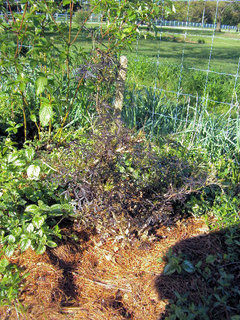
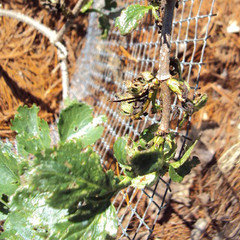
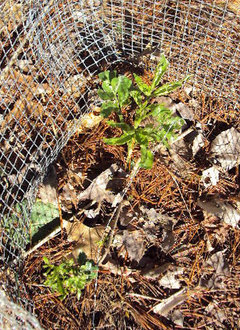
I have had a Black Lace Elderberry for about 4 years. It is just now starting to grow, but it does not have the extreme growth I have read they are capable of - just happy it is still alive. I have fertilized, checked ph, kept watered, trimmed old shoots, even though they have been sparse. I give compost. I am able to grow the American Elderberry easily. However,I bought Samyl and Samdal over three years ago and they have also done poorly. At first they continued to die off and then I finally got 2 that have at least some leaves, but this is the forth year and they are only in the 12 - 18" range. Could the ph actually be too high? I use ammonium sulfate, could it be they need more iron, or something else, or should I add sulfur. The ph is about a 6, at this time.

Comments (7)

  • 9 years ago
    last modified: 9 years ago

    'Trimmed old shoots'....why? Sambucus nigra needs very little pruning and they fruit on old wood. You are keeping the plant small by cutting off growth and stopping it from bearing. Elder is a very forgiving shrub and will grow in a wide range of soils. I think you might be trying too hard with these.

    Any chance of pictures?

  • 9 years ago

    I should have been more specific. The black lace I trimmed back because so many " online experts" said it would improve growth, and I guess it did. The elderberry I only trimmed off shoots that had died, which werent mant since it hase shown little growth.

  • 9 years ago


  • 9 years ago

    to Floral-uk: I really appreciate your help. I have found several sites - one is Home Guides, that states for the Black Lace: Cut off all shoots to ground on young Black Lace Elderberry in early spring and years after prune 1/3 of all shoots and remove all older stems. Before I started pruning the Black Lace it looked like the other 3 elderberries. This information is similar to the care of American Elderberry. I have a large stand of American elderberry and they have to be pruned back hard every spring. They are cut to 30" or can be cut to ground and still grow to 12' and bloom/bear. With the European elderberry, shown in pictures - they are still about 18" tall in three years. I only cut off dead shoots. They appear to be growing some this year, but the growth rate has been very slow and not as described in any article I have read. I have never found a complete article as to the care and pruning of Samyl or Samdal elderberry. Since I don't think pruning is the cause of the delayed growth, that would leave insects, diseases, or nutrient deficiency, ph etc. I have never seen insects, or indication of disease. What is your Ph? With what and how do you fertilize?? Also, do these ever get pruned, or do they grow into a permanent bush/tree? Can you send or direct to pic. of mature plant? I can't believe I am unable to find complete information on these.

  • 9 years ago

    I'm afraid I don't give much credence to those Home Guides. They seem to have a lot of inaccuracies and generalisations. Black Lace is a cultivar of Sambucus nigra i.e. It's a European elder. They need no special soil or fertiliser and little pruning other than periodic rejuvenation. They are very forgiving. I would leave it alone and stop cutting it back for a couple of years. The advice to cut back young shrubs is old hat. They need all their leaves to feed growth.

    Your other two really do look sick. I suggest you try to get some clearer pictures and post about them on the Fruit and Orchards forum where I know a lot of US elder growers. This forum is very slow.

  • 9 years ago

    Hi again. I see you posted on Fruits and Orchards but you added your question to another post. If you start your own post over there you'll probably get more targeted responses specific to your own situation. They'll need good pictures to diagnose the problems. Good luck.

    ps I don't grow named elders for berries personally because they are so abundant in the wild. Almost nobody grows then for fruit in gardens here. The ornamental ones are widely grown and given no special treatment. They cope with any soil and have no pests to speak of. They are usually cut to the ground every few years but not when newly planted.

Sponsored