Software
Houzz Logo Print
tom123_gw

Pentas

9 years ago

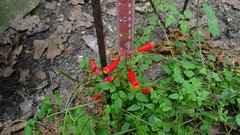
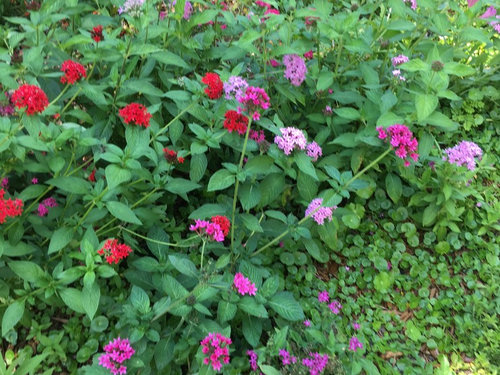
The large, red Penta Lanceolata has been the best nectar plant in my garden for years. (Now the large purple porterweed is very close.) The large box stores sell the smaller pentas, which attract butterflies, but not as well. Last year I made a concerted effort to find other large Penta Lanceolatas of different colors. My friend, Rhonda, who posts here often found one for me and then I found four others online. Here is a photo I took this morning.


Two of the "lavender" pentas are difficult to distinguish. Interestingly, each different penta has a distinct growth pattern. The butterflies have liked all of them.

Comments (23)

  • 9 years ago

    Tom, I've often wondered how your new Pentas were doing and if they attracted the butterflies and hummingbirds as well as the Red. Your new colors are lovely. Do the lavender Pentas maintain/hold their bright color as the blooms age?

    Mary

  • 9 years ago
    last modified: 9 years ago

    Tom,

    They're so beautiful! I hope my new pentas lancelotas do as well as yours :) I know that I've said it often, but your garden is just amazing.

    I have seen the Gulf frits and a giant swallowtail feeding on the pentas the last couple of days.

    Rhonda

  • 9 years ago

    Tom, your pentas, both colors, are just beautiful!

    Sherry

  • 9 years ago
    last modified: 9 years ago

    Mary, the flowers fade pretty much like the other pentas--they maintain their colors for quite a while. The hot pink (Nova) one has very large blooms, perhaps twice as large as the red and they fade in a different fashion. It seems like each little flower in the bloom has it's own life span. Near the end there are only a few little blooms, but they are still very bright.

    I haven't seen hummers visiting the pentas yet this year. Right now they are mostly visiting the Cuphea Schumannii, the large purple porterweed, the coral honeysuckle and the salvia Amistad.

  • 9 years ago

    Tom,

    How often do you fertilize yours pentas and what fertilizer do you use? Thanks!

  • 9 years ago

    When I plant most plants I put in a time-release fertilizer in the hole and also a bit of Espoma organic fertilizer. I then water the hole good so that more soil covers the fertilizer-- does not come into direct contact with the roots.

    The time-release fertilizer that I use is Nutricote-- was highly recommended to me by a nursery owner.

    When I am putting in flowering plants, (which is almost always) I use Espoma Flower-tone around the plant, just beyond the root system. For other plants I use Espoma Plant-tone.

    I like the Espoma products because they are organic and don't burn the roots. Espoma also adds beneficial micronutrients to their fertilizers.

    Normally, I will just fertilize pentas and other plants once a year if they are established. I try to use an alfalfa based liquid "soup" that is highly diluted for new plants to help them establish a strong root system.

  • 9 years ago

    Thanks for the info Tom! Does your alfalfa soup contain fish emulsion as well? I had a recipe that I made in 50 gallon batches at my old place that contained alfalfa, epsom salts, fish emulsion and water. But, the stench from the fish emulsion made me vomit every time that I opened the lid so I had to stop using it. Thanks!

    Rhonda

  • 9 years ago
    last modified: 9 years ago

    No, it doesn't, but I could see how that would be a useful addition. The "soup" does stink, but it isn't horrible, in my opinion.

    Fish emulsion is organic and it should help beneficial microbes grow in the soil. I think it is also fairly high in iron, which is helpful to many plants.

    I have to get off my butt and start a new batch of "soup."

    Rhonda, I meant to caution you regarding the Hamilia Patens. Where I live, and where you now live, it is a thug. It will grow very high and wide and throw out roots deep and wide.

    You remember them at my house, right? Today I'm going to have to go out and chop down a very tall one that is hanging over my pool screen. The screen has a hole in it and the man won't be able to repair it if I don't cut down most of this plant.

  • 9 years ago

    Maybe I'll brew up some here with very little fish emulsion...it really did help the plants stay healthy. I just have such a strong gag reflex LOL

    Thanks for the caution about the Hamelias. I didn't think twice about planting them since they dies back in Williston. But, I do remember your huge shrubs (more like trees) now. Cutting down that big one will be quite a chore...please don't overdue it in this heat.

    I guess I'll transplant the native one to a more open space in the yard. I think I'll leave the dwarf one for now.

  • 9 years ago

    Tom, I am trying two 'new to me' plants this year and knowing you plant for the hummingbirds, I've often thought to ask you if you've ever tried them. Since we have hummingbirds here from late spring through summer, I'm trying to add a few new plants specifically for the hummingbirds this year. Because I have such limited garden bed space, I'm trying plants that reportedly stay fairly small.

    Eccremocarpus Scaber Chilean Glory Flower or Glory Vine and Uraguayan Firecracker Plant - Dicliptera suberecta.


    The Glory vine will not live through my winters but it had such pretty blooms that reportedly produce and hold a lot of nectar, I thought I'd like to try it for a summer to see how it does. Although still very small, it is already producing flowers and they are such a nice size for the little hummers. It is a fast grower but very delicate looking. I don't know what it will look like once it becomes settled and matures. I just put it into the ground about a week ago. The vines are so delicate (so far), it might be something you could grow without needing a chain saw to remove or prune :-). The little blooms are about an inch long and it clings by little tendrils that curl around whatever they touch.


    The Uraguayan Firecracker Plant - Dicliptera suberecta plant is also doing well and already setting buds. I'm anxious to see the blooms as they're also supposed to be attractive to the hummingbirds. It is expected to over winter here in ground, which will be a plus. It is also supposed to be easy to propagate by cuttings. I'm trying a cutting now. Hope the hummingbirds like it. I've planted this one right next to their feeder. I don't own a photo of the blooms but you can google it to see the blooms, if curious. They are a bright red orange, tubular and point upward. The foliage reminds me a bit of Lychnis coronaria aka Rose Campion.

    Mary

  • 9 years ago

    Mary, you've mentioned two plants that I have never tried--at least I don't think I have. They look like very good hummingbird plants, though. The flowers are certainly structured like the ones they like.

    Both plants seem to be well regarded on many Internet sites. I haven't seen either discussed at any length in the hummingbird forum that I frequent.

  • 9 years ago

    Tom, I'll let you know how they do and if the little hummingbirds like them. If they do well and I can be successful with cuttings, I'll send you rooted cuttings if you'd like to try them.

    I'm so limited on space, I've had to remove most of my vines because of their rampant growth. I know the Glory Vine will die at years end and that is a big plus for me. For you, the Glory Vine might grow year round ... that could be good or bad! The Uraguayan Firecracker Plant for sure would be year round in your area and it sounds like it's size will be manageable.

    Mary


  • 9 years ago

    Thanks, Mary. Let me know if you want cuttings from any other hummingbird plant. I have a few that would grow in your zone. One of the best would be the Amistad Salvia. It blooms starting in early spring and doesn't stop blooming until the first frost--which where I live means that it often never stops blooming.

  • 9 years ago

    Well Tom...I'm glad that you were able to cut that Hamelia up pretty quickly. I think I'll hold off moving mine for a while since the hummers and zebra longwings like them....maybe keep them trimmed to a somewhat manageable height. I'll just have to keep a close eye on them. Thanks!

  • 9 years ago

    Thank you, Tom. It's very kind of you to offer a cutting of Amistad Salvia. I have followed the earlier threads on the Amistad Salvia and it sounds lovely and a real must have but I'm afraid it would grow too big for my small area. Will let you know how the plants do here and then you can decide if you'd like to try them. I've been seeing different little hummers already visiting other blooming plants. Usually one will take up residence and chase off other visitors but so far, this hasn't happened this year. Keeping my fingers crossed they continue to play nice.

    Mary

  • 9 years ago

    Rhonda, I just reread your post about alfalfa "soup" and noticed that you added Epsom salts. I have stopped using this, because I read that most of our soils in Florida don't need it--even our sandy soil. I remember reading someone from the U. of Florida, I believe, who specifically said not to use it unless it was very diluted.

  • 9 years ago

    Thanks Tom! I hadn't heard that but if I make more, I'll hold the salt :)

  • 9 years ago

    Tom, I live in Sarasota. I've been raising butterflies and trying to build a garden to attract them and bees and birds.

    Having moved here from NY, I'm running into problems keeping nectar plants thriving. I had no problem growing in NY, my gardens were so attractive to all the above! Florida is a different story!

    I keep planting Salvia, some make it others do not. Weeds overtake or drought weakens the plants. I've tried my northern flowers without luck. Cosmos, zinnias, coneflowers, daisies. If they make it they do not do well.

    I do have the tall Pentas and some large shrubby plant which flowers almost year round. I notice the bees and butterflies go to it. I've taken cuttings from the tall Penta and planted the cuttings around the property.

    Tropical Milkweed does well until the aphids and Milkweed beetles do it in.

    I'd like to know what you are growing which is working for you. Where in Florida do you live. Maybe you could suggest some plants I could try. I do mulch heavily, use Plant Tone and a Kelp fertilizer. I also have used timed release but was concerned it contains Boron.

    Jane

  • 9 years ago

    Hi, Jane. Yes, it does take some time to learn what grows here and what doesn't. I have tried all of the flowers you mentioned above and none of them do well with the exception of a type of daisy-like yellow flower.

    There are many flowers that will do well for you. I'm not sure how much room you have, and I'm sure you know to attract butterflies that larval plants are as important as flowers or nectar plants.

    An outstanding nectar plant is the large purple porterweed (Stachytarpheta frantzi.)

    It will grow quite big with enough water and fertilizer, but it is probably the best nectar plant around for butterflies. Hummingbirds love it also. Pentas, of course, are excellent also and they come in many colors.

    Lantanas are very drought tolerant and the butterflies really like them. There are many types. I suggest you find a good nursery nearby and consult them.

    Mexican sunflowers (tithonias) are excellent for butterflies also. They are annuals, but they do self-seed often. I buy these as seeds. They grow quickly.

    This same suggestion goes for other plants--especially larval plants. The nursery should be able to suggest a good passaflora or passionvine. These vines will bring Zebra Longwings and the orange butterflies or Gulf Fritillaries. If you have some room you should try to get some kind of casia bush or small tree for yellow butterflies or sulfurs. On my property, tropical milkweed does well and self-seeds all over the place.

    If you are interested in attracting hummingbirds there are a number of plants that will do that in your plant zone. I only recommend two salvias at the moment, although I have several kinds on my property. I don't recommend those that bloom only once or twice a year. Why plant them when you can have some that are ever-blooming? I recommend first Amistad, which you can plant almost anywhere, but it loves sun, and Miniata, which thrives in shade. Butterflies will use both, but they are not top-tier plants for them.

    If you have room hamelia patens or firebush are excellent nectar plants and they are used by both hummers and butterflies. Beware, however, these plants are thugs. They grow very large (some of mine approach twenty feet now) and they tend to self-seed. They are very difficult to dig out if you don't like them. The reason they are difficult to dig out is that they have extensive root systems--which make them very drought-tolerant.

    That's a start. There are many other plants to recommend, but these are ones that I wouldn't be without. Again, check with a nearby nursery to find larval plants that are good for butterflies in your area. Flowers or nectar plants are easy and are used by most kinds of butterflies.


    Good luck, Jane, Let me know how things go.


  • 9 years ago

    Tom, the pentas and porterweed cuttings you sent are looking very good. Both are blooming well. All I need now are some butterflies and hummers to enjoy them.

  • 9 years ago

    You go, James. Let us know when they start visiting in droves.

  • 9 years ago

    I am growing Asarina scandens for the first time. It started slow but has finally started growing. My Sonset lantana started blooming which is a favorite of the skippers. I've got tropical milkweed popping up here and there in the yard. I will not see anymore monarchs until the Fall. Last fall I had several cats on them. James

Sponsored
Landscape Management Group
Average rating: 4.9 out of 5 stars33 Reviews
High Quality Landscaping Services in Columbus