

Rubberplant
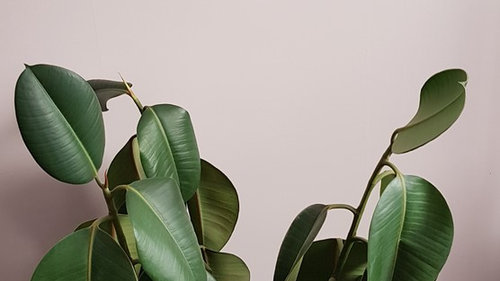
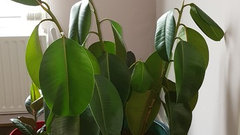
Does this plant look ok?
Comments (30)
 9 years ago
It looks kind of droopy as if it's not getting enough light. Do you have it by a window? If so what direction does the window face?
max lex
Original Author9 years agoThe window is west facing,the plant is not in front of the window,it's against the wall to the right of the window,I'm not sure if I'm watering the plant correctly,maybe this is also a problem?
Related Professionals
Elizabethtown Landscape Architects & Landscape Designers · Dover Landscape Contractors · Kissimmee Landscape Contractors · Burlington Landscape Contractors · Kankakee Landscape Contractors · Muncie Landscape Contractors · South Sioux City Landscape Contractors · Rochester Landscape Contractors · Bridgeport Landscape Contractors · Florence Interior Designers & Decorators · Worcester Interior Designers & Decorators · Oneonta Interior Designers & Decorators · Akron Interior Designers & Decorators · Mansfield Interior Designers & Decorators · Vernal Interior Designers & Decorators- 9 years ago
Well, tell us how you water.
Also, placing the plant not directly in front of the window will not provide enough light.
You need it directly in front of the window.
max lex
Original Author9 years agoMoved the plant next to the window,I'm afraid to place it in front of the window as it would be next to a radiator,I'm now trying watering the plants every day.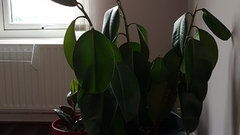
max lex
Original Author9 years agoThis is the only window i have,I'll reduce the watering,thank you for all the advice.
max lex
Original Author9 years agoWould it harm the plant if i placed it next to a radiator,what about a halogen lamp used above the plant,good idea or not? I'm thankful for all the advice i receive.
- 9 years ago
What part of the world are you in? Is it approaching summer where you live? If so, the radiator would not be in use?
A halogen lamp would not do much good. Incandescent light bulbs produce far more heat than usable light. Plus, halogen bulbs are usually around 3200k (color temperature) and your plant would prefer something in the cooler spectrum (4200k, 5500k, 6500k, etc).
max lex
Original Author9 years agoI'm in the north east of England,I'm getting worried about the plant.
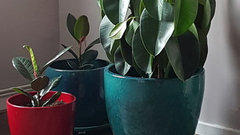
- 9 years ago
I've had great results using CFL and LED bulbs at 5000k, but I prefer the LEDs because they're cooler and last much longer than halogen, CFL, or other kinds of bulbs. The key to not going broke is to hit sales at retailers. A little graph showing the light frequency/temperature will be on the bulb's box or packaging. The light needs to be fairly close to the plant to be effective. I move my larger plants and lights to hit different parts of them.
BTW, do get the plant right in front of the window when the radiators aren't in use; it will make a big difference in its health.
- 9 years ago
I also use a cheapo plug in timer so I don't have to remember to turn the lights on and off, and set it so they get 10-14 hours of light per day, depending on the season.
- 9 years ago
Looks like it may be rotting. It should only droop if it is thirsty and then return to normal after watering. If the soil is wet and the plant is droopy......it doesn't look good.
 9 years ago
How long have you had this plant? It looks like it must have begun to droop recently as the leaves look beautiful and not yellow or discolored, did something change recently?
max lex
Original Author9 years agoI've had the plant for just over a year,nothing has changed regarding the positioning of the plant,I've just repotted it but it was starting to droop before i repotted it,I'm using a slow release food(as directed on the package)and water it when it feels dry,I'm bemused.
- 9 years ago
In my experience, rubber plants like to dry out quite a bit between waterings, I would back off on the watering, use a sharpened wooden dowel shoved all the way to the bottom of the pot to make sure that the plant is dry most of the way down before watering and water thoroughly when you do, then allow it to dry again. Moving it into brighter light will probably help the plant use the water more quickly so if the radiator is not currently in use, move it there. If root rot is not very advanced then the plant can be saved but if it's too far gone there may be nothing you can do but I definitely think it's worth trying.
 9 years agolast modified: 9 years ago
Contrary to popular belief, fertilizer is not food. Plants absorb sunlight and manufacture their own food through photosynthesis. Fertilizers are just nutrients. If we want to "feed" our plants, then feed them sunlight. But, as others have already stated, the leaves themselves look healthy; aside from the drooping. So this is more than likely a watering issue. There have been times when my Ficus elastica's pot has gotten bone dry, and the leaves still remained perky and upright. If I ever left it to go without water for any extended period of time, then its leaves would eventually start to sag. Yours is more than likely from being watered too much. Well, more precisely, too frequently. When you do water your plants, always flush the whole entire pot with plenty of water until it begins to drain from the bottom. Take your pot somewhere where it can drain away all of the excess. If you don't flush out the soil when you water, then the dissolved minerals within the water will eventually begin to accumulate in the soil and cause these kinds of problems for your plants.
max lex
Original Author9 years agoFrom now on I'm going to water my plants in the shower,giving them a good soak and let them dry out,maybe do this once a week.
- 9 years agolast modified: 9 years ago
Once a week may be too much. Don't water on your set schedule, water as the plants need it.
As partially mentioned above, get a wooden dowel and sharpen the ends.
Stick it all the way into the soil until it touched the bottom of the pot. Remove it immediately.
if it comes out dark, damp and stained with soil, do not water.
Keep checking with the dowel daily and water when it comes out clean and dry.
 9 years ago
How does the plant look now? I don't see any discussion of unpotting the plant to check roots and rule out rotting from being in wet soil. If you haven't seen any improvement, that's probably what I would do next. How did they look when you repotted- full and bushy or thin and scraggly?
If you have seen improvement, then I wouldn't unpot, since you reported recently. How long ago, and did you remove all old soil and replace, or did you move the whole soil mass to a bigger pot and fill in with more dirt?
max lex
Original Author9 years agoI think my plant is definitely dying,part of it has broken at the base and totally broken off,It's dried out at the base of the stem,I'm afraid it's just a matter of time:(
- 9 years agolast modified: 9 years ago
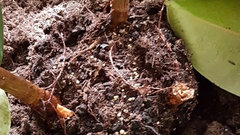
It looks like you just popped the plant from its smaller pot into this one without breaking up the root ball? I can see the outline of the old soil. My guess is it was root bound and not breaking up the root ball when repotting kept it root bound. The roots could not grow to support all that top growth, so it wilted.
Also, the new soil does not look very good--too dense, too much peat. Is it potting soil? John Innes, etc?
max lex
Original Author9 years agoYes,it's john innes potting soil,what type of soil should i have used,I'm relatively new to house plant care,if i repotted the remaining plant in better soil after freeing up the roots do you think it has a chance of survival?
- 9 years agolast modified: 9 years ago
Search for gritty mix on the forums. Lots of people like it. I have been using Lechuza pon lately. If you use the John Innes, mix in one part perlite. It needs better drainage.
If it were my plant, I would try to break up the rootball and repot, yes. Looks too like it needs to be planted a bit deeper, as I think I see roots not covered by soil I your last picture. I would also trim it back, as the top growth is struggling. You might get some new cuttings that way too--just leave a couple of leaves on each cutting.
- 9 years agolast modified: 9 years ago
[[Oops, I didn't see odyssey's post before I submitted mine. Gritty mix is even better than 5:1:1 so long as you keep up with the watering requirements (it's much 'faster' than 5:1:1), so you might want to look at both.]]
Loosening up the roots and doing your best to blend the boundary between the new soil and the root ball will make a huge difference, because water movement is so drastically different in the two areas that the rootball tends to stay dry while the area around it is too saturated for roots to survive there, especially when you're using a dense, peaty, water retentive soil like what you seem to have.
But here's a contrast to your situation: I'm caring for a horribly rootbound plant that has so little soil in the rootball that water runs right through it. I didn't want to repot it (including pruning and spreading out the roots and giving it a great 'soil') until summer. I got tired of soaking the rootball every other day, so I did pretty much what you did, except that the 'soil' around the undisturbed rootball is 5:1:1 mix, an excellent growing medium that drains fast and provides air for the roots even right after watering well. I monitored soil moisture inside the root ball and in the surrounding mix, and watered or soaked strategically so that the whole thing was moist for three or four days after watering. Result: new fine roots now poke out of the root ball into the 5:1:1 mix, and the plant is doing great. It'll do even better after repotting, but doing what I did has given it a decent head start.
The problem with most potting soils--even fancy expensive ones that claim to be 'fast draining--is that their fine particles stay saturated long enough to suffocate the previous fine white roots that transport water and nutrients to the plant. Combine that with the fact that most people water according to a schedule or based on surface dryness instead of monitoring the moisture levels all the way through the pot, and it's no wonder that most growers have trouble with the basics.
Anyhow, you'd do the plant a big favor by changing the soil to something fast draining and highly aerated. I'll come back and post a link to info about 5:1:1 mix after I eat my late dinner, but if you'd like you can use the search box at the top of the page to search for 5:1:1 and browse the threads that come up.
- 9 years agolast modified: 9 years ago
Mmmmm, brined chicken cooked sous vide (temperature controlled water bath) with sliced ginger and garlic and seared, with roasted beets and a big fat baked potato.
As promised, here are some links, along with something I wrote for my own reference. Some of the posts in these threads can be dense, but it's worth taking some time to nail down basics and their application to real life.
This is an excellent primer on ficus; it focuses on f. Benjamina, but applies to FLFs too.
This one is a great primer on basic principles that you'll use for a long time to come. The leading post explains the principles behind the 5:1:1 and gritty mixes as gives you the recipes for each, and the discussion below it is full of useful tips and concepts:
Container soils water movement and retention xv
And here's a typical thread comparing the two mixes. Check out the longish post by rooftopbklyn halfway down this thread:
is-als-gritty-mix-or-5-1-1-mix-really-any-better-than-other-mixes?
(and my answer to the thread's title is yes, absolutely)
I've only used 5:1:1 so far, but having read tons of threads about the mixes I can give you a rough synopsis of what people say about their pros and cons.
Gritty mix:
Pros: More fast-draining, well aerated, and non-water-retentive than 5:1:1. When the ingredients are properly screened and rinsed it doesn't support a PWT (perched water table) and is almost immune to overwatering problems, which means you can water at will instead of carefully monitoring soil moisture. It's also more durable than 5:1:1, meaning you can go several years without having to change out the mix.
Cons: The crushed granite (or the equivalent) and Turface make it heavy, especially in large pots. It needs to be watered carefully and thoroughly to make sure the Turface and bark absorb water, and dries faster, which means watering more often. Turface and grit can be hard to find in places, though there are a number of substitutes that may be more available.
5:1:1 mix:
Pros: Aeration and drainage are far superior to almost any other container soil, but it soaks up enough water to leave more time between watering. The ingredients are more available for most people than with gritty mix. It weighs much less than gritty mix, so many of us prefer it for large pots.
Cons: Water retention means the mix supports a relatively small PWT, so soil moisture needs to be checked to make sure is time to water. It's less durable than gritty mix, so plants in 5:1:1 need to be repotted within three years at most, preferably two. The ingredients are more commonly available, though good bark is still an issue for some of us.
Whew! Maybe it's time for a nap!
max lex
Original Author9 years agoThank you once again for the advice,and your meal sounds wonderful.






jamilalshaw26