Software
Houzz Logo Print
ltran54

Sole survivor

9 years ago
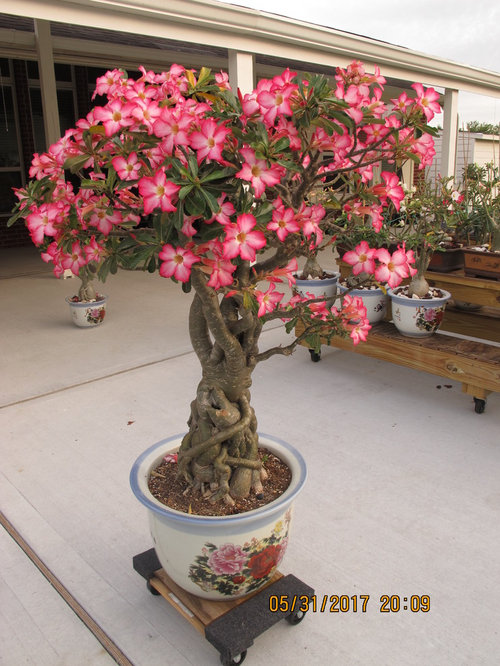
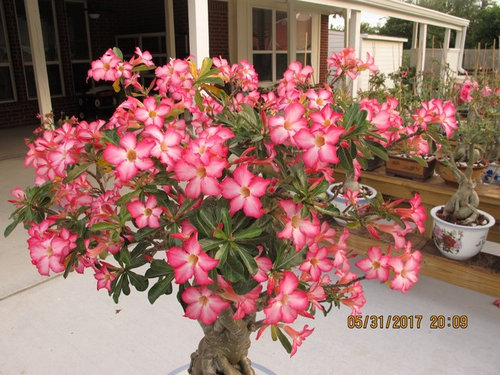
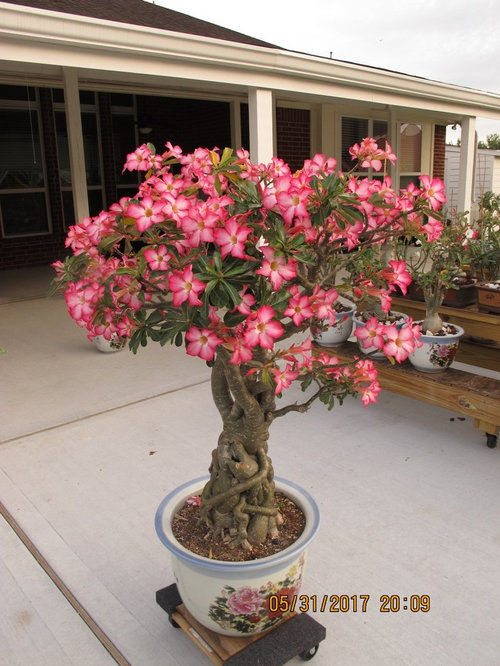
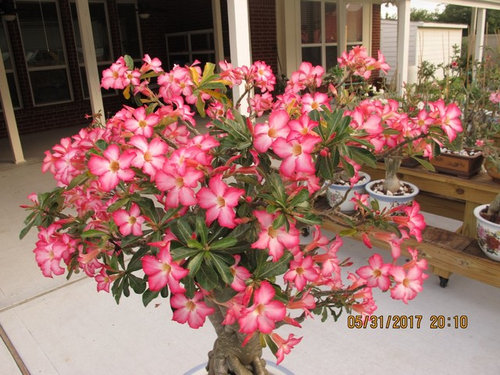
I had so many big ones, but each year, few died. This plant is one of my very first plant.

Probably older than 15 years old. Only one still alive.

Back then, no double and triple desert rose.

Comments (60)

  • 9 years ago
    last modified: 9 years ago

    Wow! That really does put it into context, especially the size of the pot. Thanks,

    Rob

    P.S. Love your benches w/ wheels.

  • 9 years ago

    Beautiful! I love your plants, too! :-)

    Tyler

  • 9 years ago
    last modified: 9 years ago

    Marie, those are the cutest photos of you with your grown children! You should be so proud of them - they are all gorgeous and reflect your gently and carefully tending to them. Just love seeing your smiling face next to those happy plants!

    Carol

  • 9 years ago

    Omg!! Your making my obsession for these plants unreal! Your plant is simply amazing! I

  • 9 years ago

    Hi, Marie!

    So very nice to meet YOU!!!

    As always, beautiful ... You're a flower all on your own!

    Maria Elena


  • 9 years ago

    Gorgeous plants

  • 9 years ago

    Beautiful ...and your plants too :)

  • 9 years ago

    Hello Marie, nice to see you with your plants. Good job we're not standing alonside each other as we would both have a crick in our necks....I'm 6ft lol!

    Gill

  • 9 years ago

    Gill, when I got my citizenship certificate they type 5'11" instead of 4'11". If I commit a crime someday, they will look for Marie up there instead of Marie down here. hehe

    Marie


  • 9 years ago

    What a marvelous tree!

  • 9 years ago

    Marie,

    Your 15 year old tree (original picture), is that an obesum or a somalense?

    Maria Elena

  • 9 years ago

    Wow Marie......Those are stunning Adeniums and I love the Santa one :)

    I live close to Houston and the last few days.......rain, rain, rain....and today more rain :( and more rain tomorrow :(((( It's good that you can roll them under the cover!

    I had to put my Adeniums back in the greenhouse where I've been fighting spidermites. I will be glad when Wednesday gets here!

    Happy Gardening, Jeannie :)

  • 9 years ago

    I hear ya. Last year and this year in Colorado, I haven't been able to put my plants out full time until the middle of June! This is the first week that daytime temps will reach 90*, but according to the 15 day forecast; it's still gonna be below 55* at night.

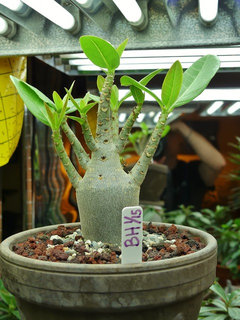
    My patience is running thin. (Unlike the trunk on this "Black Hawk".)

    Rob


  • 9 years ago

    Oh Marie, you are wonderful. Your height comment made me laugh so hard! ;) Gorgeous tree with fantastic trunk and roots. Beautiful. I agree and confirm from my research that people don't realize how recently double and triples became more widely available. They are still new, not to mention the wider range of colors. Or how recently even seed grown has become the standard instead of from cuttings. Keep up the great posts - your plants look great.

  • 9 years ago

    Hyn, in 2008 my friends and I placed our first order of double and triple in Thailand. It was $1500 plus $600 (EMS) for shipping, total of 55 plants. When they came, the caudexes were so small about small egg size. I got myself 9 plants in that order and average $42 each. Only 2 still alive with me this day. When you totally addicted to it, you paid at all cost.

    Marie

  • 9 years ago

    OUCH. Well, live and learn. I've been busy making back up grafts of all of my imported grafted plants in the hope that if I loose any of them, I will hopefully still have them so to speak. Only time will tell but so far I have a growing number of happy seedlings sporting new tops! I plan to use them in hybridizing myself.

    I read on the Siam Adenium website, as well as Top Tropical and a few others, that the first double adeniums were produced about 20 years ago, but that they have been slow to be reproduced in many colors. Apparently previous to that most adenium were still being commercially made by cuttings, not seed. Only in the past decade has hybridizing really taken off with them widely.

    As a hybridizer (not yet with adeniums) I love delving into the history and development of our current strains, researching genetics, and the directions things are moving in now. So I thank you Marie, and appreciate posts from those of you who have been collecting and growing adenium through the decades to share your observations.

  • 9 years ago

    I'm really looking forward to trying some tissue propagation with adeniums as well but alas, packing up and moving first. So perhaps in the autumn or next year once I can set up a laboratory space.

  • 9 years ago

    Rob nice clean plant. Patty we need more people like you to stabilize this plant i think with what all of us on this forum swapping info we will in years to come have stable plant colours im living in hope its sooner rather than later

  • 9 years ago

    Marie, I also live in Houston :) Could you please tell me how you get so many blooms here? How do you fertilize and what sort of soil do you use? I can't wait to get blooms like this!


  • 9 years ago

    Just catching up on this post.

    Gill, us tall girls gotta stick together! I'm 6' tall too!

    Tyler

  • 9 years ago

    Candi, I used miracle gro potting mix, add perlite for soil. Osmocote 14 14 14 mix about 25% to 30% of color star twice per year, that was all. Miracle liquid mix once every few weeks. (if it rains, I wait longer)

    Marie

    btw, what part of Houston do you live? I live southeast of Houston.

  • 9 years ago

    I use almost the exact same mix as Marie oddly enough. Though I feed with Dyna-Gro products instead. I also add a little lime, charcoal, and worm castings but lots of perlite. So thank you for posting that, Marie.

  • 9 years ago

    Hyn, what is lime, charcoal and worm castings? Can you post a pictures?

    Thank you.

    Marie

  • 9 years ago
    last modified: 9 years ago

    Not much to see but I could try to get photos of the packages. Worm castings are earth worm poop, basically. It's very black 'earth' collected from worm farms and plants love it. My local Walmart sells it and you only add a little bit. It's not too rich, won't cause burn nor elongation and is full of trace minerals, etc.

    Lime is dolomite lime, calcium rich crushed limestone that is either a powder or reconstituted into a disolvable granule. It is primarily used to supply calcium and buffer against drops in PH, making your soil more stable over the long term. If you use a very gritty non-soil based mix it's still helpful, especially if your water is a little acidic as mine is.

    And charcoal is charcoal! You know, burnt wood that hasn't had enough airflow to turn into ash. I used activated charcoal you buy at aquarium stores. It adds air pockets to soil and traps heavy metals and other impurities that can be harmful to plants but more importantly as it breaks down it supplies carbon to make highly enriched soil without necessarily raising PH like ashes do.

    Those are added in fairly small amounts to my basic mix which is mostly perlite with a tiny bit of potting soil. For seedlings I also throw in some sharp sand but don't really use it with the bigger adeniums so far.

  • 9 years ago

    Marie, thanks so much! Me too!!! I live in the Webster/Clear Lake area!

  • 9 years ago
    last modified: 9 years ago

    Hyn,

    I read charcoal also helps protect from root rot. The recommendation was to crush it to a gravel consistency and mix it into the soil. Is that how you're using it?

    Maria Elena

  • 9 years ago

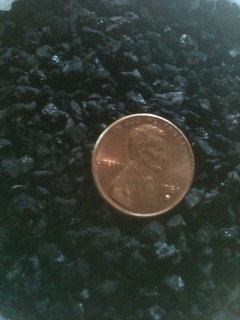
    I hadn't heard that, Maria. I'd be pleased if it does though it's not cheap so I don't use a lot of it in there. Aquarium activated charcoal is about the same size as smaller particle perlite, at around 3 or 4 mm pieces or there about so no need to break or crush it. Hortecultural charcoal is usually much chunkier and you might want to break it down a bit first. Charcoal /dust/ is actually also very good for soil but you could dump that into your garden if you didn't want it too fine in your pots.

  • 9 years ago

    There are people who make their own charcoal with, I think it's called a double burner ... one barrel inside another.

    Here's a study of the impact of charcoal on soil pathogens:

    https://www.ncbi.nlm.nih.gov/pmc/articles/PMC3147372/

    Excerpt:

    Recent studies have demonstrated that soil-applied biochar promotes the
    systemic resistance of plants to several prominent foliar pathogens. One
    potential mechanism for this phenomenon is root-associated microbial
    elicitors whose presence is somehow augmented in the biochar-amended
    soils.

    *****

    Here's an interview I came across that mentions the use of charcoal in soil for improved aeration. Perhaps that's the key:

    http://www.npr.org/templates/story/story.php?storyId=89562594

    Excerpt:

    FLATOW: Ah. So what does adding charcoal to the soil, why does it make it a better fertilizer?

    Dr. GUO: Charcoal is a fine-grained, porous black carbon, and it
    is generated from plant materials. And it is non-toxic to plants. So
    there are many tiny pores in charcoal. So once applied to soil, the
    pores will allow air to diffuse into the soil. Plant roots need the air
    to breathe. And in the meanwhile, the tiny pores will hold water and
    nutrients and later supply it to plants. More important, unlike other
    organic fertilizers, charcoal is very stable and it will not decompose
    to carbon dioxide. So once applied, it will stay in soil for hundreds to
    thousands of years. So to summarize, the high stability and porosity
    make charcoal a better fertilizer than other organic materials.

  • 9 years ago

    Thanks when i make up my next mix I'm going to include charcoal

  • 9 years ago

    Well F#@%!!!!

    I just spent over an hour writing a comment about Biochar, and this G*** D*** page crashed; deleting the whole damn thing! God that tick's me off to no end!!!

    Rob

  • 9 years ago

    Yes, biochar - it was reading up on that some years ago Rob that got my husband and me adding charcoal to our garden more than a decade ago. Now after having been here for the past 8 years and having added ashes and charcoal every winter from our wood stove (as well as composted leaves and horse manure) we have built up the best garden we've ever had. It does make a huge difference and the thinly spread ashes help counter our acidic clay soil. So I'm a believer and have been adding it to all of my potting mixes for years now.

  • 9 years ago

    Hyn - Does your product say what makes it "Activated"?

    Rob

  • 9 years ago

    Bingo, she got it. Google is your friend! ;)

  • 9 years ago

    Yes Maria; I included that same link in my lengthy, but failed comment from 20 hours ago. I've been using Biochar for a while now, and also included this link.

    https://en.wikipedia.org/wiki/Biochar

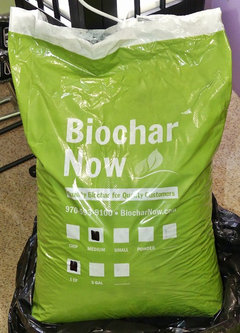
    A lot of nurseries & hydro shops sell bags labeled "Biochar",


    but it's really just horticultural charcoal. People will buy this and add it to their soil expecting miraculous growth, only to be disappointed due to the fact that it's not activated.


    After talking w/ Jericson Pastor about the addition of Biochar to his soil, I began researching all the information I could find about the stuff. JP get's his Biochar from "Pacific Biochar"https://pacificbiochar.com/. Unfortunately, they don't ship to my area.


    Intent on getting my hands on this product, I contacted PB's CEO, Josiah. He was kind enough to tell me how I could make the equivalent of their "Blacklite Mix #6".


    https://pacificbiochar.com/biochar-products/biologically-activated-biochar-blacklite-mix-6-for-sale-online/


    I've been making this, and using it ever since. I've even done some experimenting w/ the activation process, like adding different microbes such as: "KangaRoots" or "Azos", and available food sources; like Molasses.


    Biochar's benefits are far reaching and complex, but at a basic level; it serves as a great hotel for microbial life, and the microbes I'm interested in; are the type that create a symbiotic relationship with the plant. More specifically, the type that promote stronger root systems, and increased caudex growth.


    I add 2-5 percent by volume per batch of soil.


    Recipe - Biochar 4 parts

    Rock Dust (Azomite) 1 part

    Food Source (Rice Bran) Less than 1 part

    Microbes (Wormcastings) 1 part


    Let set for two weeks or longer (covered w/ leaves, or something similar) in order to activate, turning occasionally.

    Rob

  • 9 years ago

    Thank you all for all the info we have in this thread. So many things I don't know.

    Marie

  • 9 years ago

    Excellent information, Rob. Thank you so much for sharing ... So appreciated!

  • 9 years ago

    This is very similar to seeding an aquarium to establish the nitrifying cycle with beneficial bacteria. Except with plants you also ideally want larger organisms to aid the soil mix. A lot of people grow their adeniums so gritty and dry that they aren't going to be able to cultivate those beneficial life forms but if your mix has some organics, over time they'll move in all on their own. Or as Rob does you can compost your mix with leaf mold and it'll happen faster.

    In his case, Rob is using the word 'activated' completely differently than industry standards. 'Activated' when associated with charcoal usually means something entirely different so the terminology is apt to be confusing.

  • 9 years ago

    Hyn - You're right. The term "Activated" that you're prolly thinking of; is the heating process(es) which change the chemical make up of the carbon material/source, thus creating a product w/ high adsorption, and filtering properties. (As Hyn cites " traps heavy metals and other impurities that can be harmful to plants")

    Wikipedia -" To produce activated charcoal, manufacturers heat common charcoal in the presence of a gas that causes the charcoal to develop many internal spaces or "pores." These pores help activated charcoal trap chemicals."

    A one by one inch piece of Biochar has an estimated surface area the size of a football field.

    I should have used the more precise terminology "Biologically Activated", inoculated, or charged.

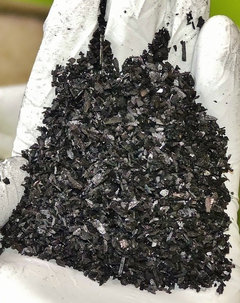
    (Horticultural Charcoal)


    Rob

  • 9 years ago

    " charcoal is charcoal!"

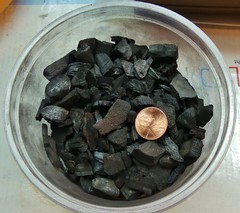
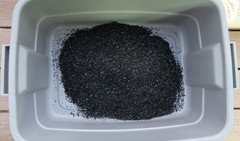
    The first batch of Biochar that I made, I put it together in a Rubbermaid tub.

    (Just Char)


    I had forgotten to ask Josiah Hunt whether to cover it or not, so I decided to put the tub's lid in place. (Which I later found out, was incorrect. It should be lightly covered.)

    When I finished making it (and before covering it), the end product looked just like what you would think a mixture of the above mentioned ingredients would look like.

    However, on day two, I decided to take a peek at what might be going on. When I removed the lid, I was astonished!! There were massive networks of LIFE that had taken over, and seemingly appeared out of nowhere, many different strains.

    I was shocked, (and a bit frightened lol). At that time is when I emailed Josiah, and asked him if the Biochar should be covered or not. That's when he told me to use leaves as a loose cover instead of a sealed container.

    Hyn - What would happen if you sealed your "Activated Charcoal" in a container? :-)

    Rob

  • 9 years ago

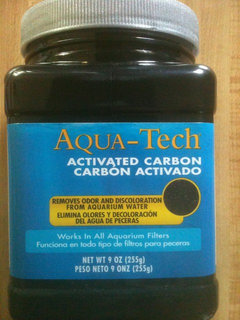
    I purchase this at Walmart....

    I keep it stored in that container inside the house.

    I use it for making cuttings in water and also I add some to my potted plants. I have re-potted Adenium seedlings (ones I purchased off Ebay) and added a very small amount to the soil which was cactus/succulent mix and perlite.

    Happy Gardening, Jeannie :)

  • 9 years ago

    there are a lot of us in the Houston area, I am in Galveston. I have a tendency to just lurk on the site.

  • 9 years ago

    Beachplant, Jean came to my house last Saturday and Candice came to my house later that same day, we had a great time. You can come to see my plants.

    Marie

  • 9 years ago

    Beachplant, I live about 20-25 minutes from Galveston :) Do visit Marie! She has a wonderful collection! We should make a local Houston Adenium club since we have so many people near. Then maybe we can have little annual get togethers!

  • 9 years ago

    I keep coming back to this thread to look at Marie's original tree she posted. I just love it. So I saved the photo as 'Marie Tran's Obseum'. ;)

    I also keep thinking about what you have said, Rob. I'm a big fan of biological life in my outside garden, though indoors my plants have a systematic insecticide granule added because root mealies are an issue indoors in my gesneriad collection.

    Not so much outside though, so I may phase using the insecticide granules with the adeniums and encourage more biological activity like we do in our vegetable garden. Leaf mold is a powerful thing we use every winter that I do not use with my adeniums but I'm giving this some thought. A few may become test subjects to see if 'biologically activated' helps them grow better.

  • 9 years ago

    Hi all,

    Sorry I haven't posted lately, I've been kinda busy.

    Anyway, after my last comment; I contacted Josiah at Pacific Biochar and asked him about Jeannie's carbon product.

    This was his reply - "activated carbon” is most commonly made from coal that has been de-volatilized, then “activated”.

    Where as "Biochar" is usually made from softwoods.

    I also found out something I didn't know. "Pacific Biochar" is now selling two of their mixes online w/ free shipping. (They previously didn't ship West of California.)

    https://pacificbiochar.com/biochar-products/biologically-activated-biochar-blacklite-mix-6-for-sale-online/

    https://pacificbiochar.com/biochar-products/rock-dust-biochar-dense-mix/

    Hyn - I'm not sure how insecticides come into play here, since the type of microbial life we're talking about; aren't insects. For instance, do insecticides affect Mycorrhizae? I can always write an email, and ask.

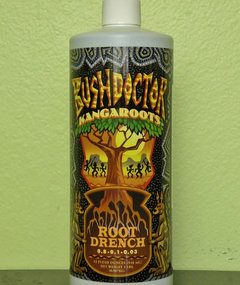
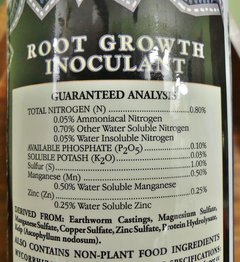
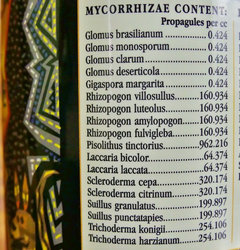
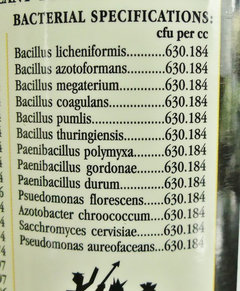
    Here's some pics of the "microbe" label listing on "Kangaroots".


    Rob


  • 9 years ago
    last modified: 9 years ago

    No, I don't think that is accurate. Activated charcoal in the aquarium trade is ONLY made from hard woods (from what I have read). I'm not as certain about 'activated carbon' because I don't buy that. In the aquarium trade with fish, activated coal can kill them and is a no-no. I worked many years in that trade. If they have found a way to make it safe to use with fish then that's more recent. If it is now safe for use with aquarium fish and their touchy microbiological filters, then it would be safe for plants as well. But I recall that didn't used to be the case.

    It depends on the insecticide, Rob. But yes, some of them state that they are harmful to invertebrates. A previous comment about leaf mold and your being able to see tiny insect life made me think of all kinds of small beneficial insects in soil in addition to microbiology like nitryfying bacterium. I do not know how often insecticides effect the latter.

  • 9 years ago
    last modified: 9 years ago

    Josiah's reply about "Activated Carbon" was based on the photos in "Jeannie's" post above, that I included in my email to him.

    Rob

  • 9 years ago

    Ah, I don't know about the one she bought. It doesn't look like the one I get.

  • 9 years ago

    It was purchased at Walmart in the pet dept. in the section of fish aquarium supplies.

    Happy Gardening, Jeannie :)