Software
Houzz Logo Print
robin98

Can I reduce tulip bulb splitting? If so, should I?

9 years ago
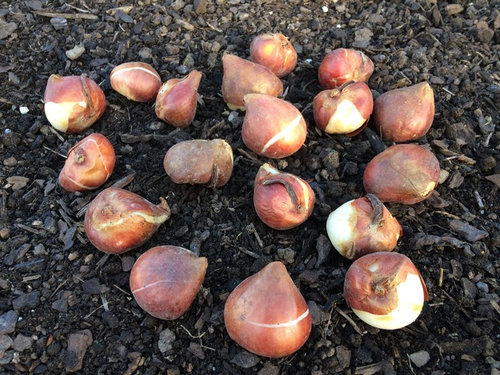
Each year I plant some new bulbs from the store, and some old bulbs from the previous season that have been dug up then stored then chilled first. I'm Southern Hemisphere zone 9b, so to get blooms again you have to lift them like this, if you can be bothered. I make a bit of an effort, partly because bulbs aren't so cheap here, but also because it seems a bit heartless to just chuck them!

But I do compromise and only dig up the ones that are planted in a raised vegetable garden bed (for cutting), because they're easy to find and it's easy to dig. Others planted in small clumps here and there in the rest of the garden are left because I forget where they were and the ground is harder to dig in anyway. They often come up again but usually just foliage (sometimes short flowers)

When I do dig bulbs up, they've usually multiplied, with up to five bulbs where there was one, often a couple reasonable size and the others smaller. I thought this was a good thing - yay, free bulbs - and the larger ones do bloom when replanted, but I throw the smaller ones out, so there's a fair bit of waste.

It's taking me ages to get my head around the whole bulb life cycle - multiplying, splitting, mother&daughter bulbs, the original bulb being gone altogether, offsets, bulblets etc - but now I'm realising that so much splitting may not be such a good thing? Is there anything I can do to reduce it? In the photos the bulbs on the paper bag are the same type from the same grower as the bulbs on the soil (one year ago they looked exactly the same)

Comments (8)

  • 9 years ago

    I find the splitting is worse in pots then when planted in the ground...but generally, the smaller offsets can also be raised to flowering size in a separate nursery bed or even a dedicated bulb frame (with protection from rodents). The following years foliage will either be blind or attempt to produce a small bud (remove it). Allow the foliage to die back and offer up a liquid feed before the foliage dies away. Within 3 years, even the smallest offset will have reached flowering size. If you grow species tulips, they will readily seed around, taking 4 years to flower - this is well worth doing with expensive bulbs such as t.sprengeri, t.whitallii, t.orphanidea etc. Tulips seeds will easily germinate the following spring (after a winter chilling) and grow away to form colonies if left undisturbed.

    It also helps to deadhead spent blooms as soon as the petals drop.

  • 9 years ago

    Thanks for your reply Campanula. I do let the foliage die right down, and I do deadhead spent blooms (or if I'm cutting to put in a vase I take either no foliage with it or just the last smallest leaf). If you've found splitting worse in pots, I wonder if growing in raised beds has a similar effect? I might dig up a couple of the in-ground ones at the end of the season to see if they split less.

    Are Triumph tulips more prone to splitting? I tend to stick with Ile de France, because I love red tulips and these particular ones have an almost glowing quality to the red and stand out even on gloomy rainy spring days. I've had other reds before that were more matt and lovely in the sun but harder to see across the garden from inside the house on those horrible days. Which is exactly when you need to see a splash of colour outside!

    Also is planting depth a factor? We are told to plant only 4-6 inches deep here, which seems shallow now that I'm reading more about it... Maybe that's recommended here to avoid rotting because it is quite wet here?

    Apologies for another essay!

  • 9 years ago
    last modified: 9 years ago

    I like to have my cake...and eat it, so I do a double by planting new bulbs in pots (they are cheap as chips here in the bulb capital of the UK)...then haul them out of the pots and line them out at my allotment (in the ground) for future years. Win/win as I get that fab spring show as a guarantee...and continuing survivors in the soil are a bonus to enjoy amongst the veg plots.

    The planting depth is an issue - if you sit the tulips bulbs on a little bed of gravel. it can go some way to alleviating winter rot. I have planted at least 8inches deep and even up to a foot.

  • 9 years ago

    That is a good idea, thank you,I will look into it for next time. Your allotment sounds interesting - is this a shared community garden for your whole neighbourhood, or are certain people granted rights to specific areas in it? Do you have any pictures of it?

  • 9 years ago

    The tulips in the raised bed grew to a reasonable size (it's the mix of new and recycled bulbs I showed before)

    But this is what happens with any left all year in the ground - tiny! Half a dozen frosts a year is just not enough chilling.

    And what has happened here? Why are some of the petals green? Weather damage, mutation, virus??


  • 9 years ago

    To be honest, I could easily transfer my allegiance to bulbs and corms which do not require the chill demands of tulips - calochortus, gladioli, zephyranthes. Tulips grow well for me in the arid eastern UK because I can manage the summer baking in my sandy soil but even so, a mild winter will discourage the flower stems from elongating, with buried blooms deep within the leaf scape. I have come across green petal colouring as early anomalies in some clematis (viticella purpurea for example) but not on tulips so cannot help.

    robin98 thanked User
  • 9 years ago

    Haha, I know what you mean. I look forward to having tulips in vases this time of year, and it's become a tradition for me to give them to friends with birthdays around now, so I'll put in a bit of effort to keep that going. But not too much - the midgets in the garden will definately be chucked!

    Still curious about the green petals, if anyone else knows...


Sponsored
Trish Takacs Design
Average rating: 4.9 out of 5 stars36 Reviews
Award Winning & Highly Skilled Kitchen & Bath Designer in Columbus