Software
Houzz Logo Print
rickhepworth

New Bermuda Lawn

9 years ago
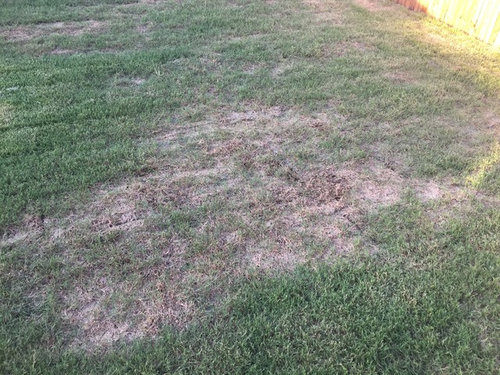
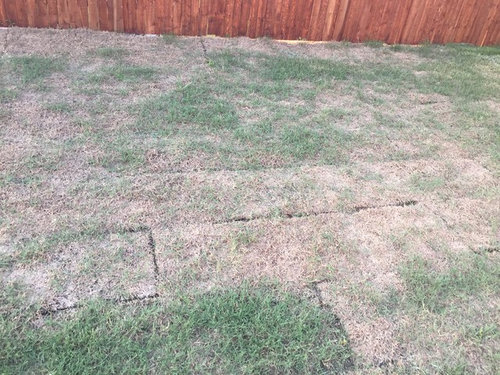
My wife and I recently moved into a new home in Anna TX (north Texas). The builders laid Bermuda sod about three weeks prior to our arrival. When we moved in the backyard had clearly taken a hit, and had major browning. The front lawn was not as bad and has since thrived. After now 8 weeks the back yard have is still plagued by large brown masses. I blame this in part on myself, as I ignorantly kept the sprinkler on the home builders setting and watered 6 days a week for the past 2 weeks. To top it off I laid weed and feed all throughout the yard, and rather heavily on the dead areas. One of the brown patches has been constantly wet, for about 3 weeks (probably longer) now. As of yesterday I cut the back yard watering to 12 minutes twice a week. The area with wet grass has dried but fungal growth is clearly present (at least I think) The soil is moist, as I could easily push a screw driver into it.

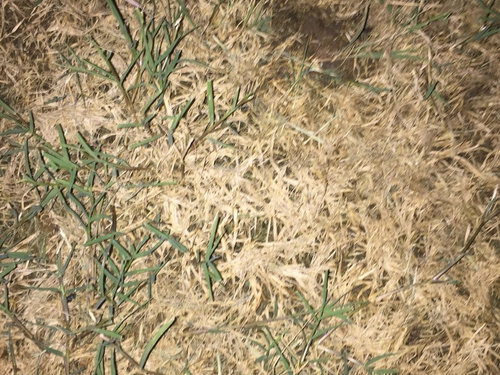
Aside from the wet area, the other large brown patch has several cracks where the sod has failed to join together. This soil is also decently saturated.

i am not sure where to go from here.


Should I water the areas where the sod hasn't grown together?

Should I apply some rich top soil?

Do I need to remove the dead fungus?

Should I bag when I mow? (I haven't yet)


I have been told it is most likely too late to save the grass for this season, but figured I'd give it a shot. The top photo is the area that has been wet and I believe is growing fungus. The second is the partitions between the sod, the last is the fungus matter over the wet spot.


I want to take pride In my lawn. Any advice is greatly appreciated.


Comments (7)

  • 9 years ago

    Keep watering the dead areas lightly daily. Put a heavy dose of nitrogen over your complete yard 1lbs +. Rake away the dead grass lightly top dress those areas.

  • 9 years ago
    last modified: 9 years ago

    Im guessing its probably warm there, so keep the sprinklers running 3 times a week, and use an organic fertilizer every 6 weeks - starting now. Completely dead grass can be raked out with a thatching rake, which will help living runners spread into bare spots. Topdress uneven areas with sand . If you want to speed up the fill in process, seed the area with an improved bermuda type. The newer seed types blend with sod grown types rather well. ' La Prima xd' -available on-line from various sites, is excellent !

    Richard Hepworth thanked Tom
  • 9 years ago

    Thanks for your response. After I dethatch do I need to remove the dead grass? I'm guessing yes but figured I'd ask anyway.

  • 9 years ago

    Yep, remove any dead material......its just getting in the way right now.

  • 9 years ago

    But do not rent a power dethatcher, it will tear out all the good stuff

  • 9 years ago

    Here's what should happen with new sod.

    1. Roll it down immediately while installing to ensure good contact between the soil and the roots of the sod.

    2. Water 3x per day for 5-15 minutes depending on the sprinkler flow. All you need is enough water to moisten the soil under the sod, not so much that the soil is squishy. You should be able to walk carefully on it without sinking in.

    3. After a week test a few corners of the sod to see if it is knitting in with the underlying soil.

    4. When most of it is attached to the soil, start to back off on the watering frequency and lengthen the time. Eventually for the summer in our area you would get up to watering once per week for long enough to apply a full inch of water. At this point you can start fertilizing.

    Given that none of that happened, you have to pick up the pieces. Have you checked to see if the sod is attached to the soil in the really dead looking spots? If it is then I would tend toward the deep and infrequent watering described below. You will have to ease into it as your roots are not that deep yet.

    I'm not sure Tom's suggestion of seeding will speed anything up. For one you would be seeding an improved common bermuda into a hybrid bermuda. Tom is the lone proponent of that approach. I could be convinced under certain circumstances, but in general, the two grasses look weedy when combined. Rather than do something I would put in the experimental classification, just stick with the TIF you have for now. In addition bermuda seed can take awhile to germinate and come in. You already have the grass and there's no killing it. At worst it is dormant. I do like the idea of using organic fertilizer to get it going. That never hurts.

    Here is the watering plan for mature turf. Again, you should ease into this. Watering 3x per week should be a very short term approach for new sod.

    Watering: Deep and infrequent is the mantra for watering. This is for all turf grass all over the place. Deep means 1 inch all at one time. Put some cat food or tuna cans around the yard, and time how long it takes your sprinkler(s) to fill all the cans. Memorize that time. That will be the time you water from now on. My hose, sprinkler and water pressure takes 8 full hours to fill the cans. Your time will likely be less. I like gentle watering. As for watering frequency, that depends on the daytime air temperature. With temps in the 90s, deep water once per week. With temps in the 80s, deep water once every 2 weeks. With temps in the 70s, deep water once every 3 weeks. With temps below 70, deep water once a month. Note that you have to keep up with quickly changing temps in the spring and fall. This deep and infrequent schedule works in Phoenix and in Vermont, so it should work for you. The reason for deep and infrequent is to grow deeper, more drought resistant roots and to allow the soil to dry completely at the surface for several days before watering again. If it rains, reset your calendar to account for the rainfall.

Sponsored
The Steele Group
Average rating: 5 out of 5 stars1 Review
Industry Leading General Contractors in Franklin County, Ohio