Software
Houzz Logo Print
johngaas

Any advice welcome, losing many plants

9 years ago
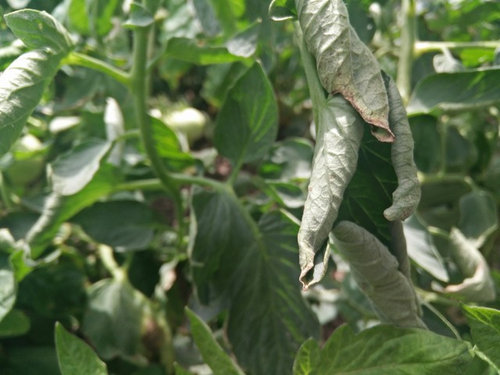
Hello,

I've until recently had a very healthy garden. About 3 days ago, I noticed some leafs looking a bit droopy. The next day, I notice one plant was basically dead, and many others with droopy yellow brown leafs. I thought since it was so quick it had to be some sort of disease. I applied a bottle of Garden Safe Fungicide3.

After applying, I noticed a hornworm. I applied the same fungicide directly on it, came back 30 minutes later, and it was still happily eating away. So I was so glad to see this fungicide that specifically says it is useful on hornworms didn't phase him.

So I know if there is one, there are more. I have not found very many organic solutions. But I am also afraid I have some disease going around as many leafs don't appear bit, but are quickly going from healthy to yellow and brown.

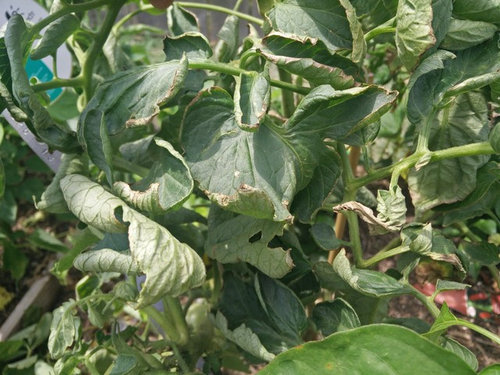
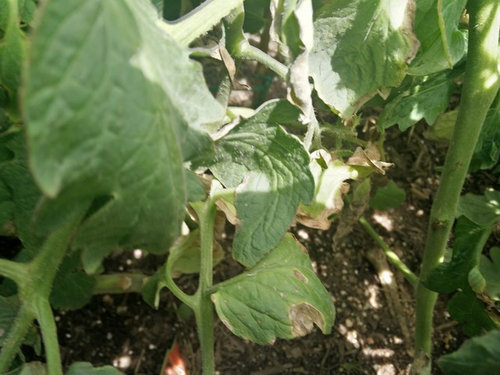
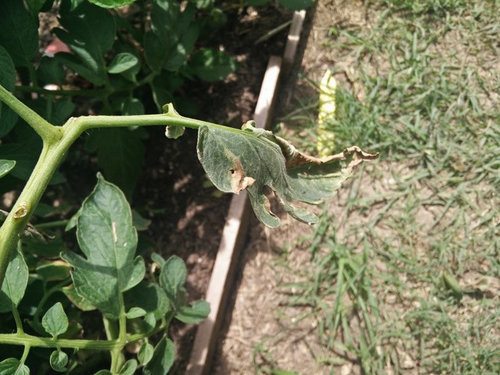
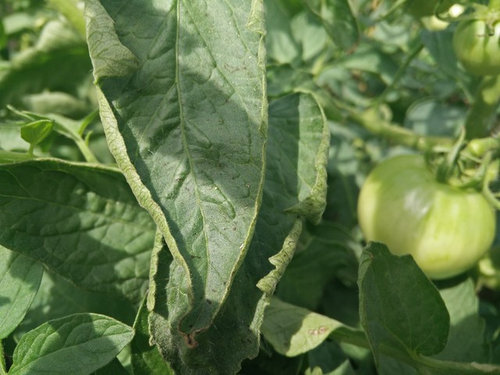
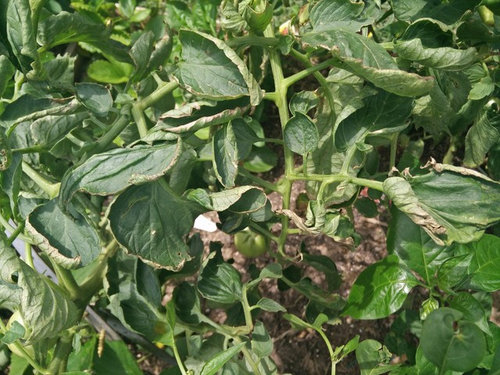
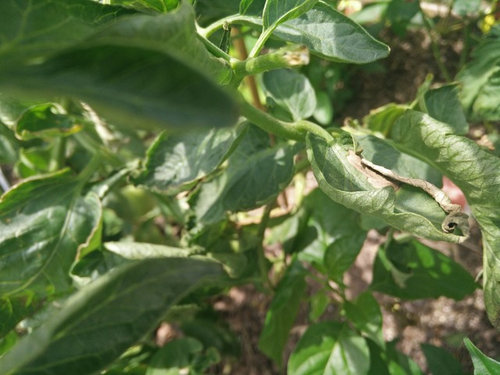
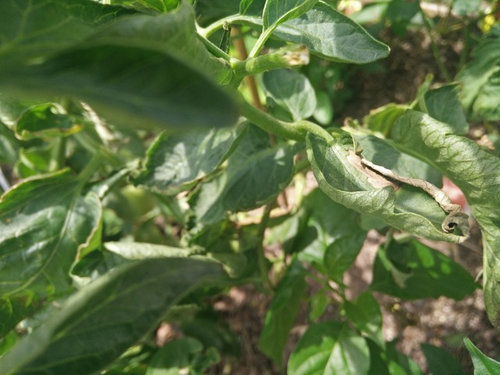
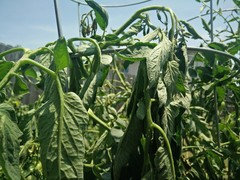
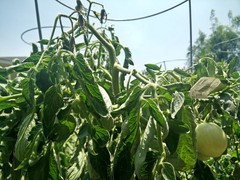
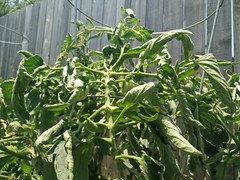
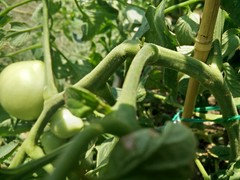
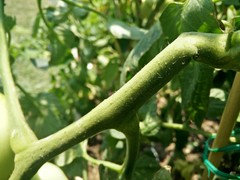
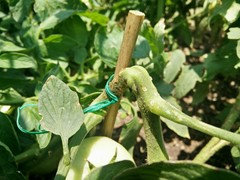
I'd really appreciate any tips. I've attached some examples. Its killing me seeing these plants going from itsy bitsy to big and healthy to almost dead so quick.

I'm sorry for the messy pics. I'm sure it's not advisable but I have removed the plant supports for now so I can more easily just get on my back and slide between the rows to check for more hornworms. So the branches are a bit everywhere.

Thanks in advance for any help! Also I am in central Texas, so weather has been pretty stable. I water once a day. And I last fertilized about two weeks ago with the vigoro tomato and veggie garden mix. One one side of the tomatoes are bell pepper plants, and on the other are some hot pepper plants. I've pruned once most of the stems from the bottoms. I noticed I missed a few and they are yellow now.


Comments (32)

  • 9 years ago
    Thank you Linda for your feedback! It has calmed me a bit. I have been in somewhat of a freakout mode!

    Being my first garden, it was scaring me seeing such healthy plants one day to droopy and dead leafs the next. The leaf curl with little black spots also concerned me, and seeing them brown.

    I don't think it would be drought or wind related. I am pretty scheduled with my watering. I have cantaloupe, watermelon, summer/winter squash, strawberries, and many hot and bell peppers that like their water also, and they all are so far flourishing (knock on wood).

    So far with my searching I've found one more hornworm. I didn't even think about them having to eat the leafs vs directly spraying it lol! Too used to taking care of ants I guess.

    I suppose I'll go ahead and start pinching off the leafs that are showing the yellow or brown edges. I saw a link on leaf curl somewhere around here that I really want to memorize, and mean while I suppose hope for the best, and go pick up your suggestion.

    Thank you again.
  • 9 years ago
    last modified: 9 years ago

    The Garden Safe product you're using which is supposed to deal with pests and fungus is not particularly effective on either, in my experience. I used it one year, and it did nothing. In general, the most effective products are specific products. The disadvantage is that they require an accurate diagnosis of problems. But the upside is that they will work.

    Also, hornworms don't cause leaf yellowing and browning. Hornworm symptoms are usually disappearing foliage--often looks like someone took scissors and started clipping off leaflets--big holes eaten into fruit, and hornworm frass (poop), which looks segmented.

    It looks like you may have the start of either fungal issues (something like grey mold or early blight) or maybe your plants are showing drought stress, which can look very much like fungal disease.

    The hornworms are a separate issue.

    Linda has given good advice on how to deal with the hornworms. As for the foliage disease, some options that will be more effective in slowing the progress of the problem are: neem oil (don't use a neem extract spray--use the oil), copper, Daconil (chlorathonil), or a biological like Serenade, Actinovate, etc.

  • 9 years ago
    I forgot to mention these are a mix of Celebrity, Phoenix, Roma, Beefsteak, and one Parks Whopper Improved. With the disease resistance of these was a big reason I am so concerned with the wilt, and also the blossom drop. It is getting hotter in TX, but I thought most of these would be OK.
  • 9 years ago
    last modified: 9 years ago

    FWIW, that damage looks like drought stress to me.

    And disease resistance confers no protection against blossom drop. Blossom drop happens for many stress-related reasons, but excessive heat is probably the most common one.

    And very few varieties are not going to suffer lots of blossom drop, occasional wilting, leaf curling, etc. during a TX summer.

    In TX, you usually need to plant very early so that most of your fruit has set before the heat hits.

  • 9 years ago

    Most fungicides are pretty ineffective once fungus has set in. Best to use as a preventative.

  • 9 years ago

    I also agree with Linda that you're still far away from "losing" your plants. They're just showing the expected signs of stress for your area this time of year.

  • 9 years ago
    Thank you so much for the feedback! Being my first real garden, and babying these things, I was in a huge worry.

    I read quite a few articles on blossom drop that soothed my worries, as did you guys and gals.

    I was going to pinch the damaged looking leaves but seeing as how abundant they are, I may just leave them in place. Plus although not directly in the coming gulf storms path, much rain is predicted, so I won't risk open wounds.

    I will now switch to a two day watering routine and hope these guys get what they want. Currently I have just been doing a morning watering.

    And I've learned searching the internet for answers is about the same as googling your symptoms if your sick. Its always the worst outcome. I was convinced that the droopy tops on some was because of that disease that stops water from reaching them, and the leaves were infected with either Early Blight, Septoria Leaf Spot, or Fusarium Wilt.

    Time to take a breath. Thanks for all the feedback!
  • 9 years ago
    last modified: 9 years ago

    John, are your plants growing in containers? They look like they're growing in the ground.

    If the ground, you shouldn't need to water 2x a day, even in TX.

    You may be watering too shallowly. You want to water slowly and deeply so that the water gets deep into the ground. If you just keep watering the surface, the tomato plants will experience fluctuations in water supply and also develop shallow root systems that are more prone to heat and moisture stress.

  • 9 years ago
    last modified: 9 years ago

    Also--when it gets really hot, a little wilting (not full-on collapsed wilt, but some "softness") in the new growth during the hottest parts of the day and some leaf roll all over is pretty much a normal reaction for tomatoes to have, even if they're not starved for water. That can happen to my plants up here during heat waves even in PA even when they have plenty of water. I'm sure it's far more common in TX. The plants perk up when direct sun goes away or temps cool a bit. Don't water just because you see these signs.

    In addition, overwatering and waterlogged roots are also a cause of wilting and foliage damage.

    It can take some experience with your own soil to figure out how much water it needs under what conditions, as these things are different from garden to garden.

    The best thing to do is to wait to water until digging down a few inches into the soil (pick a spot near your plants but not so close that you'll damage roots when you dig down) doesn't reveal moist soil. Then, at that point, water very well and deeply. If you have clay-ey soil, you might need to rig up a drip system of some kind to keep water from just running off of dried clay. Mulches help a lot to prevent a water-resistant crust from forming on soil. In TX, I highly recommend you mulch your plants well for a number of reasons.

    Test the mulch before putting it down by germinating something like peas in soil that has a little of the mulch in it to make sure there's no herbicide contamination in the mulch. If the peas sprout distorted, you have an herbicide issue. If the peas sprout with normal foliage, you're good to go.

  • 9 years ago
    last modified: 9 years ago

    Even in central Texas, with the normal high temperatures we've been having here, watering once a day is too much. If you're just watering a little once a day, the water isn't getting to the roots and, as noted, your roots won't be deep. If you're basically just keeping the surface of the soil moist, that's risking various diseases. I water my tomatoes deeply once every three or four days, and they are well mulched as well.

    I agree that your plants are somewhat stressed, but for this time of year, it's normal stress. Just wait till July! The leaf roll in high afternoon is normal. Don't sweat that.

  • 9 years ago

    Hi Gor,

    I missed your post about the Garden Safe. That's good to know it does not seem to do much. I was browsing my local Home Depot site and they have a neem oil and copper product both from a company called Southern AG. I will probably go ahead and just pick them up along with the BTK stuff.

    I have my plants growing in the ground. What I did was somewhat of an inground/above. I dug about 8" deep, 14' long, and 4' wide. I then used cedar pickets, and placed them about 2" deep along the sides, so almost a full 4" was above ground. I then went to a local landscape company and purchased, an exact measurement here, crap load of some local soil mixes. One was called a growers mix, which is a 60/40 compost/soil mix. I then also purchased a landscapers mix which was a 80/20 mix of soil/compost/sand. And I am sure this will draw some groans, but my neighbor had some extra bags of Miracle Grow Garden Soil, to which I added into the mix. How they can call this soil is beyond me, it was just wood and sticks. Once all was added in, I mixed by hand, and then leveled it out.

    Also as far as fertilizer goes, I initially started out with a 29-0-4. Since the initial use, I have only used a 12-10-5 with Calcium.

    Initially I had my garden setup with a soaker hose. I used that for, I cant recall how long, but it was until the time my plants were big enough to where I could prune about the bottom 8" of any branches. After that point, I did start to hand water. Reason being is my local Home Depot only sells Miracle Grow soaker hoses, and after returning 3, and trying 5 in store, they all had the same problem. Every single one would just spit out water from the connection to the hose. I was worried about the plants at the end run of it, as it went from a decent drip, to more like a spittle at the end. I figured since the lower leaves were now pruned off, I could handwater without worrying about getting any leaves wet.

    I never did do a topcoat of mulch. Reason being, the Miracle Grow as I mentioned, was basically mulch. And the landscapers soil I purchased also did have more of a mulch texture to it. Earlier when I was crawling under the plants looking for worms, looking at the surface, its not just dirt, it looks like it has a mulch on it.

    As for the wilting, when I planted my Summer Squash, I noticed during the day they would wilt, then come right back by late afternoon. I worried about that at first, but actually found the answer to that one online. After learning about the, as I refer to it, the midday lean, that actually made me more concerned about the tomatoes, as those do not bounce back in the afternoon. Really actually in the past 3 days, they have not bounced back at all.

    I'll also try your suggestion and go ahead and find a good mulch and test it out. I have a bag of scotts black mulch leftover from the front yard, but I doubt that would be a good idea. But speaking again of mulch and watering, this makes me think that maybe I still have a different underlying problem, as this has all happened within the last 3 days, and it was around late March/Early April that I planted. Wow it feels like its been longer, but seeing the growth in such a short time is amazing.

    Thank you for all your input and patience with my lack of knowledge.


  • 9 years ago

    Hi Dan,

    Thanks for the input. Nice to see a fellow Texan. I just replied to Gorbelly with a novel of info on my garden. I'd agree on the leaf roll 100%, but it makes me think its something else as my Squash does bounce back, the cantaloupes as well, but the tomatoes have not.

    I have not put down an actual mulch, since it already does look like it has a mulch topping with no dirt showing. But seeing as how thats being suggested, I am going to do that now. I think I will also go back to the soaker hose, but they have been doing fine with a once a day handwatering for about 20 minutes or so.

  • 9 years ago
    last modified: 9 years ago

    Around here, in the summer, mulch is a necessity. That's what keeps the soil from drying out fast. It "looks" like it has mulch, but you didn't put any on? Does someone else maintain your garden?

    If your tomatoes are thirsty, they'll do what everything else does when they're thirsty. They'll wilt. You could wait for the first signs of wilt before watering. Your tomatoes should tell you when they're thirsty, if you watch them closely. If you water too much, you'll just leach the nutrients out of the soil. Stick your finger in the soil and see if it is moist two inches down. If it is, it doesn't need water.

  • 9 years ago

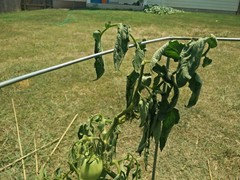
    Can you get us a photo of an entire plant showing the wilting?

  • 9 years ago

    I do not see any wilting in any of the pics. A lot of the times, leaf roll is caused by too much water.

  • 9 years ago
    last modified: 9 years ago

    I don't see any wilting, either. Just some leaf roll, which is to be expected during the summer in TX. The other damage could be stress from overwatering or underwatering from too-shallow watering, or, honestly, it could also just be mechanical damage from storms, etc.

    But I asked in case there was wilting on the newer growth of the plant. While wilting in the tender new growth in the heat is expected to a certain degree in TX, if it doesn't resolve at night, then something is wrong. However, I wanted a pic in case something like like epinasty from flooded roots, etc. was being mistaken for wilting.

  • 9 years ago

    Can you say more about hand watering? I have read it is not very effective. How long and fast is the water on each plant? Do you know how far down is moistened?

  • 9 years ago
    I'll try and get a few other shots today. I did not have a chance to work with them tomorrow, so today I'll be removing their temp supports and putting them back up in their right cages and wires.

    Once that's completed I'll be either buying the Southern AG Triple Action Neem oil or the Liquid Copper Fungicide from the same company. I think more then likely the Neem Oil.

    I think I'll also pick up a bottle of their Thuricide, sounds impressive for worm control.

    I'll also be running the soaker hose again thru the garden.

    Once again thank you all for all the feedback.
  • 9 years ago

    IMO, the issue with hand-watering is that it's hard to do it slowly enough that it doesn't run off away from the plant you're trying to water, especially if your soil is crusted or has a higher clay content. So it can be time-consuming under these conditions, and, if it's not, then you're probably not getting the water where you want it to go.

    In looser soil like sandy soil or well-amended soil, especially when it's been protected by mulch, hand-watering may not be problematic.

    And there are ways to engineer around the issues. Tomato trays, digging irrigation "trenches" or "moats" around your plants at plant-out, using bottles as makeshift drip irrigation, etc.

  • 9 years ago

    I'd recommend against a scattershot approach to pest/disease management. As in, I don't know what is bothering me, but I'll blast everything with all cannons a' blazin hoping to hit something anyway. Though neem oil and BT are pretty benign stuff. Not obvious that you have any particular pest or fungal problems. To the extent this this is all just about heat stress, there is nothing out there to hit.

  • 9 years ago
    last modified: 9 years ago

    John had said he was finding hornworms on his tomatoes in his original post. Linda recommended BT, which I agree with.

  • 9 years ago
    Just wanted to supply something I thought might expose a problem.

    As I am putting the tomatoes that go into cages back in, I'm noticing the plants are being flexible. Way too flexible. A couple of times when I was placing branches into the cage, it should have by all means snapped, but it just bent.

    I also noticed some of the branches I had tied to bamboo as a temp support, they have just bent right over.

    And I'm not sure by what you mean by shotgun approach Dan. One is for the hornworms, the other is to either treat a possible disease or to have as a preventative.
  • 9 years ago

    Some plants are pretty flexible. But sometimes, it's a sign of loss of turgidity. Pictures would help.

  • 9 years ago
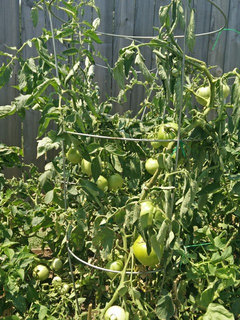
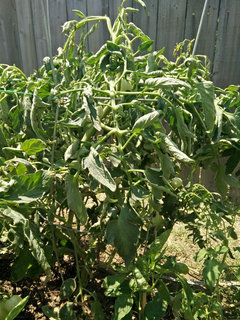
    Here's a few. Still looks like chaos, I've just recently got the cages back in place.
  • 9 years ago
    Looks like the app only allows four a time, here is the flexibility.
  • 9 years ago

    The closeups aren't particularly helpful to diagnose wilting. Can you step back and get us a picture of an entire plant or multiple entire plants?

  • 9 years ago
    Hopefully you can make sense of the mess. The thermometer is hitting its highest yet this year, so I could totally understand if the wilting started today. These look so mangled and tangled more then in person. I will try and get more pics once perhaps the garden is in the shade.
  • 9 years ago

    I really believe you are doing more damage to your plants that are the hornworms or any fungal disease or any wilting. One can not ell now what is wilting and what is just stems and leaves drooping over because they have been messed with so much. Why did you take all of the plants out of the cages and then back in?

    To me, they look fairly healthy.

  • 9 years ago
    last modified: 9 years ago

    Agree with ncrealestateguy.

    Dig down in your soil about 2 inches. If it's dry down there, give them a good, deep watering. If it's not dry down there, leave them alone. Go out at last light or very early in the morning and see whether they look improved. If so, then they're just wilting a bit from heat, and you don't need to worry about them. Don't overwater them. Soggy soil + high temps is a recipe for bacterial wilt, among other things you want to avoid.

    In future, don't remove cages and then put them back on. You'll damage your plants and/or injure their roots. Root injury opens them up to soilborne root diseases. Ragged leaf injuries open them up to fungal foliar disease.

    A few hornworms isn't something to panic over. The nice thing about hornworms is that their damage and frass are very evident and easy to spot, and while you may lose a few fruit and some foliage, they don't swarm over plants en masse like more problematic pests. Once you see their damage, you hunt them out and pick them off, maybe spray BT in case there are smaller ones on some of your plants somewhere. They're really not the worst pest that can happen to your tomatoes by a long shot--just one of the more dramatic because of their size.

    In a very large garden or on a farm, sure, they're a real problem because it's impossible to individually monitor plants. For most home gardeners, though, they're not a big deal unless you have a period during which you have to neglect your plants. I think it's safe to say that neglect is definitely not an issue with you.

  • 9 years ago

    NC,

    Perhaps, but too late now. Just overactive to get the hornworms. I think what started it all was just the general droopiness, with some spotting. Now that they are back in their homes, I'll hope they come back. Once its not in the 100's also. I'll take your fairly healthy. This has been a great learning experience for me from my first post of freaking out over sudden "limpness".


    Thanks Gor,

    You live and you learn. Cant get stuck in all the coulda/woulda/shoulda. Appreciate all the help. Everything is starting to look better now as the garden is back to good form. This has been very educational.

    They are going to be left alone for another day, as the soil is still moist. Tomorrow has some rain chances so hopefully mother nature provides the water.

    I'll send you a PM and let you know how it all worked out in a week or so.

  • 9 years ago

    Brown leaf edges as in your early pix can be the result of spraying anything oil based in high heat. Sometimes the product runs out to the edge of the leaf and then sizzles in the sun. For me whenever I get wilt with no apparently signs of disease I'm thinking mites. I usually do battle with Tomato Russet Mites, which you cant see, and / or spider mites which are possible but hard to see. In any event, once this kind of heat sets in, your plants are going to at the very least pout. Some will die. I was planted out late Feb this year which was fortunate as the heat arrived early too. As has been mentioned, start new plants for Fall.

Sponsored
Peabody Landscape Group
Average rating: 3.5 out of 5 stars8 Reviews
Columbus' Reliable Landscape Design & Contracting