Software
Houzz Logo Print
annkih

New to orchids - what is this?

9 years ago
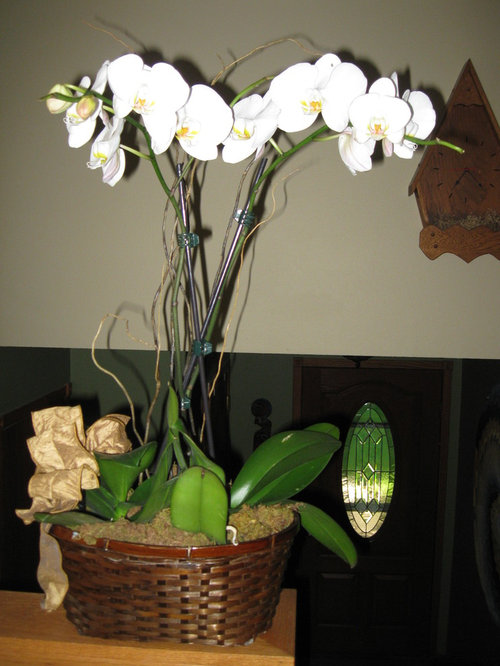
Hi folks - I just received this plant, from my brother-in-law's funeral. I know it's an orchid - but that is the extent of my knowledge. It actually is two separate plants (in two pots), in one basket.

Please tell me more about it, so I can care for it properly. Thanks!

Comments (4)

  • 9 years ago

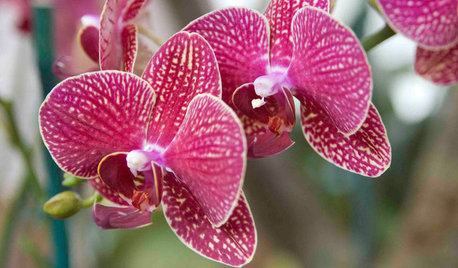
    It is a Phalaenopsis.

    Mountains of information on the net on how to give it TLC.

    Seek out complete culture notes appropriate to where you are in the world.

    Here are some written for Sydney, Australia.

    Phalaenopsis Culture

    These notes relate to Phalaenopsis culture in the Sydney area. These orchids cannot be grown outside in the yard or
    in a shade-house because winter minimum temperatures are too low and some summer maximum temperatures are
    too high. These temperature problems plus low humidity mean that special housing to meet Phalaenopsis needs is
    required, or the plants should be grown inside your home.

    Culture within the home

    Finding the right place to put the plant. Your plant needs bright light, humidity levels of about 60% and
    temperatures where both you and the plant will be comfortable. That rules out one place that is often suggested, the
    bathroom. Another place that is not good is one of those small closed in sunrooms where dry winter air is heated and
    the humidity levels are too low.
    My plants are on the windowsill of a large airy kitchen. Winter temperatures range from 12C to 18C each day and a
    fibreglass blind protects the plants from all but a few hours of gentle sun in winter. Do not expose the plant to harsh
    direct sunlight because the leaves of the plant will burn. Early morning sun is best, but late afternoon sun is also OK
    provided it is screened as described above.

    Humidity

    Some people recommend spraying the plants with water every day to raise humidity. This is not necessary because
    the humidity level in most homes is about 60%. You may wish to place the plant on a humidity tray containing
    pebbles and water. This is not necessary either, but will not cause harm, provided the bottom of the pot is not sitting
    in water.

    Watering

    Frequency depends on the potting material and the atmosphere in the house but as a general guide once a week in
    winter grading to two or three times a week in summer. Potting material should be kept moist but not sopping wet.
    Make sure no water is left sitting in the crown of the plant for an extended period, as the plant may rot. Use a tissue
    to soak up excess water.

    Fertilizing

    Use complete liquid fertilizer with every third watering, but only at half the prescribed strength. Wet the foliage as
    well.

    Repotting

    Every two years in late spring. Use specially prepared orchid bark, not Cymbidium mix. Try not to disturb the roots
    too much and just replace some of the older bark. Do not be in hurry to put the plant in a larger pot, because like
    most orchids, the plants seem to do better in a slightly pot-bound condition. Do not worry about some roots growing
    outside the pot. That is a good sign.

    Treatment of flowering stem

    When the flowers are nearly finished, you can cut the stem off just below the lowest flower and the plant may
    produce a new flowering shoot from the node just below the cut. BUT, note that most experienced growers cut the
    stem off at the base so the plant will put all its energy into growing new leaves, and therefore will produce better
    flowers next time.

    Making the plant flower

    The plant should produce a new flowering stem in late autumn as the temperatures drop. Some growers induce
    flowering by watering the plant with Epsom salts (Magnesium Sulfate) once a week several times in autumn. The
    amount of Epsom salts required is one tablespoon full in a bucket of water.

    Pests and diseases

    Your plant should remain pest and disease free in the home environment. Fungal disease which shows up as black
    spots on the leaves is a symptom of over-watering. Cut back on the watering a bit and seek help from a nursery or

    garden centre if the problem persists. Phalaenopsis are also susceptible to mealy bugs, which are small, white, fluffy
    looking bugs that live on the undersides of leaves or between the leaf bracts on the central stem. Use either White
    Oil or Pyrethrum to remove these pests. More than one application may be required, so if you see another bug, spray
    again. If you use White Oil, make sure to move the plant out of direct sunlight for a few days otherwise the leaves
    may burn.

    AnnKH thanked arthurm2015
  • 9 years ago

    Thank you so much! I live in North Dakota, so it will definitely be an indoor plant. My options are my living room (which faces SW) and my office (which faces East). Perhaps I'll put one in each place, to see which one is happier.

  • 9 years ago

    An east window is best. In summer I'd put it off to the side of the window, in winter the direct sun of an east window in North Dakota should be ok. Get rid of the moss on top and let us know what they are planted in.

    tj

    AnnKH thanked tsugajunkie z5 SE WI ♱
  • 9 years ago

    They are planted in bark. For now they are in my living room, near (but not in front of) a window facing SE.

Sponsored
Hope Restoration & General Contracting
Average rating: 4.7 out of 5 stars35 Reviews
Columbus Design-Build, Kitchen & Bath Remodeling, Historic Renovations