Software
Houzz Logo Print
kc270

Basement Seepage - Eliminate Before Selling?

9 years ago

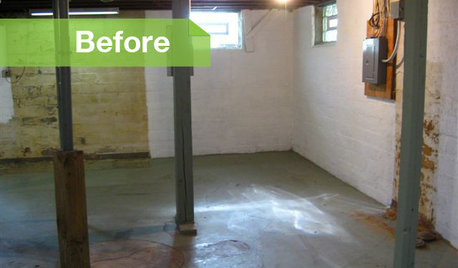
The house is a bungalow in northeast Ohio, built in the early 1960s. Water seeps into one side of the basement when it rains. It has been this way for years. That side of the basement is finished with a plaster ceiling and walls, with paneling on the lower half of the walls. You can see the water damage on the paneling.

If the home is going to be put up for sale in the next five years or less, should we just leave the basement as is and discount the price for the seepage? Or will the discount for a leaky basement be so great, that the basement should be waterproofed before putting the home up for sale?

Any ides you can share would be appreciated.


Comments (14)

  • 9 years ago

    Really the information you are looking for is too area and property specific to get good advice from the internet. You should talk to a local realtor.

    In the area I recently moved from basements tend to leak, it is assumed that there are two kinds of basements those that leak and those that will leak 2 years after the new owner moves in. This isn't true, of course, but the prevalence of leaky basements colors the whole market and really reduces the value of all below grade square footage to the point where fixing a leak often isn't worth it.

    Some of it also depends on the space itself. A pit basement with 6'10" ceilings, little light, indoor/outdoor carpet and old paneling may not be worth the cost of repairing when a day-light basement with 9' ceilings and lots of light might well be worth fixing.

  • 9 years ago
    last modified: 9 years ago

    Bry has good advice.

    We sold my mom's NE Ohio house. Same deal. It leaked off and on for decades.

    What we did was remove the paneling, flooring, carpeting, built ins right down to the cinder block.. We treated for mold. We then painted every surface with a white Satin finish. Beige concrete paint for the floor. I can't remember the brand but it was "basement" paint.

    The effect was clean, bright, "dry" (temporarily) and it worked to help sell the house. The buyers could imagine finishing the basement, as opposed to seeing water damaged paneling and moldy smells, and imagining having to gut the basement.

    ETA: also replaced the two tiny transom windows. They were totally trashed.

  • 9 years ago
    last modified: 9 years ago

    "If the home is going to be put up for sale in the next five years or
    less, should we just leave the basement as is and discount the price for
    the seepage
    ? Or will the discount for a leaky basement be so great,
    that the basement should be waterproofed before putting the home up for
    sale?"

    "What we did was remove the paneling, flooring, carpeting, built ins
    right down to the cinder block.. We treated for mold. We then painted
    every surface with a white Satin finish. Beige concrete paint for the
    floor. I can't remember the brand but it was "basement" paint."

    If I saw a house with visible seepage damage, I would expect the discount to be big enough to cover the worst case possible. And that could be huge.

    If I saw a house with unfixed seepage, versus one with brand-new finishes ... I would assume you just spiffed up and didn't bother to fix the problem.

    If I saw a house with permits and receipts covering a fix 4 years ago, and no NEW seepage ... then I'm interested. If it has not recurred, it's not serious.

  • 9 years ago

    Thanks everyone. jn3344 - exact same situation for me and my siblings - your idea about providing potential buyers with a blank, mold/rot free slate is something to consider. How many days would you say you spent on that project? I live a few states away and would have to plan my time.

    One sibling read that a wet basement is an automatic 25% deduction in value, and wants to fix based on that information. That's what prompted this question.

    I guess the best thing to do would be get the waterproofing quotes to see how much money we are talking about.

  • 9 years ago
    last modified: 9 years ago

    Hmmmm I spoze just covering up evidence of water damage is all you really need to do, if you were just concerned about how it looks.

    But as a buyer I would want to be assured that the drainage and other EXTERIOR factors that are creating or contributing to water damage have been corrected

  • 9 years ago
    last modified: 9 years ago

    Yes get the quotes. Beware of easy solutions.

    Several things had been done over the years. At one point the slab had been jackhammered up along two interior walls, drain tile and a sump installed (?) and then patched. This work was obvious when we tore out the carpet and painted the floor. Another time the deck off the living room was removed, and clay soil along the one basement wall replaced with drainage rock, then the deck replaced. These were not cheap fixes.

    The moisture we had (not really running water) was coming from a 3rd place, but only intermittently.

    Idk your situation so I don't know if it makes sense, but we had that basement so clean you could do surgery in it. (Jk of course). People like clean when searching for a house.

    Time. I was 1000 miles away. I came back 3 times for a week each time. Then a couple long weekends. Not just for this project. My sister who lived closer paid someone to remove everything from the basement. Including the drop ceiling. Had to rent a roll off for the material. Then we cleaned. We treated the moldy areas and rafters with this green stuff. Then we waited to see what the water was going to do. Then we painted.

    As someone said, get info from a real estate professional about what makes sense. We didn't make a whole lot of money, but we made some by selling it move in ready as opposed to an investment property for a flipper.

    Good luck.

  • 9 years ago

    Thanks for the detailed response. The one attempt made to fix the leage was was tearing up the concrete driveway that butted right against the foundation, and putting in stone as you did on the one wall. It did not fix the problem. I think part of the challenge is the compactness of the lot. On one side, the driveway is right up against the foundation, on the other side a 12" to 18" strip of grass along the house, then a concrete driveway for the neighbor on that side.

    I know someone who did the interior perimeter drain tile and sump pump as you described around the entire perimeter of their basement, and that solved their problem. I think that would be the only option on the house I described, because an addition with a slab foundation was added to the back of the home, meaning there is no exterior access to that side of the house's basement wall.

    It can't hurt to get quotes and see what a basement water-proofer thinks it would cost to resolve the problem, and also to see what a real estate professional would estimate loss in value if unfixed, and the water damaged paneling is left in place. I think what you did in removing the damaged materials is a good way to go, because that is one less obstacle for a potential buyer to deal with. That, and I don't think there is a big nostalgia market for 1970's paneling decor. I do not think anyone in the family is up for that job, though.

  • 9 years ago

    As someone selling a house in any of the 3 states I have lived in, the seller must complete a disclosure form and that form discusses water/leakage. If you don't fix it, will you lie on the disclosure?

  • 9 years ago

    You have to disclose water intrusion. See the seventh post in this thread.

  • 9 years ago

    We bought a house a couple years ago that had disclosed water in basement and claimed fixed with landscaping. We fortunately looked at it after heavy rain and found it still had seepage in the same room that also had newer stick on tile carpet - not the same carpet as the rest of the house. There was no water anywhere else in the basement so we decided we could live with it in the one corner. Since that time we also had water coming into a lower level utility room on the other side of the house during torrential rain. Based on exterior drainage patterns we have since installed gutters but it's too early to say if that has eliminated all basement water problems.

    All that said I think I'd rather know and see the real situation rather than something that's been covered up to make it look good for sale. Once it's been disclosed that there's water in the basement it's a negative no matter what because the future condition is a risk the buyer really can't predict. I'd rather have the honest facts than a cover up.

  • 9 years ago
    last modified: 9 years ago

    Our home was purchased under the same circumstances. The seller said a trickle of water came in but only during extremely heavy rains, maybe 1 or 2 times a year. We decided it was something we could live with, and probably could fix with landscaping. Regrading worked for one portion of the home, we still have a leak at one corner. And that one will be tricky to remediate, because a wide cement walkway behind the house is pitched toward the foundation.

    If I were in the market for a home, I would prefer a clean-up as someone mentioned earlier, not a cover-up. Damaged wall or floor coverings still in place would have me wondering what the block wall or cement floor looks like underneath them. But if the walls and floors are laid bare and cleaned up, and the water intrusion is disclosed, then a potential buyer would know where they are starting, vs the unknown hidden behind a damaged wall or floor covering.

    That is probably were a real estate professional, would be able to guesstimate how of a discount un-repaired water damage might require. And even then, that is just a guess. I know people who would dismiss a house immediately if basement water was disclosed, where you and I both had stronger stomachs, and purchased homes knowing the basements had water issues. Assuming $10,000 to $20,000 to install an interior perimeter drain, I still think it probably would be best in this specific case, to reduce the price, and let the next owner figure out if they want to salvage any of the interior, and also how they want to solve the water problem (which I really think the only viable solution will be an interior perimeter drain).

  • 9 years ago

    I would clean it up and solve the seepage problem. I would not buy a home with water in the basement. I heard too many horror stories!


  • 9 years ago
    last modified: 9 years ago

    I would fix it. The current house did have minor seepage issues discovered shortly after purchase during some severe rain. We did some landscape drainage changes ourselves, and problem solved. Hurricane Floyd (13 inches of rain) came a few years later - no seepage. Problem solved.

    But some seepage issues are much more severe, and I would not want to buy a home I knew had a leaky basement, discount or not.