Software
Houzz Logo Print
jabubaoski

Severe leaf curling, please help!

9 years ago
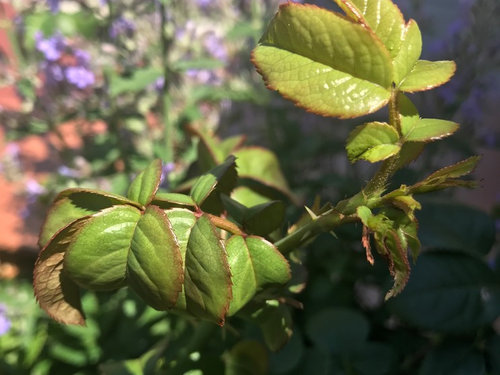
I had my 4th floor roof terrace landscaped recently and had 5 roses planted. 1 Graham Thomas, 2 quicksilver and 2 ebb tide. They are planted amongst flowering perennials, annuals and ornamental grasses.

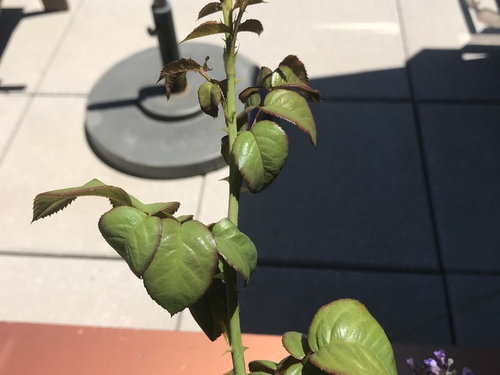
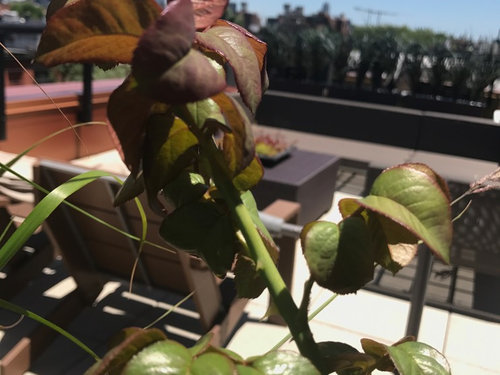
I noticed a fairly severe case of leaf curling on the 2 quicksilvers as soon as new growth started emerging, there are some leaf crisping on the tips and stunted growth as well. This coincided with an increase in leafhopper activity so I assume that's the culprit?

I have been diligently cleaning the undersides of the leafs when I can, 90% of the time I find baby hoppers (can't fly yet) and sometimes I'm quick enough to squish adults. While I enjoy vanquishing my enemies I'm not sure it's successful as their numbers don't seem to decrease and most of new growth are still stunted/curled. I also see some crispy new growth, so I probably have midge too.

GT and ET seem to be stronger and able to withstand the onslaught, only some of the new growth are affected and it doesn't stop them from blooming. The Quicksilvers on the other hand are in sad shape, they grow but 100% of the new growth are stunted/curled.

What can I do? Would something like Spinosad help? I use a lot of organics to improve the soil and I have pollinators so I don't want to harm them. If this varietal is just not able to withstand some insects I may have to replace them next spring. I should note I have hoppers, midge and other pests in the garden as well and I see often imperfect leafs, but those roses just shake it off.

Thanks in advance for your comments!

Comments (9)

  • 9 years ago

    I have thrips, midge, grasshoppers, aphids, slugs, sawfly and countless others because I live next to wetlands and forests. I have them so bad that I too have distorted leaves and crispy new growth. They attack my roses and phlox the worst. I have used the bonide which has spinosad and Monterey and it's a never ending battle. I had originally thought it was my soil and I have done countless things to improve the soil and only recently noticed the tiny insects everywhere. I have also used Organocide 3 in 1 this year and that did help when I sprayed my entire garden. It's also safe for bees. I haven't been able to use it recently because it's been too hot to spray. This time I'm going to be spraying my entire garden and nearby trees and then doing it again 3 days later like the directions say. Anyway those products do work but consistency is key I have found. I feel your pain, although my flowers look good it's the foliage I focus on improving.

    jabubaoski thanked Va Joh(zone8b)
  • 9 years ago

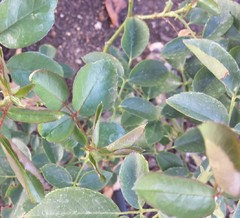
    Thanks Patty, the leafs are unfortunately not normal. I had them both in my yard for 5 weeks before transplanting and they grew and bloomed while waiting. Normal leafs are straight, these new ones are all curled downwards/inwards, some more severe than others. They are also mostly stunted in size, some with crispy ends some not.

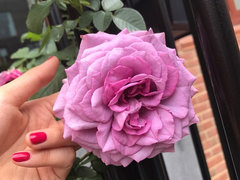
    This is a picture pre-transplanting, the leafs are big, thick and straight, no curls no burn.

  • 9 years ago

    I feel your pain Va Joh, I have all the pests you mentioned - except I'm in NYC! The mild winter and incessantly rainy spring have been a boon for insects in my area. I wish I had some good guys to combat them, I picked up some ladybugs last week but they seem more interested in the nectar/pollen of my agastache. And a torrential downpour drowned my mantis egg case overnight. Gah!!

  • 9 years ago
    last modified: 9 years ago

    Jabubaoski,

    That looks like heat stress/intense sunlight damage to me. I get it frequently.

    When many consecutive cloudy/mostly cloudy days occur during warm weather, when very active new tip growth is in progress, the new growth is not getting its full allotment of bright, unobstructed sunlight, day after day. Then, immediately following the cloudy spell, if several intensely clear, bright sunny days accompanied with high heat occur concurrently, the damage you see takes place.

    Nothing can be done other than to keep your roses well watered. Its nothing to worry about in the least.

    It's like planting out greenhouse grown annuals before they are hardened off to the heat and intense sunlight outside, which conditions they did not receive growing inside the greenhouse. They will wilt and scorch in a heartbeat if not graduated for several days into their outdoor growing conditions.

    Seattle and Pittsburgh (where I garden), are the cloudiest cities in the USA. When sunny days come here, my roses' foliage suffers, showing the same symptoms your roses have shown. I have this occur regularly. Even developing buds will fall off from the heat/sudden intense sunlight stress...not for lack of moisture. I keep my roses well watered.

    Moses

    jabubaoski thanked Moses, Pitt PA, cold W & warm/humid S z6
  • 9 years ago

    Thanks Moses, I hope you are right but I still think the damage is insect related. My yard is even hotter than the roof (surrounded by more reflective heat) and the swing between hot and cold is more intense, the 2 plants had normal growth with no signs of distress in the 5 weeks prior to their transplant. NYC had 2 bouts of 90s heatwave interspersed with lots of rain during that time. I have not seen any signs of recovery since the weather has normalized in recent weeks, all the new growth sport distorted leafs.

    In my limited experience when plants are heat stressed they stop growing, these guys have grown, just not normal growth.

  • 9 years ago
    last modified: 9 years ago

    I had some roses that were growing abnormally small leaves that were folding up like taco shells. The roses next to them were perfectly fine. I couldn't figure out what was wrong. They are now growing normal leaves again. I saw the same thing at my father's house and at a friend's house on some of their rose bushes. Perhaps it was weather change related issue, but at the time I thought it might be a mineral deficiency, because of the all the rain from El Nino.

  • 9 years ago

    Could be calcium deficiency as it is leached out soil by rain. Young leaves are affected. Try giving gypsum but you also may need to give some magnesium and potassium too if you give Ca or else you might trigger K and Mg deficiency.

    https://www.google.com/amp/amp.bhg.com/gardening/flowers/roses/solving-rose-nutrient-problems/

  • 9 years ago
    last modified: 9 years ago

    Jabubaoski,

    Some varieties of roses have very delicate young foliage, even vigorous, disease resistant ones. One variety's new growth can suffer from a sudden onset of heat/intense sunlight, while its neighbor of a different variety, growing under identical conditions, sails right through the sudden change without skipping a beat.

    My Sweet Fragrance, Julia Child, and Beverly will crisp. Quietness, Lady Ashe and Aunt Honey never crisp.

    BTW, I like your choice of roses.

    Moses