Software
Houzz Logo Print
hzdeleted_30900020

New Construction - Wet Basement

9 years ago
last modified: 9 years ago
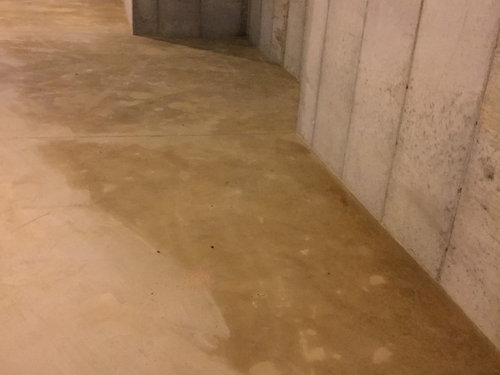
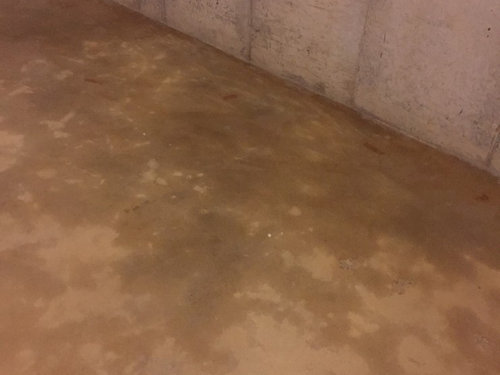
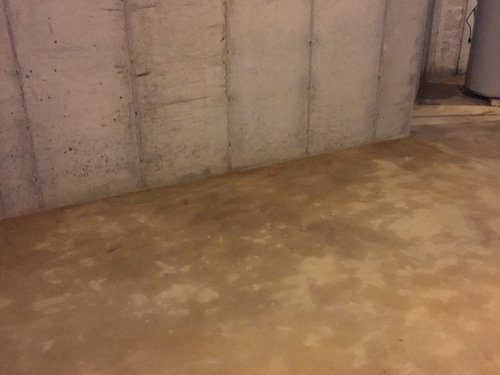
We are building a new home in NJ. We are nearing the final stages. About a month after the house was under-roof, the entire basement flooded - up to your ankles from wall to wall. The builder installed a perimeter drain that leads the water to an inlet away from the house. It hasn't flooded since then, but there is still periodic wetness in the basement - all over the floor and on the walls where they meet the floor. The basement will be dry for a week and then back to this wetness. The builder told us it's because there are no gutters or leaders on the house. We have concerns that there is a serious water problem with this lot. Any advice from the photos?


Comments (28)

  • 9 years ago

    Where are you in NJ? There are some areas that chronically flood and have wetness issues. We just did an addition in NJ and had to put in a seepage tank to avoid this exact problem. Before the addition we would get a small puddle from ground seepage, now that we have the tank, it is bone dry. How is the grading near the foundation? Do you have a sump pump?

  • 9 years ago

    My first thought was did they do the grading away from the house? However I'm no expert so will leave the suggestions to those who are.

  • 9 years ago

    Yes - the grading is done, for the most part. It's not a final grade but it is close. Before the builder put in the "perimeter drain" to the inlet, the sump pump was pumping water 24/7. Even on sunny days with no rain. That was a huge red flag for us - we couldn't figure out why the pump would be running when it wasn't raining. It was even pumping water after 4 days of 90 degree heat and no rain. The builder/owner assured us there isn't a water table issue. But I remember the construction foreman telling my husband when he dug the foundation that it didn't "perk" well so he added a layer of stone. We didn't sign up for a lot that has water problems. And we absolutely don't want to inherit a water issue. So now we are stuck trying to figure out our next step.

  • 9 years ago
    last modified: 9 years ago
    The builder told us it's because there are no gutters or leaders on the house.

    I don't understand how anyone would build a house like, other than in a desert. And even there, there are occasional cloudbursts.

    Plus you haven't noted how the exterior of the foundation was waterproofed. At all? Or just damp proofed with a quick spray of cutback asphalt?

    ****

    A new house was built 15' from the lot line of a new home I built.Mine had only asphalt damp proofing. Dry as a bone--once inadequate downspouts were doubled up.The neighbour had a sump pump running 24/7 for years.Every lot is different.

  • 9 years ago

    Do you already own the lot or does the builder still own the lot?

    My suggestion would be to talk to get an engineer or someone knowledgeable out. For example, we hired an inspector who periodically checks on our build to make sure things are being done according to plan and also to fix anything that doesn't look right.


  • PRO
    9 years ago

    I would re-evaluate the problem after gutters and downspouts are installed and final grading is complete--both can contribute significantly to the problem you are experiencing.

  • 9 years ago

    Thank you Charles Ross Homes. My worry is that the gutters and downspouts will be installed right before we are expected to close. And then we will have no time to evaluate whether or not they solve the problem. We are well aware that once we close on this property, the water issue becomes our problem. I also don't understand why the entire basement floor would be wet if it's a surface water problem. Isn't it more likely that surface water would leak through the walls and perimeter?

    The other thing I forgot to mention before - The concrete around the support/lollie columns has not been poured yet. These are the support beams that sit on the footers. Some of the columns have dry dirt around them - but most have wet dirt. And when we dug a few inches into the wet dirt, we saw water. What does this say about what's under that foundation?

  • 9 years ago

    " but most have wet dirt. And when we dug a few inches into the wet dirt, we saw water."


    That's a huge forgot to mention. Sounds like water table to me but I'm no expert.

  • 9 years ago

    Do you already own the lot or does the builder still own the lot?


  • 9 years ago

    Is this a daylight basement or a pit basement?

  • 9 years ago

    cpartist - We are building in a subdivision of about a dozen homes. The builder owns all the property. We signed a contract in April, 2016 with the builder to build one of his models. Although we don't own the lot, we have given him a huge amount of money already - per the contract.

    bry911 - This is a pit basement. There is no access to the outside (without going upstairs through the house.)

  • 9 years ago
    last modified: 9 years ago

    So you are getting this much water with the sump pump going 24/7? That would very much concern me. Is it possible for the builder to install the gutters now, so you have time to see if that makes a difference? I am not an expert, but I don't know if that will make a significant difference (being you are getting a lot of water in the basement even during stretches of dry periods). Although I just re read your posts and it sounds like you are getting periods when the basement is dry? Grading and gutters can make a big difference in some cases, but obviously it depends on the house and grade and soil. New concrete also has a high water content in itself.

    Either way, I would get my own engineer involved before proceeding to close.

    For what it is worth, our sump pump often starts running a day or two after a rain, but not during. Sometimes it takes time for the water to work through the soil and get pumped out. Have you had an above average amount of rain this spring/summer (so the ground might be unusually saturated)? How about snow over the winter?

  • 9 years ago

    Can you get an independent inspector or engineer out to look at the problem? I think if it's a water table issue that wasn't accounted for, you might have a case to back out of the agreement. I would first get an engineer out and then if needed talk to your RE lawyer.

  • 9 years ago

    The builder was hesitant to allow us to test with an independent engineer.

    Gee, why am I not surprised?

    When I told my builder that I was bringing in an independent inspector, his comment to me was, "Good. I doubt you'll find any problems but just in case, I'm happy to have someone else look over our work." Our inspector did find a few small HVAC problems and noticed that they had forgotten to tighten some hurricane bolts.

    But now that there is evidence that water is continuing to seep into the basement, even after the installation of the perimeter gravity drain, he is coming around. He knows how uncomfortable we are - and we would never close on this house without a report from an expert

    Smart. Also at this point, I'd get an independent inspector in too. If the builder was that cavalier before, I'd want to know what else he cut corners on.

    Sounds like you're doing the right thing now.

    Just another thought. Are you in a flood zone?

  • 9 years ago

    Karen I totally sympathize with you. If exterior basement walls are still exposed, an ideal solution is installing a permanent barrier that prevents soil from touching the basement/foundation walls, exterior and interior waterproofing and resealing cold concrete joints between foundation and walls. It is evident your builder failed to build a french drain on the inside of your basement walls. Have your builder cut/trench out a french drain on the interior perimeter of basement walls tying the drain to your sump pit.

    Our last home I built in NJ was adjacent to wetlands and our sump pump (with a french drain) ran incessantly. Eventually when I finished the basement, I ran moisture tests on basement concrete floor and it passed with flying colors; I was able to install hardwood floor directly on the concrete floor without issues however installed a second battery backed sump pump just in case. In addition I sealed the walls with several coats of concrete sealer followed by 1" foam insulation and then wall framing.

    This may be a repeat of what I iterated in another foundation waterproofing thread however may be useful to folks building on large lots with water issues and a budget to permanently combat the issue; depending on size of the project/foundation it can put a serious 'drain' on your pocket and budget. But would you not rather have a dry and mold free home, basement, crawlspace and foundation?

    In our current home under construction adjacent to massive wetlands, with the water table less than 3' in places, and despite the builder (and my DW) saying I was going way overboard with my expensive drainage ideas, I took extensive measures to build a very robust drainage and waterproofing system, doing everything possible to keep water and dampness away from the huge foundation and 5' crawl space, not quite a basement but with a solid concrete floor nevertheless. Installed perimeter drains in line with top of footings with the wide drain pit filled deep with peanut gravel, tightline for downspouts, stem walls exterior concrete sealer, external dimpled membrane to name a few, however went one significant step further and built an intricate drainage system below the entire foundation floor, all sloping towards and tying into the six inch perimeter drain at one lowest graded corner of the home from where the combined drain leads to an outlet almost 130' away, exiting into the wetland beginning area of my property, agreed most folks don't have that much space, one would instead lead the drain it to an external pit or a second internal pit with a second sump pump, pumping water out to your storm water system. Surprisingly, I did not install a sump pump at all, instead use natural or graded slope of our lot for drainage, one needs excellent grading for this to be successful. Similar to an operating sump pump, I see water draining out of the distant drain exit no matter what the weather since there will always be water below the surface, we just need to make water dissipate or flow where we want it to. One can never fight water, we learn to respect and work with it; it is one of the most powerful forces on earth and water will always win.

    By the way I only pay my GC after a construction phase completes, as an owner/designer/unqualified architect, I'm always in control but have an amazing builder/GC building our home.

  • 9 years ago
    last modified: 9 years ago
    Have they completed (pushing the dirt tight around the foundation?). Also, has it been raining quite a bit? Our foundation did not have the dirt pushed against the foundation and when it rained, we got a small amount of water in our new build ( before we moved in). Once the foundation was tightened with the dirt, never had another drop of water in 2 years, even when we had monsoon rains. If they tiled around the foundation, waterproofed it with that rubbery looking stuff and you have a sump pump, you should NOT be getting water in the basement (unless of course it was not done correctly).


  • 9 years ago

    The lot is graded. The very back of the property has a small pile of topsoil but it's nowhere near the foundation. It's not a flood zone - there's no wetlands. This is a very residential area. Thank you for all your comments. I would appreciate advice on what it means when the basement floor absorbs water (in the center). Not around the perimeter. The entire basement floor gets wet - not just the walls and the outside. The best way I can describe it is the floor is a sponge, sucking up all the water underneath it. That's exactly what it looks like on the surface of the floor.

  • 9 years ago

    Have they backfilled yet?

    I had a very similar problem on a new build. Intermittent wetness that no one could explain. Then one day we had a huge rainstorm, and my basement became an indoor swimming pool. It was quite a shock to go downstairs and see about 3 inches of water covering the floor.

    Turns out some brilliant mind crushed the footer drain with they backfilled the foundation. So my newly-seeded front lawn had to get all torn up, and I lost all sorts of stuff I had stored in the basement, etc...

    But once they replaced the crushed footer drain, I've never had another drop of water inside since.

  • 9 years ago

    Sorry, I saw we cross-posted.

    I am by no means an expert and there are people here who know way more than me...but I'm wondering if maybe you have a footer drain problem?

  • 9 years ago

    Thank you patriceny! I will look into that. Can I ask how you knew that was the problem? Is that something your builder discovered?

  • 9 years ago

    I think the builder had his "ah-HA!" moment after the entire basement filled with water after the big storm. Before that, I was seeing seep-age/wetness around the perimeter in spots, and at the base of the support poles. They were sort-of brushing me off, I got the sense they were hoping it would cure itself. Instead we got a heavy rain overnight, and I woke up to literally 3 inches of water all over the basement - and that's the point he realized what was going on.

    If they can't figure this out and fix it for you, I would not want the house. Sorry. :(

  • 9 years ago
    last modified: 9 years ago

    Karen, Unless you are planning to hire a professional engineer/inspector, or waiting for results from your attorney, we need to identify exactly what went wrong since by all accounts with an effective perimeter drain and working sump pump, you should not have a water problem. Would have loved to help in person, unfortunately we relocated from NJ to WA a couple of years ago.

    From your pictures it appears water is seeping up through a possible gap between slab and basement walls. To answer your question why basement is also wet in the center; regular concrete is porous and moisture will wick upwards through it due to hydrostatic pressure and lack of effective installed counter measures; I said regular concrete because one can add expensive additives to minimize/eliminate concrete porosity; but we can still fix things.

    First check perimeter drain installation: Do you have visibility to where the perimeter drain exits into the inlet? In your case, especially with sump pump turned off, there should be water pouring out of the drain; if not, the drain may either be

    a) sloped incorrectly (may even be feeding water back into the drain

    b) has a break somewhere (like patriceny described)

    c) is installed much higher than bottom of footings

    d) has drain holes facing up. Perimeter drain should have drain holes facing down so water starts moving sooner than wait for it to rise above top of drain; you want the pipe to drain and not float.

    Additionally, a perimeter drain should be sleeved in fabric to prevent clogging drain holes (it takes time to clog drains hence an unlikely cause in your new construction)

    e) is a combination of one or more above issues

    Measures: 1. Have the drains scoped: Preferably, this should be done when the basement is wet, so that you can tell if the drain is actually draining water to the drain. Have one ten foot section on a longer wall or where feasible, excavated to bottom of footing level. I'm guessing but it is very likely you have issue (c) above. Top of perimeter drain 'should not' be higher than bottom of basement slab. Drain needs to be next to bottom of footing to be effective for draining water. If that is the case, you may have no choice but to have entire perimeter dug out to lower height of perimeter drain or correct one or more above issues. If drains 'appear' to be installed correctly and water is still not draining fast enough, there may be a break/leak which unfortunately means uncovering 8'-10' sections at a time to identify where it is crushed/broken.

    1. Not that anything can be done about it immediately but do ask the builder if he installed a vapor barrier (visqueen sheeting) before he poured the basement and what thickness it was 6mil, 10mil or thicker (very likely it is 6mil if at all installed, builders will not use anything thicker unless specifically asked.
    2. Other effective measures: #1 is install an interior french drain, at least 8" deep (twice your slab thickness) draining into sump pump pit

    #2 if no vapour barrier was installed, have a company use Pressurized injection of waterproofing material, such as polyurethane, via several drilled holes.

    #3 same as #2 above but have them seal joints between slab and walls.

    #4. Dig out sump pump pit, deepening it to effectively lower water collection level and taking water away from bottom of slab and walls.

    There are several other possible solutions but we need to establish root cause or causes first.

    Please keep us apprised of course of action you are or intend to take.

  • 9 years ago

    Some excellent waterproofing measures noted above, particularly PineBaron's usual overkill. But virtually anything to do with basement waterproofing in a three foot water table can be justified!

    But without knowing what's on the exterior walls--silence seems to indicate the usual dampproofing--and no gutters or downspouts, how could you expect anything but dampness.

    When I was building under the mandatory TARION warranty in Ontario, the builder has to warranty no water entry for two years. No excuses accepted. And if the builder doesn't remedy the problem, the warranty programme does it and bills you back.


  • 6 years ago

    Hello - I am sorry as I know this is an old thread, but I am currently undergoing this issue with a new build. Were you ever able to resolve/find the exact issue?

  • 6 years ago

    We’re dealing with this exact same scenario in a new construction house in Lexington, KY. I do not want to buy a house with a damp basement, but I’m not sure what can be done to get out of buying a money pit or resolve the issue. What happened with your house? Was it fixed or did you walk away?

  • 6 years ago

    @Ellen Kling, is it a custom or developer? This thread is full of great suggestions. If you discuss with a RE lawyer then please share here so others can benefit.

  • 6 years ago

    OP says this was before gutters, which most likely also means before final grading. This will happen from these ^ reasons.


    Example, my parents house is up on a hill with a working sump pump etc. One year they forgot to clean/clear their gutters, so when it rained hard they'd overflow right away darn near against the house. So much water would seep against the foundation wall, it would just "appear" on the basement floor from it getting so wet


    I'm in a very wet area in my own house, so I have significant grading to my yard and also buried all of my downspouts to discharge water way da hell away from my foundation.


    Getting any variable wrong (no/dead sump pump, no/broken gutters, no grade pitch away from the house, or I've seen people's sump pump discharge exit 1" out of the house to dump it right against the foundation again) can make your basement damp/wet