Software
Houzz Logo Print
myoyster

On the lookout for a True Black Sjans

9 years ago
last modified: 9 years ago

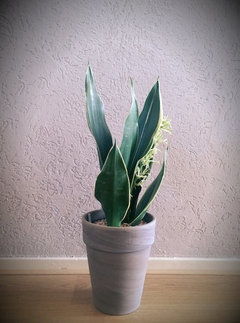
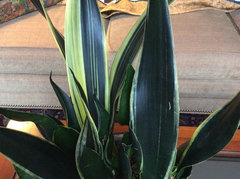
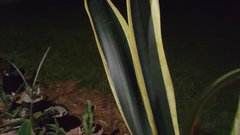
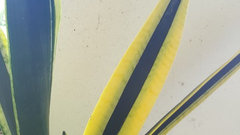
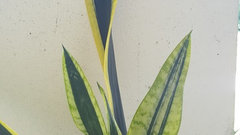
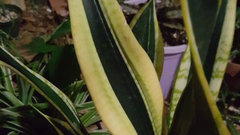
Recently I've acquired a true black Zamioculcas, and to be honest I love it! Such a sexy plant! It makes me wonder if there is a True Black Sjans available somewhere. I have a "Black Gold / Midnight shine? (confused)" and a "Black Coral / Black Gold? (also confused)", but neither of those are truly black. They are just dark green, not even really dark green. Does someone know if a True Black Sjans exists and where they might be sourced? Preferably Trifasciata sized. Thank you very much!

What I've found:

Black Robusta, not really black. Haven't seen them anywhere overhere.

Black Brazil, seems dark green.

Black Dragon, this one seems available overhere. Dark green though.

Crane's Black Sport, beautiful plant! But also green.

Winter Green, also not black but beautiful nonetheless. Talked about in this topic.

So to make myself clear about how serious I am about a TBS. I'm going to experimenting with dye in my watering regimen. :D

Comments (27)

  • 9 years ago

    A black Zamioculcas?? Could you please show us a picture, Oyster? I don't quite trust the random pictures I found online. Thanks!

  • 9 years ago

    Amazing! And what a name. It's like being directly pulled out of a fantasy novel.

    I read that it was introduced by a Dutch grower in March 2017, and can't find anything similar on eBay. Guess we'll have to wait. It's very likely patented. Were they selling it at an outrageous price?

    By the by, nice gramophone.

  • 9 years ago
    last modified: 9 years ago

    I've read that also. Apparently the regular ZZ was also introduced by a Dutch grower, possibly the same. It's indeed patented, it has a PBR trademark. The price was outrageous indeed, almost 4x the price of a regular one. I didn't want to pay that much for it so I left the garden-centre empty handed. On my way to home I realised about how the Zamioculcas Micro magically disappeared from the market. I went back immediately, bought it and cried a little haha. But it's really pretty. I'm an all time Sansevieria lover, but this one is competing for first place. Luckily I have my growing conditions perfectly under control, so I'm confident I can keep it in good health. Thank you very much, I love to play records every now and then. Are you an enthousiast also?

  • 9 years ago

    Oyster, you did the right thing!! Nice plants disappear from market all the time. I haven't even seen any Zamioculcus Micro in person, let alone owning one. Once the owner of these patented plants pulled them from the market, there would be literally no means for us mortals to acquire it.

    The nerd in me is thinking about a brute force way to create a black sans: get a hundred Compacta and a hundred Robusta black, cut them into a thousand pieces, stick the cutting in a sand bed, and watch them grow.

    I'm a big fan of records and vacuum tube. However, the OCD in me cringes every time seeing the stylus gliding over the grooves, knowing that we are actually distroying those records by playing them. That somehow made every playing of the records a ritual for me because I know the sound wouldn't be the same next time. Oh my, that's an unbearable burden.

  • 9 years ago
    last modified: 9 years ago

    I have a couple of sans that are pretty dark, I can't say they are as dark as your ZZ plant. One is called Black Sword, medium height and narrow, sword-like shape. The other is Mein Leibling, mature leaves are very dark, new growth mottled. It is a tall trifasciata, thick leaves with a sort of keel.

    In addition, I was browsing in my local nursery and saw a number of very dark, solid plants, hahnii shaped rosettes, but much bigger than the typical hahnii. I didn't look at the name, if they were labeled, but next time I get down there, I will take a picture and see if I can get an ID. I love your ZZ plant!

  • 9 years ago

    Oh, I forgot to mention, there is a patented variety called Black Jack. It has the gold edges and the green part is really a green black. My nursery had these for a while, but they had a big problem with some kind of infection, blistered areas. I did buy one of these and tried to treat it, but eventually threw it out. It really is a beautiful plant the though, if you can find one.

  • 9 years ago
    last modified: 9 years ago

    OMG I need that Zamiocalcus, Oyster!! Thank goodness you went back to get it. Gorgeous plant and best of luck with it. Maybe it will make its way to the states eventually.

  • 9 years ago

    Yeah. Lori, if you spot it, please get one for me too!

  • 9 years ago
    last modified: 9 years ago

    @ElliotLi Could you please explain to me how that would produce a black Sjans? I certainly can relate to this OCD thing. I haven't really experienced the record period (too young), so it shows in other things. But I do know what your talking about. Even the part about how playing (theoretically) reduces the dynamic range of a record each time haha.

    @barbmock Thank you very much barbmock. I haven't seen your cultivars but I will keep an eye open. The "Mein Liebling" sounds German so maybe I'll hop over the border sometime to have a look over there. The "Black Jack" really sounds like a "Midnight Shine" or "Black Gold". Does that sound familiar to you? But maybe the green is not as dark as your cultivar. Please have a look at my "Midnight Shine / Black Gold" below. I don't know what it's called really. Names are really confusing.

    @vitorama Thank you very much! I hope it will reach the US soon!

  • 9 years ago

    I have seen some regular sans trifasciata turn really dark being in regular house light and never seen the light of day. They almost didn't even look like a sans at all at some point. Leaves being more soft and wider than normal. I don't think there will ever be a really black of anything. (I have been wrong more than being right).

  • 9 years ago

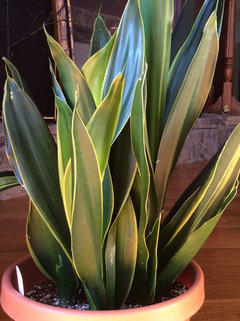
    This is the Black Jack, it is a lot like the Green Gold, but the leaves are larger, wider and more black. Midnight shine is a nice one too, more narrow leaves with thin gold margins. This is Midnight shine below, the leaves don't look very black, but they are. Too bad I don't have either of these anymore.

  • 9 years ago
    last modified: 9 years ago

    @Stush2049 Pitts. PA, zone 6 Nice idea and experiment! Maybe I'll put some mature leaves in a cabinet to see how dark I can get them.

    @barbmock That Midnight Shine looks lovely! Such nice glossy and reflective dark leaves! Love it! Thank you for providing photos. Apparently these two cultivars are different from my "Black Gold".

  • 9 years ago

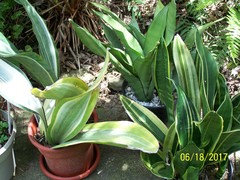
    The one on the right is similar but is an noID from Walmarts on sale several years ago. It has nice yellow strips thru the leaves similar to S. t. Kristi. It is much darker than it's showing in this photo.

    Barb, Shame you don't have those sans anymore. Were they hard to grow?

  • 9 years ago

    Thank you Oyster, I hope you find a nice black sans on of these days.

    Stush,, Well you win a few and lose a few. That Black Jack wasn't healthy when I bought it. Should have known better. I think I lost the Midnight Shine the year I put my plants out a little too early in the spring, and a cold snap took out a bunch of them. This past year, it has been the mealy bugs that are giving me trouble. I do have a Midnight Shine started, hopefully this summer will bring some growth.

  • 9 years ago

    Barbara, where do you find these Sans?? You have such requisite cultivars grown so beautifully. Wow!

    Stush, you are another one with these unbelievable cultivars! Do you have a picture of Kristi? I saw someone selling one once called Kristi but it looked like Compacta to me.

    i jealous of you both!

  • 9 years ago

    Lori, Just luck finding them in the big box stores. Haven't been that lucky in years. On another site I'm on, someone found hahnii Solid Gold for only $3.50. It was in Home Depot but not any in my area. I asked her to buy me one but they were sold out. It was solid yellow with a dark green border. The Kristi I saw was on the internet and some looked bad and only one I saw looked like it should be a Kristi. Multi strips across the leaf in an orderly fashion and not so random. I get this pattern in some leafs but not most of them, so it may lead to one some day but not really there yet.

  • 9 years ago

    I bought a Black Gold from a local nursery years ago. It has some very dark blackish green leaves, but is very variable with some thin leaves some well as a picture is worth, you know....

    I've always taken sans for granted, they just grew. I'ts just recently that I have noticed and enjoyed their beauty and diversity. So I hope you understand when I post pictures of plants that are common to you but amazing to me:)


  • 9 years ago
    last modified: 9 years ago

    Hi Vitorama,

    You asked about where I find my sans. We do have a nice chain of nurseries around the Atlanta suburbs, Pike Nursery. They carry sans, but not a wide selection. I like to browse and sometimes find something I can't live without. I do of course look around the garden department of the BB stores and sometimes can find something new, usually unlabeled. But, my very best plants have all been given to me or traded with some very generous friends here on this forum. I feel so fortunate to have gotten acquainted with some fine friends here.

  • 9 years ago
    last modified: 9 years ago

    Oyster, what I meant was finding the darkest sans mutation through selective cultivation. Sans grows slowly from seeds, so traditional selective breeding is not effective. Instead, people grow cuttings and induce mutations on cuttings. Given the ideal condition (heat and light), pups can form within three to four months on leaf cuttings, therefore the turnover speed is fast.

    Mutation usually happens on meristem tissues. The chance of mutation is much higher on leaf cuttings than on whole plants because, on leaf cuttings, all cells on the wound compete to form callus cells and mutation can happen in any cell, while on whole plant, the growth of pups is regulated by hormone and only a tiny amount of rhizome skin cells are turned into meristem cells, and they are usually homogeneous, with fewer chances for mutation.

    Of course, you'd need a large amount of cuttings for this to make sense, like hundreds at least. Growers and nurseries do this regularly as part of their production process; when they spot a favorable mutation in their fields, they patent it and profit. Why haven't they found a black mutation yet? It is probably really rare.

    That's what I mean by a "brute force" way. You don't need much science here. More advanced methods exist, such as using hormone regulated tissue culture to see the color of seedlings without having to wait for their maturity, or using genetic modification to enhance anthocyanin production. The latter are being used fairly regularly now to produce new ornamental cultivars.

  • 9 years ago
    last modified: 9 years ago

    Thank you very much for sharing your photos jstropic, Stush2049 Pitts. PA, zone 6 and barbmock! It's really nice to see some beautiful Sans all over the world!

    @ElliotLi I've always wondered about that. Thank you very much for your thorough explanation! Maybe I'll get some tests going on in the near future. I've had some succes with an unusual yellow Trifasciata offset from one of 50 or so cuttings. You can read about it overhere if you wish to. Again thanks!

  • 9 years ago

    Elliot, thank you for the very enlightening explanation for inducing mutations. I also wondered if chemicals were used for that purpose.

  • 9 years ago
    last modified: 9 years ago

    Yes. Colchicine is common used to induce mutation on seedlings. I think I have read about people trying it on sansevieria, but I am not sure about its effectiveness.

  • 9 years ago

    This subject about inducing mutations in plant tissue is interesting. Is there any interest about starting a new topic about this subject? Maybe we can come up with some interesting experiments.

  • 9 years ago

    Sure. I'm very interested in that. Just want to let you know that I'm a newbie and a new collector, so take my words with a grain of salt. There is so much I need to learn. For instance, Lori just told me that you can induce new pup growth by stabbing the mother plant in the center using a bamboo stick.

  • 9 years ago

    Hey Oyster,

    We meet again ;>) welcome.

    These Sans Forum folks are a lovely bunch & have great & varied Sans collections. This site has become more active in recent years.

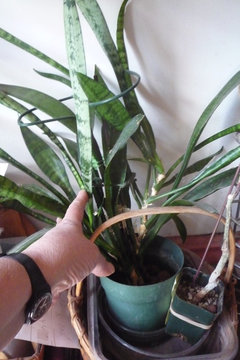
    I'm a bit of an experimenter myself. I have a Sans. that's Hydro grown, it's gotten pretty large, have a look.

    This sits in a pot of Leca stones (fired clay balls) & water.


  • 9 years ago

    Many years ago we talked about what 'Causes Variegation in Sans.' I purchased some regular Futura compacta that turned out to be 'Gold Flame'. Wondered if it was a chemical trick or if something fishy was going on. We talked about the use of weed killer and gamma rays and even birth control pills. Even X-rays in an air port. In Japan and overseas nurseries they do use some chemicals that may or may not keep their variegation in future new pups. Secret still out there.

    Removing the growing center of most any plant causes it to produce new growth in pups or side branches. If infection sets in know as 'Crown Rot' then the plant dies. Any cuts on plants should be done in dry conditions and use of powered sulfur to cure the cuts. Some here use cinnamon but it never did me any good.

Sponsored