Software
Houzz Logo Print
jshar2004

To amend soil or not for citrus trees?

9 years ago

I must have read every topic on this subject, but the opinions seem quite divided with more people on these forums leaning towards no amendment at all.


Well I have heavy clay soil here in Northern California (zone 10a) - so heavy that a pickaxe is my main tool while the shovel is just used for collecting loosened dirt. After about a foot in, I start hitting hard rock or clay clumps where overhead swings of the pickaxe are needed to break things down effectively.


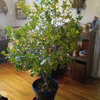
The garden experts at my local nursery recommend backfilling with 50/50 native soil and compost, which is what I did for the three other fruit trees planted in recent months even though that advice is contrary to what most people say here. Should I follow the same recipe for two citrus trees I'm planting (mandarin and grapefruit), or should I try no amendment this time?


Thanks!

Comments (14)

  • 9 years ago

    Plant it in a raised bed about a foot tall and 4 foot radius minimum. ruff up the clay surface so the roots can make the transition into the hard clay.

    6b Steve

  • 9 years ago

    Thanks for the responses. Building a raised bed is not practical in my case, but I'd still like to add some compost at least. Maybe a few handfuls just to soften things a bit instead of 50/50.

  • 9 years ago

    Citrus does not like wet roots. Clay is either wet or dry, adding amendments may help keeping the soil even.


    You maybe trying to grow plants or trees that are not native to your soils, adding amendments is an attempt to make your existing soil compatible with non native plants.


    Based on decades of both experience and reading Sunset magazine, I would amend the soil based on the local expert recommendations, instead of someone in Iowa, who has never seen your area.

  • 9 years ago

    I would follow Brettay's advice exactly. Citrus will grow in clay soils; but it takes a long time for them to adjust and/or for the roots to get below the clay. The first rule is dig a big hole, more wide than deep; and fill with water. If the water drains out in 12 or so hours, you can be good with that to start. If the water doesn't drain out, you have to keep digging until it does; otherwise you are just creating a large container made of clay, but worse because at least containers drain.

  • 9 years ago

    Thank you guys for the pro-amendment advice.

    Brett - can I use compost (instead of buying loamy soil) to gradually expose the plant to native soil?

  • 9 years ago

    Ideally you want to use something that adds organic matter to the soil but also doesn't break down super fast. Some of the compost blends I have used have disappeared very quickly, so it just depends on exactly what you are adding. Also, remember this is a continuous process. You should add organic material to the soil each and every year.

    -Brett

  • 9 years ago

    good to know. Thanks. The blend I have is composed of aged chicken manure, redwood sawdust, and mushroom compost.

  • 9 years ago

    Ugh! I didn't even think to ask this question before planting my citrus. OK, four years ago I didn't have a clue. But for the ones in the past few months, I dug a big hole about twice as big as needed, plonked the tree in and filled it up with citrus planting soil from the nursery! I compacted the new soil as much as I could so it wouldn't sink in after a while, and that was it! After that, I have been reading the same posts about using the same soil as I dug out, but so far they seem ok. (This is what i do for everything I plant, and I didn't think citrus would be any different!)

    KC

  • 9 years ago

    I remember being told to make several deep cuts with your spade around the sides of the hole you've dug. The theory being it gave the roots gaps/cracks to get started growing into the clay. Maybe it helped more because it helped water drain away? Would this help at that interface at all, or be wasted effort?

  • 9 years ago

    Where I grew up in the hills of Southern Cal. we had very hard clay soil. My neighbor and I planted over 50 citrus and avocado trees between the two of us. He was actually a PHD Botanist so I never argued with him when we dug huge deep holes, amended the native soil with organic matter 50-50- hand mixed in 5 gallon buckets over and over again until the arms and back were aching! The trees grew well and the fruit was spectacular.

    When I moved close to the beach several years ago the soil here is more sandy and loamy as you might guess. Until you get about 22 inches down and then it might as well be bedrock! I still mix the soil as my friend taught me except now I use palm and citrus mix instead of the old sludge or nitrohumus. I don't dig the holes nearly as deep now as I learned that is really not needed. Thank goodness!

  • 9 years ago

    I also amend my clay soil to keep it from being an air-tight brick around my new tree's roots. I think the point about not amending soil is very good but there are exceptions. Tree roots tend to circle around inside the hole you dug if you try putting loose soil in a clay hole, hence the no-amendments guidance. Roots will also grow best in areas where there is water and nutrients....also in the space of the hole you dug. That results in a root-bound tree as if it had been left in a pot that was too small. This is why you should dig a really large diameter hole, and an irregularly shaped hole also helps discourage the roots from circling. The more native soil, the better, to a point, so there isn't so much difference between what you dug out and what is beyond your excavation.

  • 9 years ago

    True but their is a fine line with proper drainage and your ratio of native soil to amended soil. 50-50 seems to work best for me. That's what I was taught anyways.

Sponsored
Buckeye Basements, Inc.
Average rating: 5 out of 5 stars40 Reviews
Central Ohio's Basement Finishing ExpertsBest Of Houzz '13-'21