Software
Houzz Logo Print
bsmith0023

When to fertilize next

9 years ago
last modified: 9 years ago

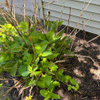
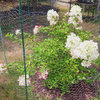
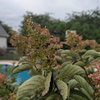
Ok so as a back story, I have mopheads that I bought last spring. I am in zone 8b, SC. They are very full of leaves but I did not protect them enough and only had little blooms this year and some that have dead old wood. I fertilized them about a month ago with generic 10-10-10.

I also have a couple fresh 1gallon plants I planted this spring and fertilized with the same slow release at the same time.

Should I fertilize both sets this fall or wait until next spring? I was going to either use Espoma Holly Tone or the Espona Soil Acidifier. Also what's the real difference, they both are for acid plants and both turn the leaves more blue I hear.

Thanks

Comments (18)

  • 9 years ago
    last modified: 9 years ago

    Slow release fertilizers usually last about 3 months. If you fertilized in (example) Jan 1st then do it again April 1st. That second application would last another three months and you would need to fertilize again on July 1st. And so forth.

    Do you really need a 2nd application? Maybe not. If the 2nd application lasts until after your avge date of first frost then I would skip it. Places where this is not needed are locations where the growing season is short (Spring starts late and Fall/Winter arrive early).

    Do you even need a fertilizer? Not really, provided your soil is not deficient in some mineral(s). I have forgotten to fertilize in some years and nothing bad happened to its growth rate, blooming, etc. Hydrangeas respond well to composted manure so I try to use that when I remember to feed in Spring but this year, I completely forgot so I have not fed them... yet (only potted ones). You can also use organic compost and cottonseed meal. But since you bought those two products, use those until they run out so you get your money's worth. Or use them for something else. Again, not needed and hydrangeas are not going to react like roses do when you simply fertilize roses a lot and get a lot of growth.

    In areas with a long growing season like mine, I fertilize in March first and then sometimes, I give them a low nitrogen fertilizer in the Fall. Hydrangeas do not go dormant here until late November or as late as January. My average date of of first frost
    is Nov 15 so the last fertilizer application would be around August 15.
    But I hardly do this. And when I do, I use a zero or low nitrogen
    fertilizer.

    The soil acidifier product is an amendment to prevent iron chlorosis and helps change colored mophead bloom colors. Iron chlorosis when the leaves turn yellow, except for the leaf veins which remain dark green.

    If your soil is naturally acidic, only a fertilizer is needed so a soil acidifier would be unnecessary. Blooms will be blue. If your soil is alkaline then yes, use the soil acidifier amendment per the label instructions. Holly Tone per se may have a little of sulfur but it is THE fertilizer of the two products.

    Newly purchased shrubs in pots usually come with round fertilizer pellets that are slow-release fertilizers. You can skip fertilizing those potted plants with pellets this year since the plant nursery already fertilized them for you.

    I just finished amending the soil with aluminum sulfate today, the preferred method if you want blues. Aluminum is what turns the blooms blue. Sulfur makes the soil acidic and that in turn makes the plant absorb aluminum easily. Soil normally has naturally occurring aluminum so products that acidify are usually good enough but if you are trying to turn blooms blue then add a kick to the product by buying a product that also contains aluminum. Aluminum sulfate does that for me. But keep it away from azaleas and rhodies.

    Be careful not to go crazy adding amendments since the sulfur can burn the tiny hydrangea roots. Try watering, amending and watering again (but ck if the product what that you apply it in a different way).

  • 9 years ago
    last modified: 9 years ago

    Luis, great read. Thanks for that! Our first freeze is generally early to mid Nov but if I just fertilized in June thrn I'll leave it alone. Now I would not mind hearing more about how you use the aluminum sulfate to get better blues. I haven't tested my soil but i have very sandy soil so it is somewhat acidic. My blooms are blueish, but I'd like stronger blues if possible. How much of this do I use and how often with my growing season? Also is this a fertilizer or just helps the color?

  • 9 years ago

    "I haven't tested my soil"

    Do yourself a favor and call your cooperative extension agent today for soil test instructions. It is the single best thing you can do to ensure happy gardening.

    If you don't know what you already have then how do you know what you need to add? You don't. You are guessing.

  • 9 years ago
    last modified: 9 years ago

    No, the amendment is not a fertilizer but some ferts may contain sulfur, added by the mfg so they can label the fert as 'for acidic loving' plants. A/S typically does not contain nitrogen, pottasium, phosphorus and minor minerals that ferts have.

    Turning blooms blue is a pain in the neck when the shrub is in the ground. Easier to do in pots. It requires close monitoring of how much a/s you use and what soil pH the soil is. I am not trying to get blues though. My soil is alkaline and I always have to amend it in the Spring and, optionally again, in the Summer or Fall. I am playing around with one lacecap to chg bloom colors but I stop when it turns purple.

    Worse, some varieties resist turning blue so it is also necessary to find how the specific variety does in really acidic soil. Names with "blue" suggest they may! produce good blues but I have seen nice blue pics of ES in the forum. Nikko Blue is one good example.

    If you want to spend the time, start trying to lower the pH to 6 or above 5.5 with a rebloomer. A $$ soil pH meter will be needed or frequent (annual?) soil tests. Make the chg gradually so the sulfur does not injure the plant's roots. The amendment gets added per label directions. Then I observe the next set of blooms. Then I slightly increase the dosage and observe the next set of blooms. Blooms are now purpleish. A pH meter with numeric result$ would help but I do not want to spend the money. Some of those meters are not that great but accurate results are not important to me. I would only care about the pH trend (going down, up or stable). To really get exact and accurate results, you need a real soil test. So I just play around and write notes on a wall calendar saying how much I added and when.

    Purchasing a Nikko Blue type of plant may be a better starting point for you. My NB is too young so I am not adding much a/s too it yet. Just enough to prevent iron chlorosis.

    Once you amend, do not stop or your soil will revert back to its original pH. Another reason why this is a pain. If your soil freezes, do not apply until Spring. I can apply it and water it in Winter because the soil does not freeze here.

  • 9 years ago

    Oh yea I didn't even think about the new plants having fertilizer in the pots from the nursery. So I will not worry about it any more this year. I think next spring I may look into the amending as well. When do you normally put down a spring fertilizer though, once you see leaves ?

    I think I will do a soil test, I never really thought about it since it is so sandy I just assumed it was more acidic than anything. But still would be good to learn where it is.

  • 9 years ago

    A sandy soil does not necessarily mean the soil is acidic - there is really no direct relationship there. And if you have never had your soil tested, it IS a very helpful practice to do at least once. It establishes a baseline from which you then know how and with what you need to amend or what nutrients in particular you may need to add.

    I live in an area where the soil is naturally acidic - rhododendrons and azaleas and hydrangeas and other acid lovers thrive here. However, I have a hydrangea - Enziandom, which is known to produce large, very deeply blue flowers - in a raised bed that is bordered by a concrete walk on one side and mortared low stone wall on the other. There is obviously some lime leaching going on as the flowers on this hydrangea (only its second year) are a pale purply-pink. So I will be applying the aluminum sulfate Luis referred to bump up the acidity in this area to recover those deep blue flowers. But I don't expect to see them this season.....it takes about 6 months for the amendment to have effect. Same with the sulfur applications.

    I also do not fertilize but I do have a pretty rich soil that supplies all the nutrients the plants need for healthy growth and I do mulch with compost, which resupplies these nutrients as it breaks down. That is one good reason to have a soil test done........you may very well be fertilizing unnecessarily.

  • 9 years ago

    do you recommend cow manure at all ? I was told the Black Cow manure is good to add in the spring and fall ?

  • 9 years ago

    I use BC from Lowes. As long as the cow manure is composted, you can use it... But it is a form of slow-release fertilizer so apply it as you would any other slow-release fertilizer (well before the plants go dormant in the Fall).

  • 9 years ago

    Manures of any kind are always very low grade nutrient sources compared to any sort of commercial fertilizer. And they require the actions of soil organisms to release any nutrients and that is a long term process, so there is very little chance of over fertilizing with these, even very late in the season. I mulch spring and fall with compost and there is no visible response to the application other than just nicely healthy plants.

  • 9 years ago

    so what is the point of a cow manure then ? I was told to use it for exactly the reason you had mentioned but if it is such a low grade nutrient, does it actually do anything ?

  • 9 years ago

    LOL!! Unless you have had a soil test showing that your soils are nutrient deficient, you do not need to fertilize. That is a myth that is perpetuated by fertilizer manufacturers. Plants make their own food by pulling necessary nutrients out of the soil and combining that with sunlight, water and oxygen via the process of photosynethsis to create the proteins, starches and sugars they need to survive. Typically, all that they need will be present in the soil. Nitrogen is the one nutrient that tends to be deficient simply because it is consumed in such quantity but also because it is the most mobile and moves through the soil rapidly. But it is easily replenished by mulching with an organic mulch, like the compost or composted manures. Any organic matter spread as a mulch will supplement N availability.

    Compost and manures are not considered fertilizers simply because their nutrient load is very low and also extremely variable so they are difficult to quantify. And to qualify as a fertilizer, the product must be quantifiable....known in the fertilizer industry as a 'guaranteed analysis'. Both compost and manure lack a guaranteed analysis. But they are considered soil amendments and amendments do supply some low levels of nutrients to the soil. What the compost and manures do best is improve soil structure and encourage a healthy soil biology and that in turn will make naturally occurring nutrients more accessible, resulting in better plant growth.

  • 9 years ago

    ahhhhh see you learn something new every day ! thanks, I do get what your saying and appreciate that response.

  • 9 years ago
    last modified: 9 years ago

    would you use manure on most plants like my azaleas too ?

  • 9 years ago

    I mulch everything with compost. You could do so with the manure if you wish. I also do not fertilize anything other than container plantings.........there is really no need to. Between my good soil and the frequent mulching, they get everything they need.

  • 9 years ago

    nice, thanks !

  • 9 years ago

    I also never fertilize azaleas unless something is going on. I just keep them well mulched and let them feed off the decomposing mulch.

  • 9 years ago

    With your sandy soil, the biggest plus of using compost or composted manure and mulch will be to improve your soil, particularly its ability to hold onto nutrients and water. The soil critters will slowly break it down and work it into the soil and over time the tilth will improve.

    I am someone who rarely uses fertilizers, but I do use compost, composted manure, and mulch. Even with my relatively newly formed sandy soil (glacial deposits) my plants do well. If you don't need the fertilizers (your plants will tell you if something is missing by the way they look) it's best if you don't use them or at the very least use only time release products. Many commercial fertilizers are water soluble, so what the plants don't use immediately wash either into surface waters like rivers or down into the ground water and contribute to some of the water pollution and algal blooms.