Software
Houzz Logo Print
amber_rosier

Rose Rosette Disease Problem

I am new to gardening with roses, having started 2 years ago. I have been having problems with the growth of my roses since autumn this year and now into winter, recently i've finally identified the problem as being RRD and am so devestated. I'm fairly sure all 15 roses in my backyard have it, the two in the front yard are yet to show any signs. Is my best course of action to dig up and bin all of these roses? If this is the case, how long should I wait to plant new roses?

Comments (17)

  • 9 years ago

    Do you or your neighbors use a herbicide or Weed-and-Feed type lawn treatment?

  • 9 years ago

    May I ask about where you live since you are entering winter. I will assume you are in another country. To this point in time I believe that rrd has not escaped America. But never say never it could happen and likely will someday. There are other rose viruses in other countries. Is there anyway to post a photo of your roses?

    Since there are many photos of rrd that can be found on the internet. I will also assume that you have looked. Let us hope it is not rrd. There are many herbicides that can cause a rose to look as if it is infected.

    A photo is the only way for someone to properly help you.

  • 9 years ago

    How have you identified the problem to be RRD? It's not common to hear someone have 15 roses effected all at once, but could happen. It's more likely a herbicide damage, so before you remove them why not post some close up pictures here so the experts online here can take a look. If it is indeed RRD you will get some great advice as to how to discard.

  • 9 years ago

    Hi everyone, thank you for your quick responses, I am at work at the moment so don't have any photo's to post but I will later!

    I've been trawling the internet for months and the appearance of the plants just seem to most resemble RRD. I didn't know it could be possible herbicide damage.

    Quick description - Any new growth is ugly, red and extremely weak/curled, when the leaves mature they start spotting yellow in a weird pattern (almost looks similar to mosaic virus) then they eventually fall off. The canes are unnaturally thorny. When stems grow, they are spaghetti like, pale cream and pink in color and almost floppy. Buds and flowers that form look sickly.

    I am in Sydney Australia for those wondering. I have spoken to my husband and he has used round up in the past for weeds in the backyard although not very close to the roses. When these problems all started he hadn't used it in months. The two roses in the front yard don't seem to be affected and that's where my husband has used the most weed killer and lawn fertilizer last year. The back lawn is never fertilized. As far as i'm aware the two neighbors next to us have not used any weed/feed treatment in 2 years.

    All of our roses are from different suppliers, but we planted the majority of them last Spring which for us was September-November 2016. All these issues started late summer/early autumn and have persisted until now. I have just been pruning off all the ugly growth and picking off the leaves, but stopped in Winter because we have heavy frosts. I do hope I don't have to dispose of them all!

  • 9 years ago

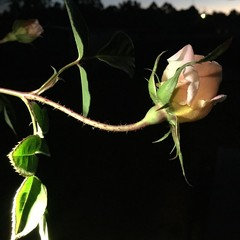
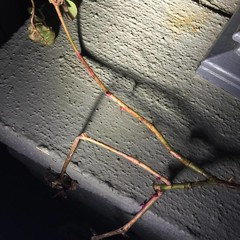
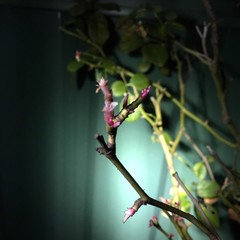
    Unfortunately it was dark when I got home but I tried to take some photos with a torch I hope they are clear. I wasn't able to get a photo of the blue moon we dug up, it had hundred's of red thorns down it's canes.


  • 9 years ago

    Hello Amber

    In those particular pics I don't necessarily see RRD, just some pretty sick roses. When you do get a chance could you post a pic of the really thorny stems? I'd like to be certain it is RRD before we discuss disposal. As far as I'm aware, pretty much all the other rose issues are curable ,or the rose can live with it (like rose mosaic).


  • 9 years ago

    Unfortunately we dug the one (blue moon) with all the big red thorns up and it's already been disposed so I can't get a picture of it. The photo with the unopened bud, I see lots of tiny prickly thorns down the stem, is this not unusual? Sorry i'm new to all this and cannot figure out what the issue is or what i'm doing wrong! I'll see if I can get better photos of some of the others in daylight hours.

  • 9 years ago

    The rose does indeed look sickly. Does not look like herbicide to my eye anyway. Let me say if you where in America it sure looks viral and does indeed resemble rrd. Please post as many photos as is possible.

  • 9 years ago

    Are these roses anywhere near any of the following plants:

    Dates

    Royal Pawlonia trees

    Peach trees

    Hackberry trees

    Redbud trees

    European Mountain Ash

    Red Currents (or black currents)

  • 9 years ago

    Hi Ann. I'm glad you posted. Are those plants allelopathic toward roses like black walnut is, or are they disease vectors? You've got a new wrinkle for me, lol.

  • 9 years ago
    last modified: 9 years ago

    Thanks everyone, I will post more photo's later today, unfortunately as we are in winter we don't have much foliage on the bushes so it's a bit hard to see the extent of it at the moment. I spoke to rose nursery over email and they did think the yellow patterned leaves looked like mosaic virus.

    To answer your question, they aren't planted near any of those trees, but 3 of them are planted by a juvenile lemon tree and lime tree.

    EDIT - Can I also ask, if this is a combination of multiple issues, what I can do to nurse them back to health? Up until this point the most we've done is spray with eco oil occasionally and a yates rose spray when we've seen blackspot or downy mildew.

  • 9 years ago

    If I'm remembering right it has to do with a phytoplasma that causes witches broom like growth in pawlonia trees. I would have to go look up the rest of the relationship.

  • 9 years ago
    last modified: 9 years ago

    Amber, we need to know more about your growing conditions. Also, have you been treating DOWNY, or POWDERY mildew? There's a vast difference. Powdery mildew is exactly like it sounds, a whitish powdery coating that disfigures the leaves. DOWNY mildew is a deadly disease that affects the whole plant, causing rapid die back, loss of cane and eventual death if it continues unabated. You can Google to see the difference.

    Where in Australia are you? How intense is your summer sun? What aspect are your roses growing in (full sun, morning sun, evening sun, partial/shaded...you get the idea)? Is there reflected heat from hardscape? What is your soil like? Do you water? Do you mulch?

    There's not much you can do for the mosaic. It usually weakens a plant if it's rampant, but roses can grow for many years before they succumb to it. In warmer weather the leaf mottling usually disappears and you will forget it's there. The cercospora and black spot should be controlled by the Yates spray, but it is best used as a preventive, which means spraying BEFORE symptoms appear.

    For the sunburn I'm seeing, you can do two things: work to keep a good foliage canopy on the rose (see below), and/or supply some shade, either with a structure or by moving the rose.

    If that is powdery mildew lesions I'm seeing, then it's very difficult to control. There are a couple of chemicals available here in the US, but I don't know if you have them there...they aren't terribly effective anyway. There's a hot water treatment that supposedly works (spraying HOT water on the canes, trying not to cook the roots, lol), and Jeri in CA swears by spreading fresh horse manure around the rose. Just don't let it touch the rose itself. In the meantime, any cane that is girdled by a lesion is a goner and needs to be cut back below the damage. It can travel rapidly down the canes.

    General good culture will go a lonnnnnnnnnnnnng way toward improving your roses' health, as long as they aren't being slammed with weather/climate beyond their ability to cope. Make sure they aren't water-stressed. Fertilize. Add compost. Start a PREVENTIVE spray program (hopefully you can discontinue when the plants perk up!) when the first new leaves grow. Mulch.

    Then cross your fingers :)

  • 9 years ago

    Thanks for your reply, you are right I did mean POWDERY mildew!! We are in Sydney, our summer sun is pretty intense, but we haven't had particularly scorching weather in 6 months. The winter sun is quite mild and at the moment it is pretty frosty here.

    Our roses are all planted in different soils because we have worked on the beds for 2 years at different times and replaced a lot of the soil that was already here. Some are in good quality rose specific soil, some in clay soil, some in a generic garden soil. We do mulch. Would the red splotchy stems i'm seeing be an indicator of downy mildew?

    Thanks for your suggestions, I will work on them and see how they go come spring in a month :)


  • 9 years ago

    Herbicide sprays can travel a long way on even the slightest of breezes. And the damage may take several months to show up in new growth. It also can take a long time to dissipate. So don't be surprised if there is some further damaged growth. Water is the key thing. You need to flush the roses out and keep them very well watered for some time to help them shake off the toxins.