Software
Houzz Logo Print
luaygh

Disease ID

9 years ago
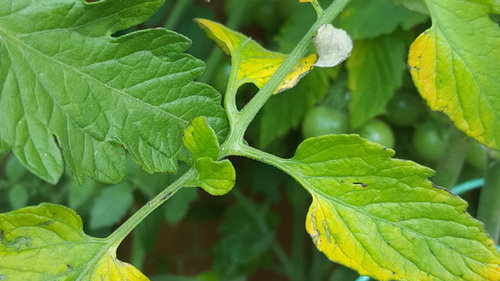
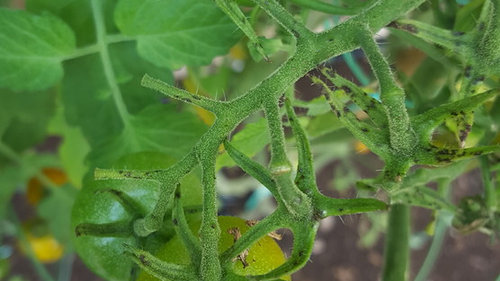
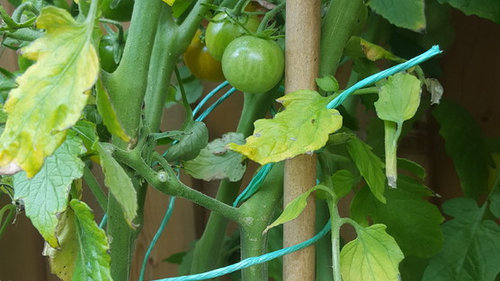
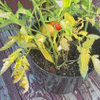
Some of my tomatoes have been battling some sort of disease which I think is either early blight or septoria. Can I get a confirmation on this?

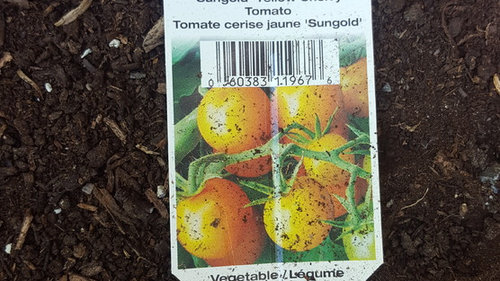
The hardest hit is my sungold. Another yellow variety (Carolina gold) is hit hard. Other varieties are more tolerant and seem to be thriving. I grow a variety of hybrid and heirlooms.

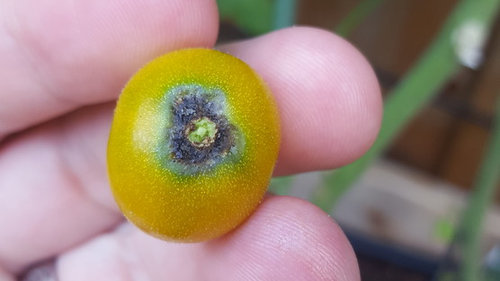
Also some of the fruit has black discoloration around the stem. I'm cutting that off and still eating the fruit. Should I just diacard the affected plant/fruit?

I have been treating on rotation with sulfur and neem.

Heavily pruning affected foliage.

Thanks!


Comments (16)

  • 9 years ago

    It could be septoria, but think it's more likely to be bacterial spot with some drought or nutrient stress. Have you been fertilizing regularly? With what/how much/how often? How often/much are you watering?

    The fruit is safe to eat. Don't use it in canning, though, as diseases can affect fruit pH.

    Make sure you wash hands and disinfect pruners and other garden tools with a mild bleach solution before using them on other tomatoes or pepper plants after using them on affected plants.

    Copper is usually more effective for bacterial disease than neem and sulfur, although at this point you won't cure anything but just try to manage it and slow it down. Make sure you're also spraying your other plants that are not affected, as fungicides available to home growers work best to prevent or delay disease onset; they are not curative.

  • 9 years ago

    I don't bother with canning because I don't grow enough for that purpose. What I did last year was freeze the cherry tomatoes for use in sauces through the winter.

    I fertilize every 7 to 10 days, rotating with a fish emulsion called fish plus(1-10-10) and with a granular tomato food miracle gro fertilizer.

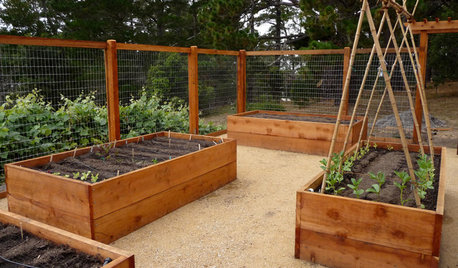
    The raised beds are new this year, and I loaded them with Triple Mix as well as extra sheep manure and granular Jobes organic slow release fertilizer.

    I believe this started developing after I got back from vacation in late may/early june, during which I had drip irrigation going. I rained quite a bit during that time as well, so I know for a fact that the raised beds were being over watered, especially when the plants were so small.

  • 9 years ago

    I don't really see anything on the leaves other than some signs of excess water yellowing and the new growth color looks good..

    But the stems and fruit are well dotted and that usually means bacterial rather than fungal issues. I agree with gb that it is most like bacterial spot. Fungicide of your choice but I also agree that you will the copper based fungicides to be far more effective as they have anti-bacterial properties not found in the others.

    Dave

  • 9 years ago

    New growth is vigorous and very healthy. But the yellowing and spots is crawling upwards and I am removing affected foliage on a daily basis. The only watering I do to the raised beds is when I fertilize. The rain takes care of the rest.

    I'll pick up some copper spray. The only copper based fungicide available here is bordo. Any downside to humans and/or pets?

  • 9 years ago

    In quantities used in home gardens, copper is very safe when dry, but you don't want to get the spray on pets or kids, who may lick themselves/put their hands in their mouths and eat it or get it in their eyes. So just make sure they stay away while spraying. Copper can be irritating to skin, mucous membranes, and the GI tract.

    I would wear long sleeves and gloves when spraying to avoid too much skin contact. And any time I spray anything in the garden, even products touted as completely "natural" and safe, I shower off afterwards, as one can develop contact sensitivities to any substance. For the same reason, and because because people can be allergic to anything/develop allergies to anything, I always wash produce from the garden that has been sprayed with any substance before eating/serving.

    There are organic copper options, like copper octanoate, here in the USA at the retail level, although you usually have to order it online. Some brands: Bonide, Southern Ag, Monterey, etc. Not sure about availability in Canada.

    All copper can be toxic to aquatic life. In the amounts used in home gardens, I wouldn't worry about runoff, but you might want to be conscientious about dripping/drift if you have a pond as part of your landscaping.

  • 9 years ago
    last modified: 9 years ago

    Just an interesting point I hadn't realized before this summer...

    Earlier this year I called my county Ag. Agent about 2 diseases which I had never seen before which took down 2 different plants very quickly - each showing different symptoms.

    I should preface by stating that I don't use fungicides.

    The rest of my plants had their usual issues of early blight and septoria, but I was hoping to learn these 2 new issues and their symptoms.

    He came for a visit and brought with him a field guide of tomato diseases.

    There were so many different types of fungi, bacteria, and viruses in that book that it was quite impossible - without sending a sample off to the lab ($35 fee) - to narrow down the exact disease. Some have symptoms fairly easy to diagnose, but there are many for which field diagnoses (let alone a photo on the internet) is just not possible.

    BTW... there's an online version of the Field Guide. The book he brought even had photos of the symptoms.

    The end point being that knowing how to prevent, manage, and develop strategies for tolerating and planning for future crops is much more important then id'ing individual diseases.

    And of course, being able to distinguish the difference between nutrient/pH problems, environmental issues, herbicide damage, and disease is also of importance. At least with nutrient, environmental (ie... watering,) and pH issues there's a measure of 'cure'.

  • 9 years ago

    A certain level of ID is necessary to know what to do to prevent in the future. Especially with soilborne wilts. Also, some diseases should be reported to extension offices, including serious, rapidly-spreading diseases like late blight as well as diseases/pests that are new to an area.

  • 9 years ago

    I'm not sure if we have the equivalent "extension office" or a similar system as you do in the US here in Canada. I would presume so, but I'm not familiar with it.

    The reason I was looking for an ID is because I wanted to know if it was fungal, bacterial, viral... Would help me determine a course of action for this season, and plan for prevention (or at lease mitigation) next year. I don't have much land, and I cannot really rotate crops. The downside of an urban backyard I'm afraid.

  • 9 years ago
    last modified: 9 years ago

    I shall leave the door open to the idea that my region, and it's high incidence of tomato disease, makes for a different response than other regions. However...

    The point the county agent made was fairly simple... regardless of the disease, the only thing you can do is work on methods and practices that rely on prevention. If you have the space... a 4 year rotation schedule. If you don't have the space, rotation is not possible, so what can you do? Go to containers. That's it.

    You should remove all diseased, or possibly diseased material... either burning it, or removing it from the area.

    If you have little, to no, tolerance for disease, then use fungicides from day 1.

    Think air flow.

    Practice good watering techniques.

    If it's a slower spreading issue, remove as much damaged material as practicality allows.

    Practice good garden hygiene.

    What did I forget?

    In any case... like he said... there's little you can do. If you want to be sure, then do like like the commercial concerns in my area who have a financially vested interest in identifying problems... drop the $35 for a lab test to identify the disease.

    Now, if one wants to contribute to such causes as late blight maps, there's nothing wrong with that, but it too must be lab identified for an accurate report. And if there is late blight spreading into an area... what is the recourse? Begin spraying? Start pruning for air flow? Changing your watering practices? Not bringing in anything from other gardens? - These are all the things that, if you have no tolerance for disease, you should have been doing from day 1. There are no cures.

  • 9 years ago

    I don't think those recommendations are just for your area. They're for all areas. Those are all good cultural practices that reduce and prevent disease.

    But many home gardens can't afford to rotate "crops" every 4 years due to lack of space. In those cases, knowing what you have can help with choosing resistant varieties.

    In addition, if you're a no-till gardener and you know you have, say, southern blight, you may rethink your no-till philosophy for the affected area.

    And, as you point out, some things you can't do anything about. Thrips, for example, are notoriously difficult to control. Rotation won't help. Air flow won't help. If you know your plants are going down frequently enough to a disease that gets diagnosed as TSWV, you have enough information to decide whether or not you want to stick to resistant cultivars.

    And so forth.

    I'm not arguing with your larger point that cultural practices are of the utmost importance. But knowing what you're dealing with in your garden is key to informing cultural practices.

    Even with common foliage blights, both bacterial and fungal, and viruses, it can help to know what you're dealing with because it helps you to gauge risk of spread to other plants in your garden and help inform your decision on whether or not to pull diseased plants immediately to be safe or risk trying to let them outgrow or learn to live with the disease enough to produce some yield. It also helps you to gauge whether it's even worth it to see whether you'll get some harvest, as some diseases ruin fruit quality to the point of being not worth eating while others spare fruit entirely or only wreak cosmetic damage.

    As for LB, the point is not to help only yourself but to also help others. So getting an official diagnosis any time there is a catastrophic disease to your plants may not help you, but it alerts local agricultural authorities who help others in the long term by tracking, recording, and warning. Commercial farmers do have some measures they can take, and it's probably really important to their economic survival to know that LB has been seen in the area.

    So maybe you don't always have or need the certainty by shelling out for lab tests. Certainly, it's not worth it to home gardeners. But it can help to learn enough about garden diseases to give you an idea of what risks you're dealing with and how to respond.

  • 9 years ago
    last modified: 9 years ago

    I think the point about finding resistant varieties is important, and that's something else that I probably should have prefaced my original comment. I pretty much grow OP's and heirlooms, and my conversation with the Ag. Agent was predicated on that fact. I did forget to mention that point above, as the context between him and I accepted that as one of the starting points.

  • 9 years ago
    last modified: 9 years ago

    There are OP varieties with documented disease resistance. I believe one of the only bacterial wilt resistant cultivars that isn't a rootstock-only variety is OP (Neptune), for example. As well as one of the few late-blight resistant cultivars (Legend). There are quite a few early blight resistant OPs.

  • 9 years ago

    Perhaps there are resistant OP varieties, but no thanks. Those may be beneficial for others, but I rotate to protect from the worst of diseases. For the majority of the other problems, I have a lot of tolerance.


    You really have to see the field guide to fully get his point. We can sit here and say... "that's this disease, or that disease..," but until you see the images right next to one another... there are too many symptoms that over-lap. And this agent, who gets a lot of experience working with the commercial tomato farms (Hunts, Delmonte, et al...) in my county, is saying that neither he, nor the agricultural technicians working in the commercial tomato fields, can make positive id's for many problems without the lab tests.


    I tend to believe him.

  • 9 years ago
    last modified: 9 years ago

    As I said, it's not always about specific, positive IDs. But making an effort to get in the ballpark and figure out what's going on is an important part of the good cultural practices you're talking about.

    If you learn the symptoms of bacterial wilt, for example, and learn how to diagnose it by looking for the bacterial ooze, then you know that you have a bed infected with it and can take measures--either avoid planting susceptible crops in that bed if you have the space or take measures with resistant varieties, grafting, or biological controls the next year. Knowing the difference between how BW presents vs. verticillium or fusarium can make a huge difference, as lots of F and V resistant varieties have no resistance against BW.

    Another example: knowing how to determine whether your suspected nutritional deficiency or fungal disease is actually mites is extremely helpful. Knowing that mites are in your area, which conditions favor them, and what early mite damage looks like can be the difference between pointlessly spraying copper fungicide and watching your plants go down vs. getting a potentially devastating mite problem under control early.

    I'm not saying that you always have to have a lab-determined definite diagnosis by PCR or what have you, so it's not particularly productive for you to argue as though this is what I'm saying.

    I'm saying that acquiring the knowledge and experience to get a general idea of what pests and disease are common in a given area and look like in a given garden definitely helps the gardener to develop more productive and effective practices. This is even more important for those of us with limited space to rotate crops or people living in high-pest-pressure areas where viruses and mites are a big problem.

  • 9 years ago
    last modified: 9 years ago

    In other words, I can agree with the idea that a definite, confirmed, scientific diagnosis is not always necessary. And we rarely get hung up on those here, as common foliar diseases tend to have common prescriptions.

    But in some cases, such as soilborne disease, it IS important to get a more definite diagnosis. Even if you have the space to rotate your crops, some soil diseases have a wider host range, so it's important to know which crops you can rotate in safely. There aren't that many home gardeners with the luxury of unlimited space that they can leave completely fallow for long periods.

    And getting a passing familiarity with viruses in your area is important as well, since those cannot be solved by rotation, mulch, airflow,, or other cultural practices and are pretty much down to luck.

Sponsored
NME Builders LLC
Average rating: 5 out of 5 stars2 Reviews
Remodeling Company in New Albany, Ohio