

Zinnia trouble?! HELP! It's spreading!
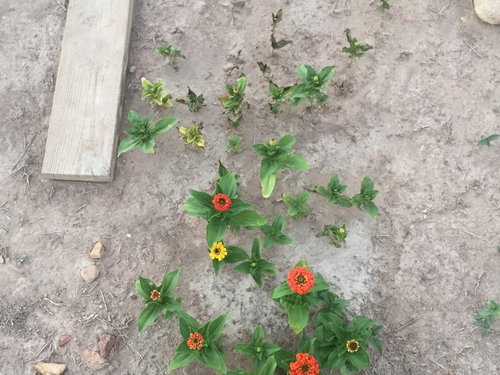
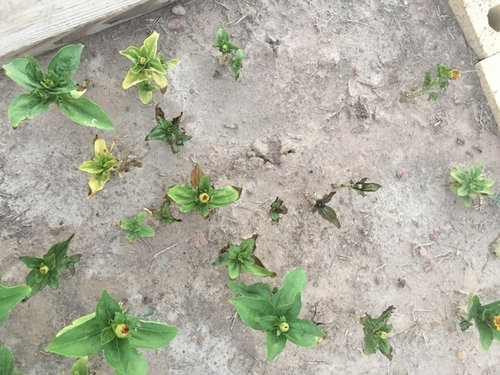
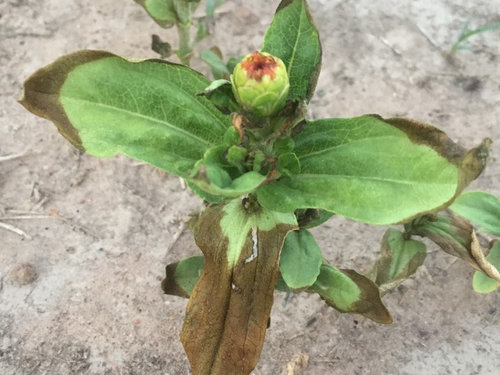
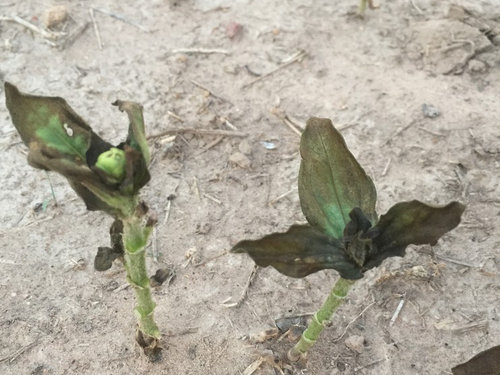
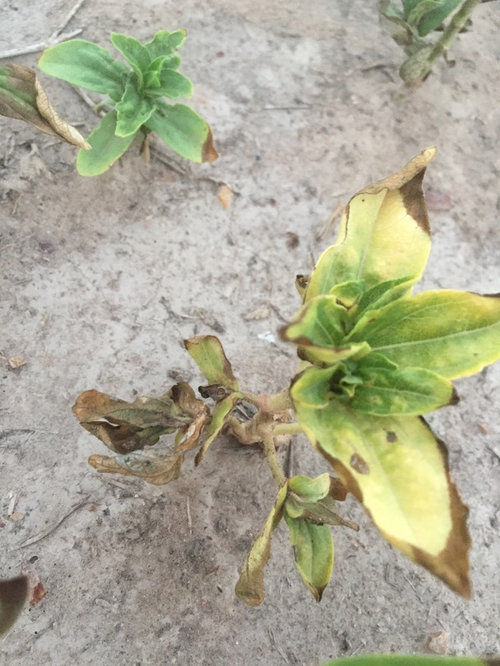
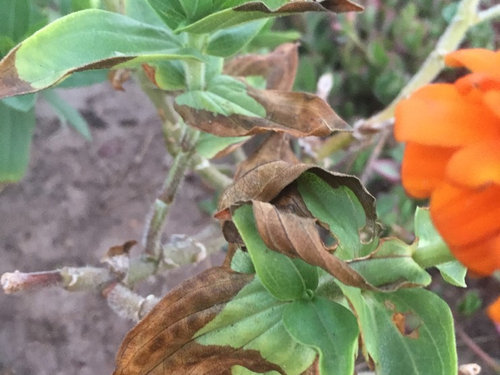
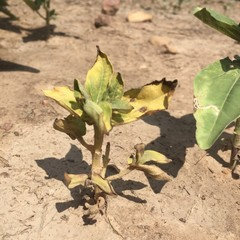
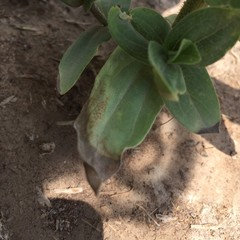
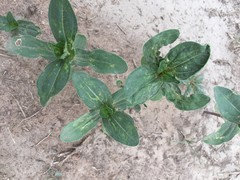
I'm new to the whole gardening thing, so I've no clue what's going on here. I've searched all over the internet, and can't seem to find anything that looks exactly like this. Can someone please help me before it spreads to my healthy ones? I apologize if my photos don't show up correctly. I'm using my cellphone. By the way, the leaves are kinda slimy. I've recently sprayed for ants around the flower beds because they were eating up my seeds every time I planted them (hence the late start). I'm not sure if that would have something to do with this. Also, because the ants did not respond to the spray, I sprinkled granules around the flower bed. A couple weeks ago I sprayed the garden with a dawn dish soap/water mix, and thought maybe this could be the cause too. Like I said, I have no idea what's going on. If someone could enlighten me, I would greatly appreciate it. Y'all have a good one!
Comments (27)
 9 years ago
take a tablespoon or small hand shovel .. and FIND OUT.. if there is any moisture an inch or 3 down ... test a couple spots over the area ...
it looks real dry ...
it always amazes me.. how other things can be attracted to.. and attack stressed plants ...
if you dont fix the stress ... then it doesnt matter what you do.. to try to fix the secondary problem ...
never heard of ants attacking seed ... but then.. TX usually does things their own way .. lol ...
kenLindseed 8b TX
Original Author9 years agolast modified: 9 years agoThank you! I did as you suggested, and it was dry 3 inches down. I couldn't go any deeper than that. I could barely get there! The ground is really hard, and it does dry fast. It's also VERY sandy and rocky, with some clay.
LOL @ TX doing their own thing; that is so so true.
Like I said previously, I'm new at this, so what do you suggest I do to fix this issue?
Editing to say, it is a real thing, ants eating seeds. I have found them on top of the soil, with a hole in the shell, and the embryo gone. I have watched them eat little freshly germinated zinnias alive as I was planting them. Very sad.
Related Professionals
Pensacola Landscape Architects & Landscape Designers · Saint Joseph Landscape Architects & Landscape Designers · Knoxville Landscape Architects & Landscape Designers · Frisco Landscape Architects & Landscape Designers · Des Moines Landscape Architects & Landscape Designers · Bennington Landscape Architects & Landscape Designers · Ogden Landscape Architects & Landscape Designers · Rolla Landscape Contractors · Lufkin Landscape Contractors · Grand Rapids Landscape Contractors · Salt Lake City Landscape Contractors · Dothan Architects & Building Designers · Tulsa Architects & Building Designers · Akron Architects & Building Designers · Billings Architects & Building Designers- 9 years agolast modified: 9 years ago
Hi Lindseed,
Wow! That is some serious trouble.
" A couple weeks ago I sprayed the garden with a dawn dish soap/water mix, and thought maybe this could be the cause too. "
Just out of curiosity, why did you do that?
" Like I said, I have no idea what's going on. "
I don't either, and I grow a lot of zinnias. As an experiment, try cutting off some of the progressing dead areas, to see if they immediately reappear, or to see if there is some delay in the reappearance in the dead area. The purpose of this experiment is to discover whether this is a progressing disease, or a response to an environmental stress. This picture shows an example of the type of cuts I am suggesting. You can click on the picture and hit your F11 key for an enlarged version.
If this is a progressing disease due to bacterial or fungal or viral disease, cutting off the progressing disease should cause a delay in the progression, whereas if it is chemical or environmental the brown areas should reestablish themselves almost immediately.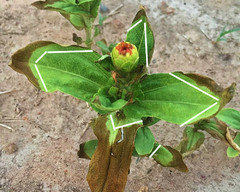
ZM
Lindseed 8b TX
Original Author9 years agolast modified: 9 years ago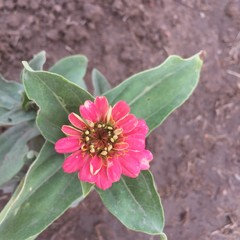
Zenman,
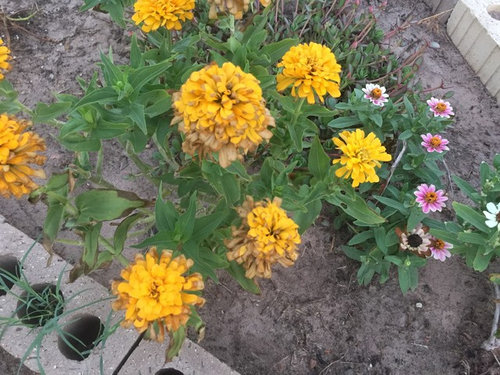
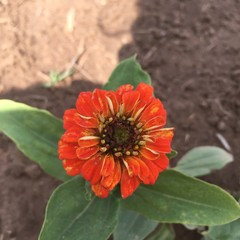
Thank you so much for your reply! I feel as if I'm talking to a celebrity. Lol! You have been my inspiration for growing zinnias. These photos show an attempt at breeding; pretty bummed it's being overtaken by whatever this is, but hopefully with some help, I can learn something new, and be better off next year.
I did as you suggested and clipped the edges of the leaves off. I am VERY curious to see how this turns out.
I wanted to point out something I noticed on one of them; the whole thing is yellow. Not just the leaves, but the stem as well. What could be the cause of this?
I have something else interesting happening; white spots on the petals? I was so excited about this, and it seems everything that could have possibly gone wrong, has gone wrong. UGH
Oh well; like I mentioned, I am VERY new at this, and am so excited to learn everything I can.
P.S. I used the dawn dish soap because I read it would steer the ants away. It was ineffective.
Lindseed 8b TX
Original Author9 years agolast modified: 9 years agoWow, I don't know why it put my photos at the top, and mixed them all up. Sorry 'bout that. I'm expressing my newbieness. LOL
I'd also like to add that this happened pretty much overnight. One day they were beautiful, then the next morning a few of them were just COVERED in this, and it has progressed quickly ever since.
Photo was taken July 25. You can see I've pulled up a few since then. (Sorry for the toes Lol)
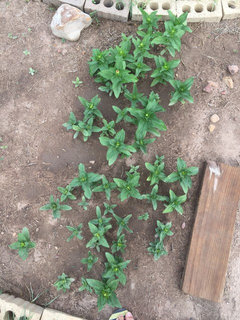
Lindseed 8b TX
Original Author9 years agoThank you HighColdDesert! I didnt amend (mend?) my soil at all. I jumped the gun because I was so excited to get these in. I started making compost a couple months ago. I think some of it is ready to be worked in. I guess this year will be for getting my soil ready, and next year will be better.
The yellow zinnias, though, are about 5 or 6 months old, and have just recently started showing signs of this. I have others I planted around the same time who also have the same symptoms. I have torn off just about every leaf. My profusions (I think that's what they are) just started displaying the same symptoms as well. These are all in a different flower bed than the younger ones. I have a thumbelina which is 3 months old in the same flower bed as the ones in question and is doing amazing. In other words, it's perfect.
- 9 years ago
Hi LIndseed,
By the way, I responded to your message over in Dave's Garden.
" I used the dawn dish soap because I read it would steer the ants away. It was ineffective. "
That soap may be the problem. Incidentally, by any chance were those ants fireants? As it happened, many years ago we moved out of Fort Worth about the same time the fire-ants were moving in.
One of the good things about here in Kansas is that it is too far north for fire-ants, killer bees, and armadillos. And how were the ants "eating up my seeds every time I planted them" ?? That is bizarre -- were they actually digging your seeds up? Do you still have those ants? I don't see any of them in your pictures.
That last picture shows some reasonably healthy zinnia plants on July 25 . After that you (1) sprayed for ants, (2) sprinkled granules, and (3) hit them with Dawn dish-washing soap. Just out of curiosity, what was that spray, and what were those granules ??
The possible good news is, that with your longer Texas growing season, you probably still have time to get in a full season of zinnia growing. I could plant zinnias here in August and get them in bloom before our killing frost, but I wouldn't have time to do a lot of pollinating and seed maturation before frost, and you probably still could. I remember one Christmas in Fort Worth when we still hadn't had a killing frost. Here in east central Kansas we can expect a killing frost sometime in the last part of October.
I see a few tiny zinnia seedlings in that last picture. Obviously you don't plant your zinnias in rows, but how do you plant them? And did you actually see any ants carrying your zinnia seeds?
ZM
Lindseed 8b TX
Original Author9 years agoZen_Man,
I do believe they were fire ants. Since I sprayed last, they have not returned. However, there is a different type of ant now who seems uninterested in my seeds/seedlings. They are very small and orangish and move super fast. But I am not at all worried about those.
I noticed when I first planted my profusions a couple months ago, they were inhabiting the seedhead. I have many deadheads I have yet to try to collect seeds from, so I'm not sure if they were eating them or not. I DID have a deadhead from a Magellan (I think) that had seeds sprouting still attached to the flower, and there were several seeds that had holes in them and the embryos were gone; I assume it was the ants funny business.
I germinated a few seeds in paper towels, and as I was planting them, the ants were gnawing at the cotyledon. I actually saw that with my own eyes. I never saw them carrying the seeds off, but I did see them above ground, when they were in fact planted, and had been robbed of the embryo. Very strange indeed.
I have to clear up space on my phone, but later today I will show a photo of the cotyledon missing off of some volunteers from some zinnias I have planted in a tire. The ants have migrated into it, and I'm assuming the ants did that as well. VERY FRUSTRATING to say the least.
As for the way I plant my zinnias; they were in rows, but I have pulled quite a few up. To be honest, I planted them way too close together. Hehe.
The little seedlings you see off to the side were actually just sprinkled and mixed into the dirt. I was experimenting with germination from a specific seedhead and had more success than I thought I would.
Lindseed 8b TX
Original Author9 years agoOh, here's another thing that happened. I use well water to water my plants, and just recently put a chlorine tablet into the holding tank, which holds 1200 gallons. Could that also maybe have a part in my predicament?
Lindseed 8b TX
Original Author9 years agoPhoto of cotyledon missing. I saw them one day and I was like, "Yay, volunteers!", then the next day, they looked like this.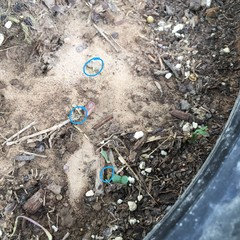
- 9 years agolast modified: 9 years ago
Hello Lindseed,
OK, in the old tire I see the missing cotyledons, but I don't see any ants. The only ants that I know about that would, or even could, remove zinnia cotyledons are those big red ants. I think they are called Harvester ants. They do clear a spot of all vegetation around their den. A bare circle maybe a yard or more across. But if they were living in that tire, there would be at least half a dozen of them in the picture. The fire ants that I saw in Fort Worth had only a few inches cleared around their dens, which were located about every 8 to 12 feet apart on both sides of the bike trail I was using. They literally seemed to be spreading by walking down the bike trail.
I know a phone is not a camera with a close-up lens, but can you get some kind of pictures of these ants? Some phones can focus pretty close to the lens.
" I use well water to water my plants, and just recently put a chlorine
tablet into the holding tank, which holds 1200 gallons. Could that also
maybe have a part in my predicament? "I don't think so. That seems like a reasonable dilution of the chlorine tablet. I am much more interested in how much Dawn liquid detergent you put in how much water to try to banish the ants. If you used a concentrated detergent solution, it could actually serve as a herbicide and kill plant life. A lot of seemingly innocent things can serve as herbicides, vinegar for example. And detergents that aren't diluted a lot.
" As for the way I plant my zinnias; they were in rows, but I have pulled
quite a few up. To be honest, I planted them way too close together.
Hehe. "I also plant mine in straight rows. I put stakes at the ends of the rows and tie a string tight between the stakes to act as a straight guide. Yes, I also deliberately plant mine much too close together because I do cull them heavily at first bloom, keeping only my favorites. The more zinnias you grow, the better your chances are of finding something interesting.
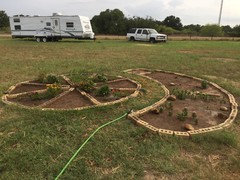
That bigger picture is very helpful. That's ingenious using bricks as edging. That is an artistic layout of the beds. I see you have some unused space in the beds (courtesy of those ants?) plus you could easily expand your beds by moving the bricks and hoeing out the grass.
" ...but hopefully with some help, I can learn something new, and be better off next year. "
You can learn all sorts of stuff this year, and with your longer growing season, try some new things this year. We need to learn lots more about your ants. If you have an old unused aquarium you could catch a bunch of them and start an ant farm, and study their ways. Or not.
When we were kids on the farm, we used to get a quart mason jar and laboriously catch red ants one at a time, and toss them into the jar and, when we had a big bunch of red ants in the jar, take it over to a different red ant den and dump the already mad strange ants onto that den. And watch with fascination the ant war that ensued. We told our Mother we were just trying to teach the ants to get along together. Which wasn't completely untrue.
But we can be nicer to your ants as we try to study and understand them. That's just part of better situation awareness. Perhaps after all that Dawn detergent, your ants are already fresh and clean. And totally confused, because they do identify each other by smell.
ZM
Lindseed 8b TX
Original Author9 years agoZen_Man,
Here is a photo of some ants living in my profusions.
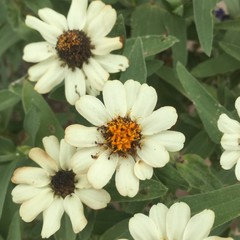
I used a spray bottle I bought from Walmart and just put a little squirt in there.
Actually, I'm lying to you. Now that I think of it, in desperation, I took the soap bottle after all of my seedlings went missing once again, and squirted it all in the flower bed and then watered it in. Wow. How embarrassing. LOL. Desperation will make you do crazy things; I am living proof.
Eventually I would like to utilize more space out here. I am in the country with some acreage, living in a camper trailer with 3 children and a husband. It has been an adventure.
I like the idea of the ant farms. I have always wanted to do that. Thank you about my garden plan. I did have vegetables in there, but they were stunted and whatever they produced shriveled up at a certain stage, or it was deformed. When I pulled up my zucchinis, a swarm of ants emerged and went everywhere. Once again, I believe the ants had something to do with that. Here is my garden before I pulled up the vegetables.
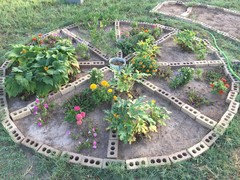
Lindseed 8b TX
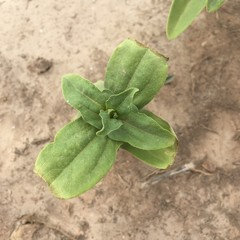
Original Author9 years agoOh, and as for the experiment. Here is what's happened so far.
Lindseed 8b TX
Original Author9 years agohttp://forums.gardenweb.com/discussions/1537297/insecticidal-soap-burns
I just found this, and am now completely convinced it's from the dawn dish soap. Oh how I regret that.
Lindseed 8b TX
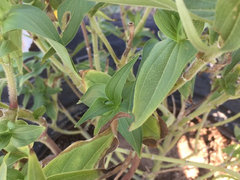
Original Author9 years agoActually, not completely convinced, because it's also on the zinnias in the tire.
- 9 years ago
Hello Lindseed,
" Now that I think of it, in desperation, I took the soap bottle after all
of my seedlings went missing once again, and squirted it all in the
flower bed and then watered it in. "That would be a no-no. As someone said in the link you gave, Dawn is not soap, but is a detergent. Most of the damage you have pictured is probably from the Dawn detergent overdose. You have probably seen the television commercial where a single drop of Dawn makes a dramatic difference.
" Oh, and as for the experiment. Here is what's happened so far. "
It's too soon to make any conclusions based on that. Has it been less than 24 hours since you made the cuts?
" I just found this, and am now completely convinced it's from the dawn dish soap. Oh how I regret that. "
That mega-dose of Dawn needs to be washed out of the soil. Hopefully you are due for a rainy spell. It would use a lot of your well water to try to wash it out yourself. If you over-use a well, it can run dry. During the drought of 2012 our well ran dry from overuse of it to water our gardens. It would recover somewhat in a few hours, but we had to reduce our water usage to what our water table would supply, and water just our best plants. It's OK to use Dawn as a wetting agent in your sprays, but use an eyedropper and add it a drop at a time. One drop might be enough.
" Actually, not completely convinced, because it's also on the zinnias in the tire. "
And, since you did not apply Dawn to the tire, that foliage problem is probably caused by Southern Blight (Sclerotium rolfsii) or Gray mold (Botrytis cinerea). The plant debris in the tire favors both fungus diseases. Notice that this seems to be more of a spreading infection than the near whole-plant distress from the Dawn. Remove as much of the loose organic material from the tire as you can and replace it with sand. A bag of children's play sand from a home store might be sufficient, or you might have some other source of sand available.
If you want to spray the plants, you could use a systemic fungicide like Bayer Disease Control for Roses, Flowers, and Shrubs. Or, if you prefer a non-toxic solution, Green Cure consists of Potassium bicarbonate (an ingredient in baking powder) and a proprietary wetting agent. Green Cure is not systemic, so it needs to be reapplied after every rain and it does not protect new growth like systemics do. I have used both products with satisfactory results.
ZM
- 9 years agolast modified: 9 years ago
Hello again, Lindseed,
" Here is a photo of some ants living in my profusions. "
Actually, they are not living there. They are just feeding on some of the nectar that butterflies, bees, and hummingbirds normally go for. They are tiny, you know. Although some of them can give you a sting that you will notice. Unless you are really busy. In which case, you might not notice. They are little.
ZM
Lindseed 8b TX
Original Author9 years agoZen_Man,
I once was lost, but now I'm found. Lol! Thank you for all the great information. I definitely don't want our well to run dry; that's all we have at the moment.
It's been raining all around us for several days, but we haven't gotten anything. The little one horse town I live in has an anti-rain dome. It's been that way my whole life. I have radar pictures to prove the circle the rain makes around us. People don't believe me when I tell them, but it's true. It rained just 10 miles away, but we didn't get a drop. I hope we get some soon. The lack of is really taking a toll.
I will check back in the morning to see progress on the foliage. I will also be investing in some of the Bayer Disease Control. Luckily enough, we just bought 4 bags of sand for the kids sandbox. I'm going to confiscate some and put it to good use. (:
- 9 years ago
Hi Lindseed,
Chuckle. We live in a similar weather "hole". Good luck. Keep an eye on those zinnias.
ZM
Lindseed 8b TX
Original Author9 years agoGood morning,
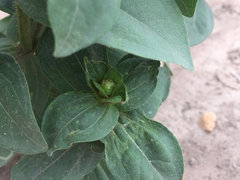
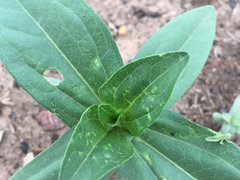
As of this morning, everything is looking pretty bad. It's supposed to rain the next few days; hopefully it will wash away my bad choices. I'd like to share some photos off something else that I've been noticing on my zinnias. Everything I can find points to calcium deficiency or cucumber mosaic virus. Any thoughts?
- 9 years ago
crikey .... zen can you address lack of water 3 inches down.. where the roots are supposed to be .. if you did and i missed it.. forgive me ...
OP is living a bit too much in instant gratification ... you need to give these things some water ... and watch the new growth like the last pic.. the ugly parts of the plant are not going to recover.. and you have to outgrow whatever problem you used to have ... have faith ... plant them.. and they will come ...
it has be addressed.. but i will restate.. horticultural soap is on old fashioned remedy .. back when dish soap was actually soap ... now its detergent. and i hope you didnt spray a detergent on the plants in blinding sun ... if so.. it wouldnt be surprising that you burned them ...
you have a COUNTY extension office ... and it might be worth the time.. to call and ask them about what ants are active in your county ... and how to deal with them ...
whatever comes of it all ... NEVER GIVE UP ... keep learning.. and have fun ... but be patient ..
it might be best.. for the long term.. to learn how to amend your soil ... so you have a better soil culture.. moving forward ... you have some bare areas in those beds.. where you could be3 working on that.. so that next season.. you could move the Zs ... to that area.. and then rework the soil in this area ...
frankly .. you got them this far.. and for a newb.. in that soil .. two thumbs up .. we should be discussing and focusing on next year .. rather than dwelling in the instant gratification of today ...
keep up the good work ...
ken - 9 years agolast modified: 9 years ago
Hi Lindseed,
" Everything I can find points to calcium deficiency or cucumber mosaic virus."
You are wise to be paying continuing attention to your zinnias. If your soil is caliche-based (if you dig down to the subsoil you find a layer of caliche limestone rock) then Calcium deficiency is unlikely. Otherwise, some of the foliage problems do look similar to Calcium deficiency.
As far as I know, Cucumber Mosaic Virus is not present in either Texas or Kansas. In fact, it was confined to the two coasts, according to my reference book.
However, there seems to be quite a bit of variation from one plant to another in your photos, and normally we expect a soil problem--a deficiency or too much of something--to be exhibited more or less uniformly among the plants. I see several interesting details in your photos, like these. (Click & F11 for a maximum view)
There is some obvious insect damage (the hole in the leaf) and those spots on the younger leaves are worrisome. I wish I could see the undersides of those leaves. If you have a magnifying glass you might want to inspect the backsides of your zinnia leaves, looking for anything out-of-the-way, like small sucking insects or insect eggs. Oh, and that young grasshopper has "dis-respected" your zinnia.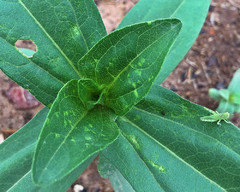
You might want to check with your County Agent to see what a soil test would cost. Or maybe he or she could just tell you something about the soil in your area.
Has anybody applied any herbicide in your immediate area? Like, applied a fertilizer that includes a weedkiller to the lawn ?
One approach to plant nutrition in the garden is to simply foliar feed with a really complete soluble fertilizer. I have had good results from Miracle-Gro Tomato Food, which contains more Magnesium than most of their formulas. Magnesium is important because it is a component of chlorophyll. I also use a lot of Miracle-Gro Bloom Booster Flower Food for its great Phosphorous content and good trace elements. It wouldn't hurt to mix those two products.
By the way, zinnias are one of the plants that are resistant to Cotton Root Rot, according to this link at Texas A&M. That is one thing you don't have to worry about. It might be a good idea to explore the Aggie Horticulture website.
ZM
 8 years ago
Hi Lindseed, it's been half a year since and wondering how your zinnia plot has evolved.
I am with Ken mostly on this issue although Dawn probably amplified the problem especially when the plants were so stressed.
Your soil back in July was too inhospitable with severe compaction and it's the best time now as ever in Winter/Spring to work on it , conditioning it nice, by adding a lot of organic matter that make it enriched and friable.
I understand that Zinnia like things on dry side, but it also like it well nourished.
Also, the plot need to be mulched well during warm season, just that it need to be clear of zinnia stems. Since you are in Texas, you have a similar climates to mine here in Australia and everything needs mulching in summer unless it's cactus. As long as you do not recycle diseased plant matter, Texas summer I believe is too parched for the mulch to hover plant diseases for sure. The situation that your zinnia plots are in is exposed enough never to endanger your zinnia with excess moisture I imagine?
I apologize to butt in so belated and uninvited and for my bad English. I was compelled to comment by seeing your soil so dry and hard. Good lack with your zinnia breeding, I am in it as well (thanx ZenMan and co.).
Sayuri.
- 8 years ago
I too am curious as to how your Zinnia plot turned out. Here in North Louisiana I have trouble with gray mildew spots on my zinnias, as well as grasshoppers eating holes in the leaves. Depending on how your watering when you do water, if it is overhead and the leaves are getting wet it's possible that some of your gray spots or mildew as well. If you would mulch around your plants it would prevent splashing from occurring and that could help.
One thing that no one mentioned I believe, is Aphids. That is another pest that we suffer from here as well. Some of your Leaf damage resembles aphid damage. And the trouble that you have with Ants could also point to that. Aphids are attracted 2 a substance called honeydew that is produced by aphids. And ants will actually Farm aphids so that they create more honeydew for them to eat. Colorful flowers particularly yellow-colored are most attractive to aphids. After a while a black mold is produced.
Write back and let us know how things are going. Hopefully this year you have some good compost to work into your soil, as far down as you're able to get it that is. I feel sorry for you having that hard Rocky dirt. Here I have brick light clay! So I feel for you!
- 8 years ago
I haven't seen a single aphid in any of the pictures. Since an infestation is pretty physically obvious, I'm not going down that path.
I would rather have seen a fire ant mound than the ants. Is that one in the picture of August 4 at 12:28? Those mounds, with the ants boiling out in masses are unmistakable.
Fire ants can damage plants by nibbling and dislodging roots, and and they EAT seed. But these images aren't screaming fire ant damage to me.
It does look like chemical burn of some kind......dish detergent, pesticide, or fertilizer. Was any mention made of fertilization? Also, was the well water tested? I had considerable damage to my 11 acre container nursery by not staying on top of water quality during a drought. The sodium levels skyrocketed! Symptoms very similar to yours.
Anyway, I'm too late to be of help for last year's crop but am interested in knowing how Lindseed resolved the problems.










HighColdDesert