Software
Houzz Logo Print
nandina_gw

Your thoughts/opinions, please

9 years ago

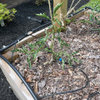
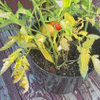
After 65 years in the plant growing/garden design business I am stumped. Presently I oversee a large Community garden which was relocated last winter due to a construction project. All is new including the soil placed into the raised box gardens just before spring planting. Many tomato varieties have been planted by owners in these boxes and all are thriving...except mine which I had to discard with a serious case of Bacterial wilt. (Yes, I ran the stem in water test to check and it turned very cloudy. No doubt of the problem.) I know it was not in the seeds because I raise seedlings for 10 friends every year and their plants are thriving. I have one type of each tomato I lost to wilt thriving in pots on my patio.

Lingering in the back of my mind is the following thought. Organic me decided to dry banana skins this year, reduce them to powder and plant it at the base of my tomatoes in my box garden for additional potassium. This technique is well known and highly touted. With a bit of research I have discovered that bananas are infected with the same Ralstonia solanacearum bacteria known as Banana bacterial wilt. Now I am wondering...did the banana skins I used carry the bacterial wilt on them which infected my box garden tomato plants? It seems in the realm of possibility.


Comments (19)

  • 9 years ago

    That's a fascinating observation. If banana peels really carry a pathogenic bacterium, it would be interesting to know if composting would destroy that bacterium. I'm guessing maybe not. Ralstonia is pretty hardy. That being the case, and if you're going to dry and powder the peels anyway, maybe you should just bake the powder for a while. That should sterilize it.

    I routinely compost banana peels, and look forward to getting the potassium from them. Potassium is particularly relevant to my melons.


    nandina thanked daninthedirt (USDA 9a, HZ9, CentTX, Sunset z30, Cfa)
  • 9 years ago

    You'd have to assume that a bacteria that evolved to colonize a banana tree could survive in a new climate and soil long enough to colonize a completely different species of plant. Having worked in the grocery distribution centers, I can say that bananas are sprayed for insects at least once in their journey from tree to table. Don't know if the sprays are bactericidal but they are pretty powerful. You'd have to see if anyone's doing research on whether this particular bacteria can cross species . It could be a possible cause but bacterial wilts can come from many sources. I had it last year on at least two plants. I grew everything from seed, imported no new plants or even soil, changed nothing in my garden. This year I have heirlooms grown from seed in the exact same place and they look fine.

    nandina thanked aniajs
  • 9 years ago

    In my diatribe above I failed to mention that I followed directions for drying banana skins. First air dry skins, then bake in oven to further dry skins and then reduce to powder in food processor. I can find no definitive statement that heat kills bacterial blight.

    I do know that cucumber beetles carry the blight. But, this is a 'tight' grouping of growing boxes so doubtful that the bacteria would only appear in just one garden box.


  • 9 years ago
    last modified: 9 years ago

    That's an interesting thought Nandina! It sounds very possible.

    Worried that I might have introduced BW into my veggie garden using home-made compost containing lots of banana skins, I checked it out and it appears that BW does not overwinter in the soil in the north! Perhaps putting the banana skin powder in the freezer for a couple of weeks would be the answer.

    Linda

    nandina thanked Labradors
  • 9 years ago
    last modified: 9 years ago

    Re heat and bacterial blight sterilization, yep, it works. In fact, steam treating soil is a well used strategy for combating soil-borne blight bacteria. So it sounds like you already sterilized your powder. That is true that Ralstonia is tropical, but I think freezing won't kill it. In fact, cryostorage is a common strategy for Ralstonia cultures.

    Interestingly, transmission of bacterial pathogens to plants can happen effectively just off your hands. That's why sterilization of pruning tools isn't considered very effective, if you're holding those tools with hands covered in bacteria. So one might be careful about working in the garden after handling fresh bananas!

    BTW, as to "colonizing a completely different species of plant", that happens all the time. We're talking about a particular bacterial species. It's not something that is host-specific. In fact, many tropical plants are infected with Ralstonia. Bananas are just the only ones that we import into our houses.

  • 9 years ago

    Dan, if freezing doesn't kill Ralstonia, how come it doesn't live in the soil in the north?


    Linda

    nandina thanked Labradors
  • 9 years ago
    last modified: 9 years ago

    You can read here about cryostoring Ralstonia.

    http://plantpath.ifas.ufl.edu/rsol/CulturePreservation.html

    Can you give us references about it not surviving in the north? My point was just that freezing temperatures evidently don't kill it. Something else in the north does kill it, I guess.

    Maybe playing ice hockey on top of a garden bed kills the stuff?

    nandina thanked daninthedirt (USDA 9a, HZ9, CentTX, Sunset z30, Cfa)
  • 9 years ago
    last modified: 9 years ago

    First, Ralstonia solanacearum has a wide host range which includes both tomatoes and bananas. The same pathogen can infect different species. Some pathogens are very specific. Others are generalists. Both are normal to find in nature. R. solanacearum can infect over 250 species of plants in about 50 different families.

    Cucumber bacterial wilt (which also affects some other cucurbits) is a totally different species, Erwinia tracheiphila. Unlike R. solanacearum, it's not soilborne but is transmitted by cucumber beetles.

    There are different races of R. solanacearum. Race 3 is cold-tolerant. However, it's rare to find it in North America at this point. Race 2 is mostly in tropical regions and is not cold tolerant. Race 1 has the widest host range but does not overwinter normally in the north.

    nandina thanked gorbelly
  • 9 years ago

    It seems that it's the FLUCTUATING temps that do the virus in here in the north :)


    Here's a scholarly link to the subject http://aem.asm.org/content/76/21/7061.full


    Linda

    nandina thanked Labradors
  • 9 years ago
    last modified: 9 years ago

    Also, cryopreservation isn't really a good indicator of cold tolerance, as it's done under very specific conditions which are not found in nature.

    nandina thanked gorbelly
  • 9 years ago

    My point was simply that "making it cold" doesn't necessarily kill the stuff. Making it hot does. So baked banana dust ought to be pretty innocuous.

    nandina thanked daninthedirt (USDA 9a, HZ9, CentTX, Sunset z30, Cfa)
  • 9 years ago

    True! Baking would be a lot easier than fluctuating cold!

    Linda

    nandina thanked Labradors
  • 9 years ago
    last modified: 9 years ago

    Heat is a pretty reliable killer of most things. If you're baking the skins, they're unlikely to be the source of infection for the plants.

    As for the cold, rapidly bringing the temperature of something down to subzero and holding it there steadily is obviously a technique used to preserve many things that would not survive freezing under non-lab-controlled conditions.

    But under conditions in nature, R. solanacearum strains 1 and 2 are not going to survive a northern winter unless pretty deep underground. In 8a, though, it can probably frequently and easily survive in the environment.

    nandina thanked gorbelly
  • 9 years ago

    Many thanks to all for your thoughtful research and comments on this subject. It would be my guess that the bananas probably are not the cause of my bacterial wilt problem. At least I hope so because of the common addition of banana skins to compost piles. Sure hope one of the newly discovered bacterial strains that affect the deep tropical bananas has not begun hitchhiking.

    Also, A big thank you to those who urged growing Momatoro tomato. It is outstanding in taste and production. A winner!


  • 9 years ago

    Well, that doesn't absolve compost piles of being a vector for banana skin-induced bacterial blight. Probably some more thought needs to be expended on that. But baked banana skins won't be any threat.

    nandina thanked daninthedirt (USDA 9a, HZ9, CentTX, Sunset z30, Cfa)
  • 9 years ago

    wow... interesting thread. I'm a banana-eating cold-composter in the fluctuating temps of the cold northeast, but I got the bright idea a couple years ago that it would be good to sort of top-dress various plants in the garden with a fresh mix of things like coffee grounds, banana peels, and eggshells. This thread makes me think that's a very bad idea. :p

    nandina thanked party_music50
  • 9 years ago
    last modified: 9 years ago

    FWIW, I've been using banana peels in my mostly-cold compost for years, and I've never seen any bacterial blight that I could connect with it.

    There are a LOT of research papers in the literature saying that addition of compost to growing beds actually greatly increases plant resistance to Ralstonia, but I don't see any that talk about the survival of that bacteria in the composting process. I'd have to assume that hot composting kills it, but no hot compost pile gets uniformly hot. Did you add a lot of compost to your new community garden bed where you got the wilt? That is, all the beds in your community garden may have been infected with blight, but only other beds were "innoculated" with compost.

    I have seem some reports that suggest that if a banana grove is infected with Ralstonia, you won't get a lot of bananas out of it, so the assumption that store-bought bananas carry Ralstonia might not be correct. It seems that if a grove is infected, the best strategy is to remove the whole grove.

    nandina thanked daninthedirt (USDA 9a, HZ9, CentTX, Sunset z30, Cfa)
  • 9 years ago
    last modified: 9 years ago

    Bacterial wilt does poorly in an environment with a robust microbiome and lots of organic matter. So that makes compost an unlikely place for it to hang around. Just a guess, but I would think that properly finished compost would pose little risk.

    I vermicompost my banana peels (the worms love them), which is cold composting, but secretions in worm guts supposedly inhibit R. solanacearum (and many other olant pathogens).

    Last year, I had a bed where bacterial wilt took down my Cherokee Purples. Last year, the beds were new, and the soil is clay-heavy and had almost no organic matter in it (had had nothing but lawn growing on it for many decades). Last summer was also extremely hot for the region, so soil temps were high. So it provided a great environment for R. solanacearum. I planted cover crops last fall (winter peas, oats, tillage radish) which I cut down and worked in the spring. At plant-out, I amended the planting hole well with vermicompost and coffee grounds (coffee has been found to be a preferred food for Trichoderma species, which inhibit bacterial wilt) this year and drenched my plants in B. subtilis as well as drenching later in the season with B. amyloliquifaciens. So far so good. Worms were practically jumping out of the soil when I was planting out, whereas last year, the only worms I found were the occasional "hibernating" worms (curled up and dormant, trying to outlast poor conditions). The Pantano plants that are growing there this year are monsters and producing like crazy.

    I suspect R. solanacearum is way more common in Mid-Atlantic soil than is commonly understood by "conventional wisdom". Every year, I have a pepper plant or two go down with it, even in completely new beds. Actually, USUALLY in completely new beds. The older beds accumulate more organic matter, which I think is protective enough up here where conditions aren't ideal for the organism.

    I'm hoping that measures including biological tactics and organic amendment continue to be effective, as I can't rotate crops in my small garden. I can graft against the more common northern soilborne wilts, but, in the US, rootstocks that take care of BW but also V are basically totally unavailable to the home gardener (there are some that are resistant to BW and F). I think you have to buy around a million seeds if you want to access them. So retailers that sell grafting seeds to home gardeners don't carry the ones that also protect against BW.

    So far, I've had no problem with V or F--only BW. But I prefer to take measures against V or F colonizing the beds, so I'm going to start experimenting more with grafing (I have one home-grafted plant this year that survived my cats, and it's doing really well).

    nandina thanked gorbelly
Sponsored
Bella Casa LLC
Average rating: 5 out of 5 stars17 Reviews
The Leading Interior Design Studio in Franklin County