Software
Houzz Logo Print
hendrickson_m_tyler

St. Augustine Dying

9 years ago
Hello -


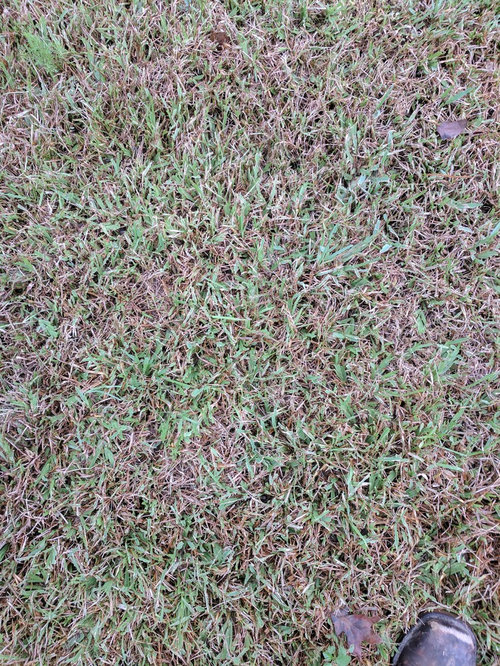
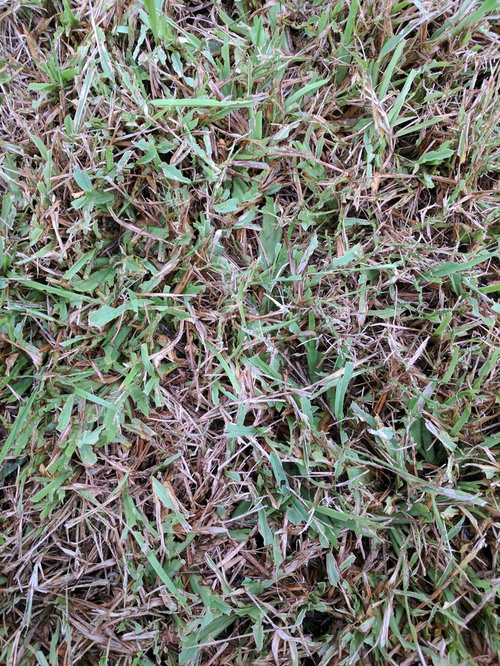
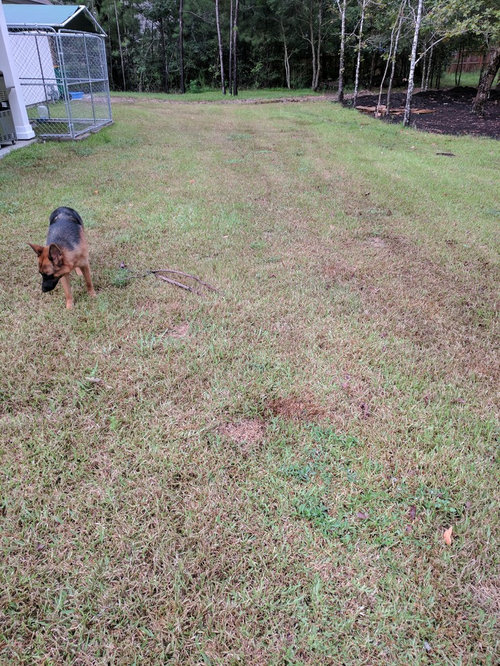
We live just north of Houston and I am having issues with my St. Augustine. My back yard is dying at a rapid rate. We have sprinklers and my watering schedule right now is every other day for 10 minutes a zone. However, I have had the sprinklers off for two weeks due to the rain we've been receiving.


I fertilized in the spring, and have used granular pesticide once about a month ago when the initial problems started.


I have checked the roots for rot and they se

em okay. It's not "easy" to pull the grass blades out. I have not checked for chinch bugs with a coffee can, but crawling around today, I could see little critters crawling. They were very small black bugs, and I just saw a couple. I also found a few worms in the grass sections I inspected. Not sure what type they are or if they're good/bad (I will research).


Anyways, I am relatively new to the south and would not like to have to re-sod. I have ordered a liquid pesticide, and have fungal liquid pesticide. Also, two weeks ago, we moved some dirt across the lawn with a garden tractor (X360) and a trailer. I'm wondering if I have a fungus and it was spread with the JD tractor.


I am not sure if I should fertilize, use fungicide, use pesticide, corn meal, or a combination?


Comments (23)

  • 9 years ago

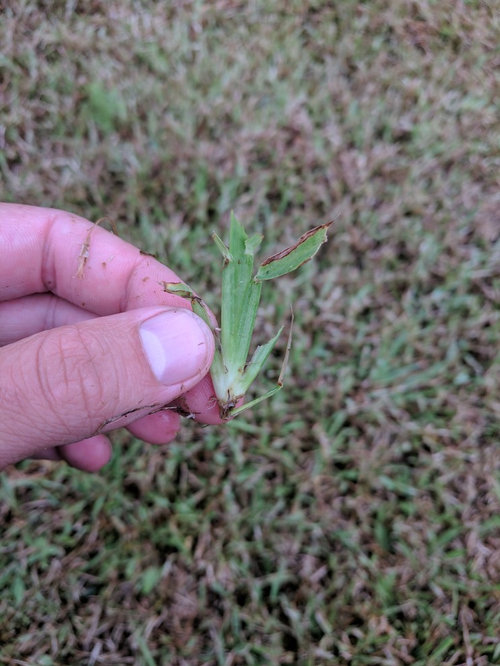
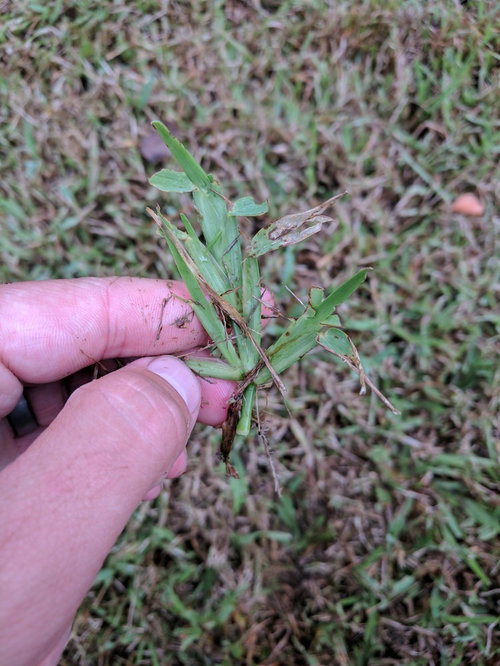
    Here's the worm type:


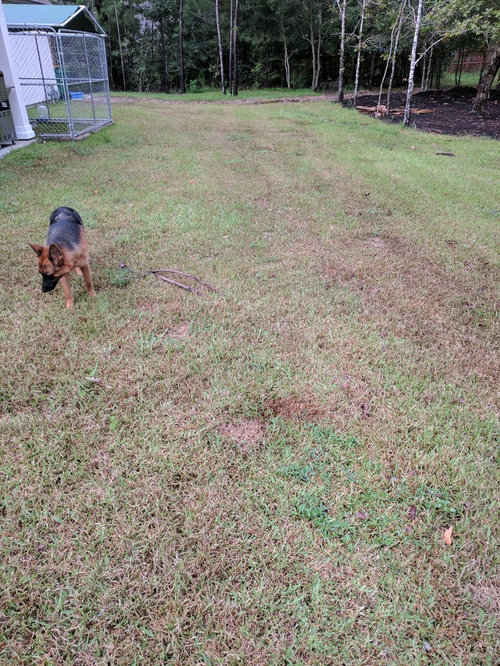
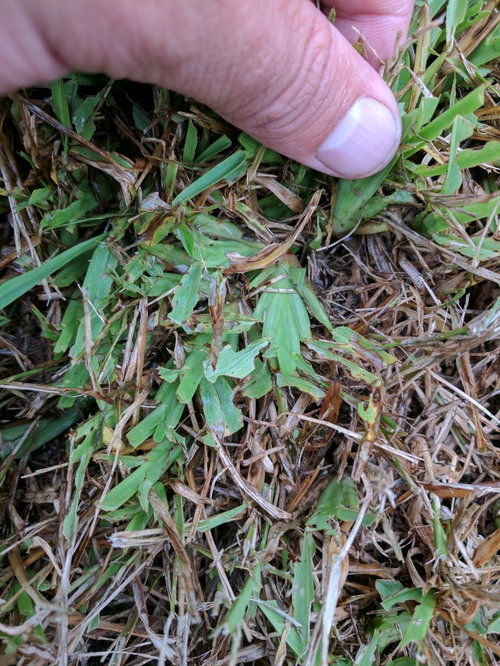
    Here's the initial problem, which I used a granular insecticide a day after for chinch bugs (I now know I should've used liquid):


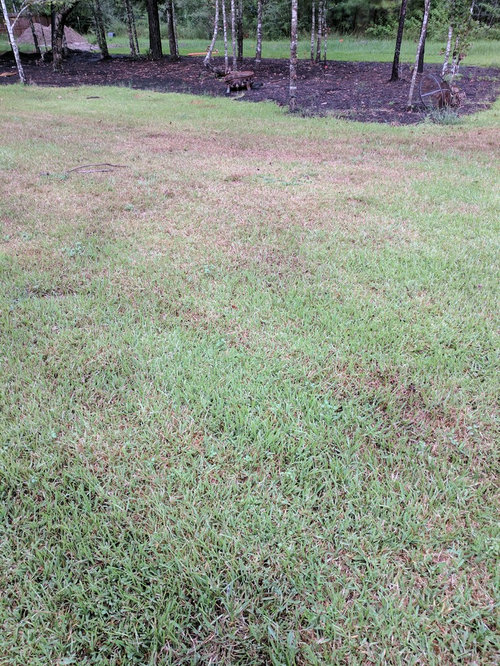
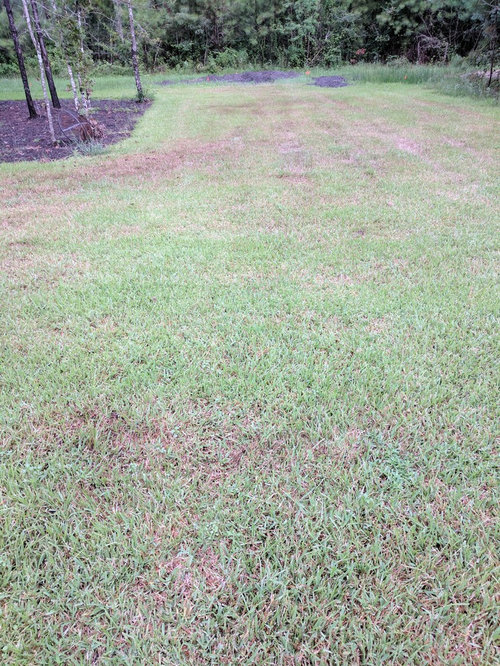
    Here's what it did look like 3 weeks ago...


    I also mow my own grass at the highest deck setting. Typically twice a week, however there was a couple times the grass got quite long before I mowed. I had to pass over it a couple times to get the clippings to settle into the grass.

  • 9 years ago

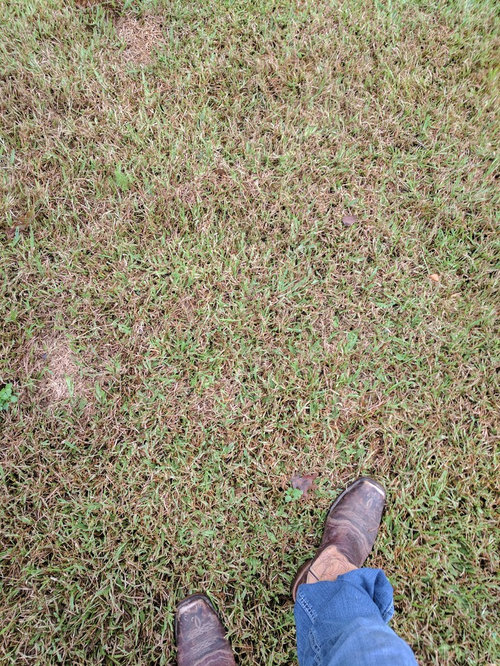
    You may be new to the south, but you got the boots right. Its fungal, not bugs. Sod webworm may be an issue in the fall, but other than that bugs are your friend here

  • 9 years ago

    Are you in Conroe, magnolia, waller?

  • 9 years ago
    haha can't go wrong with the HH's. I'm off Rayford and 99. Thanks for the advice, I'll put the fungicide down tomorrow after work.
  • 9 years ago

    All this rain we're getting doesn't help either. We got about 5" last night.

  • 9 years ago

    If you have not already used the fungicide, then corn meal should work on this problem. 20 pounds per 1,000 square feet over the entire lawn.

    I got 5 inches in the gage yesterday morning. My gage goes up to 5 and it was just under, but the way it was raining, it might have been splashing water out of the gage. With this rain I should be good for a month without watering again. We'll see. I'm usually overly optimistic on these estimates, but then the humidity usually falls fast after a storm like this raising evap rates. This time it's staying overcast and humid.

    You are watering wrong, especially in your area. Here's the skinny on watering.

    Watering: Deep and infrequent is the mantra for watering. This is for all turf grass all over the place. Deep means 1 inch all at one time. Put some cat food or tuna cans around the yard, and time how long it takes your sprinkler(s) to fill all the cans. Memorize that time. That will be the time you water from now on. My hose, sprinkler and water pressure takes 8 full hours to fill the cans. Your time will likely be less. I like gentle watering. As for watering frequency, that depends on the daytime air temperature. With temps in the 90s, deep water once per week. With temps in the 80s, deep water once every 2 weeks. With temps in the 70s, deep water once every 3 weeks. With temps below 70, deep water once a month. Note that you have to keep up with quickly changing temps in the spring and fall. This deep and infrequent schedule works in Phoenix and in Vermont, so it should work for you. The reason for deep and infrequent is to grow deeper, more drought resistant roots and to allow the soil to dry completely at the surface for several days before watering again. If it rains, reset your calendar to account for the rainfall.

    I would adjust this watering to stretch it out even more in SE Texas. It is so humid your evaporation rates are very low and water stays in the ground longer.

  • 9 years ago

    Thanks for the comment. I was going to pick up some corn meal today. I have not applied the fungicide because of the rain. We're supposed to get more rain this afternoon. Can I apply the cornmeal today before the rain, or should I wait until it's supposed to dry out? I am planning on using cornmeal more frequently for reasons listed below. Also, does it spread well in a spreader?


    Regarding the watering schedule, I agree with you. However, the sod was new this past December (2016), and it didn't start to take until May. The soil underneath is clay, and water does not absorb well. I started with deep infrequent watering, and I couldn't keep my lawn green, even before the real hot months. I figured what was happening was the water was running off before soaking in, and it was a waste of $$. I decided to change up the watering schedule to more frequent, and the yard took off. In the front (which drains better than the rear), I am watering once daily, 10 mins and 5 mins per zone alternating days. That grass is green as can be.

    I think once I get a good base for the grass, I'll return to the deep and infrequent watering schedule.

  • 9 years ago

    I'm battling sod webworms in north Houston myself (Kingwood). I see some leaf spot but that mostly looks like insect damage to me. Are you seeing little brown months hovering over the turf in the late afternoon?

  • 9 years ago

    Pintail -


    I thought the grass looked like it had been eaten too. However I have not noticed any moths hovering around the grass at night. I googled sod web worm and I haven't seen anything like it. There are just some bees and flys usually. Mosquitos have picked up since my sprinklers are off (I have an inline turbine pump for liquid mosquito control).

  • 9 years ago

    That first pic appears to be a sod webworm caterpillar. That's what the eggs turn into after the months deposit on the leaf blade. They then eat the grass. Take a walk through your lawn in early morning or late afternoon just before dark and I'll be you'll see them.

  • 9 years ago

    Okay I will do tonight if it's not pouring again. How many moths are we talking about to destroy that much grass in two weeks? It's approximately 10-12k sqft.


    If I do find moths, what's the path you've taken to treat yours? Insecticide?

  • 9 years ago

    Our lawn had quite a few moths, I'd prob see 50 or so while walking around. My battle isn't over but I applied Bayer Complete Insect granules two weeks ago and have been following up with weekly apps of BT caterpillar killer out of a hose-end sprayer. Pestrong.com has gallons for like $30. You have to spray every week for three weeks to break the life cycle. If you go the spray route, wait for the rains to stop. The insecticide needs to sit on the leaf blade for at least a day or two in order to work.

  • 9 years ago

    Thank you for the info, I'll check it out tonight.

  • 9 years ago
    Well Pintail, you hit the nail on the head. Went exploring a few minutes ago and there are caterpillars everywhere. I mean everywhere. Went exploring in the front yard and there is moths in the damp sections. I spread the cornmeal anyways (not sure if it'll help with worms) because I had it. I'm going to go pick up a pull behind sprayer tomorrow and start my battle on the webworms. I'll keep this post updated.

    I believe what happened is I spread the eggs when I was doing my yardwork and that's why the dead spots grew so fast. I looked back and it happened over a two week period.

    Hopefully it's not too late in the year to revive my grass before fall.
  • 9 years ago

    Glad you found the culprit, those buggers chewed my lawn up in just two weeks as well. I'd throw some granules down now and then come back with spray when the rains stop.

  • 9 years ago
    For sure. I plan on waiting until we're forecasted for a couple days of dry weather to do the spray. I'm hoping tomorrow will be the day. I'll pick up the granular tomorrow. thanks again
  • 9 years ago

    Those caterpillars might be part of the problem, but you definitely have a fungal disease. The corn meal can go down while it's raining or during a drought. Doesn't matter. As to whether it flows through a spreader, you probably already know the answer to that. No, not very well. Corn sucks up all the humidity in the air and starts to clump in the spreader. If you have an uneven soil surface that causes the spreader to bounce, that helps. I spread it by hand. I have a 2-pound coffee can that I fill. Then I "eyeball" about a 10x10 foot area and try to put the 2 pounds of corn meal evenly on that area.

    As to the caterpillars, the BT Worm Killer should kill them all in 24 hours. Nothing works faster. If there are more eggs waiting to come out, then you will have to repeat. I believe it would be impossible for you to spread the eggs and certainly impossible to do it as efficiently as the moths do it. They lay the eggs in the soil. I would not use another insecticide. That would be overkill, a waste of money, and an unnecessary contribution to pollution. But while you are at this, you should dig up 1 square foot of soil looking for grubs. If you see fewer than a dozen grubs, then cover it back up and leave it alone. If you see hundreds of grubs, then go back and do the granules for grubs.

    Have you sprayed shampoo on your lawn? Shampoo helps with water penetration in all types of soil. The application rate is 3 ounces per 1,000 square feet. Follow that up with 1/2 to 1 inch of rain or irrigation. In your case just spray it and let the rain take it down into the soil. You defs don't need more water for awhile.

    Deep and infrequent watering only works on established turf and only after the roots have grown deeper into the soil. New sod needs frequent watering to get the roots into the soil at first.

    This lawn will recover from all the above. Stick with it.

  • 9 years ago

    dchall, are you seeing any fungus besides gray leaf spot?

  • 9 years ago

    Thanks for the tips. 150 lbs of cornmeal went down yesterday throughout my yard. I did have to jostle it for the clumps though.


    Where do you recommend getting the BT spray? I would like to pick it up this afternoon and spray tonight.


    Thanks!

  • 9 years ago

    Well, I built a little trailer for the sprayer and sprayed the BT spray last night right at dark. I went ahead and applied on my entire acre. I'll check tonight to see if we have any worm movement.

  • 9 years ago

    I used BT WK on tomato hornworms a few years ago. It was wonderful to see it work. I sprayed it right on the hornworms. They didn't move for 3 days. Then they turned black and fell off the plant. I took pictures. It was like they were posing for me. All in all it was VERY satisfying to see those suckers die.

  • 9 years ago

    Haha I may have willfully imagined them wilting away last night!