Software
Houzz Logo Print
amtramel

Protection from late freeze- suggestions?

9 years ago

I have a relatively small home orchard that I've been working on and learning from over the last four years. My location is in the western part of Virginia (could throw a rock into West Virginia from my back yard), zone 7.

Of all the trees I've planted, I've had the best luck with Peaches, Nectarines, and Plums (in that order), but the Apricot has proven to be quite the challenge in my particular micro-climate.

The tree is a prolific grower (has put on at least 36" of growth this spring/summer alone), and I've done some summer pruning to keep things manageable, however, I'm starting to think about the plan for next spring.

Every year, the Apricot blooms with tremendous vigor, and is without a doubt beautiful. It always sets a tremendous amount of fruit (thinning may be prudent), but we're prone to late frost, and each year I cringe as I watch the tree drop all its fruit after a late freeze.

I'll start off by conceding that clearly this particular variety of Apricot is obviously not ideal in my specific location.

That said, does anyone have any thoughts or suggestions concerning preventative measures, or things I can do to protect the tree in early spring in the hopes of nursing along the tree should we experience another cold snap?

Thanks!


Comments (5)

  • 9 years ago

    Figured I would add a couple photos and I can't seem to edit my original post.

    Take it easy on me. I'm no gardener, and this has been a learning experience from day one.

    Still watching and learning based on each particular tree's reaction to types of pruning cuts, and I certainly have more to learn.

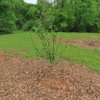
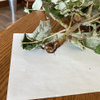
    Here are a few pics-

    Apricot:

    Hale Haven Peach:

    Flat Wonderful Peach:

    All of the above will obviously need even more pruning either later in the season, or next spring - though I feel like I've been doing my best to keep up with it.

  • 9 years ago

    For frost protection you might be able to use some row cover as netting? Agribon or gro guard jump to mind. Or 6 mil/greenhouse plastic could work. Sprinklers can give some very modest protection too. For pruning--it's hard to see from the pics but you want an open center for those trees. Use all three dimensions and no crossing branches. They do look healthy though.

    amtramel thanked DonInFLX (NY, 6a)
  • 9 years ago

    It is really a crapshoot unfortunately... You'll find tons of threads on this topic though, and there are many *possible* things you could do, but few easy ones that really have any impact.

    Many serious growers consider high tunnels the only effective solution. I've tried lots of different things, and the only one that has worked for me (since I am unable to use high tunnels) is tenting the tree well with plastic and providing a heat source (such as an electric or propane heater) throughout the freeze event. This can be very difficult depending on the tree's size, and problematic if there is strong wind. I don't really bother with this anymore.

    Commercial operations use giant fans to exchange the cooler air at the surface with warmer air above it under clear night skies, but even this provides a limited amount of protection. They also apparently use sprinklers, but these have to remain running during the entire freeze event to be effective, which makes them impractical for home growers.

    I've resisted the urge to continue planting apricot trees, and just keep my fingers crossed that I might get lucky occasionally, or that at least there will be some trees in the area that don't freeze out. My peaches definitely fare much better, though not perfectly due to late freezes.

    amtramel thanked nmfruit
  • 9 years ago

    Thank you both for the comments. I have to agree on the "crapshoot" comment. I've read elsewhere that I should consider myself lucky if I wind up with fruit one out of five years.

    I have three different varieties planted, the other two supposedly more durable with regard to frost, but both are very young, and nowhere near production size.

    Doubt I will waste the "orchard" space with any others, as I fare far better with peaches, and have several that are reaching sufficient size to produce at least moderate amounts of fruit.

    The early warm-up this year took a heavy toll on stonefruit at my location. Stuff broke dormancy, then bam, hard freeze.

    Shockingly, we picked at least a bushel of fruit from a Flavortop Nectarine, and at least a handful of plums. I don't know how that nectarine made it through, but I did learn two new things.

    1 - wasps LOVE ripe nectarines

    2 - brown rot is definitely an issue for August ripening nectarines here (over and above the bushel we actually harvested, there was at least an additional 30% loss due to brown rot)

    I just move forward and try to keep learning more each season.

  • 9 years ago

    Here's a June Gold Peach as an example, planted two years ago. It was the first one I ever planted where I followed the "guidance" to cut a whip back fairly aggressively to promote lower branching.

    Unfortunately, all those branches were right at deer level, and the plant was eaten down to a twig. I thought for sure it was dead, but did some pruning "cleanup" to deal with all the damage, then protected not just the lower trunk, but also surrounded the tree with netting.

    Everything you see here is literally this season's growth. It has come back with a vengeance (though it has a much lower, spreading growth habit).

    Just based on what I've seen over the last four years (that is the extent of my fruit tree growing experience), barring any unforeseen catastrophic events, I think next year will be its big year- where it reaches substantial size and durability to be truly viable as a food source.

    It should put on a fair amount of height, and start to catch up with its brothers and sisters. I've learned that backyard culture doesn't really work well at my location- bears and deer. To have a fighting chance, they have to be nursed to a certain size, and there's a commitment of time and effort involved.

    That said, I have acres to work with, and live in the sticks.

    I've done some summer pruning on this one as well, mostly to try to open it up as much as I can, and position it well for next season.

    Glad I'm not the only one who has this fruit tree bug.