Software
Houzz Logo Print
jw628427

River rock tile problems

9 years ago
last modified: 9 years ago
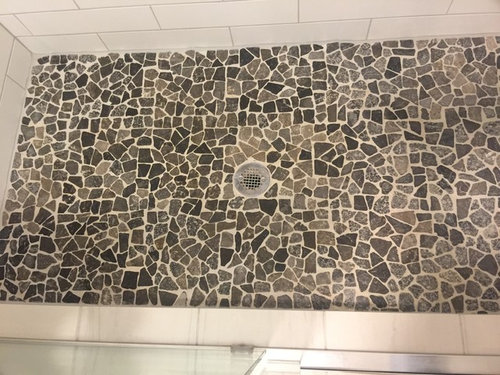
We recently finished a bathroom remodel about 3 months ago and did a river rock travertine tile On the floor. The shower was finished and sealed weeks before we first used it. After just a few weeks of regular use, we noticed not all the grout and tiles were drying, even after days of not using the shower. It always looks like this. The installers insist this is normal and our contractor used a moisture meter that showed there wasn't more moisture in the spots that appear wet. We have friends with a river rock shower floor that don't have this issue. Any ideas of what is going on and is there anything we can do? We are really unhappy with this final product.

Comments (16)

  • 9 years ago

    That certainly looks like standing water/moisture from the picture. Is the slope of the pan and consequently the tile correct? How was the pan constructed? Any progress pics?

    J W thanked millworkman
  • 9 years ago
    last modified: 9 years ago

    I unfortunately don't have pics anymore. The company basically said something like the shower will always have moisture in the pan and that we have nothing to worry about. Is that true or should we be asking them to investigate further? There is a slope in the tile but we have no idea if the pan underneath is sloped. It just always looks dirty and wet...

    if there was standing water, wouldn't the moisture meter pick that up?

  • 9 years ago
    last modified: 9 years ago

    Your drain tells me you have a full mortar bed pan. Underneath the liner or membrane is a required yet often skipped or improperly graded preslope.

    In full mortar bed pan builds the preslope has ZERO room for error. You can expect your pan to stay moist until eventually it breeds mildew that starts with a faint musty smell..

    You should have been home to witness the plumbing inspector approve the shower pan after FLOOD TESTING it for 48-72 hrs. Just when the flood test drain plug gets pulled you should have witnessed ALL the water quickly drain out and then proper weep hole measures were made prior to The mortar bed going in..

    TOO late. Youve got a cheap outdated version of a shower pan and likely not done correctly. This is the kind of stuff that happens for half price by the novice crew that has yet to be run out of buisness.

    J W thanked User
  • 9 years ago

    Thank you both for the insight. We have the installing company coming out next week to look so hopefully we can find a resolution. We weren't watching the whole process that closely since we had a contractor overseeing the project since we wouldn't know the proper steps, flood testing, etc.

    At this point, is there anything we can do? Or is the only resolution to rip out the shower?

  • 9 years ago

    If you had a contractior over seeing the project, were yu paying him of the installer directly? If you paid the contractor and he paid the tile installer then you need to have the contractor involved, in fact he should have been your first call as the tile installer is his customer not yours.

  • 9 years ago

    It's been a long painful process but the project manager that was on our project left and the contractor closed his business. I've just been working directly with the vendors since it's been the easiest route. Next will be the first time the vendor sees it and hopefully they can help us.

  • 9 years ago

    They will likely blame it on the poor choice of tile (rock) and excessive grout and give you the runaround. If the shower is built properly they should be able to remove the rock and grout and mud bed to expose the liner and weeps. At that point you can share pictures right here.

    Yours is a common tale of woe.

  • 9 years ago

    Talked to the project mgr who was on site and asked him your questions. He said it passed the flood test and when the new curb and pan were built a new slope was built into the new shower pan.

  • 9 years ago
    last modified: 9 years ago

    like i said runaround . You didnt see it drain did you? You are heading down a well worn path with a long term problem . Rememberr my advice down the mold road

  • 9 years ago

    We do trust the project mgr - he worked for our contractor and has been great. It's the vendor / tile company that I'm worried about dealing with.

    One thing I'm wondering is our contractor took a moisture meter to our tile and it did not show more moisture under the wet looking grout. Is that a good sign or mean nothing in this situation? Could it be a problem with the sealant?

    But if what you're saying is true, it sounds like the best option would be to rip this whole shower out and start over. :-(

  • 9 years ago

    I had a similar issue with my Kerdi pan not drying in some areas my GC was wonderful and insisted that the subcontracted tiling company redo it all. The thing was that with Kerdi just doing the floor would have left me with a subpar shower hack and not the new shower I paid close to 10 k to have properly waterproofed and tiled so my GC insisted on a whole shower redo or full refund plus tile cost. In my state I had to allow the tiler the opportunity to make it right before a refund so we let him redo it. It now dries quickly after use and was worth the time and inconvience to have had it totally rebuilt. Just redoing the floor could jeopardize your wall's waterproofing.

    J W thanked roarah
  • 9 years ago
    last modified: 9 years ago

    "He said it passed the flood test and when the new curb and pan were built a new slope was built into the new shower pan."

    Could be semantics...could be poor grammar...could be obfuscation, however:

    1) ",,,it passed the flood test..." Well whoop-dee-doo. Does that simply mean that it didn't leak? It should also mean that the water drains quickly and cleanly, with no water puddles left on the membrane.

    2) "...a new slope was built into the new shower pan."

    "Into the shower pan" versus "under the shower pan". Who knows. Different terminology, semantics, wordsmithing. Again, it could have been done correctly or this could just be careful language. However, the sloped mud preslope should have been installed on the flat subfloor. The membrane should have then been placed on the sloped preslope. This way, the membrane itself is sloped to the drain. That is a building code requirement. On top of the sloped membrane goes another layer of mud. The tile gets thinsetted to the second layer of mud.

    Most water retention problems in mud bases are due to the membrane being placed flat on the subfloor and single layer of sloped mud being installed on top of the flat membrane, with the tile going on top of that single layer of sloped mud. Again, that is a code violation. With regular use of the shower, any mud layer on top of the membrane will indeed always hold some moisture. But if the membrane is sloped as it should be, excessive moisture in the mud bed will follow the slope of the membrane to the drain and exit the mud bed via the secondary weep holes in the drain. If the membrane is flat on the floor, then the mud bed can become saturated with standing water. The excessive buildup of moisture can turn into a mess.

    Big question, find out if the membrane itself is sloped. Choose your wording carefully. If you ask "was the membrane itself sloped, because if you didn't slope it, that's a code violation and you'll have to rip it out and rebuild it at your cost" they may just answer "yes". If you ask "can you tell me how the shower base was built, from subfloor-to-tile", you may get a better answer.

    Maybe they did slope the membrane. Maybe they didn't. Regardless, good luck with it all.

    J W thanked MongoCT
  • 9 years ago

    Thanks all for the input and advice. This is all really helpful!

  • 7 years ago
    last modified: 7 years ago

    Interesting... we have the same river rock shower floor How long did the grout dry and set before it was sealed, and do you know what kind of sealant was used? It almost looks like there is moisture under the seal. I was told to let the tile and grout sit for at least a couple weeks before sealing, then to use a penetrating seal on the grout. Not sure if that is the problem, or not. I sealed mine myself, and waited for 3 weeks and that was before moving in, so the shower had not been used at all before I sealed it

    . .

  • PRO
    5 years ago

    We just finished installing a river rock floor for a customer. Our customer is complaining of this same problem. We use the Kerdi line shower system and have been in the business for over 25 years so the pan was definitely built and sloped properly. I think the problem is due to using natural rock flooring and getting a sealer that is quality and will seal the porous rocks. Natural stone always looks different in color when you wet it. Water under the shower head is going to get more saturated than the rocks around the exterior regardless of the way that the pan is built. We are going to inspect the shower floor and most likely get another brand of sealer to make sure the rocks don't become saturated and look darker. We will likely steer clients away from rock in the future. The large areas of grout are not ideal for a shower floor or anyplace that gets wet.