Software
Houzz Logo Print
parker27mv

keraji mandarin

8 years ago

Keraji is a cold hardy Japanese mandarin with yellow-orange skin. The taste is like lemonade and the fruits are small and a bit seedy. Supposedly keraji can handle down to 12 °F.

Apparently it was a fairly popular tree in the Southeast among those growing cold hardy citrus, but I can't seem to find any nurseries carrying it now. Anyone know where I could get one?

Comments (15)

  • 8 years ago

    Mckenzie farms in sc has alot of cold hearty citrus and it very knowledable. Id try there.

  • 8 years ago

    Dave, I need to pay you a visit sometime! I'll trade you cuttings ;-)

  • 8 years ago

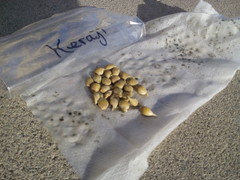
    a nursery owner in Georgia was kind enough to send me seeds

  • 8 years ago

    In my opinion Keraji is only good as a root stock.

  • 8 years ago

    Silica

    Have you eaten any of the fruit. It i8s still not cold hardy enough for me to grow outside without a greenhouse or similar. It is funny that their plant is on PT and is sold as a sweet-ish lemony fruit.

    Steve

  • 8 years ago

    Steve, the fruit is small, seedy, some what sweet, but it is also without any acid content giving it a insipid taste.

  • 8 years ago
    last modified: 8 years ago

    I wanted to get keraji because I'm planning to hybridize it. So for me, I'm not really paying attention to whether it's an overall good tasting variety but whether it has certain desirable attributes that could be conferred with breeding to an offspring plant. If it's insepid lacking sourness for example, seems like it might hybridize well with yuzu.

    or maybe it might hybridize well with citrumelo (which people say is lemon-like).

    During my research I came across something interesting in a Japanese genetic analysis paper. Seems like keraji shares in common a parent with satsuma mandarin, a type of Japanese tangor called kunenbo which must be confering a degree of exceptional cold hardiness (it's a parent of bloomsweet as well). The analysis actually indicated keraji was probably a backcross of kunenbo with another sour-type citrus known as kubachi (today rather obscure, but the pictures I was able to find look similar to kabosu or sudachi).

    Edit: I just read another research paper DNA analysis that says keraji appears to be a cross between kunenbo (seed parent) and kikai-mikan. I found a picture of kikai-mikan and not surprisingly the fruit looks a lot like a cross between both the pictures of kubachi and kunenbo I saw. So it looks like keraji may indeed be a backcross with kunenbo-- that is (kubachi x kunenbo) x kunenbo.

    I suspect there might be different cultivars of keraji with slightly different qualities when it comes to edibility/flavor if these plants have been propagated at some point from seed. The seeds seemed pretty big like they would be really easy to grow, so that may be likely. (I was preparing seeds from a yuzu at the same time, and the keraji seeds seemed even a little bit bigger!)

    Silica, what I'm saying is that if the keraji you tasted was flavorless it's possible what you have isn't real keraji but a seedling of keraji.

    Anyway, truly cold hardy citrus cultivars are seldom delicious, so you have to make the best compromises you can according to what climate zone you're trying to grow the plants in. Keraji may be one to try in parts of Northern Texas or the Seattle area.

  • 8 years ago
    last modified: 8 years ago

    just for any of you who were curious here's a japanese site showing pictures and description of Kunenbo:

    http://www.michinosima.com/kaimono/kunenbo.html

    the name Kunenbo translates as "nine year mother"

    in appearance they're pretty comparable to a Kara mandarin.

    In terms of cold hardiness, I'm sure kunenbo and kara are probably on the same level as satsuma mandarin.

  • 8 years ago

    One growing here in Augusta Ga and the fruit is delicious even after a severe streak of cold nights.

  • 8 years ago

    You say cold hardy cultivars are seldom delicious?Really?Owari and Okitsus are awesome tasting.You should find a better source.

  • 8 years ago
    last modified: 8 years ago

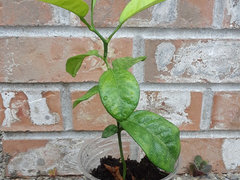
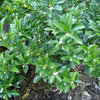
    keraji seedling

    I tried planting both some keraji and yuzu seedlings outside in the ground in mid-March, but they did not seem to do very well and lost all their leaves. (This is in the PNW so the temperatures hadn't really begun to warm up yet) I'd recommend if you're in a colder climate to give the seedlings a year or two (or three) to grow out before trying to permanently plant them in the ground.

  • 8 years ago

    An update on the in-ground seedlings: Their leaves developed white streaks and gradually all fell off. I guess they could not handle the extended cold temperatures this early in the year. (It wasn't just seedlings that struggled, I also saw this on larger cold-hardy citrus in pots; and by cold I'm not talking about any freeze, we don't have Spring freezes in this climate) However, I am just beginning to see signs of leaf growth on all the seedlings, little tiny leaflets beginning to grow out. I'm guessing temperatures in this climate do not really begin warming up enough to sustain citrus growth until June. I'm keeping them well watered.

    I don't know if very small seedlings here can survive the Winter but I've read a promising story from someone else in a place that gets even colder temperatures (albeit the temperatures do begin warming up a little earlier in the year there).

  • 8 years ago
    last modified: 8 years ago

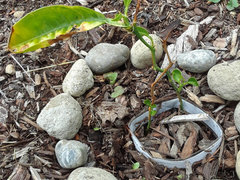
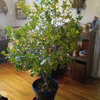
    keraji seedling

    I planted it out in the ground mid-March and it lost all its leaves and partially died back just a little bit because of the cold temperatures, or sustained cool temperatures (not freezing though). However, it looks like it is now starting to come back, regrowing tiny little leaflets. I've been keeping it well watered.

    Kind of amazing when you think about it. This is actually just a little further north in latitude than Quebec City, Canada. About 2 hours north of Portland, zone 8a.

0
Sponsored
Peabody Landscape Group
Average rating: 3.5 out of 5 stars8 Reviews
Columbus' Reliable Landscape Design & Contracting