Software
Houzz Logo Print
bantaj

Floor drain for washing machine overflow drying out

8 years ago

I just replaced my washing machine and think I found the source of the regular flies we were finding in our home.
The washing machine is in a plastic pan (like this one) with a drain in it that sits atop a drain in the laundry room floor.

The washing machine ejects dirty water as it should through the waste drain in the wall so the floor drain, since it's designed to only gets water in the event of a leak or hose burst, does not get regular water down it.

The floor drain has a P trap plumbed under the floor that I can see in the ceiling of the basement. I poured water into the visible drain after getting rid of the old machine and noticed there was no water in it and could hear noise of water running through the drain lines when flushing an upstairs toilet. I saw flies float up once the trap was filled which makes me think this is the issue.


What is the recommended solution here?
I've seen devices that act as a one-way valve and also see something that periodically drips water into the drain to keep the P trap full. Also seen suggestions to pour water down there even week or so and put mineral oil in to slow evaporation but neither of these will work as the washing machine site directly atop the drain.
Any suggestions? I'm tempted to run a flexible pvc hose to the drain and up the back side of the washing machine so we can feed water down every periodically but there must be a better solution.

Thanks in advance!

Comments (9)

  • 8 years ago

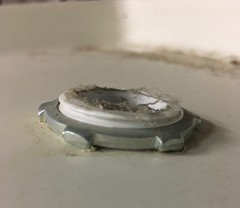
    The pan has a threaded connector to allow the pan to drain into the floor drain. The threaded connecter sits proud of the bottom of the pan by approx 1/8" so if I just pour water into the pan now and then, most will drain out but not all since the threaded drain creates a small lip (see attached photo for example. It also creates a potential opportunity for a leak which is why I'm not crazy about the idea of just pouring water in the pan. Instead I may snake a small 1/4" or 3/8" tube into the drain and have that run under the washing machine and up the back so I can fill it from up top and keep the pan pretty much dry.

    Anyway, I'm surprised I'm having to go through such a DIY solution as it seems like this would be a relatively frequent problem for this type of floor drain/pan setup.

  • bantaj thanked Vith
  • 8 years ago
    last modified: 8 years ago

    I installed a Sioux Chief floor drain P-trap that has a fitting for the trap primer line, and a convenient plug that can be removed for snaking the drain line. If your P-trap is accessible, you may want to consider installing this type and connecting it to a trap primer. http://www.siouxchief.com/products/drainage/residential/floor-drains/weldone?template=P3Brochures

    Bruce

    bantaj thanked Bruce in Northern Virginia
  • 8 years ago

    The other thing I've heard people doing is to use mineral oil. Pour in a cup or two. It doesn't evaporate.

    bantaj thanked weedmeister
  • 8 years ago

    All these good suggestions are overlooking the fact that the pan and drain are a hack to begin with. That electric emt fitting would be insufficient if a hose burst or pump leaked. That need's to be corrected before spending money on a plumber and trap charger. OP's solution is fancy enough for existing conditions.

    bantaj thanked klem1
  • 8 years ago
    last modified: 8 years ago

    It does look odd, but appears to be designed that way. This pan has a knockout and a connection similar to what OP shows. It is meant for only a 1 inch pipe to the drain. I would think it is only sufficient for leaks. And holds standing water so you can notice there is a problem. A burst pipe would require a separate floor drain.

    Although one would think that the EMT nut itself would leak and render pan pointless. If anything I would cut off the extra thread and seal the nut with caulking.

    bantaj thanked Vith
  • 8 years ago
    last modified: 8 years ago

    I have seen the lint that builds up behind and under the machine clog those little 1" holes long before the pan can prove to be of any real benefit. Especially with a lip and locknut to hinder the flow and snag the lint. There is probably also a grate on the floor drain beneath the fitting to further trap lint and make a really good blockage.

    bantaj thanked User
  • 8 years ago


    Quick post to close the loop on what I did:


    i purchased a new leak pan to replace the cracked one. New pan came with a threaded pvc fitting, nut and rubber washer to help seal against leaks that the original EMT solution was likely to have.

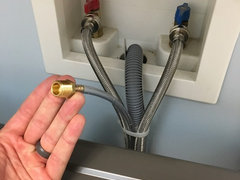
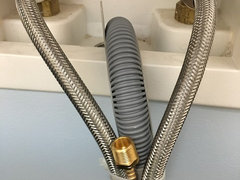
    i ran a short length of 1/4” vinyl tubing through the leak pan and down into the drain opening (no grate as one person thought) and ran the other end up behind the washing machine and connected a barbed fitting as seeen in the photos. This allows me or the wife to squirt some water from above once a week or so to fill the trap very easily.

    i realize this is not ideal as one shouldn’t have to do this but for the budget and effectiveness (no more sewer gas smells), I am pleased.

    Thank you to everyone for the suggestions and feedback!


Sponsored
Wannemacher Interiors
Average rating: 5 out of 5 stars26 Reviews
Customized Award-Winning Interior Design Solutions in Franklin Cnty OH