Software
Houzz Logo Print
blackwillow87

Seedling container size question

8 years ago

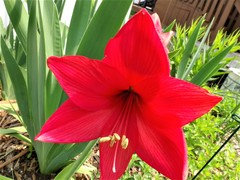
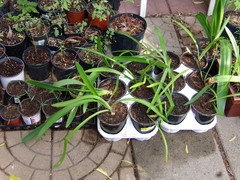
Hi, I have a few amaryllis seedlings that are nearly 2 years old. The leaves are nearly a foot long and I recently transplanted them into a bigger pot, but I didn't separate them. Should I wait until Spring to put them in individual pots, and what size pots should I use? Thanks

Comments (15)

  • 8 years ago

    Thank you oleg9grower. I think I have a few 6 inch pots, would those be too small for the seedlings? I also have some seeds that I collected from a noid red/pink one in my garden. I'll be curious to see what type of blooms the offspring will have. I think it was self pollinated because I didn't have any other amaryllis in bloom at the time.


  • 8 years ago

    I got them repotted. I put the largest seedlings in 1 gallon containers and then I transferred the smallest ones into pint and 6 inch containers.


  • 8 years ago
    last modified: 8 years ago

    Sorry, I was 2 days old at the cottage

    in the village. I did not have access to the computer. You have another metric system, you have inches - we have centimeters. 6 inches is about 15 cm, right? For a while this is enough.

    With regard to your question about seedlings: usually seedlings from self-pollination in their parameters are inferior to maternal varieties. But there are exceptions.

    In any case, this is an interesting experience. I hope, when they blossom - you show them to us?

    I wish you success ).

    blackwillow87 thanked oleg9grower
  • 8 years ago

    It's alright oleg9grower. Once the seedlings in the 15 cm pots are larger, I'll move them into gallon pots.

    I didn't know that about self pollinated seedlings, that's interesting and I learned something new. Once they bloom I'll definitely post pictures of the blossoms. Thanks so much and I'll keep everyone posted on their progress.

  • 8 years ago

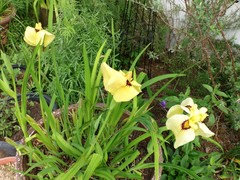
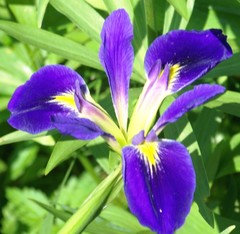
    On your photo back like some iris peeps out?

    blackwillow87 thanked oleg9grower
  • 8 years ago

    Yes I grow a few types of bearded irises, a Siberian iris, a Louisiana iris, and a pseudata iris. The one in the picture is a reblooming noid iris.

  • 8 years ago

    Yes, this is an interesting collection of irises. Pseudata is probably a hybrid I.

    pseudacorus and ensata? (Japan origin?).

    blackwillow87 thanked oleg9grower
  • 8 years ago

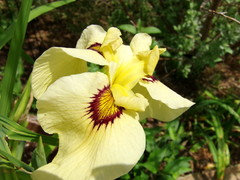
    You're right about it being a hybrid. At first I thought it wouldn't do well in my area since it's hot and dry most of the year, but I've had mine for about 3 years and it's survived in a container that dries out quickly. It looks a bit ragged by the middle of Summer but it comes back strong once the rains return and it cools off in late Fall. The variety I have is called Ryugan. I've had the Siberian iris for a few years now but it has yet to bloom. It could be a result of mild winters in my area. Here's the pseudata Ryugan.


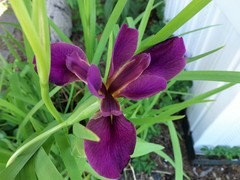
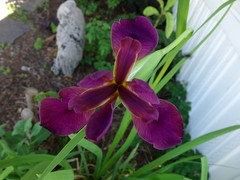
    The Louisiana iris that I believe is Vinicolor.


  • 8 years ago

    Thanks for the wonderful pictures, they're all very beautiful :-))))

    blackwillow87 thanked Fred Biasella
  • 8 years ago

    Thank you Fred!

  • 8 years ago
    last modified: 8 years ago

    It's okay that he's ragged. The main thing is that it grows and blossoms. I have the same hybridization failed, although I also included different forms of pseudacorurus.

    So the Japanese breeders are good fellows.

    I read their article in the newsletter The American Iris Society somewhere in the late 90s, early 2000s.

    The connection of beauty with stability and durability they seem to have turned out.

    Iris vinicolor is also rare and unusual. From Louisiana irises I had I. fulva with a reddish color of the flower.


  • 8 years ago

    You're right about that, I just wish it would bloom more than once a year. I actually got a seed pod on my vinicolor Louisiana iris which surprised me because I wondered what pollinated it? I've seen fulva and that's one I'd love to grow one day. I actually need to put my Louisiana irises in a larger container because the rhizomes have bent the whole container lol.

  • 8 years ago

    You asked about pollinating a vinicolor. I did not quite understand what you are asking. If the question concerns the carrier of pollen, then the answer lies in the specific nature of the structure of the flower: it is adapted to pollination by insects and also a bird of hummingbirds.

    If the question concerns pollen, then the answer is this: Louisian irises are fully capable of self-pollination, even with their own pollen.

    Another property of the Louisians is the rapid growth of the rhizome, so you have a problem with the container. At me they grow in soil and not in the container. This is made possible by the absence of drought and the properties of our soils. In your case, there are two options. The first - to transplant into an even larger container, the second - to transplant with the removal of the old part of the rhizome.

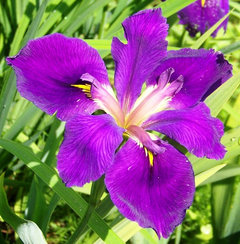
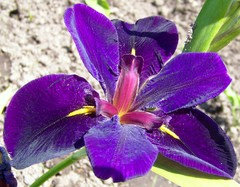
    Here are a photo of a couple of my Louisiana irises:


    blackwillow87 thanked oleg9grower
  • 8 years ago

    I had a few hummingbirds this year and since I've been growing more native plants in my garden, I've had a lot more biodiversity. Since it's self pollinated, will that mean the offspring will be inferior?

    Your Louisiana irises are beautiful! I think I'll have to get both a larger container and discard the old part of the plant because the only new growth I see is around the sides of the container instead of the center of the container. I need to look for some large plastic tubs but they can be pricey.

Sponsored