Software
Houzz Logo Print

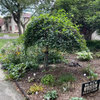
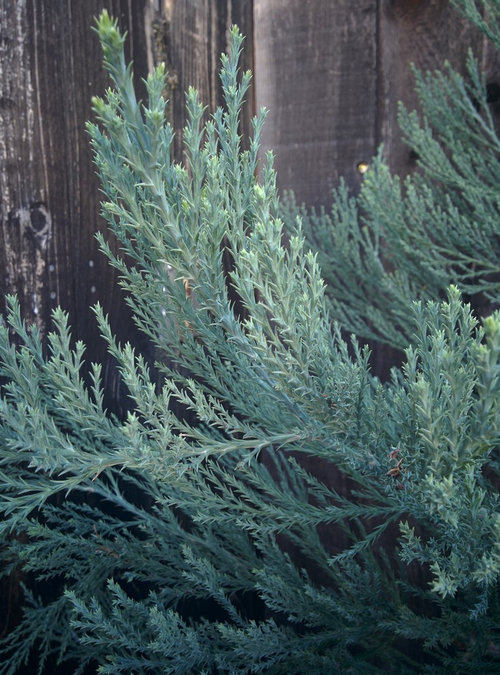
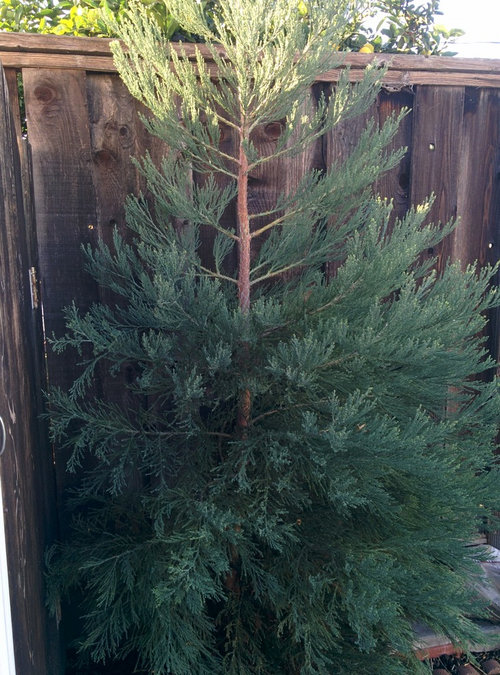
This evergreen tree was a foot high when we moved in 3 years ago. It's now about 8 ft.

Location is the South Bay, SF Bay Area, Calif.

Comments (28)

  • 9 years ago
    last modified: 9 years ago

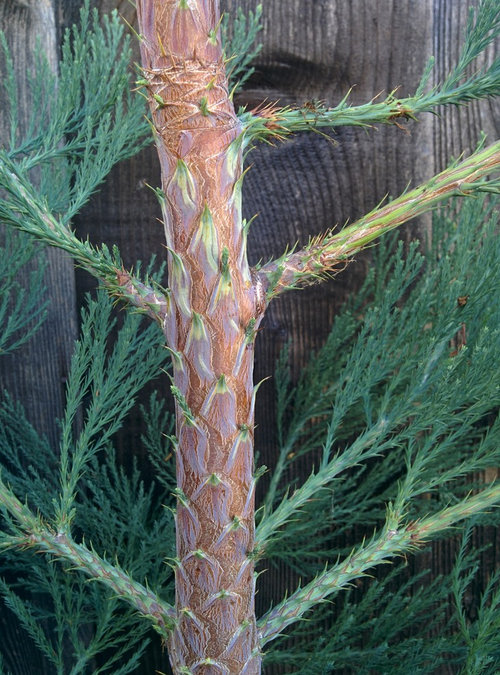
    Giant redwod, Sequoiadendron giganteum.

    Doesn't look like the greatest siting for it :-( Far too close to fence.

    ofdm (South Bay Area CA zone 9b) thanked gardengal48 (PNW Z8/9)
  • 9 years ago
    last modified: 9 years ago

    Thanks. It's planted right next to a fence in a strip of soil 2 ft wide. What's the best option for the tree? Can it be kept to a maintainable size?

  • 9 years ago

    Sorry, will have to be removed. If you can get it out in transplantable condition the new planting site will have to be suitable for one of the world's largest growing tree species.

    ofdm (South Bay Area CA zone 9b) thanked Embothrium
  • 9 years ago

    Unless you have some acreage at your disposal, this is not a good tree for a residential garden. Will develop a wide lower canopy spread (aka dripline) of as much as 50'. And while they can get much larger in the wild, in a cultivated setting it is not uncommon to see them reaching 100' or more and after not too long a time.

  • 9 years ago
    last modified: 9 years ago

    No acreage :). Looks like it will have to go.

    Since it has to go anyway, are there any drawbacks in enjoying it for a few years until it gets to 20 ft or so and then taking it down?

  • 9 years ago
    1. It might push your fence over by then.

    2. It will cost more to remove.

    ofdm (South Bay Area CA zone 9b) thanked hoovb zone 9 sunset 23
  • 9 years ago

    1. How about if I remove the branches towards the fence. I'm obviously not concerned about longevity.

    2. Regarding cost of removal, it should still be a fairly small caliper at 20ft high, right? So I should be able to just fell it and let the stump rot?

  • 9 years ago
    last modified: 9 years ago

    No, these produce comparatively massive trunks with broad, elephant's-foot-like bases. And redwoods are decay resistant - you'd be looking at a stump for a long time.

    ofdm (South Bay Area CA zone 9b) thanked Embothrium
  • 9 years ago

    Thanks all. If I can find someone with space willing to taking it how should I go about removing it?

    I remember reading that redwoods have shallow roots. So will a 1 ft wide and 1 ft deep root ball be ok?

    Also can I dig it up now in this season?

  • 9 years ago
    last modified: 9 years ago

    1 x 1 likely to be much too small for a tree with a top of this size. There may not be enough room there to get it out in a transplantable condition.

    ofdm (South Bay Area CA zone 9b) thanked Embothrium
  • 9 years ago

    That is much too small for the rootball of an 8' tree. You'll want one 3' across and 18-24" deep to even have a hope of survival. I gather from your description, that it is 1' from pavement and 1' from a fence (the roots will have extended into the neighboring yard) so from a practical sense (work vs. chance of success), I'd say don't try it.

    ofdm (South Bay Area CA zone 9b) thanked Smivies (Ontario - 5b)
  • 9 years ago

    Could be a nice christmas tree

  • 9 years ago

    A bit thin above and the small tip branch-lets would sag under the weight of ornaments.

  • 9 years ago

    You could always list it for free on Craigslist and say that the person has to dig it out on their own and bring enough fill dirt to cover back in the hole. Someone might want it.

    ofdm (South Bay Area CA zone 9b) thanked (ryanga7a) Ryan M
  • 9 years ago
    last modified: 9 years ago

    Thanks, all.

    Yes, it's 1' from a fence and 1' from pavement.

    By the way, would a Birch work in this spot? Like maybe Young's weeping Birch? Possibly a row of 3 or 4. I'd like something 25 ft high or so.

    Another option is a Robinia Frisia.

  • 9 years ago

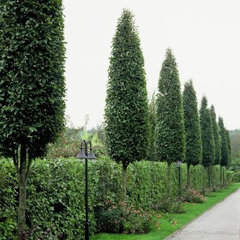
    A 2' wide plantng strip is not sufficient space for any sort of tree unless one that is espaliered into a 2 dimensional form. Or one that has a clear trunk to at least the top of the fenceline before branching out.....something like columnar European hornbeam 'Frans Fontaine'


    ofdm (South Bay Area CA zone 9b) thanked gardengal48 (PNW Z8/9)
  • 9 years ago

    The tree will eventually outgrow the spot. One thing lost in this discussion, though, is fences don't last nearly as long as people think. The fence may be ready for replacement before the tree damages it. Think of it as a cool conversation piece while you have it.

    ofdm (South Bay Area CA zone 9b) thanked edlincoln
  • 9 years ago

    All my opinion:

    I can fell most 20 foot trees. With the poor fence side access cutting will be interesting but a sawzall with a good wood balde oughta still be able to handle the back cut at 20 foot.

    The stump, who cares. These are soft wooded if rot resistant. You'll be able to get it within an inch of the ground and pile mulch or rocks over it.

    How close is the fence? A foot? It just may grow into it. Maybe you'll have to remove it at 20 feet.

    Ditto on the fence's expected lifespan.

    I say enjoy it for awhile. Or I say again.

    ofdm (South Bay Area CA zone 9b) thanked toronado_3800
  • 9 years ago
    last modified: 9 years ago

    A 2' wide plantng strip is not sufficient space for any sort of tree unless one that is espaliered into a 2 dimensional form. Or one that has a clear trunk to at least the top of the fenceline before branching out.....something like columnar European hornbeam 'Frans Fontaine'

    I'm hoping for one that will clear the top of the fence but will have a thin trunk and can shade a bit on my side. That's why I thought a weeping asymmetrical birch or a Robinia might work? Maybe Imperial Honeylocust?

    A columnar tree wouldn't give much midday shade I'm thinking.

  • 9 years ago

    The blue color suggests 'Hazel Smith', which is actually faster growing than the species!

    Sequoiadendron giganteum 'Hazel Smith'

    ofdm (South Bay Area CA zone 9b) thanked Sara Malone (Zone 9b)
  • 9 years ago

    The Robinia won't stop at 25'........a local botanical garden has a grouping of 60+ footers. And will create root shoots at a good distance as well, just like your standard black locust. And the birch is just too short and wide for that space. The Gleditsia is a much better possibility.

    One way to potentially narrow down tree choices is to look at mature specimens in any local parks or botanical gardens or to Google images of the trees online and visualize what a presence a mature specimen would make in that location. Looking at nursery trees can be very misleading and has taken many gardeners down the wrong path when that small, narrow baby that looks so cute in the nursery rapidly grows into a monster :-))

    ofdm (South Bay Area CA zone 9b) thanked gardengal48 (PNW Z8/9)
  • 9 years ago

    What is your goal for the spot? Shade? Privacy screening? How big is the yard itself? What else is planted there? Check the appropriate zones for the trees you are considering. The Young's Weeping Birch is listed for USDA zones 2-7. You are in USDA zone 9.

    ofdm (South Bay Area CA zone 9b) thanked hoovb zone 9 sunset 23
  • 9 years ago
    last modified: 9 years ago

    Site does not sound like there is enough root room for anything but quite dwarf, shrub sized trees. And an existing or a future neighbor may interfere with any branch growth that were to extend beyond the fence. For instance here I have a neighbor that periodically cuts off or sprays herbicide on roses I plant against my side of the fence, which straddles the property line.

    With bronze birch borer having made it to the Pacific Coast local plantings of Betula pendula are being spoiled and removed. Before then even in my cool summer area aphid infestations would make these trees wet with honeydew, along with premature leaf dropping starting each year during summer drought conditions.

    As I remember it I estimated a 'Frisia' I saw in Auburn, WA one day to be about 70 ft. tall. According to the 2006 edition of Trees of Seattle the largest in a row at Kubota Garden Parks was 70 1/2 ft. tall with a trunk 3 ft. 3 in. around. Another Seattle example, on 58th Ave S was 63 ft. tall with a trunk 5 ft. 2 in. around and an average crown spread of 45 ft. in 1989.

    ofdm (South Bay Area CA zone 9b) thanked Embothrium
  • 9 years ago

    Looks like Frisia is too big then. I thought it might work because a book I borrowed from the library said it was good for smaller gardens as it usually stayed less than 10 m (33 ft).

    Yes, it's a tough spot but I would really love some deciduous shade over some of that 20'x20' pavement. Something with a thin trunk and that can survive no or few branches over the neighbors property.

    I don't mind it being relatively short lived because with a thin trunk and 20 ft height it shouldn't gain too much mass to be problematic if and when it needs to be removed.

    I'm experimenting with a Crape Myrtle and I'll look into honeylocust even though it is said to not be a good performer in the Bay Area.

    I can always remove them before they get too large if need be.

  • 9 years ago
    last modified: 9 years ago

    I doubt that skinny bed will support good growth of anything 20 ft. tall. Unless there is a way for much or most of the roots to escape it. Maybe on the neighbor's side. But how many years are you willing to wait for the canopy to develop? A small, slow growing kind suitable for the limited space might take 15 years to grow that many ft. high and wide.

    Honeylocust is another large tree over 60 ft. tall, completely unsuited to this situation. Crape myrtles can be bought in a full range of sizes from miniature to tree.

    ofdm (South Bay Area CA zone 9b) thanked Embothrium
  • 9 years ago

    Slow growing is better than nothing I guess. I found a dwarf Umbrella Black Locust which might be suitable but I'll have to do more research on smaller shade trees.

  • 8 years ago
    last modified: 8 years ago

    'Umbraculifera' isn't going to be able to live a long time in a skinny bed either - whether or not there is actually more soil available is a critical point. Apart from the problem of the fence and neighboring property being right there.

    ofdm (South Bay Area CA zone 9b) thanked Embothrium