Software
Houzz Logo Print
bijanpahlavan

Is it normal for a/c compressor to rust like this?

8 years ago

I was looking around the house the other day and noticed that our fairly recent a/c has a very rusty a/c compressor, please see the photo. Is this normal? What can be done to remedy it and prevent its recurrence? Thank you.

Comments (18)

  • 8 years ago
    last modified: 8 years ago

    age, model. brand of condenser...plus your location and especially if coastal...

    bijan pahlavan thanked tigerdunes
  • PRO
    8 years ago

    Ah the climatuff Trane compressor. They paint them orange... maybe to try to hide the rust color? LOL.

    Seriously I wouldn't worry about it. Throwing white wash on rust isn't going to do anything for you except waste money on white wash. It would be more trouble than it's worth.

    Although if you have a 'home warranty' and a problem develops they can deny the coverage if they feel the rust had anything to do with causing the problem.

    bijan pahlavan thanked Austin Air Companie
  • 8 years ago

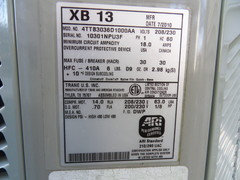
    Thanks for your reply and the information regarding rust on these Trane compressors. As for what model here is the picture of the entire unit and the id tag, so perhaps you can tell me that:

  • 8 years ago

    XB13, 7 yrs old, 3 ton...your location?...

    IMO

    bijan pahlavan thanked tigerdunes
  • 8 years ago

    We are in suburbs of Washington DC. Fairfax County.

  • 8 years ago
    last modified: 8 years ago

    Sandpaper and rustoleum. Obviously would require taking the housing off. Doable for the handy, and if you wanted to do it or not. Kill power to the unit first of course. Paint wont last forever but will help.

    Ironic that the 'climatuff' is rusting.

    The rusty gas lines next to it could use some rustoleum also.

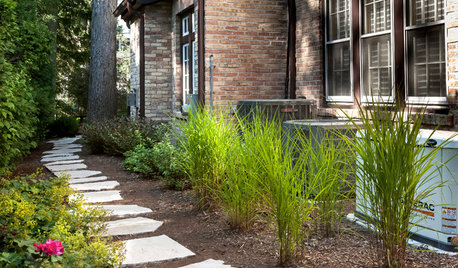
    The ground looks saturated next to the condensers. That is a contributing factor it appears a lot of water and moss accumulates in that area.

    bijan pahlavan thanked Vith
  • 8 years ago

    I would be more worried about the other condenser. The lineset and electrical connection are an accident waiting to happen. Who does work like this?

    bijan pahlavan thanked mike_home
  • 8 years ago
    last modified: 8 years ago

    Vith what causes ground saturation like you have seen in the picture? What is the remedy. I will have to check to see what is causing the water to accumulate in the area. It is away from the gutters so I don't think that is the cause. Could it be that the ground is too hard and water stays there for a long time?

    mike_home I have to admit I also think many of the things I have seen in this house and other houses appear quite subpar in workmanship. The other condenser is the older unit that came with the house when we bought it, the house has 2 a/c units. I hear one of the units quite loudly when it come on and off and I think it is the older unit although I have not checked. I think they should have at least run the line through some sort of conduit and hide them somehow. I assume all the subpar workmanship was by the original builder. As of now I don't know who that is but I am trying to find out and will post it once I know its name.

  • 8 years ago

    The builder and year of build was likely: 2002 Centex homes

  • 8 years ago

    Ground saturation against a foundation= improper grading (dirt doesn't slope away from the house) and or runoff.


    One possible solution is a French drain - a trench is dug, a perforated pipe (connected to regular pipe run to a lower spot on the property where it can drain out) is put at the bottom and then the trench is filled with base rock. Water will seep out of the dirt under the surface into the French drain and be carried away.

    bijan pahlavan thanked Elmer J Fudd
  • PRO
    8 years ago

    XB 13 - the 'b' stands for builder grade.

    It sounds really easy from a forum board to take the unit apart, sand the compressor down and put rustoleum over it.

    It isn't a good idea. For one you will be bent over an all aluminum spiny coil that is extremely fragile. You accidentally make / rub a hole in that and you're in the deep end of the pool.

    Next the climatuff compressor is attached via roto lock compression type fittings. If the compressor fails and you've got rustoleum all over those fittings you may be looking at new fittings to be able to change the compressor out. That alone will make this not worth the effort.

    bijan pahlavan thanked Austin Air Companie
  • 8 years ago
    last modified: 8 years ago

    Austin Air Companie thanks for decoding the model name. What is builder grade? Does it mean it is better than the standard grade or something? If it does then I wonder how fast non builder's grade rust if this one is rusted this much in about 7 years!?

    I thought about sandblasting the compressor and then putting some paint on it, but that was just a thought, not really wanting to do something like that, besides where would the sand go? Probably all over the condenser etc. Good to know the difficulties that one can encounter on taking a job like this, without this info I might have been tempted and then find out the job is far more involved that planned for. As someone else mentioned the rust is not a real concern, so my assumption is that it is a slow process and may take many more years before something goes wrong with the compressor due to rust. From your post it is clear that just the compressor can be change although it seems replacing just the compressor is not that cheap. How much would a job like that cost? It is probably comes down to replacing the entire unit by then as efficiencies will increase and the labor for replacing an old compressor would likely be as much or even higher than the whole unit.

    Elmer J Fudd (formerly S Whiplash) thanks for the info on saturated ground and a possible remedy. Can you suggest what kind of person or company would know about this type of work like digging and installing a French Trench? And what range of price they should charge for it?

    Thanks.

  • 8 years ago
    last modified: 8 years ago

    One choice would be a landscape contractor but they often come in two flavors - some only do "maintenance", like lawn mowing, bush trimming etc. Others do real construction work and it is the second type you'd want.

    Another possibility would be a contractor who does dirt work and excavation, as for building and foundations. Some concrete contractors do drainage and dirt work too.

    Someone who does this regularly will have the eye (and the equipment and experience) to do it right. A hack with a backhoe, well, who knows? You're may be talking about a pretty long trench (to get it to a spot where it can run out) and doing so may involve siting and avoiding buried pipes and electrical wires. Get someone who knows what they're doing.


    It's a trench two to three feet deep. How much it could cost depends on how long it is and what kind of access and obstacles are involved. It might even be hand dug in parts if equipment access is limited.

    bijan pahlavan thanked Elmer J Fudd
  • 8 years ago

    Elmer J Fudd (formerly S Whiplash) that seemed quite involved. We live in a home owner community and I think for doing something this involved there has to be permission. The distance between our house and neighbors on either side is like 2 yards and the ground that is saturated is in that corridor, all the landscaping is done by contractors that the homeowner association hires. I am wondering if the homeowner association has to get involved since this ground saturation affects not only our house but the adjacent ones too. Any idea how to go about something like this in a community such as ours? Thanks.

  • 8 years ago

    Builder's grade is an unofficial term meaning the cheapest possible component. Builders are always looking to maximize their profit. They will typically use items which look good, and may have a well known brand name, but made of the cheapest material. The Trane XB13 was the bottom of their condenser line. It no longer appears on the Trane web site so it may be discontinued. One may argue that Trane's cheapest model is on par with other company's mid-level model. But that is open to debate.

    During the next heavy down pour, go outside and observe how the water drains between your house and your next door neighbor's. Sometime simply extending the downspouts further away from the foundation solves the problem.

    If the homeowner's association is responsible to maintain your property, then contact them and explain the problem. Some photos showing the poor drainage will help your case. You may have to put your concerns in writing and attend an association meeting.

    bijan pahlavan thanked mike_home
  • 8 years ago

    If you're saying it's condos and the space outside isn't yours but owned by the association, then what Mike said is what you need to do.

    bijan pahlavan thanked Elmer J Fudd
  • 8 years ago

    It is not condos, it is single family houses but in a community with an association that is responsible for things like trash, maintenance of the landscaping (the little that there is), replacing the outside fencing around the entire community, asphalt of the parking spaces etc. The spacing between the houses is very limited (no yard). I think the space between the houses are not ours but the association. So I guess the first step is to explain to them the problem and then suggest the solution given here and see what is their answer.