This has been an interesting citrus hybrid that we're assuming is US-852 (Changsha mandarin [Citrus reticulata Blanco] x English Large Flowered Trifoliate Orange [Poncirus trifoliata]), originally created in 1965 by Dr. Joe Furr at Indio, California. It was released for use in Florida as a rootstock around 1999, but later discontinued for a number of reasons.
I picked this up at the Citrus Expo in VA Beach a long time ago. Gave it to a friend to grow. It is a quite hardy citrus and actually survived for many years in the ground near Sterling, Northern VA. Assuming a hardiness in the mid single digits F. Only during the vortex years did it finally die to the ground and not come back. But before then, it grew well in a sheltered spot and was able to bear fruit one year. Was it a fluke? Perhaps. But a light covering might have allowed it to survive.
Unfortunately, the fruit ripens in late November after hard frosts, so the fruit must be protected somehow. A fruit was taste-tested back then by some friends of mine, but it had already experienced hard frost, so they were not really able to determine potential fruit quality.
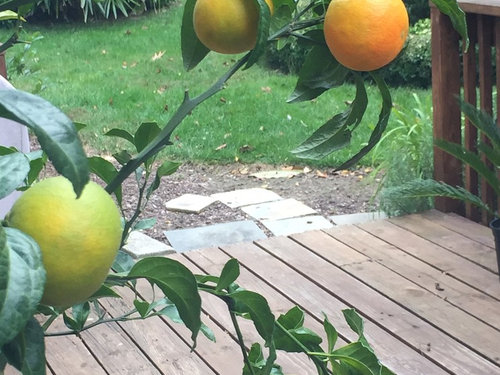
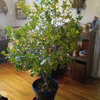
I was able to obtain cuttings of the plant (prior to vortex) and grew up a few in pots. They were moved into my garage for the winter. This summer I finally got some fruit.
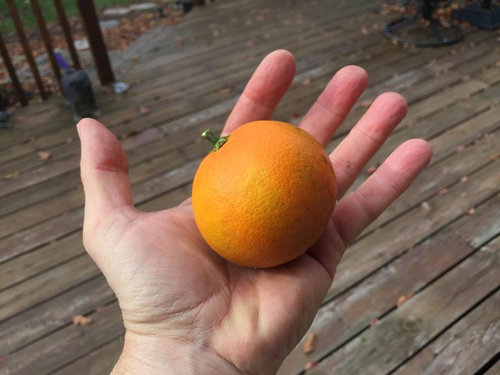
On November 12 I picked one off my potted tree. It was quite large and a very pleasing orange color as you can see. The flesh gave just a bit. This fruit had never experienced a freeze, since I brought the plant into my garage just prior to hard frost. So I was finally able to do a good taste test of this fruit!
Nice color and very juicy!
Here were my initial thoughts.
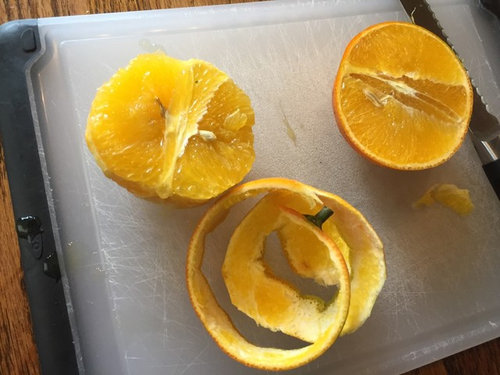
The peel was very thin, but adherent. I had to use a knife to peel it. Peel had slight trifoliate oil smell and taste. My wife could smell it from a ways away!
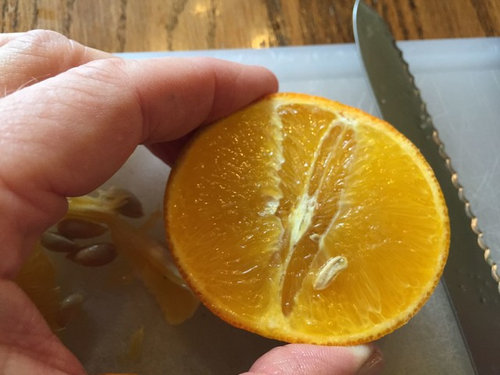
Flesh was yellow/orange like a juice orange and very juicy. Not the deep orange of a mandarin though. There were probably a dozen seeds present. The flesh smelled a bit of trifoliate. First taste impression was a tartness followed by a very distinct presence of trifoliate oil. I ate one half out of hand. But after eating my Satsumas, I'll probably never eat another Citrandarin this way. It left a slight oil taste in my mouth.
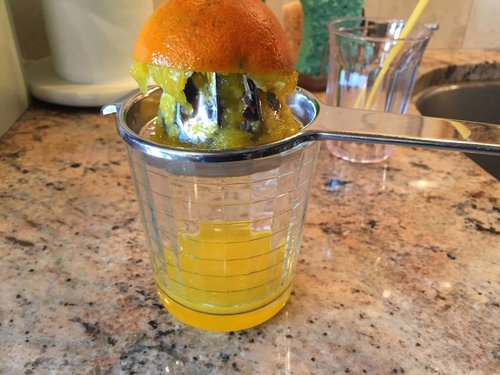
So, then I squeezed the remaining half of the fruit. Got a good amount of juice. Since it was tart and trifoliate-tasting, I added some Equal (half a bag). It was a bit better this way, but still could taste trifoliate oils. Just not very satisfying.
Preliminary Conclusions: This Citrandarin would make an interesting ornamental where hardy (zones 7B and milder). I do not think I would ever eat it out of hand or squeeze for juice unless I was on a Survivor show. But maybe some wouldn't be bothered by it like I am.
So, I decided to wait a few more weeks to see if any remaining fruit on the tree would sweeten up and lose some trifoliate taste over time. I had my doubts about the taste issue.
(later that month)... I tried another Citrandarin two weeks later. This one was very ripe and just fell off the tree. This time the flavor was actually a tad better. I didn't taste as strong a trifoliate oily taste as before .. it was still there though, but not overly obnoxious. No oily aftertaste this time. Not much of a mandarin flavor though, and not sweet ...maybe closer to a unsweetened grapefruit with the unmistakable 'spiciness' of trifoliate. Quite juicy. With some sugar (a lot), it might make an OK ade drink. I would liken it to Morton citrange perhaps.
One more week later : I squeezed yet another Citrandarin. This time, I treated it more like a lime or lemon by diluting the juice with three parts water, and then adding two bags of Equal sugar substitute.
Not bad!
I will very likely do this again if there are no good mandarins available at the supermarket. There are still a handful of Citrandarins left on my trees! Hope you enjoyed my observations!


 8 years ago
 8 years ago
 7 years ago
 7 years ago
 6 years ago
 3 years agolast modified: 3 years ago

johnmerr