Software
Houzz Logo Print
bless_thecreative

Building Our Home

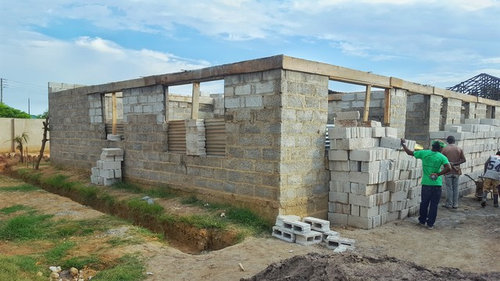
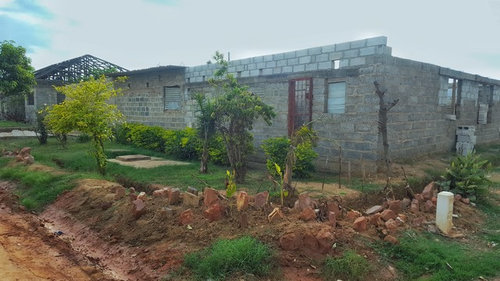
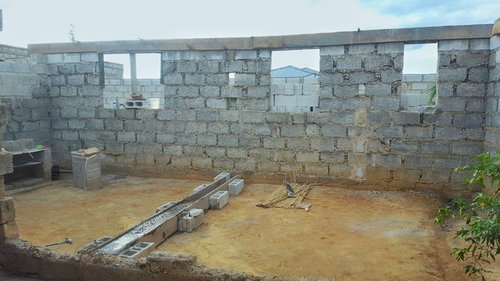
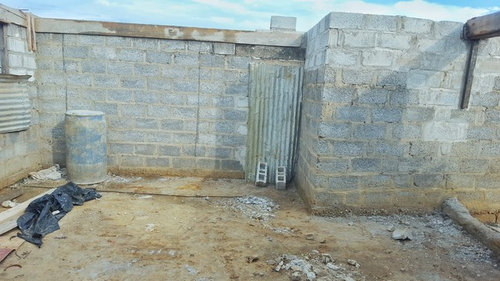
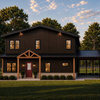
Boo and i are building our house both can't wait for the interior period

Comments (42)

  • 8 years ago

    Where are you building? I love the plants in your yard!

  • PRO
    8 years ago

    I'm getting a strong third-world vibe.

  • 8 years ago
    last modified: 8 years ago

    mrs. worthy is from Portland, JA. If the poster hadn't listed her location as US, I'd say it was typically Caribbean block and stucco; note security grille going in already. Light steel and cement board is evidently making inroads in JA too.

  • 8 years ago

    Welcome. Where are you building?

  • 8 years ago
    last modified: 8 years ago

    If the poster hadn't listed her location as US, I'd say it was typically
    Caribbean block and stucco; note security grille going in already.

    My first thought, upon reading that her location is in the US, was that maybe she's in one of our territories!

  • 8 years ago

    Um where does the OP mention where they are located?

  • 8 years ago
  • 8 years ago

    Worthy, what does JA stand for?


  • 8 years ago

    @littbug - Jamaica?

  • 8 years ago
    last modified: 8 years ago

    Yeh.

    Though mi wife only unleashes her out-of-date patois when the pickneys misbehave!

  • 8 years ago

    Here.

    Yes I looked there even before you linked it and didn't see it so again where are you seeing it?

  • 8 years ago
    last modified: 8 years ago

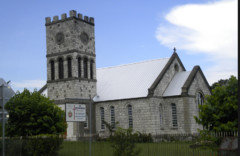
    If the OP rejoins us, it would be interesting to see what the walls are made of. At first glance, it looked like pure block. Looking again, I'd say it's natural stone with block added here and there. A rebuilt older home perhaps? Many of the most historic old buildings in JA. are of cut stone.

    For instance

    St. George's Anglican Church, Buff Bay, Portland, JA. 1814.

    The stones came from England as ship ballast.

  • 8 years ago
    Yes the house is located in Zambia it's the norm to build with full block. The house is being built in a new "residential area" or suburbs.
  • 8 years ago

    The stones came from England as ship ballast.

    Okay, now that is just cool.

  • 8 years ago

    In Fl we also build with block. It will be interesting to see how the house is built.

  • 8 years ago

    Hi, Bless, my brother taught in Lusaka until last year. Small world! Enjoy your home!

  • 8 years ago

    Lots of block in AZ too. My new master suite addition is all block. I’m looking forward to seeing pictures of your new home! Very exciting!

  • 8 years ago
    bpathome wow indeed, what are the odds..voluntary I presume? Thanks alot
  • 8 years ago
    The guys building are quite fast cause I took those pictures last week and when I went through last night it was totally different unfortunately couldn't take pictures
  • 8 years ago
    last modified: 8 years ago

    So a continent away (and 12 hours distant) from my guess!

    I think I see why most of the blocks--which I thought might be stone--are so much darker than the top layers: they're wetted.

  • 8 years ago
    Well hello. Not so far away from me at all :) I'm in South Africa. And from the pics I thought it could be hereabout lol
    Tell us about the project, what all are you building, for who all, anything. And let us know if there's anything specific you want advice on
  • 8 years ago
    @worthy you where actually right in the earlier comment the blocks are darker because the project was stagnant for a while and building has resumed recently
  • 8 years ago
    Najeebah thanks for the offer will definitely take you up on that one..
  • 8 years ago

    Bless, my brother is a professional, he's taught at high schools around the world, mainly in capitals. A fascinating career!

    I look forward to watching your build.

  • PRO
    8 years ago

    I watch a lot of British home building/remodeling/design shows on Netflix and was very surprised to see concrete blocks used for a great deal of the construction, including interior walls. It certainly would give some sound proofing between rooms!

  • 8 years ago
    "The U.S. is actually kind of strange"
    You can say that again lol
    Houses here are built of brick, inside and out. Drywall/sheetrock is unthinkable. It's only really used in offices and such occasionally.
  • PRO
    8 years ago

    wow, must be a pretty wonderful house. Where is your house?

  • 8 years ago
    OP is in Zambia in Africa @Oppein
  • 8 years ago

    My grandfather, a commercial builder, built his own home of concrete block. The current homeowners love the sturdiness but remodeling the kitchen was a bear. Another house in our area is block, and it was fascinating watching it go up. It's not going anywhere anytime soon!

  • 8 years ago

    We are building with concrete as well, though poured and not grouted blocks. The history on those stones is super cool!

  • 8 years ago
    last modified: 8 years ago

    A lot of homes in AZ are built with block. My grandparents Arizonan home and most in their neighborhood were block. My 1958 home is a mixture of block, glass and a very little bit of wood, but a decorative purposeful wood. Both additions I am doing to the house are block and glass. The walls between the rooms, though, are wood. I asked the contractor about making them block, but he wasnt too keen on the idea. My townhouse I rent out is mostly poured concrete (including the upper floor). If I ever build anything again, I definitely want block if possible.

  • 8 years ago
    last modified: 8 years ago

    Uniform machine-made concrete block was only devised at the beginning of the 20th Century. However, concrete made with natural occurring mineral formulations is known to be at least 4-5 thousand years old. There is one school of expert opinion that many of the stone blocks in the Great Pyramids are, in fact, manmade blocks of concrete. Roman mastery of the material resulted in aqueducts and public buildings still functional and beautiful two thousand years later!

    Interior of the Pantheon, Rome. c.120. The largest un-reinforced concrete dome in the world. (Surprisingly, the naming rights haven't yet been sold.)

  • 8 years ago

    While many houses in the U.S. last only about 50 - 70 years, cement houses elsewhere last much longer.

    The house we purchased in MN was built in 1972 and every person we talked with recommended tearing it down and starting from scratch because its structural integrity had declined too much. How long will a house built with typical U.S. stick construction in 2017 last? Will it still be around and solid in 2117?

    In Arusha Tanzania there is a neighborhood of cement block houses, similar to OP's, built mostly in the 1930's that are still serving people well and should last another 100 or more years.

    A house built in 2017 of cement & brick in The Netherlands is expected to last at least 200-300 years. And that is with little to no maintenance.

    Most neighborhoods in the U.S. slowly decline because people are hesitant to invest in 'older' houses and so the houses and neighborhood around them continue to decline until gentrification sets in. There are a few exceptions such as very wealthy communities (homes over about $1.5-2mm) or those with a lot of 'charm' and that are within safe walking/bicycling of local eating and shopping. Decline though is the rule for most, including about 90% of suburbs.

    This is the opposite of Europe where a few neighborhoods decline but the vast majority remain about the same as they've always been. When you buy a house you know that the neighborhood will be the same (relative economic status) in 50 years.

    One interesting bit is that while houses in the U.S. loose value fairly rapidly and consistently from the day they are built, those in Europe maintain or even increase in value, yet we 'invest' in buying houses while people in Europe largely rent.

  • PRO
    8 years ago

    Najeebah Hi, we have showrooms in Africa but not yet in Zambia. How can I help you?

  • 8 years ago
    Good to know. I'm not the OP, that's Bless the Creative
  • 8 years ago

    @Oppein, you asked where it was located, Najeebah answered for you.

    Najeebah and others, I'm also in South Africa (temporarily) and what I miss is the quiet of an American house. All these brick internal walls and concrete floors (often with tile, and rarely carpeted) makes the house very, very loud (esp with girls in the house).

    What do South Africans in the know do to quiet the hard materials of their house? Maybe the same in Zambia, OP?

    OP, are you anywhere near Livingstone?

  • 8 years ago
    last modified: 8 years ago

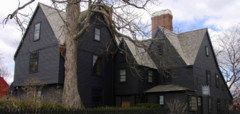
    Properly built and maintained wood homes can last for hundreds of years. You only have to look through resales in New England to confirm that!

    House of Seven Gables, Salem, Mass. b. 1668.

    It's not physical obsolescence but economic obsolescence and social changes that transform communities.

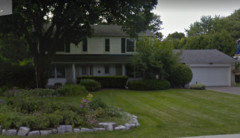
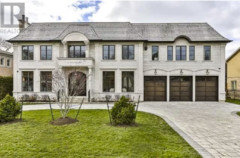
    Just consider this recent one of many teardowns in the last couple of years in our latest neighbourhood.

    Well-cared for brick and block and siding 1960s home. (2015)
    Same lot 2017. 8,900 sf. for sale C$4.98m.

  • 8 years ago
    Out of interest, how temporarily do you mean, Kirkhall; long enough to make changes to a house? Where about are you, if you care to share?

    I suppose living with things a certain way you grow quite accustomed to it; I don't generally associate houses here with being overly hard, but by you mentioning it, I can see it might well be so...

    Our entire house is tiled (you're right, it is hard), I miss the days we had carpet. Carpet or very large area rugs are great at warming up and softening and absorbing sound in a space. That's the main thing I'd focus on. You'd still find fitted carpet much more commonly in older houses. Area rugs make little difference I find.

    Soft furnishings would help of course, though the only thing I can think of that's particularly common here is thick curtains.

    Hard floors aren't problematic in the average household it seems, tiles are common. At resorts, you'll often find slate flooring throughout. You'd probably find some softness and sound absorption through laminate, though that's relatively less common than tiles.
    What enhances sound is also sparse furnishings and high ceilings, neither quite common here
  • 8 years ago
    @Kirkhall I honestly think sound proofing is not taken into consideration and I'm sure that's something that we would need to take into consideration. and it's true the houses are pretty loud,like when we moved into the apartment we are in now, which is located in the industrial area, when trucks pass by it would feel like the truck is on the bed.lol but with time we have adjusted.
  • 8 years ago
    we are located in Lusaka which is 480km, about 6 hours drive to Livingston
  • 8 years ago
    last modified: 8 years ago

    What do South Africans in the know do to quiet the hard materials of their house?

    I never lived in SA, but spent a huge chunk of my childhood in Latin America, where hard materials reign supreme. Tile everywhere, solid wood furniture (not necessarily with cushions, and if they were used, they were certainly not what most Americans would call a cushion, lol), among various other things.

    To soften things up, cheerful woven wall hangings were used a lot, usually purchased from native peoples outside the city. Pieced animal skins/furs were hung in the homes I visited, too. Woven cotton rugs and runners, sometimes layered, were popular floor coverings.

    As far as noise goes... I think some other parts of the world aren't as sensitive; they adapt out of necessity... Where I was, the sound of softball-sized raindrops hitting a simple metal roof was loud enough to drown out almost anything. Including your own thoughts. ;-)


    Maybe South Africans have similar strategies?