Software
Houzz Logo Print
theniceguy

Citrus outdoors - zone pushing

8 years ago

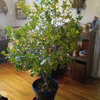
Where I’m located, there is an impressive variety of grafted citrus trees available. But it’s difficult to know which ones will bear fruit to maturity outdoors in my zone.
For example, If I understand correctly, there are early, mid, and late bearing mandarins that range from September to January for harvest. This is not including the many hybrids available, some of which claim to ripen outside at this time.
We get frost starting around oct/nov. I just had my first big Mandarin harvest off of one of my trees (unknown variety), all ripened up by early nov, so no worries.
What of the citrus that ripens later?
Is there critical point where it must reach before the temperature drops to a certain level?
Do different citrus follow different rules in this regard?
Am I limited to citrus that lists a harvest time before November?
There doesn’t seem to be a clear guide in this regard. For example, my kumquat tree, while by far the hardyest and recommended for cold, never ripens most of the fruit due to cold. While my shikwasa , A subtropical, is reliably giving me my best harvests, every year in sept/October, and is able to pull through the winter with manageable damage.
Also some which are supposed to be ever bearing, such as my Eureka lemon, only seem to put out flowers in September.

On a related note, it’s common to harvest some of my citrus varieties while they are still green (kabose, sudachi, shikwasa, yuzu, etc). This makes it easier to harvest them before the winter, and some taste great as a lemon/lime like sour juice. but I’m wondering when this is a bad idea. For example, I tried this with some Mikan mandarins, and they tasted too acidic and harsh.
What exactly are the qualities of citrus, and what affects them? Sour and sweet doesn’t seem to cover all of the aspects.

Comments (10)

  • 8 years ago
    last modified: 8 years ago

    In zone 9b you have plenty of options for zone pushing. You don't even have to plant a variety that tastes terrible.

    There are also numerous traditional Japanese citrus varieties which have more cold hardiness than most citrus, though you may have trouble finding them.

  • 8 years ago

    You do not absolutely have to use Winter protection but you will likely have more success if you do. Mikan can be found growing outside in the Kyoto area but they don't seem to do very well. All commercial production of Mikan in this area takes place inside a greenhouse. Once you get to the Tokyo area (farther North) you don't really see any Mikan. I'm sure they could grow, but it would be a little more challenging.

    There is a traditional variety called Kinkoji, which is similar in appearance to a grapefruit, that could be grown in the Tokyo area with little problem.

    In colder climates you will have to have more patience since it will take longer for citrus trees to reach a mature age where they will start fruiting. Where you are I think most citrus fruits can remain on the tree during Winter without being damaged.

  • 8 years ago

    Arctic frost and orange frost satsuma may be a good answer. Adding 3 CFL's to light your kumquat tree to give them 3 hours of extra light in late April for a couple of weeks then backing off may trick your kumquat in flowering early and giving you kumquats in august and September. Use daylight bulb with 1600 lumens. The larger diameter bulbs are more efficient. It has worked for me. Ripening fruit past October is near impossible for me.

    https://www.1000bulbs.com/product/202700/HALCO-80956.html

    https://www.1000bulbs.com/product/7822/FC20-FER3820W50.html

    These are just examples. You can find them much cheaper elsewhere.

    Steve

  • 8 years ago

    Forgot. The trees only have to see light, not daylight bright to be tricked.

  • 8 years ago
    last modified: 8 years ago

    Hi Parker, Are you living in Kyoto now? It would be nice to have another gardener in the country on here.

    Thanks for the tip Poncurus, are you sure that would trigger an early blooming months later? Ironically, I just found out it may not matter, as no one in the household likes even ripe kumquats!

    I’m not sure I’m actually a 9B. I’m sure drops below those temperatures you’re mentioning. I know other factors affect situation, and that’s where I get very foggy on this. I read quite a bit on this, but there still critical info gaps about what I can and cannot grow. I don’t want to be several years into a tree just to find out it misses some critical mass point, and I’ll never get edible fruit off it.
    I’m sure for each tree the fruit must reach a certain stage before it drops to certain temperature, or you’re never going to get fruit. To make it more complicated though, I’ve heard it’s common for Mandarin here to ripen in the snow, Or after you’ve picked it, to leave it and it will sweeten on the shelf. I have a hard time believing the quality of even ripe fruit on the tree would be unaffected below a certain temperature for a certain amount of time. I’m guessing you would get some kind of damage or drying out of the pulp etc.

    . I’m guessing for most citrus there is a critical point for ripening, where triggers a change in the sugars. Kind of like how KIwai convert starch into sugar. If you go before that you’re never going to get fruit.

    Through experience, I figured out I’m safe if the fruit ripens by October. However I’m trying to extend the season, and wondering how I can do that other than growing a variety of trees for a few years.
    As I mentioned, Locally I’ve only seen Mandarin and Yuzu grown. However, I successfully grow Sudachi, kabos, and shikwasa in ground, so I know there are other possibilities that people don’t grow here.
    I also wasted a lot of time and effort on varieties it’s obvious are never going to produce well for me here, like navel oranges or lemons.
    There are a huge variety of hybrids available locally, and it’s impossible for me to plant them all. It would help to have some general guidelines like I’ve mentioned above so I can find out my best options.

    On a positive note, I am extremely impressed with the variety, quality, and cost of fruit trees available at the local stores where I live.

  • 8 years ago
    last modified: 8 years ago

    theniceguy, Hyuganatsu may be worth trying. I don't know how cold hardy it is but I suspect it descended from yuzu (female parent is thought to be buntan). Try it and let us know how it goes.

    All those fruits you mentioned, they all descended from yuzu. That's why they show more cold tolerance than other varieties.

    (The only exception is shikwasa, which I used to know more about but now I can't remember. I think it was descended from Citrus taiwanica, another cold hardy citrus species that's not as cold hardy as yuzu.)

    Unshu mikan is the most cold hardy group of traditional mandarins (called Satsuma outside Japan). And yes, I do suspect it may have descended from yuzu, maybe two generations back (but that's just my own theory).

    As you have already astutely observed, mandarins tend to be more cold tolerant than other citrus, while oranges and lemons tend to be the least cold tolerant.

    If you can grow mikan that is not unshu mikan, you could probably grow Tangelo as well. Minneola tangelos (Honeybelles) have a fair level of cold tolerance. If the tree is small you might grow it inside for the first year before you plant it outside in Spring, since very small trees are more vulnerable. Covering it during Winter would also help for the first few years (assuming it survives).

  • 8 years ago

    Parker, that’s some unknown terminology for me, will take me a while to research it. Are you living in Japan now? Sorry, can’t see any options on here to communicate off of this thread. I I think the main issue is not cold tolerance, but rather fruit ripening. These late ripening Mikans, or other fruit that’s listed as ripening in the December - March range, i’m wondering what’s required to pull that off. Since we start getting frost here in November, wouldn’t that make any of these fruit impossible to ripen here?

  • 8 years ago

    theniceguy

    It will be necessary for you to grow those varieties that ripen before they are hit with fruit damaging freeze. You may be able to grow a couple of trees that you have to protect up through December. It is easy to wrap 2 trees, not so with 15 trees. You might want to start a thread asking which fruits can withstand the lowest temperatures. A difference of 3C/5F could make a month difference for you..

    Steve

  • 8 years ago
    last modified: 8 years ago

    Another one you might try is Kara mandarin. They're almost like an orange, with a slightly grapefruit flavor. They seem to do very well in Japan.

    https://m.youtube.com/watch?v=5rLbAmlLui8