Software
Houzz Logo Print
inna1_gw

What's happening with my orchids?

8 years ago
Hi everyone,

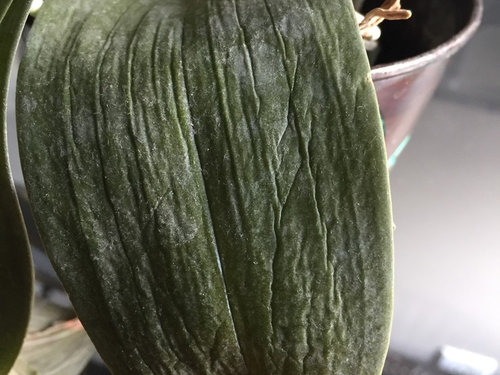
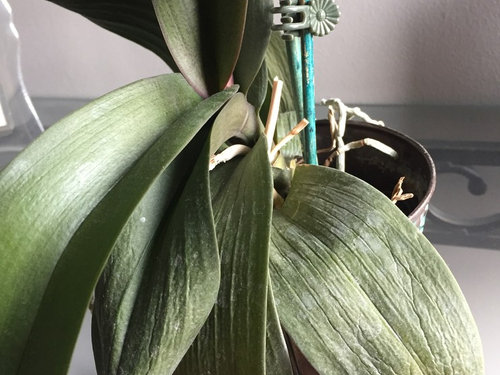
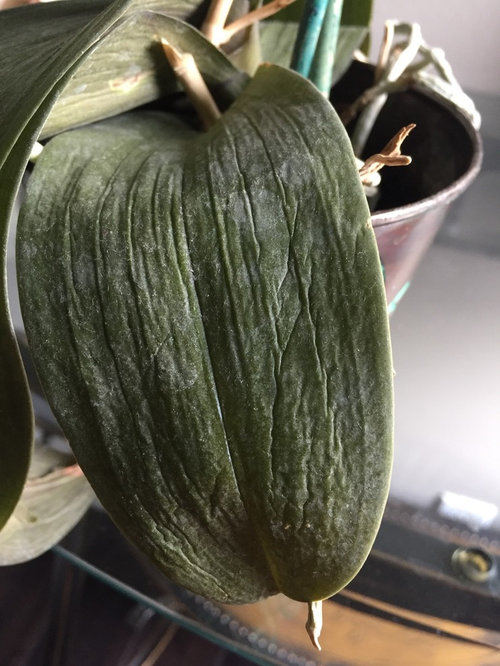
i have several pots with orchids at home and lately the leaves have became

Y

soft, limpy and wrinkly. I cannot understand if I am watering too much or too little. The top leaves still look healthy but the lower ones are not looking healthy and happy. Please help me to save my plants!


Thank you!!!

Comments (15)

  • 8 years ago

    Leaves are dehydrated, loss of roots? Where are you in the USA and where do you have the orchids, what sort of Potting Material are you using, Temperatures? and how often do you water?


  • 8 years ago

    I am in Los Angeles. I have three small pots in different places in the house. The temperature in the house is more on a cold side right now. After I bought the orchids I never repoted them, they are in some kind of rocky material. I have been watering a little bit once a week. I don't believe they are losing roots. Thank you !

  • 8 years ago

    Here are some notes written for a similar climate. Still suspect loss of roots! Recommended temp range not below 60F and not above 90F. Centigrade temps in notes)

    Phalaenopsis Culture

    These notes relate to Phalaenopsis culture in the Sydney area. These orchids cannot be grown outside in the yard or
    in a shade-house because winter minimum temperatures are too low and some summer maximum temperatures are
    too high. These temperature problems plus low humidity mean that special housing to meet Phalaenopsis needs is
    required, or the plants should be grown inside your home.

    Culture within the home

    Finding the right place to put the plant. Your plant needs bright light, humidity levels of about 60% and
    temperatures where both you and the plant will be comfortable. That rules out one place that is often suggested, the
    bathroom. Another place that is not good is one of those small closed in sunrooms where dry winter air is heated and
    the humidity levels are too low.
    My plants are on the windowsill of a large airy kitchen. Winter temperatures range from 12C to 18C each day and a
    fibreglass blind protects the plants from all but a few hours of gentle sun in winter. Do not expose the plant to harsh
    direct sunlight because the leaves of the plant will burn. Early morning sun is best, but late afternoon sun is also OK
    provided it is screened as described above.

    Humidity

    Some people recommend spraying the plants with water every day to raise humidity. This is not necessary because
    the humidity level in most homes is about 60%. You may wish to place the plant on a humidity tray containing
    pebbles and water. This is not necessary either, but will not cause harm, provided the bottom of the pot is not sitting
    in water.

    Watering

    Frequency depends on the potting material and the atmosphere in the house but as a general guide once a week in
    winter grading to two or three times a week in summer. Potting material should be kept moist but not sopping wet.
    Make sure no water is left sitting in the crown of the plant for an extended period, as the plant may rot. Use a tissue
    to soak up excess water.

    Fertilizing

    Use complete liquid fertilizer with every third watering, but only at half the prescribed strength. Wet the foliage as
    well.

    Repotting

    Every two years in late spring. Use specially prepared orchid bark, not Cymbidium mix. Try not to disturb the roots
    too much and just replace some of the older bark. Do not be in hurry to put the plant in a larger pot, because like
    most orchids, the plants seem to do better in a slightly pot-bound condition. Do not worry about some roots growing
    outside the pot. That is a good sign.

    Treatment of flowering stem

    When the flowers are nearly finished, you can cut the stem off just below the lowest flower and the plant may
    produce a new flowering shoot from the node just below the cut. BUT, note that most experienced growers cut the
    stem off at the base so the plant will put all its energy into growing new leaves, and therefore will produce better
    flowers next time.

    Making the plant flower

    The plant should produce a new flowering stem in late autumn as the temperatures drop. Some growers induce
    flowering by watering the plant with Epsom salts (Magnesium Sulfate) once a week several times in autumn. The
    amount of Epsom salts required is one tablespoon full in a bucket of water.

    Pests and diseases

    Your plant should remain pest and disease free in the home environment. Fungal disease which shows up as black
    spots on the leaves is a symptom of over-watering. Cut back on the watering a bit and seek help from a nursery or

    garden centre if the problem persists. Phalaenopsis are also susceptible to mealy bugs, which are small, white, fluffy
    looking bugs that live on the undersides of leaves or between the leaf bracts on the central stem. Use either White
    Oil or Pyrethrum to remove these pests. More than one application may be required, so if you see another bug, spray
    again. If you use White Oil, make sure to move the plant out of direct sunlight for a few days otherwise the leaves
    may burn.

  • 8 years ago

    Socal has been extreemly dry for some time, single digit humidity at times. Looks like dehydration to me. I. Would wonder about submerging the pot in water for a few hours, using very soft water. I finally gave up on my tap water here, it dries out orchids.

  • 8 years ago
    last modified: 8 years ago

    Being it is affecting several orchids and based on the pics, I'd lean towards a cultural issue. Generally the only reason an orchid becomes desiccated like that is because of a lack of water. A lack of water is usually caused by a lack of roots in the media and not by under watering. The only way to really know is to look at the roots, so you may need to pull one of the plants from its pot and check the roots out. If it is planted in a rocky material you should be able to just replace back in same pot and let us know the results so we can go from there.

    How long have you had these orchids? If you can't pull, can we get a shot of the roots and media being used?

    Good luck,

    Bob

  • 8 years ago

    Thank you everyone for trying to help! Really appreciate it!

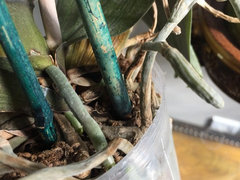
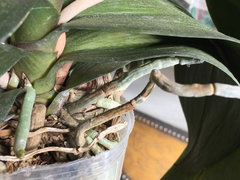
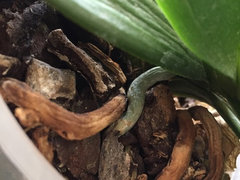
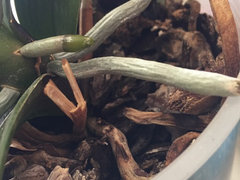
    here are a few more pictures focusing on the roots of two different orchids. I didnt pull them out of the their pots but will do it if these picture are not sufficient. Both plants do have a new growth but also some older dry roots.

    Thank you!

  • 8 years ago

    Hi, if you think my orchid is dehydrated and I need to soak the roots in the water, how do I do it?

  • 8 years ago
    last modified: 8 years ago

    Just a thought, not born out of orchid expertise to be sure: The orchids are in some kind of rocky material, and we do not know how long they have been there. If you have been watering a little at a time, it stand to reason that there may be a salt/mineral buildup in the rocks. If the roots are in contact with high salt/mineral surfaces, the water from them may migrate to the higher salt environment, osmosis. Flush the salts out of the rocks, and if that was the issue, the leaves should plump up in a reasonable amount of time.

  • 8 years ago
    last modified: 8 years ago

    Those aren't rocks, but rather orchid bark. It's most likely Fir bark, which is commonly used a a potting medium for growing orchids. Since it's being used by itself, your orchid needs to be watered more often. Your plant is thirsty. Let it soak in some fresh water for roughly half an hour and then drain the excess water away. After that, flush it out with more fresh water until the water begins to run clear from the drainage holes.

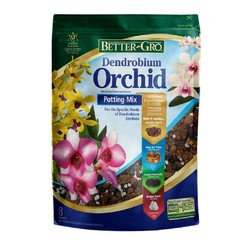
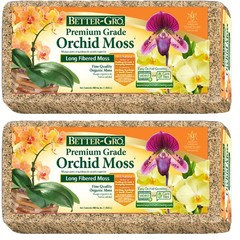
    This is why I don't like using bark by itself. It's fine to do so, but you'll have to water more often. For my orchids I use the Better Gro brand Dendrobium Mix, and the Better Gro brand premium grade orchid moss. I mix them half and half, and all of my orchids love it. Their Dendrobium mix is just the same as their Special Orchid mix (fir bark/charcoal/perlite), only it adds small chunks of lava rocks to the blend as well. Great stuff! It's officially endorsed by the American Orchid Society, and for good reason.

    My local Lowe's used to sell this stuff, but now they're run by baffoons who have no idea what they're doing. That's when I found out that Home Depot sells this online for cheap, so I ordered from them and had it shipped to the store for free, because they don't actually carry it on the shelves. Better Gro offers some of the best orchid mixes you can get, and Home Depot doesn't jack up the prices like other sites do.

    Anyways, when you mix them half and half, you get the best of both. The bark mix stays open and lets in lots of fresh air, and the sphagnum moss hold on to water much longer. Having the bark mix mixed in with the sphagnum prevents the moss from becoming too compacted. Using both 50/50 is foolproof and your orchids will love it.

    Here are the links to both...
    8 Qt. Dendrobium Mix
    & 1/8 cu. ft. Premium Grade Orchid Moss (2-Pack)

    If you have anymore questions, just feel free to ask. Hope this helps. :)

  • 8 years ago

    I beleive the orchid in the first 2 photos seems to be planted in pure spagh moss already. From what I can tell from the pic, the roots look like they may be viable in the pot, but extremely dry. I'd water that one heavily and then continue to water when the moss starts to get dry and crunchy. If the interior roots turn greenish after watering, they are viable and helping the plant.


    The orchid in the last 2 pics is planted in a bark based media. It appears to have lost most if not all of the roots that are under the bark. This orchid probably needs to be pulled from the pot, any brown or mushy roots removed/cut-off and then repotted using a pre-soaked bark mix. You may be able to reuse the old bark if it is solid/non-rotted after pulling the orchid.


    These two orchids are planted in different medias, so they are probably going to need to be watered at different intervals.


    To soak an orchid use a bowl about the same height as the pot, fill it with water and then sit the orchid in the bowl for an hour or two.


    Good luck,


    Bob

  • 8 years ago

    From your description, you're watering way too little, even for orchids in sphagnum. For now, no matter what they're planted in, I'd put all the pots in the sink and soak them for 45 minutes or so. The ones in bark will dry out in days, and need another thorough watering. The ones in sphag will take over a week, at least, to fully dry out, so I'd just watch those and figure out when they're nearly dry, and water fully again.

    Orchids don't like to be watered a little bit, they like to be watered completely, and then allowed to dry out slowly. See if more watering makes any difference. You should be able to tell with the ones in bark in clear pots, because you'll see new growth on the root tips.

  • 8 years ago

    Every time I water, I pour the water over the bark etc, and let it run out the sides and bottom until I feel like everything got soaked. I do this by holding the the plastic pot over a small pail, and just pour. Then I discard the water. I don’t count seconds, but I would say I do this for 30 seconds, each plant. I also carefully angle the plastic pot while I’m pouring, so the water reaches the middle and pours through the other side.

    I water my phal 2x/week, I’m in N Ohio. If you are in CA, that’s the desert....I would think 2x/week is minimum. I would check them every few days. If the pot is light.....give it a good drink!

  • 8 years ago

    Thank you all so much for the great information! It looks like I was dehydrating my orchids due to my lack of knowledge. I gave them a good soake a few days ago and will continue watering more often. Hopefully, they will be much happier. As for the repotting, do orchids like to be a in a tight pot, with roots sticking out or have room inside?

  • 8 years ago

    It has been my experience that these kinds of orchids like to be really snug. If I size up to a pot too large when I repot, they spend all their time happily growing more roots to fill it before they'll flower again. If I need to replace the media for a phal, I will put it out, dump all the old bark, and put it back in the same pot.

    Good luck! I hope your little guy bounces back and its next new leaves are nice and shiny!


Sponsored