Software
Houzz Logo Print
cptk1

Propagation is Not Easy

8 years ago
last modified: 8 years ago

There are countless articles on the web that start with something to the effect of "propagating by cuttings is an easy and cost effective way to get more plants for your garden." This is misleading. "Propagating by cuttings is easy," as a general statement, is false. Sure, propagating coleus, fig, and willow (etc) by cuttings is easy. But if you don't have a greenhouse or hoop house and an intermittent mist system--which the average gardener does not--most things are actually very difficult and your failure rate will be high. Still more are impossible to root at all.

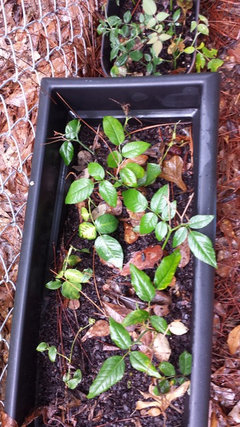
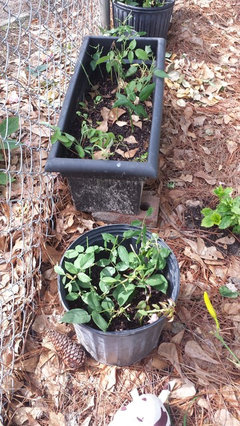
And now to what prompted this post. Trying to root Leyland Cypress outdoors in a plastic tote with peat and perlite. They've been in about 3 weeks now. Added bottom heat about a week ago. Just checked one yesterday. No callus, nothing. On top of that, my dog insists on urinating on my cuttings. He has a whole yard to urinate in, but of course he only wants to do it on my project. I had only caught him doing it when the dome was closed (I try to monitor him if he's out there when the dome is off), so I had hoped he hadn't actually gotten it on the cuttings. Well yesterday I left the dome off for a couple hours to air it out. At that time everything was still green. Checked on them late last night and about half of them have turned brown. So I guess he finally got them.

Only other theory is that it was too sunny yesterday to take the dome off. Which do you think is more likely? I'm hoping for the sun scald theory because the cuttings could still possibly root even if the leaves die, but if the media got urine in it, it's probably all over.

I guess my question is--to justify this pity party--is 3 weeks too soon to declare defeat (setting aside the possible destruction by urine)? I wasn't expecting much the first 2 weeks without bottom heat, but I figured with bottom heat I might start seeing something.

Comments (26)

  • 8 years ago
    last modified: 8 years ago

    Cuttings can be easy, but I would argue that they are not simple. Many variables need to be balanced unless you are attempting plants that are extremely easy to root. I recommend "The Reference Manual of Woody Plant Propagation" by Michael Dirr and Charles Heuser, Jr. Lots of detailed information.

    Hard to give much feedback with so little information from you, but leaving your humidity dome off for hours at a time (and hopefully not in the sun? And hopefully your cuttings aren't in direct sun to begin with?) probably did not help them.

    If you try again with the Leyland Cypress, a few notes from the aforementioned book:

    Cuttings of this plant generally take 10-12 weeks to root, although bottom heat can speed that up;

    Opinion is split on whether the time of year that cuttings are taken matters, although the author reports success with late February/ early March cuttings;

    And finally, the author suggests 3 things are extremely important: vigorous cuttings from young plants, wounding, and rooting hormone.

    Mist is the standard right now for commercial cutting propagation, but many plants can be rooted by home growers using humidity domes as long as careful attention is paid to all the variables that are involved.

    I would personally suggest you be careful when pairing bottom heat with a humidity dome. That heat will also increase the air temperature inside the dome, and without good ventilation (which would defeat the purpose of the humidity dome), you can end up with excessive air temperatures.

  • 8 years ago

    No, propagation by cuttings is not easy. 99% of plants on earth can't be propagated by cuttings at all. Of the remaining 1% that can, only about 20% can be propagated under conditions that the average person is going to commit the time or money to creating. What you mean is "propagating cuttings from a list of about 20 plants is easy." You are correct in that statement, so I applaud you.

  • 8 years ago

    Also, you contradict yourself in the course of one post. First you claim propagation with humidity domes is no problem. (False.) Then you claim that bottom heat is recommended for Leyland Cypress. But then you claim that one shouldn't use a dome with bottom heat. Yet you also claim that taking off the dome to allow airflow and prevent mold killed my cuttings. Yet with all these contradictory statements, you still insist that it is easy. I supposed next you're going to claim that you never fail with cuttings, and then cite your amazing success with coleus.

  • 8 years ago

    What the hell is wrong with you? I was trying to provide you help and advice, and those two responses were outright attacks.


    Figure it out yourself then. Unbelievable.

  • 8 years ago

    I was just helping you by providing you with correct information, since you seem to be operating under a number of misconceptions.

  • 8 years ago

    "99% of plants on earth can't be propagated by cuttings at all."

    Do you have a reference for that statement? It seems like a wild exaggeration.

    I've had success with rooting cuttings from Camellias, Azaleas, Gardenias, and many other plants. Most of these required looking to see what has worked for others combined with trial and error to find success.

  • 8 years ago
    last modified: 8 years ago

    Rooting a cutting isn't difficult in the sense that you don't have to do much to do it.. Some are more difficult to learn than others. You just have to give it the right conditions, which is just knowledge. Once you have the knowledge, it becomes easy for those specific plants.

    Every plant is slightly different when it comes to what works on this. The best way is to just try every season and different levels of humidity. That said, a good number of plants work for me with a single formula: moist sterile medium in a cup, the cutting is dipped for a few minutes in rooting hormone, put a plastic bag over it with 2 holes cut in the top, in late fall (depends on your location, but here in AZ late fall is easily the best time for most attempts).

    Btw, I used to never use rooting hormone because I tried the store bought crap a few times and gave up on it when it didn't seem to help at all. A few years ago I tried making my own solution with pure Indole butyric acid and then could root anything that I tried. If you get the salt form (potassium is the most common one- usually called IBA-K) you don't have to mix it in alcohol. Also, it needs to be kept out of UV light as much as possible. UV light makes it break down faster. I make small batches whenever I do cuttings and only keep it for around 6 months in a dark container. I like to try different concentrations and see which is the best, and they just all end up working :)

  • 8 years ago

    So you buy the IBA-K and dissolve it in water and then dip cuttings? It sounds like making your own has significantly improved your success.

  • 8 years ago

    Yeah, although I get the regular pure IBA and dissolve it in ammonia or alcohol, then add that to water for soaking. The IBA-K salt sounds easier to handle. I'll be trying it out at some point this year.

    It definitely has improved the rate of rooting in all cuttings and even air layering. For air layering, I just spray a little into the peat moss that goes around the cut.

  • 8 years ago

    Do you order from an online supplier? I agree that the stuff I've bought from Home Depot before doesn't seem to improve rooting much over not using it so I'd be interested in trying something else if it works better.

  • 8 years ago

    "99% of plants on earth can't be propagated by cuttings at all"

    What a completely preposterous statement!! There are very few plants than cannot be successfully propagated through cuttings. Where in the world do you think wholesale growing nurseries get their plants?? They sure as heck do not grow them all from seed!! In fact, named forms of most plants have to be propagated asexually (cuttings, grafting or division {perennials}) as they do not come true from seed.

    Like anything else worth doing in gardening, it does require some research, as each species has slightly different requirements regarding timing and methods. But there are zillions of online sources - not to mention published texts like Dirr's mentioned previously - that are dedicated to providing this information. Somebody out there is successful in this endeavor, otherwise none of these sites or publications would exist.

    I'd suggest you stop complaining or jumping on those who attempt to offer valid advice, do some serious reading and try again. It is by no means a slam-dunk process but it is eminently doable.

  • 8 years ago
    last modified: 8 years ago

    I just get it from ebay. I think the reason the stuff from the stores doesn't work very well is it's either in powder form (mostly talc powder), which doesn't absorb very well (at all?) into cuttings or it's in liquid form but probably expired. In any case, both are very low concentrations.

  • 8 years ago
    last modified: 8 years ago

    99% is a conservative estimate. It's more than that. Somewhere between 99% and 100%. Obviously 100% of the plants that are successfully propagated from cuttings by nurseries can be propagated by cuttings. That's a simple tautology. But that's a tiny fraction of the plants here on planet earth. And then you take that tiny fraction and evaluate which ones are going to be reasonably successful without greenhouses, misting systems, etc, and now you're down to a minuscule list of 20-50 plants that can be propagated with any decent rate of success by the home gardener. Just search the internet for plant propagation and you'll find that darn near 100% of the references to people doing plant propagation at home discuss the very easiest things to propagate like coleus, African violet, and fig.

    The point isn't that it's impossible. The point is that it is difficult, not easy.

    P.S. You threw in grafting and division to strengthen your argument when I said nothing of those methods. I said cuttings, and by that I meant stem cuttings, which was clear from the context.

    I honestly see no reason why you insist on arguing this point. I think it's obvious to anyone who has actually attempted this that it is not as easy as some of these articles claim. You actually admitted as such when you referenced all the research you have to do--not to mention the trial and error necessary which you didn't mention--to be successful. Not quite as easy as cutting and sticking like the articles claim.

    I've seen a lot of videos on Youtube where they can talk like they have 100% success, but when they are asked to show their results, there is usually plenty of failure. It's just a fact of life.

  • 8 years ago

    It's common sense. Cuttings aren't easy. Anyone that has actually done it knows that. Your argument (which has become rather repetitive, by the way) is that cuttings are possible, therefore they are easy. There are lots of things that are possible yet difficult. Naming guys that have climbed Mount Everest does not show that it is easy. I have never claimed that cuttings are impossible, so you continue to argue with a strawman.

  • 8 years ago

    "I have never claimed that cuttings are impossible, so you continue to argue with a strawman."

    You claimed that cuttings are impossible for 99% of plants on Earth, which is a ridiculous statement.

    "99% of plants on earth can't be propagated by cuttings at all."


  • 8 years ago
    last modified: 8 years ago

    However ridiculous you may believe it to be, it is nonetheless an accurate statement. And the self-evident fact that propagation from cuttings isn't as easy as described in online articles doesn't even rely on that statement, so quibbling over it is a meaningless sideshow.

    I believe in having accurate information in the public domain, even if that information isn't always what people want to hear. The reality is that when people first start propagating plants, they experience a lot of failure and trial and error unless they are propagating the very easiest plants. Sure, I succeeded, at least to a degree, on my first time with rose and hydrangea, but more difficult plants were a very different story.

    It's not just that I'm incompetent if you decide to go the ad hominem route. I've seen several examples of "gurus" on Youtube talking about how easy it is and giving the general impression that their success rate is something like 100%. But then when their subscribers asked to see actual results, there were plenty of failures, which the host then chalked up to being par for the course when propagating.

  • 8 years ago
    last modified: 8 years ago

    "However ridiculous you may believe it to be, it is nonetheless an accurate statement. "

    Prove it!! Without documentation to support this egregious statement, you are just as guilty of hyperbole as any YouTube video! btw, anyone with any sort of horticultural background or experience will tell you to stay away from YouTube videos......to borrow a scene from your playbook, 99% of them are worthless, self-indulgent exercises in nonsense and not worth the time it takes to view them.

    "I believe in having accurate information in the public domain, even if that information isn't always what people want to hear. "

    Then start looking for this information from sources other than the Internet. Since there are NO controls on what may be posted, you will get just as much crap info as you will valid data. Witness your preposterous contention that "99% of plants on earth can't be propagated by cuttings at all."

    I can't believe you are persisting in this one-sided argument when evidence to the contrary exists with any number of reputable sources as well as with the responders to this thread.

  • 8 years ago
    last modified: 8 years ago

    You are being ridiculous. You're the only one with inaccurate information here. How would you know if 99% (or more) of plants aren't able to be propagated?

    1. Because the fact the nurseries don't propagate 99% of every plant on earth? No, they only propagate things that sell. People want to buy fruit trees and ornamental plants that are known to thrive well in their area, so that's what they propagate. They didn't just happen to be the only plants that can be propagated by cutting.

    2. You tried a cutting of every plant on earth and failed 99.9% of the trials? No, but even if you did, how do you know you didn't just do something wrong that can be easily overcome by changing your method? Yes, I used the word "easy".

    Yes, there are failures of even the most easy plant when you do a bunch of them. It wouldn't be a good use of your time to make the perfect setup for propagation when most of the time, most of the plants come out okay when you propagate them with lazier methods, and some cuttings (like dead ones) just won't root no matter how perfect the setup is. This is why you do like 10 cuttings when you want around 5-7 plants. Surprise! No one that consistently does cutting propagation has a 100% success rate, 100% of the time. Well, unless they are doing Gardenias.

  • 8 years ago

    You guys, what about my christmas present, soon to be tried out, a cloner? This is the low side of the market$ but still allegedly quite good, the Clone King 36 Site Aeroponic Cloning Machine (I hope using a brand name doesn't violate any forum terms; I know these vary a lot so any review kinda needs to know which one in order to evaluate it). Amazon reviews are great. Lots of people say they've had very high results. I started reading about this and it seems even trees can be cloned -- but of course everything has certain requirements. Is there a reason anybody is still doing this manually? I mean short of money of course.

    Best,

    PJ


  • 8 years ago

    Depending on what you intend to propagate there are many less involved yet effective ways to do it without a cloner. I've built one from scratch just to try it and it did work. I just thought it was too much trouble compared to traditional methods.

  • 8 years ago

    WOW! I have not had trouble with rooting since I started using pinebark fines. I just stick cuttings in a pot outside, wet it, leave it in dappled light.

  • 8 years ago

    They may drop their leaves, but they just roll on!


  • 8 years ago

    Just something to ponder. There are over 9,000 species of grass alone. That's just grass. How many species of ferns are there? Tree? Shrub? Moss? Trust me, 99% isn't a wild exaggeration. It's probably conservative. Even when discussing the tiny sliver of plants sold commonly as landscape plants, many of them are propagated by grafting, tissue culture, and even seed in some instances because they cannot be propagated by stem cuttings or at least not efficiently enough to be profitable.

  • 8 years ago

    There is a major flaw in your logic. You stated that 99% of the world's plants can't be started from cuttings. First, you can't possibly know that and second, just because a vast majority of plants have not previously been propagated from cuttings.....usually because there is NO marketable need to.....doesn't mean it cannot be done!!

    btw, I used to work for a large wholesale grower. Virtually ALL of the plants he grew and sold - several hundred different types - were propagated by cuttings. Not profitable?? Why would he bother otherwise?

    Such broad and wild generalizations are seldom accurate - this one sure isn't - and typically unhelpful.

  • 8 years ago
    last modified: 8 years ago

    "propagating by cuttings is an easy and cost effective way to get more plants for your garden."

    This statement is not necessarily false.

    First of all, propagating by cuttings is easier with some plants than with others. But that doesn't make the sentence false. The sentence said 'an' easy way to get more plants for your garden. It didn't say it was an easy way to get 'every kind of plant' for your garden. It just said 'more plants'. They may not be the plants you want!

    Also, it can be a lot less expensive to propagate your own rather than buying a nursery container plant-- therefore it can certainly be more cost-effective, provided you have access to patent-free plant material, and provided it's the plant you want to propagate, and provided that the plant CAN even be propagated by cuttings.

    Every plant is different. Do your research. There's a TON of free information online about how to propagate different types of plants.

    "Propagating by cuttings is easy" -- your first sentence didn't say this, you did!

    Also, keep in mind that many websites hire freelance writers (who often know very little about horticulture) to write 'plant information' just so people go to the sites when doing searches on various horticultural topics. It doesn't mean the sites have good information. Often it's all too 'cookie-cutter' with horrible advice and generalizations. Maybe they're selling advertising, I don't know. SFGATE and GARDENING KNOW-HOW are some of the biggest offenders here. Do a search for propagating southern magnolia from cuttings and an SFGATE article comes up. Makes it sound sooo easy!

    Rooting Southern Magnolia

Sponsored
More Discussions