Software
Houzz Logo Print
glowgirlinto

Help with staining

8 years ago
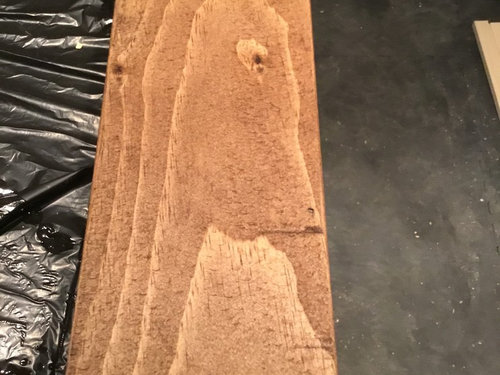
I made some floating shelves out of pine and they look terrible now that they are stained. I know pine is difficult to stain but I'm hoping someone can help me improve the look of these!


I sanded to 220, applied Minwax wood conditioner and then stained (oil-based Minwax). I see a fair bit of grain reversal that's making it look crappy. This is one of my first projects so I don't expect perfection, but is there anything I can do to improve them? I haven't put a top coat on yet.


I've just read that gel or water-based stain can be better with pine. Can I put a coat of gel on top of this? Do I need to strip/sand before I do that? Is it too late to switch to a water-based stain if I strip/sand? Is there anything else I can do to even out the staining?


Comments (8)

  • 8 years ago

    It looks to me like you didn't start with a coarse enough sand paper, and progress through the grits enough. I would sand it all down with an 80 or 100 and work your way back up to 180 or 220.

    That said, I would first try a practice board before you do all of that work again. Use a smaller piece so it's less work. If it comes out to your liking, then proceed on your shelves. Here is a good article on sanding if you have any questions on that https://www.popularwoodworking.com/techniques/rules_for_sanding_wood. 

  • 8 years ago

    Hi Steve, thanks for replying. And for the article link. I started with 60 and worked my way up. I used a random orbital sander. Should I do it again? Maybe I didn’t work long enough at each grit? Sadly I tried the conditioner and stain on a small cut off and it looked great but I don’t think it had much in the way of grain lines.


    Would a layer of gel stain work at all? Not trying to get around doing the proper sanding work but ... if it would look okay and provide faster results I’m not against it!

  • PRO
    8 years ago

    This is a fine stain job. There are no blotches. The prep perhaps could have been better; IDK what those nicks are from.

    Casey

    Laura thanked Sombreuil
  • 8 years ago

    I'm with Casey,stain penetration is as good as it get's on pine. There's no telling what caused all those "freckles". A new F4S board is already sanded to 150,why would you go back to 80 ? As for letting conditioner dry before staining,read the label. Max dry time is just that,max time in cool conditions,no wind,in the shade. It can be as little as 30 minutes in hot dry conditions. You need an "eye" and that come's with experience. Try this on scrap sometime,I believe you will like the result. Divide scrap board with tape. Apply conditioner to intire board. Get light so it reflect's off wet board. At the point where early wood dulls and moist conditioner remains' on late wood,gentely wipe half the board with dry cloth. According to directions on can.apply stain within 10 minutes in hot conditions,20 in cool. Alow conditioner on other half to dry 24 hours before applying stain. When this last stain is ready,clear coat intire board then decide for yourself. This is for the MinWax Conditioner you were using.

    Laura thanked klem1
  • 8 years ago

    I'll try the experiment sometime. I followed the instructions on the conditioner that said to let sit for 5-15 minutes, but clearly there can be a ton of flexibility for dry time! Pine is clearly annoying to work with but I didn't want to pay for more expensive wood until I had better skills. Lesson learned!


    One more related question if you don't mind? I have an oak dining table I want to refinish. Any quick tips or tricks for staining this wood? The table only has a clear coat on top that is peeling off in places so I planned to just sand the table down and stain. Can I assume oak is better to work with because it's hardwood and doesn't have the same sap issues as pine?

  • 8 years ago

    Yes, oak takes stain much better. Again, its even more important to test on scrap pieces to get the right color. Its also harder to sand that stain out if you don’t like it.

  • 8 years ago

    You will not have the blotching issue with Oak. There can be and usualy are areas that take more or less stain,,,,,,but it look's awsume so that;s the old"one man's trash is another man's treasure"deal. Unless you have had that table in your sight during it's intire life and will swear no silicon or wax was ever put on it,clean it with special cleaner meant for that purpose before sanding.. Change paper often being carful to avoid globs of finish on paper. I finish up with paper backed by pad and hand sanding with grain. If it's Red Oak and you go much deeper than old finish,a filler should be used before staining. Not so with White Oak. Use right brush and control dust.