Software
Houzz Logo Print
publickman

Flowers stolen/missing from Tillandsia

8 years ago
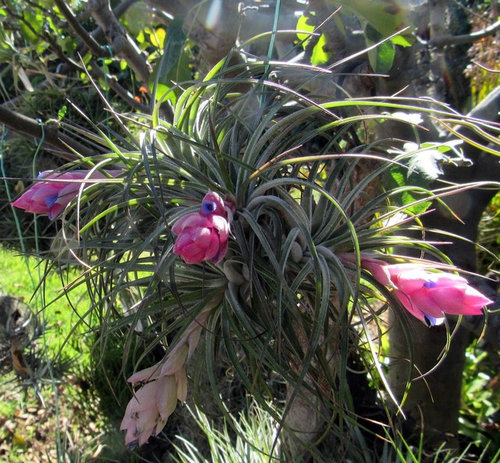
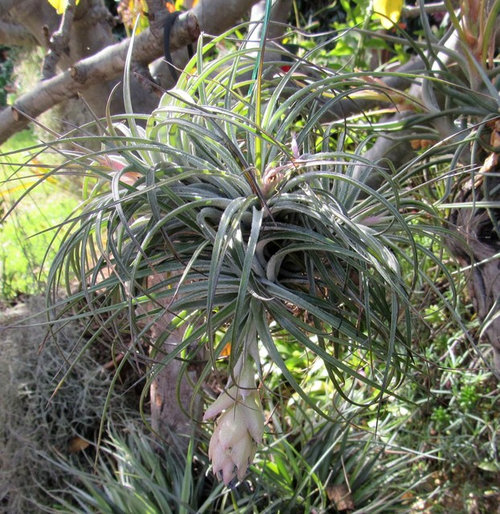
Here is a photo of one of my tillandsia, taken Jan 26, 2018 11:36AM

Here it is three days later
Photo taken Jan 29, 2018 10:45AM with three of the flower spikes missing.

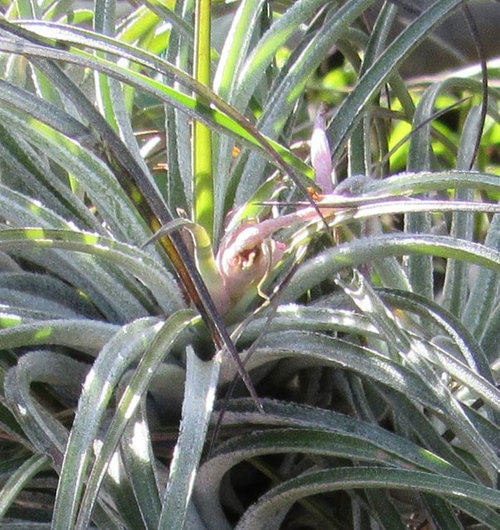
When I first noticed the missing flowers, I thought that whole chunks of the plant were missing, but as I looked closer, I could see that the flower stalks had been removed with surgical precision. Here's a close-up of where one flower was removed:

How could this have happened? I could not find the missing flower spikes anywhere on the ground. The plant is suspended by an aluminum wire, and so I do not think that a squirrel could have done it. We have a lot of hummingbirds now, but I don't think they would want to do this, especially since the flowers would be too big for them to carry off.

What do you think happened?

Comments (21)

  • 8 years ago

    Is there a chance that it had human help?

    Lars thanked kingd Z6A michigan
  • 8 years ago

    No. I have a very secure back yard, and only my brother and I have been there during those days. My brother was just as surprised as I was that this had happened. A human would steal the whole plant rather than just cut off the flowers.

  • 8 years ago

    Any flowers from anything else missing? What sized critters are about? I can't tell if the flower stems look cut or eaten.

    tj

    Lars thanked tsugajunkie z5 SE WI ♱
  • 8 years ago

    Absolutely nothing else missing, and I do have citrus fruit in my yard, as well as orchids and other bromeliad flowers. I did figure out that squirrels had eaten part of an orchid plant hanging from the same tree, but I moved it to be out of their reach. It is on a large piece of wood that they could climb on, however, and this seems a it more out of reach.

  • 8 years ago

    Well, in doing a search on- squirrels Tillandsia- there are accounts of squirrels attacking Tillandsia. Usually there is foliage strewn about. Maybe they were decorating a nest. I'd be inclined to look closely at nearby nests.

    tj

    Lars thanked tsugajunkie z5 SE WI ♱
  • 8 years ago

    Whatever did it was extremely neat, which makes me think squirrels did not do it. Perhaps it was a crow - I've seen those in the yard, but there are a lot of other birds as well, but crows are the most aggressive, after blue jays.

  • 8 years ago

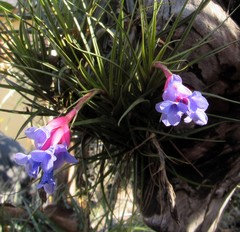
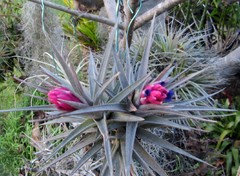
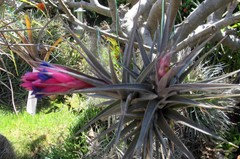
    Here are some photos of another tillandsia blooming now that has not been attacked

    It's been blooming for two weeks now without any damage. This one might be a bit more difficult for the culprit to reach. I've never seen mice in the tree, and so I don't think that was what did it.

  • 8 years ago

    Yeah I think I might put blame on the crows. They take things they think are food or things that call their attention and those flowers are definitely impressive. (Notice how they left the bottom one because it hasn’t come into colour yet or perhaps it’s past blooming..?)

    Lars thanked Rebecca Millar
  • 8 years ago

    Hi everyone.

    Lars - I don't know what sort of insect pests you have in your country, but here in Australia this sometimes happens to Tillandsias and some Vrieseas, especially Vriesea guttata which seems to be one of their most favourite meals.

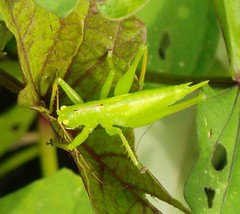
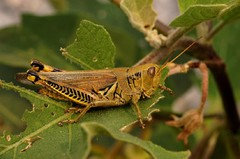
    The culprit in most cases is a "Grass Hopper" or another type of grass hoppers called a "Locust"; These can quickly chew through a flower spike sometimes cleanly and severing it completely, or some times leaving it just hanging by a "thread" of plant tissue to tantalise the grower.

    Green Grass Hopper

    Locust or Brown Grass Hopper

    These pests can often be found when watering, especially when you water the underside of the leaves as this is where they hide, and they hate water and will quickly move away from it. When they get wet it seems to make them very sluggish and slow moving and easy to catch. If you can catch them, the best method of dispatch is to crush them between your foot and the ground.

    If you have the same type of damage and still can't locate the culprit, try a night time search with a torch, as the culprit might be a grass hopper "look-alike" called a Katydid. These only come out at night and can wreak havoc among tender flower spikes on Tillies and some Vrieseas.

    Katydid

    I have found that an occasional spraying of a product called Clensel helps deter them as one of the ingredients is Citronella Oil which is an known insect repellent.

    All the best, Nev.


    Lars thanked splinter1804
  • 8 years ago

    I've not seen grasshoppers or locusts in my back yard, and it's been many years since I saw a Katydid. I have a lot of herbs and other plants that would appeal to Katydids more than the Tillandsia, I think. When I did see a Katydid, it was on my parsley.

  • 8 years ago

    Hi Lars - That seems a bit strange as I thought the smell of the herbs would have been a deterrent; on the other hand, maybe it is, and it was just that one Katydid it didn't deter.

    All the best, Nev.

    Lars thanked splinter1804
  • 8 years ago

    Hey! I think it is most likely crows... we have a peach tree in the back yard & the crows eat them right off... so do the doves !! We have lots of hummingbirds too, but I’ve never seen them eat the flower /:

    Lars thanked Evan Schlenker
  • 8 years ago

    Not all herbs deter pests. I allow Swallowtail butterfly caterpillars to stay on my parsley and dill (their two favorite foods) because I like the butterflies so much. I have a lot of dill in my yard now, but no caterpillars.

    We have way more crows than grasshoppers or Katydids - neither of which I have seen for several years.

  • 8 years ago

    I started reading this thread and soon thought "crows..." and others had already thought that :) Lars, you may have no caterpillars because birds like them (for lunch). Insect eating birds may be eating the other bigger bugs,too.

    Lars thanked debbyabq
  • 8 years ago
    last modified: 8 years ago

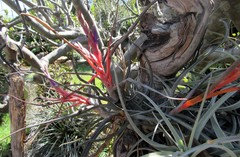
    More tillandsia flowers missing:

    April 9

    April 12:
    I have brought this one inside so that the culprit will not be able to steal any more flowers. I think I may do this with future tillandsia when they start to bloom.

    I'm less worried about this one

    and it is also more difficult for me to move.

  • 8 years ago

    Lars, have you considered getting a game/trail camera to discover what is happening to your flowers?

    Lars thanked gyr_falcon
  • 8 years ago
    last modified: 8 years ago

    How would that work? I have cameras at my front door, and perhaps I could set one up for the flowers, but I doubt I would be able to stop whatever is doing this. My front porch cameras start recording at the slightest wind, but they are the only way I can see who is at my front door, since the glass in my front door is frosted. I might get some good hummingbird videos in the back yard, however.

    I think I need to make sure that there are no "perches" near my tillandsia flowers.

  • 8 years ago

    If there was a determined cause, it becomes easier to come up with thwarting strategies, that's all.

    Lars thanked gyr_falcon
  • 8 years ago

    I did move this one

    and no flowers have been stolen - so far.

    I did manage to find the original tag for this one, and it is Kacey -T. bulbosa X T. butzii, according to Rainforest Flora, where I bought it four years ago. I photographed all the tags, and so I should be able to identify most of my other tillandsia as well.

  • 8 years ago

    Raccoons?

Sponsored
Miller Woodworks
Average rating: 5 out of 5 stars23 Reviews
Franklin County's Trusted Custom Cabinetry Solutions