Software
Houzz Logo Print
bea_in_fl

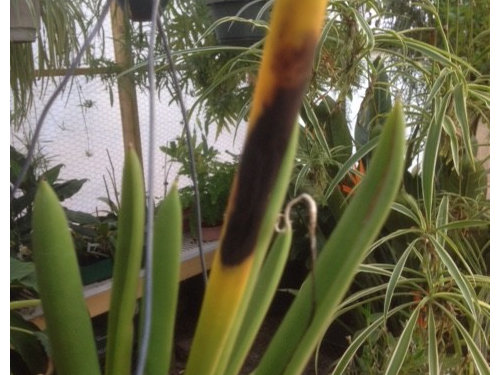
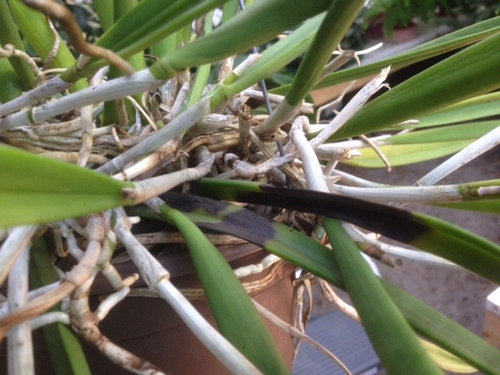
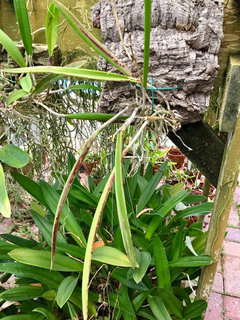
Is this burn?

I've had this Brassivola nodosa for over 5 years, indoors until last July when we built my greenhouse. I know it got too much sun ehen I first miced it to the GH and I lost some leaves to sunburn.

Does this look like burn to you? I just can't see how because since the middle of December the GH has been winterized with 6mil plastic so the sun it gets is about 3K FC. But I have lost about 1/4 of the leaves in the last 6-8 weeks and am starting to wonder if it's something other than sunburn.

BTW it must be happy on some level because it has been blooming non stop for about 5 years!

F

Comments (26)

  • 8 years ago

    That second picture looks like a blight to me. It doesn't look like sunburn deep inside the plant like that.

    That top one could also be blight unless the sun is focused on it like a magnifying glass.

  • 8 years ago

    What was the low temperature number it was exposed to?

  • 8 years ago
    last modified: 8 years ago

    Shaved the heater keeps the GH above 57. I might also mention that I have a fan running in the GH 24/7.

    I just noticed in my post the word "miced"…it should be "moved".

  • 8 years ago
    last modified: 8 years ago

    I could be wrong, but I believe they prefer higher temperatures. Could the leaves have gotten wet and been cold and wet.

    Yes, it was happy the last 5 years over winter, in your comfortably temperate home environment.

    Can you bring it inside til it warms up?


    Edit: the care sheets I've seen say 60 is the minimum temperature for these guys

  • 8 years ago

    I read the same. Min 60 degrees. But in reality not even close. I have more brassavola than anything. Especially nodosa. Some live outdoors in the trees. Those that can be heated are kept 50 and above. I have seen cold damage from low 40's.

  • 8 years ago
    last modified: 8 years ago

    SM so you don't think it's cold damage?

    From what I read 50-60 is their minimum ( depending on the source) so I set my thermometer to go no lower than 57. The temp gets that low only on the coldest nights (as in this year's two sets of freezes). Daytime of course are much higher. Overall, it's only below 60 for an hour or two per night because the GH heats up to mid eighties soon after the sun hits it and that helps keep it well above 65-70 well into the night.

    SM I knew you have several nodosas so what is your opinion? If it's cold damage do you think it will survive. I'm encouraged that it keeps on blooming.

    I've isolated the plant until I can figure out the problem.

  • 8 years ago

    my first guess is cold damage. It may have been in a colder spot in your gh. And we have had some very cold weather. I have a high low thermometer in my GH. Consider having one.

  • 8 years ago

    Bea, a flowering plant can mean it's extremely happy (i hope this is the case) or that it's extremely stressed and "thinks" it's dying. Do you garden? When it gets too hot for lettuce, it bolts to preserve its genetic heritage.

    Did you separate in within the greenhouse or did you bring it inside? Have you checked the roots?

  • 8 years ago

    SM I do have a high low thermometer. That's why I know the lowest temp has been 57. In fact just to be sure I have 2 high low thermometers in there, one at each end of the GH. But you may be on to something about a colder spot in the GH. It was very close to the outside wall and the 6mil plastic may not have provided enough protection.

    Lati I did check the roots, they're fine.

    I never thought it might be this cold sensitive. I would have expected it from my vandas but not the nodosa.

    So folks if this is indeed cold damage do you think it will eventually die? I hope not because it's one of my favorites.

    And thank you both for your help.

  • 8 years ago

    I hope it'll be okay, please let us know how it goes

    bea (zone 9a -Jax area) thanked laticauda
  • 8 years ago

    The damage will remain but it does not mean it will die. Treat it like nothing happened. Eventually the old canes and leaves fall off as new ones emerge. Just live with the ugly. As long as there is green it contributes to the plant and flowers.

    bea (zone 9a -Jax area) thanked shavedmonkey (Harvey in South Fl.)Z10b
  • 8 years ago

    Hmmmm, interesting conversation. I have several new-ish Brassavolas in my sunroom and accidentally let it get down to 43F last night. No damage that I can see yet...

  • 8 years ago

    I have one brassavola with cold damage. This one is a new division with just a few canes. All of the other brassavolas in the same environment did well. I'm thinking that a larger plant has the heat internally of the whole mass. Also some have attached to trees and I believe the tree holds some heat too.

  • 8 years ago

    Suza hopefully yours will not be damaged.

  • 8 years ago

    So far mine are still free of damage. I would assume that I would have seen something by now?

  • 8 years ago

    Bea, I know it's only been a week since you posted here but has there been any change with this plant, better or worse?

  • 8 years ago

    This is Br Little stars. I have this and many other brassavolas around my yard and in temperature controlled greenhouse. (heated space when needed) The one in the picture was the only one to have damage. An outside plant. The roots are very good and I think it will grow new canes. Each spot can have a different mini climate. I'm sure it was cold damage. Different exposure than the rest...Other little stars did fine...

  • 8 years ago

    Lati I'm sorry to say several other leaves have started showing damage. I just can't see how it can be cold damage from a little over a month ago although I know orchids are slow to show problems. Would the plant keep showing this problem that much later? As I said the coldest it got in the GH was 57 and since then our weather has warmed up and the lowest night temp has been above 60.

    In March we have our annual ochid show in Jax so I plan to take the plant with me and see if one of the experienced growers can come out to the car and look at it. I'm not taking it inside since we don't know for sure what the problem is. And for that reason I have separated from the other plants.

  • 8 years ago

    I'm inclined to believe it is some sort of infection that took hold. Hm...

    bea (zone 9a -Jax area) thanked laticauda
  • 8 years ago
    last modified: 8 years ago

    I just had another thought. From all the care sheets this plant should be allowed to dry before watering again. During spring, summer and fall for me that means watering every other day (actually I dunk mine). This winter I continued doing this but temps in the GH until recently (during those cold spells) were in the 60s and low 70s.

    So I'm wondering if it was over-watered and that is causing the problems.

    What made me think about this was that today was a watering day but I actually was gone all day the last watering day (day before yesterday) and yet the roots are still totally moist. So it has not had the chance to dry at all since last November.

    Lati and SM would that make sense to you?

  • 8 years ago

    Yes, being too wet and chilled at the same time can make it very susceptible to infections. I hope you're able to save it.

  • 8 years ago
    last modified: 8 years ago

    Exactly.

    Edit: This article from the St. Augustine Orchid Society has some really good info. And I'm thinking what I'm dealing with is fungal or bacterial rot. But if it's an infection how do I treat. I'm inclined to use a shotgun approach but with what?

    http://staugorchidsociety.org/PDF/AOS15-Diseases1.pdf

  • 8 years ago

    Plant probiotic is one thing I've seen mentioned. Did you receive my PM I sent? I'm not sure the houzz rules on posting other boards so sent you info there.

    If there isn't a systemic antibiotic then I wonder if you would have to cut out the infected parts and try to save it that way.

    Definitely keep it separate from your other plants though.

  • 8 years ago
    last modified: 8 years ago

    second picture is definitely black rot and this may be a coupling of low temps and excess water facilitating the black rot. In south florida I had many nodosa's do just fine in low 30's temps, but plants were dry.

    Amazingly enough one of my current batch of nodosa's had a similar problem a few weeks ago, I just gave it a front row spot in front of the fan in my garage during a few days inside due to below 50's temps outside (no greenhouse yet) and the problem cleared it self, no chemicals needed. A few leaves lost but all seems stable and normal with damaged plant. Got to keep it warm and dry until all damaged leaves fall off and problem area is totally dried up.

    BTW the St Augustine orchid society's website does have some very good info.

    http://staugorchidsociety.org/

  • 8 years ago

    I thought you all might like to know what's going on with this plant. I took it to the owner of Jaxma - he owns a huge orchid growing facility (110,000 sq ft) close to where I live. He couldn't say what the problem is but he was sure it's not black rot. Then a few weeks ago Jax had its annual orchid show and they run a clinic for sick plants concurrent to the show. They too said they didn't know what the cause was but it was not black rot.

    Sooo. Thete you have it. The plant has lost a few more leaves but not at the rate it did in the beginning. I'm not sure it will survive YET. Time will tell. In the meantime I keep it quarantined and water it separately from all the other orchids.

Sponsored
Whisler Home Improvement
Average rating: 5 out of 5 stars9 Reviews
Franklin County's Committed Home Improvement Professionals