Software
Houzz Logo Print
dbsb3233

Seedlings petering out

8 years ago
last modified: 8 years ago
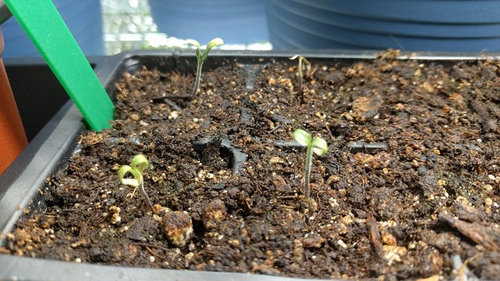
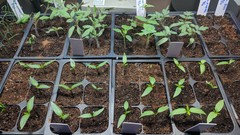
This is the 2nd year I've started by seed for my veggies. Last year my indoor seed starts seemed to grow fine. But this year nearly 80% of my starts (except lettuce for indoor growing) are getting 1/2" to 1" tall and then looking sickly. Some of them are just shriveling up and dying at that point, and others just look like they're struggling to stay alive.

Those are Homestead tomatoes in that picture, but it's happening to other varieties of tomatoes and peppers too. They get their first leaves and then they curl over, turn kinda yellow, and struggle.

The soil is just peat moss mixed with some perlite, that I microwaved first. Last year I bought seed start soil so maybe that's the problem. But I've seen experts say a peat moss + perlite mix should work fine.

I think I did over-water at one point as the soil was pretty soggy for about 36 hours before it got back to normal again. I didn't fertilize those yet because I think I fertilized too soon on some others and killed them, so I held off on fertilizing these until true leave come in (if they ever do). They're getting 16 hours of artificial light and I move them to the window for natural sunlight some days. They don't seem leggy, so I don't think light is the problem.

I do have a fair number of gnats from nearby pots. Saw other tips on dissolving 1/4" of a Mosquito Dunk in the water can and using that to water to control gnats. Don't know if that's the problem. Or if the gnats are. Or the soil, the water, the lighting?? The seeds are leftover from last year but I keep them refrigerated and they germinated OK. It's just all going south after they germinate. Maybe they'll break out of it and grow but right now I'm afraid it's all gonna shrivel up and die.

Any ideas?

Comments (18)

  • 8 years ago

    It sounds like the problem is damp off. A couple of thoughts - sterile conditions and light.

    Before I start seeds I make sure everything they're going to be in contact with is sterile. I run the flats, the flat covers, and the pots through the dishwasher. Dishwasher detergent has bleach in it, but I also put extra bleach in the wash cycle. I don't let it go through the heat dry cycle because it could melt the plastics.

    I use seed starting soil. It's sterile and it's a mix that is formulated specially for seeds and root development.

    The shop lights should be no higher than 4 inches above the seedlings. Don't move them to the window for natural light. That light is going through glass and in the process is weaker than what is optimal for seeds.

    Deanna

    Tim in Colorado (5b) thanked gardenfanatic2003
  • 8 years ago
    last modified: 8 years ago

    Tomato plants are fast-growing so if your current seedlings don't make it, it's not too late to start over.

    When it comes to watering and the seedlings are tiny, I figure they don't have very deep roots so I get a dropper and just squirt a dropper full of chamomile tea in each cell every day. Chamomile tea helps prevent damping off IF all the other conditions are right. It's not going to help if you don't have sterile soil.

    When the seedlings start getting true leaves and are more than an inch tall I start watering by putting water in the tray that the cell packs sit in. Are your cell packs in trays? I just put a little bit of water in the tray at a time because if you put too much water in there then you're going to need to take the cell packs out and dump out the water that wasn't absorbed. You know all the water is absorbed that needs to be when the surface of the soil in all the cells looks wet.

    Deanna

    Tim in Colorado (5b) thanked gardenfanatic2003
  • 8 years ago

    I just went and looked that up and sure enough, the symptoms sound exactly what I'm seeing. That's probably it. Thank you so much!

    Sadly, it probably means I'm gonna have to start over with nearly all of my seed starts, setting me back a month. My fatal flaw looks like it may have been putting some outdoor pots into the same grow rack as my seed starts. A gnat infestation developed, and it probably carried damping off fungus to everything else in the rack.

    I figured microwaving the soil would take care of any problems but I didn't pay enough attention to cross-contamination. Gosh, this is almost like a medical procedure or something to keep it all safe!

    Thanks again.

  • 8 years ago

    I put things like tomatoes and pepper are in standard 6-cell packs. I also planted herb seeds and lettuce seeds (and some spinach) directly into 6" pots. The lettuce seems to be growing fine. The spinach so-so. But most of the herbs are doing the same things as the tomato and pepper seedlings (grow maybe an inch and then shrivel up).

    I usually water the same way. I have a drip head on a 32oz bottle for gently top-watering when I just need to spot water a few cells drying out. But most of the time I bottom water in the tray with maybe 1/2" of water. I try to check an hour or so later and pour off any that hasn't been absorbed, although I did forget and leave it over night a week and a half ago and ended up with pretty soggy soil for a few days. Thought that might have been the problem, but that was just one tray and the others are reacting similarly. It does sound a lot like the damping off description. I'll read up more on it.

  • 8 years ago

    Fungus gnats don't spread damp off pathogens. I suspect it's related to the soil you're using. I would strongly recommend that you get a seed starting soil mix. If you don't, you may end up with the same result. And make sure you sterilize all the flats and the cells before you reuse them.

    Gnatrol or another product that contains BTI will get rid of the fungus gnats. You put the Gnatrol in the water that you water them with and it kills the fungus gnat larvae in the soil. Water with the "Gnatrol water" for a few weeks and that should take care of the fungus gnat problem. You have to do it for a few weeks to kill every generation of them.

    Deanna

  • 8 years ago

    Oh, ok. Maybe I read this other link wrong that talked about gnats spreading it. Here's the first one I found, but I'll check a few more...

    https://www.extension.umn.edu/garden/yard-garden/diseases/damping-off/

    I'll go ahead and get a bag of sterile seed start mix. Many people say microwaving should be sufficient but apparently it wasn't. But I only handwashed my seed trays and never did wash the bucket or shovel - just brushed them off. Didn't realize how highly contaminating that stuff can be.

    Guess I'll need to scope out a different spot in the house too for the new seed trays. I assume it's a bad idea to put the old (potentially contaminated ones that might still grow) anywhere near the new ones.

  • 8 years ago

    I've never heard of fungus gnats spreading damp off. I highly doubt that, even though that university website says it's a possibility. The larvae are in the soil where the roots (and the fungus) are, but the adult gnats fly around in the air. The only time I had a damping off problem is when I didn't use seed starting mix. But I get fungus gnats every time I start seeds.

    I for sure wouldn't put the sterile stuff next to the contaminated flats. How many seedlings do you currently have that look healthy?

    Deanna

    Tim in Colorado (5b) thanked gardenfanatic2003
  • 8 years ago
    last modified: 8 years ago

    The ones doing well are nearly all the lettuce (~25 seedlings in pots), about half of the spinach (10 in pots), most of the cilantro (6), and the rhubarb (4). And the 6-pack of white Spanish onions (30 seedlings).

    But the other 20 6-packs of tomatoes, peppers, red onions, green onions, chives, and a few other things all dampened off. I've got one 6-pack of beefsteak tomatoes that look like they're hanging on longer, and 3 peppers. But I'm guessing they'll eventually bite it too.

    So I'm about to reseed today. Been washing everything, disinfecting with a diluted bleach spray, bought a bag of Jiffy seed mix at HD, I'll moisten it in a disinfected bowl and microwave it just in case. I also read that spraying the 6-packs before soil packing with a neem oil mix inside and under helps reduce gnats, then on top of the soil after planting the seeds. And using a light powdering of cinnamon on top to combat fungus.

    I also have a bottle of Garden Phos coming that's supposed to help fend off pythium (which as I understand it is the main cause of dampening off). I think I just mix a little in the water can. (That reminds me - I need to disinfect the water can/bottle too).

    I have a different spot in the house that I'll put the new seed trays. And I'll use a heat mat so it never cools (I read that cooler temps can promote the fungus growth). No plastic cover either, and only bottom watering so the top dries out more (I've probably been over-watering). Might set up a small fan too once they start growing, although not sure I'll really need that as onions and a few herbs are the only things I put more than 1-2 seed per cell, so it all stays reasonably spread out.

    Assuming things grow this time, when is the risk of damping off mostly over? The plan is to transplant up to 4" temporary pots with my regular container soil after they grow to transplant stage (have established true leaves and roots fill the cell). Are the plants usually strong enough by then to fend off any fungus that might already be in that soil?

  • 8 years ago

    The risk of damping off ends when you turn on a fan or open a window. Stagnant air encourages that kind of disease.


    For what it's worth, I have never sterilized anything. I just wash it all in hot water with a fat bottle brush and dish detergent. I use Pro Mix soil which is already sterilized. In 40 years, the only time I had dampoff was when I had the window closed. Never again!! Lesson learned.

  • 8 years ago

    Last year I didn't have a problem either (no fan or open window), but it was my first year doing seed starts indoors and everything was new (soil, trays, tools, etc).

    Opening a window isn't an option here (way too cold, otherwise I'd just be planting outside), but I may try a fan.

    I know what I'm doing now for this new batch is probably overkill, but having lost a month I really want to make sure now. This has certainly been a learning experience. Also makes me rethink direct-seeding into small pots, as I was trying for some things (like herbs, green onions, etc). Seed start mix would be too pricey to actually fill entire pots with (even just 4-6" ones), so I'll stick to small cells and seed trays and transplant up.

    Thanks for the tip on air flow.

  • 8 years ago

    Fungus gnats are absolutely a vector for the damping off diseases, both the larvae and the adults. The fungal spores are ubiquitous, unfortunately. The disease organisms proliferate in the presence of excess moisture. So do the gnats, as we all know. But the gnats can be present without any sign of disease in the plants and vice versa.

    All we can do to prevent widespread issues with either of these problems is to reduce the moisture level. Use a very porous, fast draining medium, water only as required in volume and frequency, supply a source of air circulation to facilitate soil evaporation and transpiration, control soil and ambient temperature, and apply nutritional support as needed.

    Be very careful about the heat mat. The general rule for seed starting, even for professionals, is to turn off the bottom heat as soon as the seeds have germinated. Seedlings can become leggy and weak stemmed if kept too warm. Seed mats can do that. Cooler ambient temperatures can typically result in sturdy and stocky stems, which are highly resistant to damping off diseases.

    Tim in Colorado (5b) thanked rhizo_1 (North AL) zone 7
  • 8 years ago

    Great info. Thanks Rhizo.

    Like many people, I suspect, I struggle with knowing just how much to water. I know there is no single answer, as soil, humidity, air flow, etc all make significant difference. As a general rule, once I see a cell dry out on top (or at least 50% of it), I usually water. But maybe that's too much?

    I've always assumed that you should never let the seed actually dry out. If planting a seed at 1/4" depth (like tomato or pepper), is it OK to let the top of the cell completely dry out? And if so, for how long? If I see it roughly 50% dry (edges, but still see some darkness in the center), should watering hold off for another day? 2 days?

  • 8 years ago

    Soil should stay damp all the way to the top until seed sprouts.

    Tim in Colorado (5b) thanked susanzone5 (NY)
  • 8 years ago

    I water my seedling tray from the top with a plant sprayer. My process is different than most, is what I learned in my university greenhouse propagation courses and also from the professional growers I worked for while going to school. Forty years later......after many years of greenhouse production and home growing, I'm still doing it the same way. Gnats and damping off have never been a problem.

    I sow my seeds directly into or onto prepared flats at the rate of three or four hundred per flat. Growing a few things just for myself, I only need three or four germination flats annually, which will transplant into around 1300 or so plants, depending upon the size of my inserts. I have two lighted grow units that hold sixteen flats of transplants each.....so thirty two finished flats of annuals and veggies.

    So, I actually use a sprayer.....a pump sprayer....for all of my watering. It can be adjusted to a fine mist for the seedlings. I add fertilizer when I need to and apply it that way. I've never watered from below.

    With a coarse textured mix, overwatering is rarely a problem.


    Tim in Colorado (5b) thanked rhizo_1 (North AL) zone 7
  • 8 years ago
    last modified: 8 years ago

    Interesting on the top-watering. I often read that bottom-watering seedling trays is the way to go. But one thing I don't like about that is it's a pain in the butt if you put too much water in and it doesn't all wick up. Gotta pull all the dripping 6-packs out to pour out the excess.

    I'd prefer to top-water the cells with a drip or spray bottle but getting the amount of water right takes some trial and error, I suppose. I probably just need to take a cell out of the tray and see how many squirts it takes until I get a little dripping out the bottom, and use that as the guide to use from then on.

    There is one other reason I can think NOT to bottom-water... if I do get a fungus infecting one 6-pack in a tray, it seems like bottom watering could transmit it more easily to the other packs in the same tray by virtue of sharing the same water.

  • 8 years ago

    I dump the water from the trays with the cell paks still in the trays. My trays are rigid and sturdy. At this point in time I can guess at the amount needed and rarely need to dump. Seed starting is a skill you develop. Education plus experience.

  • 8 years ago

    Just an update. Here's my new seed tray planted 18 days ago (mostly peppers and tomatoes). Used new Jiffy seed start mix, cleaned all the seed trays, utensils, buckets, etc. with a bleach spray and hot water rinse. Success on this batch without the damping off that ruined nearly all of my first batch.

    Most of the seeds were leftovers from last year (stored in the fridge). Roughly 80% germination rate.