Software
Houzz Logo Print
cvmorales91

Orchids Care Help

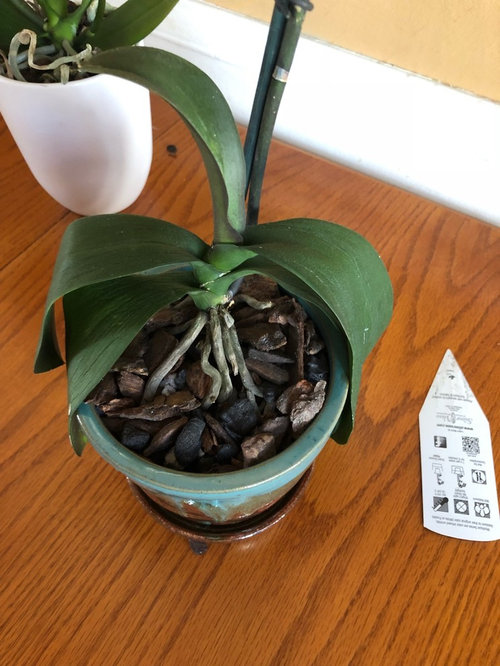
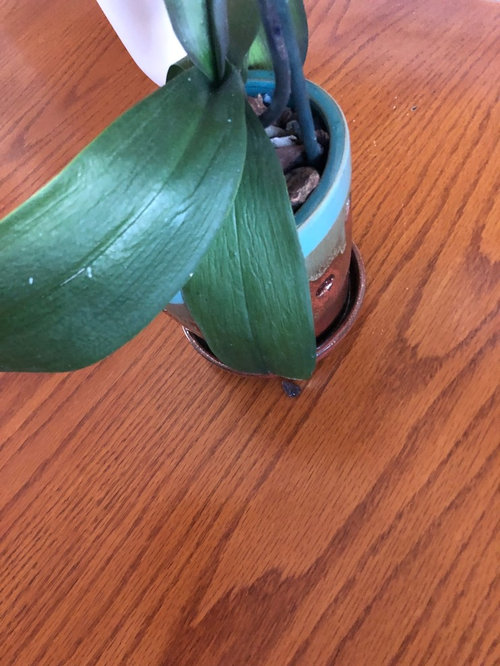
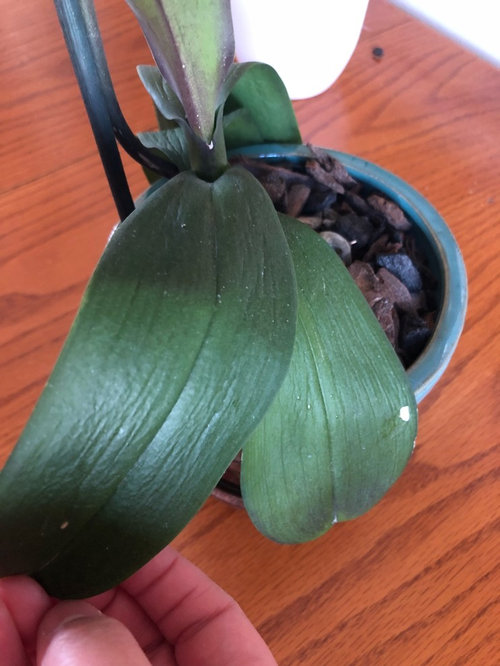
Last year I bought an orchid and I have been YouTubing and googling how to keep it alive. It has leathery leaves that are droopy and wrinkled. The instructions say to water the base for 5 mins once a week. I do that with a small amount of fertilizer. It’s still not looking any better. I was putting it near a west facing door (gets afternoon sun) but I just moved it to my room near an east facing window (morning sun). I also reported it after the blooms fell off... and just reported 2 weeks ago. Any suggestions?

Comments (14)

  • 8 years ago
    last modified: 8 years ago

    I would soak the pot for an hour or two. You may need to cover the top of the bark to prevent it from floating away. The way I like to do this is get a bowl/cup slightly bigger than the pot and water the top of the bark and visible roots and keep doing this until the bowl is full of water. I would not be using fertilizer as the salts can pull fluid from the plant and this defeats the purpose. Just use fresh, clean, room temperature water. Once it's soaked for an hour or two, pull it out of the water and let it drain completely and dump out the reservoir at the bottom. If you get any water on the leaves, use a paper towel or toilet paper to daub it dry. It'll take some patience as it has been through some abuse but it should bounce back for you.

    How did the roots look when you repotted it? How long ago was that?

  • 8 years ago
    I think the roots are okay... I did have to cut some of them off when I repotted two weeks ago...I will start soaking them longer on the regular now and start doing something about the humidity. I guess I could always bring it to the bathroom for shower time then move it back? Thanks for the help!
  • 8 years ago
    last modified: 8 years ago

    If you soak the pot when you water, home humidity shouldnt be a problem. Keep it in an eastern window though. If its cold where you live, you can move it away from the window at night to protect it from the cold next to the window.

    Once you give it a good soak today don't water again until the roots inside the pot turn from green to grey/silver and you'll only need to soak for 5-10 minutes.

    Were the roots you left firm? They could be yellow or green/silver and as long as they are firm they should be fine.

  • 8 years ago
    Yes they were firm... I cut all the ones that were paper thin and brownish black...
  • 8 years ago

    There is a lot of info that can be very confusing out there for beginners with orchids. I highly recommend joining orchidboard.com- the world's orchid forum! There are so many people who are super experienced with almost anything orchid-related, that it's hard to find a topic that can't be addressed by other members! Orchidboard.com also has wonderful, simple guides for different orchid types. Good luck!

  • 8 years ago

    I'm guessing that you're currently using just orchid bark by itself. This is fine to do, but it requires significantly more frequent waterings. For my orchids, I mix 50% orchid bark mix (fir bark, perlite, lava rock, and charcoal) with 50% sphagnum moss. Not all sphagnum mosses are the same. If you use one, make sure it's from either New Zealand or Chile. These two varieties are the best quality. The Better Gro brand sells both of these. They're the only mixes I use for all of my orchids, and this brand is endorsed by the American Orchid Society. The best quality orchid mixes, and for a reasonably low price. Home Depot has both of these for sale online for the lowest prices. I've linked both of them below. They can ship them to your local store for free, which is what I do. Then I just go and pick it up when it arrives. Definitely worth it, and your orchids will thank you for it.

    Better-Gro Dendrobium Mix &

    Better-Gro Premium Grade Orchid Moss (2-Pack)

    As I mentioned already, I mix both of these half and half. The bark mix keeps it opened and airy, and the sphagnum moss holds on to the moisture that your orchids need; the best qualities of both mixes. Plus, this 50/50 blend is pretty fool proof. You can pack it in nice and firm without having to worry about it becoming too compacted. Not to mention you won't have to worry about "overwatering" them either. With this mix, you can't go wrong, and it makes caring for your orchids super easy.


  • 8 years ago

    Here's another thing that can be confusing about humidity: we're talking about humidity around the roots of the plant. In a perfect world we'd have nice balanced humidity everywhere, but you don't have to worry much about the humidity of the whole house if you've managed to provide a humid environment for the roots. That's what the bark is for. These roots like air, that's why you see these pots full of holes. But as that soaked, damp bark slowly dries out as the air moves through the pot, the environment inside that pot is nice and humid and lovely, without suffocating those roots at all. Would the orchid love humidity all over? Sure. Can it still thrive in a dry house? It sure can, if you give those roots an airy, humid environment to grow in!

    The advice Photo Synthesis offered above about adding some chopped moss to the mix is right on if you want a little more wiggle room with watering. I'm a heavy/frequent sprayer, so I don't add to mine, but it's an excellent suggestion for those in less humid areas.

  • 8 years ago

    Me too Dannie. If my mixes had sphag in them, my plants would drown lol. We each have to find what works for our own growing style and individual environments.

  • 8 years ago
    last modified: 8 years ago

    Laticauda, I'm sure you're familiar with my telling people to generously water their plants, HaHa. When it comes to watering my orchids, strangers would probably think I was trying to drown them, lmao. For them, I most certainly don't hold back. That's why I suggested using either New Zealand or Chilean sphagnum moss. These two varieties are far superior to any other kind. They stay open and airy and nothing else compares.

    I live here in the South. We're no strangers to humidity. Sometimes I think there's more water vapor in our air than there is air. Here in Arkansas, we've already received so much rain in the past week that it's still draining out of my neighborhood.

    Potting our orchids in pots with orchid mixes is more for our convenience than theirs. Last year, I barerooted one of my phals with the intention of repotting it into one of my orchid pots. Well, something came up and I never got around to potting it. It just sat there with no orchid mix whatsoever. I still hosed it down along with the rest of my orchids and it did just fine. Not only that, but it kept on growing and grew more roots straight through the inner net pot. When I finally got around to potting it up, its roots held it firmly within the inner net pot. So rather than removing them from the pot, I simply stuffed my 50/50 orchid mix in and around the roots as best as I could. Only the bottom half of the pot contains any potting mix. That's where the base of the orchid is located. As it grows upward and sheds its lowest leaves, I'll simply add more along the way.

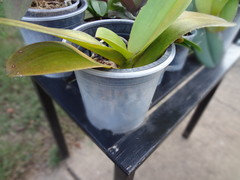
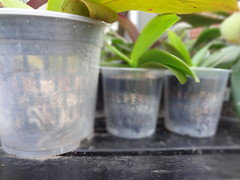
    You can kind of see how the roots had grown down through the inner net pot in this next photo. It's the larger pot on the far left...

    Not only did it thrive on my neglect all summer long, but it currently has two bloom spikes emerging from it as well...

    Most of my other phals have spikes, too, but this one is my easily one of my most neglected and it still thrives. It was a little more yellow-green than the rest, most likely from growing barerooted all summer long, but it has since greened up more after I finally added some orchid mix and gave it some diluted fertilizer.

    Orchids are much tougher than people think. Once you understand their most basic needs, you can get away with all kinds of abuse and they couldn't care less. Back when I first started growing orchids, I was always killing them with too much TLC. I think its safe to say that any experienced orchid grower has killed more than their fair share of orchids. But there comes a point where, when you've killed enough orchids, you eventually learn how not to. Then you realize that growing orchids isn't difficult at all, it is us and our lack of understanding them that gets in the way.

  • 8 years ago
    last modified: 8 years ago

    It's winter right now and pretty chilly where the Phals live (50-60) and even with just the orchid mix, it stays wet for a fairly long time. Now, the one potted in coco chunks, only gets watered maybe once a month. It's not wet in there (tons of tiny holes on the sides of the pot for air circulation) but the roots are staying green so I'm not looking to add any water to that super absorbent medium. I was all out of orchid mix and had the chunks I had bought as raised bed amendment so used that as an experiment. It seems to be working for this particular Phal. It's pushing out something (probably a branch for flowers). I made a post about it on the orchid subforum here on GW. It's not that exciting for anyone but me though, problably.

    I may be changing my tune about the sphagnum come summer!

    I have several Cattleyas in net pots with just a few pieces of bark in them and they are growing like crazy right now. The net pots are round within square pots. If you've bought orchids on eBay you may be able to guess where I got these particular individuals from.

  • 8 years ago
    Thanks everyone my orchid is looking way better than before! My only issue is that the flower spike is now starting to turn brown and wither... should I just cut that off?
  • 8 years ago

    If it's going brown, go for it. I snip mine down to about a 1/2 inch.

  • 8 years ago

    You can go ahead and do that. It won't harm the plant in any way. I usually just trim them off as close as possible to the base of the plant.

Sponsored
Mary Shipley Interiors
Average rating: 4.8 out of 5 stars34 Reviews
Columbus OH Premier Interior Designer 10x Best of Houzz