Software
Houzz Logo Print
lo1979

Sedum for a shandy slope

8 years ago
last modified: 8 years ago

I have a shady slope in my front yard that I am trying to fill in and establish. The Pennsylvania sedge and christmas ferns are doing ok, but most of the wild geraniaums didn't relaly take off, and they don't cover much area. I've heard that creeping phlox and sedum would be good as they spread and are low maitenance once established, but I'm nost sure which sedum species I should use. Bonus if there is an online retailer that sells bare root plants or flats as I will need quite a few.


ETA: I'm in Maryland if that makes a difference in what varieties are best

Comments (23)

  • 8 years ago

    Sedums usually appreciate sun so the growth and vigor in shade might be reduced. My local Home Depot sells flats of hardy creeping sedum in the Spring. It does look attractive.

    I would suggest considering a variety of ferns (a favorite is Autumn fern). If you don't have deer, hosta can bring a lot of variation in color and height plus they have strong root systems that might help hold the slope.

    There are a lot of really enjoyable plants for shade. The two listed above often bring faster OOmph. However, most plants take 2-3 years to show their potential. There are various dicentra (bleeding heart) and the fern leaf one can slowly spread and flowers all summer.

  • 8 years ago

    Weeds or grass can grow up through creeping phlox which makes it a pain to maintain especially until it is well established. But perhaps in sand soil you won't have that much of a problem? Also CP can die out in the center. I do like it though.

  • 8 years ago

    A wonderful shade-loving tall ground cover in this area is hayscented fern, Dennstaedtia punctilobula. It appears to be native to a large portion of Maryland, based on the BONAP map, and it spreads vigorously where happy, making a dense, knee high bright green groundcover that is deciduous. It will need barriers at the edges to keep it in check. Another option for shade would be Epmedium, specifically one of the spreading types rather than one of the clumping types. Some are evergreen and others aren't, and they have medium-small, often nicely patterned leaves and early spring flowers. There are a couple of woodland phlox that might do well there are Phlox divaricata and Phloox maculata which I don't think are the creeping Phlox that schoolhouse is referring to.

    Regardless, mulch well with something like a highly textured shredded bark mulch to reduce weeds while things fill in, and check every couple of weeks for weeds, especially sprouting small woody plants such as maples.

    Do you want any shrubs? If so, look at Diervilla (has the confusing name bush honeysuckle, but it doesn't have the problems of Lonicera/honeysuckle shrubs), Leucathoe, and some of the low-growing Deutzia.

  • 8 years ago

    Geranium macrorrhizum, as Gardengal suggested, would be the easiest solution--attractive, needs not attention, highly deer and drought resistant and likes shade. Never aggressive either.

  • 8 years ago

    Thanks all! I’ll look into those suggestions. Sounds like I should save sedum for the sunnier portion (which we haven’t tackled yet).


    Do do you think white wood aster would work too? I know it likes shade but wasn’t sure about on a slope.

  • 8 years ago
    last modified: 8 years ago

    I have both white wood aster/Eurybia divaricata and blue wood aster/Symphyotrichum cordifolium growing here in a mix of sun, part sun and high shade. Neither grows in deep shade, such as in the woods. I can't think of any reason a slope would make a difference. Certainly they both grow on slopes and flat areas here. My soil is quite acid and well-drained.

  • 8 years ago

    I have many shady slopes too and keep experimenting.

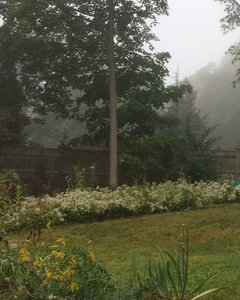
    Asters can be great on a slope on open shade. Sorry for the photo quality but this is a shallow slope at the edge of the yard in September in New England. I have them on a very steep one too. They can be a little wild looking - works for me but not for everyone.

    In another area I am trying geranium Biokovo, tiarella Happy Trails and woodland phlox Blue Moon. All were from Santa Rosa Gardens in flats (liner trays.) They don’t guarantee the liner tray plants given how small they are but they all survived my somewhat delayed spring planting and made strong progress last year. Too soon to tell if they will really thrive, but signs are good.

    I’ve had good luck with Christmas fern too. Native ginger has been slow but I hold out hope.

  • 8 years ago

    Sedum ternatum is native to Maine. It's a nice little woodland sedum that is sadly underutilized.

  • 8 years ago

    Look at Iris crisata, crested iris, a short shade tolerant spring bloomer. Mine is in a flat area, but it is well-drained. Blue or white flowers.

  • 8 years ago

    For dry shade, if you do not mind using non-native plants, epicedium (barrenwort) can be a great choice. It is semi-evergreen, has dainty flower in spring, it spreads in clumps, requires close to no maintenance, deer resistant, easily removed if they spread out of bounds.

  • 8 years ago

    Just a spelling correction on the above. Epimedium is barrenwort.

  • 8 years ago

    Thanks for the correction. I thought I typed Epimedium. Autocorrect "corrected" it for me . . . .

  • 8 years ago
    last modified: 8 years ago

    The specific nature of the shade involved is always critical to this kind of situation, with various terms such as "deep", "filtered", "deciduous" and "high" having been used to describe the variations that occur. As suggested previously it sounds like the foliage perennials you have been successful with so far have shined because of a serious depth of shade being present, with the flowering perennials attempted finding it too dark. So it would seem that rock garden plants like the familiar low growing species of stone-crops and creeping phlox - as in Phlox subulata - would be even less successful - for best results here you should describe the planting site in more detail, including what is providing the shade.

  • 8 years ago

    Absolutely Epimedium and Geranium macrorrhizum but also Polygonatum. It is available in varying heights, variegated or not. Yes, G. m. & Epimedium are ideal for dry shade as is Polygonatum. They are all happy in most any type of shade. Phlox divaricata has been mentioned but Phlox stolonifera is a wonderful ground cover that spreads very well but is never aggressive. It is easily controlled.

  • 8 years ago

    Since I've killed almost everything mentioned so far by putting it in too much shade, I agree that the amount of shade is going to be a big factor in what will grow on the slope.

  • 8 years ago

    Take a look at Lamium (Beacon Silver) for shady areas.

  • 8 years ago

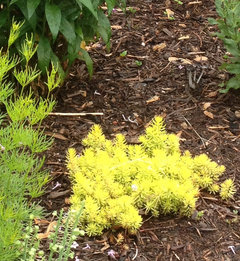
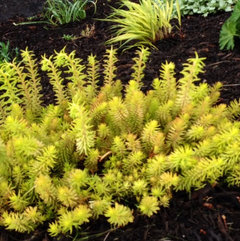
    I’m surprised no one has mentioned Angelina sedum.

    It grows in ALL conditions for me. Spreads nicely and easy to remove if needed.

    It sounds like just what the op is looking for...It’s the plant that just keeps giving! Pull a piece out, stick it in the soil, give a drink of water and be done! No more care needed lol.

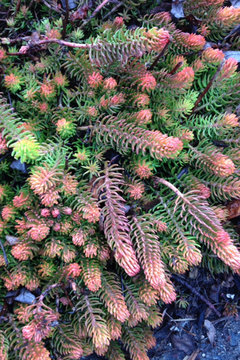
    I love it as it’s evergreen and changes colors thru the seasons....


  • 8 years ago

    But grows very sparsely in a lot of shade :-)

  • 8 years ago
    last modified: 8 years ago

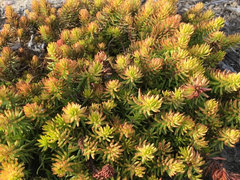
    Not in my experience, it grows the same. Sun shade part etc...

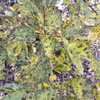
    ETA..here is a large one in shade, soon to bloom.

  • 8 years ago
    last modified: 8 years ago

    Particular characters of shade involved in individual instances need to be described before meaningful comparisons - and the most reliable suggestions - can be made. For instance, constant gloom of dense conifers or a high building wall? Or seasonal shading from deciduous trees, that allow a significant amount of light to penetrate in spring, before their own foliage has filled in completely? (And at which point the situation might be described as fully shaded, even though during the critical spring reprieve it wasn't).

  • 8 years ago

    Thank you for the continued suggestions! I'll offer a bit more info on the site. The shade comes from a large oak tree so yes, before the tree fills out in spring the area does receive more light as it is southern-facing. Also, as you move further away from the tree, portions of the slope do receive more sun. We started with the shadiest portion (it really is in the shade all day one the oak tree has filled out). I think I've decided to mix in some creeping phlox, white wood aster and more ferns for now, but maybe I'll throw in an angelina sedum too to see how it does! I'm hoping we get a bit further along to the section that gets a couple hours of morning sun this year as well, so I'll definitely try some there.

  • 8 years ago

    Be prepared with a Plan B for the creeping phlox. That's one I've had trouble with if I misjudge the sun/shade patterns in my garden. I have quite complicated shade patterns, so mistakes happen, but I'm aiming for at least half a day of sun.