Software
Houzz Logo Print
fennel94

Fiddle-leaf fig repotting questions.

8 years ago
Hi everyone,

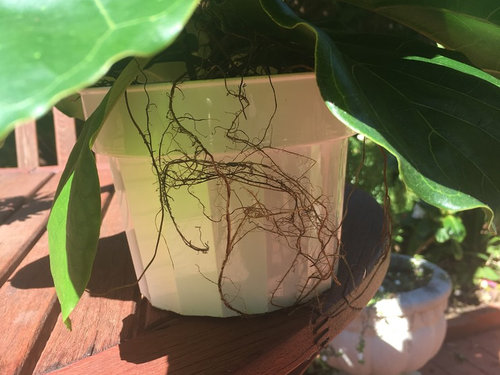
I have a fiddle-leaf fig that wants a new pot. (A few roots were already creeping under and over the pot when I got it 6 months ago and a few more have crept out since.)

This is my first plant ever, and it's stayed sublimely healthy and green so far, which makes me all the more anxious I'm about to kill something beautiful with my inexperience when I repot it.

From reading the forums I've gathered:

- It's best to repot it in early summer.
- It needs fast draining soil no matter what and likes low nutrient content like in the gritty mix.
- I have to keep the fine roots wet during repotting.
- It shouldn't be fertilised again until it starts new growth.
- It's good to trim the roots 30% or more.

However, I still have some newbie questions.

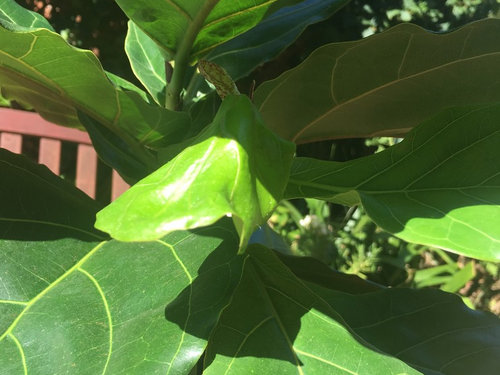
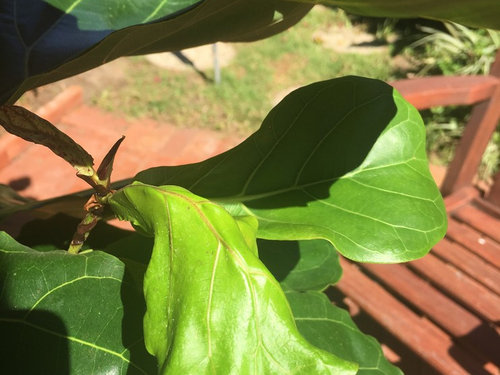
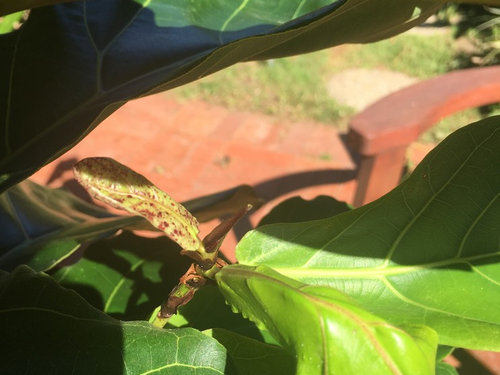
- I live in zone 10b (Malibu, USA). Should I still wait until June to repot it? I'm getting antsy to do it with roots having stuck out for so long. I'm also anxious to separate a baby tree growing out the side that is not doing as well as the main tree. The baby tree recently pushed out a leaf that didn't unfurl all the way followed by a leaf that was very oedemic. I don't know whether the old soil is a factor in this but either way I'm sure it doesn't like being on the main tree's watering plan and shrouded from light by the main tree's leaves.


- The soil. This is my biggest question. I understand gritty mix would give my tree the most potential but I highly dislike the idea of completely depending on plant food and watering as often as I've seen gritty mix users say they have to water (every 3-4 days even). Is there perhaps a different ratio or set of ingredients I could mix to give the soil only a little less potential but a lot more leniency in those areas? I wish there was a list somewhere of the detailed benefits and pitfalls of different common soil ingredients.
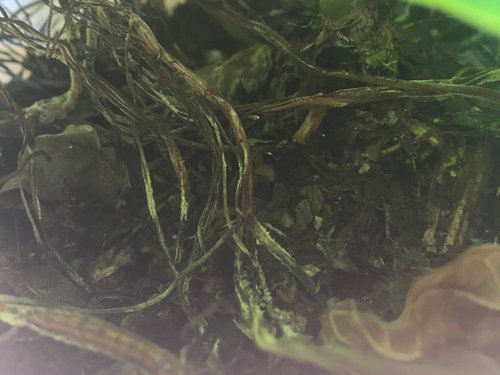
Root pruning. Again, I'm new to plant care. How do you tell which roots are are healthy and which are sickly or dead beneath the soil line? Am I correct that I should prune the large roots without a lot of feeder roots? What should I look for beyond that? I've seen people straight up hack inches off the rootball. Is that much removal and abrasion very beneficial to the tree or can I just gently separate the roots and cut off obvious problem ones? I was uneasy enough with root pruning as it was and then found some even more disconcerting posts about how foliage may need pruning also to a level the new roots can support. I definitely don't want to prune my roots to a level near enough to likely need leaf pruning. It's still a short tree and every leaf is healthy.


- Keeping the roots wet. How do I do this? Should I keep a light shower on them? Should I dunk them in a bucket of water every minute? Could someone please suggest an exact method and interval to do this right?


- Watering. Should I water it right after repotting? Does the tree need to be kept in extra moist or extra dry soil before or after the report? Also, I've seen mention of people soaking their ingredients/soil before mixing/potting into it but I don't understand it. What's that part about?


- Fertilising. Should I fertilise some time before the repot? Give it more strength somehow? I bought some Foliage Pro 9-3-6 recently but haven't been fertilising at all since I got the tree; just been giving it filtered water.


- Pot size. I read these trees enjoy small pots and can even be repotted into the same pot after root pruning but I think mine is pushing it. It's over 2.5 feet tall in a 6-inch pot. I'm definitely going 8-inch minimum—but would it be better to go for a 10-inch?

Thank you everyone.

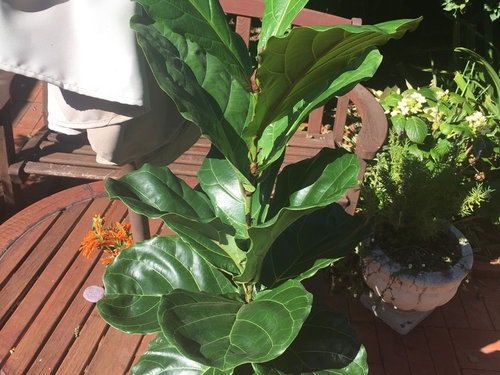
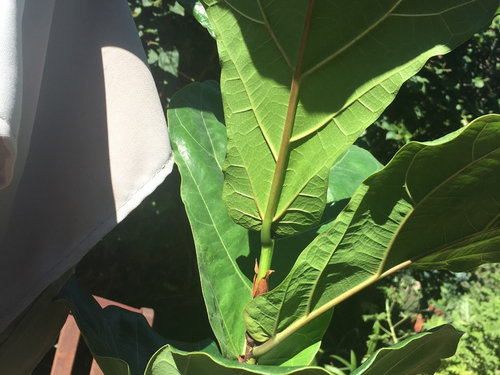
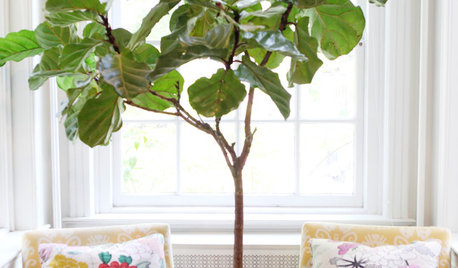
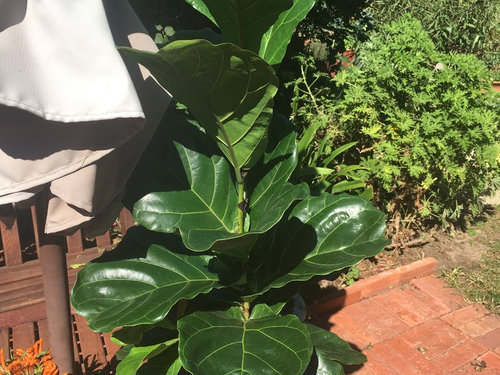
The (healthy as far as I can see) tree:


The troubled baby tree:


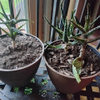
The roots:


Comments (4)

  • 8 years ago
    last modified: 8 years ago

    I think you're on the right track in your thinking, but for the sake of full disclosure:

    - It's best to repot it in early summer. Technically not quite true. Summer STARTS Jun 21. In most locales, repotting should be done by then, but you can repot even i8n northern US States into Early Aug with good results.
    - It needs fast draining soil no matter what and likes low nutrient content like in the gritty mix. There ARE work-arounds that allow you to use soils that would be wholly unsatisfactory w/o the work-around. Ballast, wicks, and several other tricks can be used to limit how much 'excess' water a pot can hold.
    - I have to keep the fine roots wet during repotting. True
    - It shouldn't be fertilised again until it starts new growth. True
    - It's good to trim the roots 30% or more. I'd limit my first foray into root pruning to removing 1/3-1/2 of the roots, total ...... and I'd concentrate on large roots that are problematic for one reason or another and not connected to the base of the trunk.

    However, I still have some newbie questions.

    - I live in zone 10b (Malibu, USA). Should I still wait until June to
    repot it?
    Can you manage to hold off until Memorial Day? That's when I would do it if I lived in Malibu.

    - The soil. This is my biggest question. I understand gritty mix
    would give my tree the most potential but I highly dislike the idea of
    completely depending on plant food and watering as often as I've seen
    gritty mix users say they have to water (every 3-4 days even). Is there
    perhaps a different ratio or set of ingredients I could mix to give the
    soil only a little less potential but a lot more leniency in those
    areas? I wish there was a list somewhere of the detailed benefits and
    pitfalls of different common soil ingredients.
    If you're going to do things to the gritty mix that eliminate the reasons you would go to the extra effort to begin with, push it to the back of your mind. It simply doesn't make sense from the perspective of economics or effort to make an expensive soil you might as easily have made with less effort and reduced outlay. I'd be thinking of something like the 5:1:1 mix, which is based on a high % of coarse ingredients, but still holds more water than the gritty mix.

    - Root pruning. Again,
    I'm new to plant care. How do you tell which roots are are healthy and
    which are sickly or dead beneath the soil line?
    You'll know. Healthy = white or tan, not black, dark brown/ slimy.

    Am I correct that I
    should prune the large roots without a lot of feeder roots?
    Yes

    What should I
    look for beyond that?
    Roots that point back toward the center of the root mass, roots growing straight up or down, hooked/ encircling/ girdling roots. I've seen people straight up hack inches off the
    rootball. Is that much removal and abrasion very beneficial to the tree
    or can I just gently separate the roots and cut off obvious problem
    ones?
    I alway start by hacking a significant fraction of the lower root mass off - often as much as 75%, but that's not meant as a suggestion to you. How much you can safely remove will come with experience. I was uneasy enough with root pruning as it was and then found
    some even more disconcerting posts about how foliage may need pruning
    also to a level the new roots can support. I definitely don't want to
    prune my roots to a level near enough to likely need leaf pruning. It's
    still a short tree and every leaf is healthy.
    FWIW - a ficus will alway benefit from pruning when you repot if you concentrate your pruning efforts at the top of the tree, which ALWAYS robs the bottom of the tree of its due, in terms of food and energy. I can say, without question, that if you continue to progress in your proficiency at growing trees in containers, at some point you will be regularly pruning at least the top of almost all apically dominant trees when you repot, for more than 1 reason.

    - Keeping the roots wet. How do I do this? Should I keep a light
    shower on them? Should I dunk them in a bucket of water every minute?
    Could someone please suggest an exact method and interval to do this
    right?
    I normally work over a tub of water and dunk the roots as often as necessary to keep them wet at all times. When it's cool/ humid/ shady, that might be every 2-3 minuts. Hot/ windy/ sunny = every 30 seconds or so. You can also use a hose & pressure nozzle to 'blast' soil off roots.

    This ^^^ fits on the hose end. Adding a shut-off helps save water.

    - Watering. Should I water it right after repotting? Yes

    Does the tree
    need to be kept in extra moist or extra dry soil before or after the
    report?
    The fraction of soil that holds the roots needs to be damp - not wet or dry - damp. If your soil is appropriate, you can easily water a couple of times each day to ensure roots get enough moisture w/o suffering from soil saturation.

    Also, I've seen mention of people soaking their ingredients/soil
    before mixing/potting into it but I don't understand it. What's that
    part about?
    Some soils, when they get dry, become hydrophobic (water repellent). To correct, make mud from about 1/3 of the soil you'll need for the repot, then mix in the dry soil. Do this well before you start the repot or transplant. By the time you need the soil, diffusion of moisture in the soil will have 'broken' any tendency toward hydrophobia.

    - Fertilising. Should I fertilise some time before the repot? Give it
    more strength somehow?
    Yes. Fertilize appropriately right up until the day you repot, and resume as sioon as you see new growth being pushed.

    I bought some Foliage Pro 9-3-6 recently but
    haven't been fertilising at all since I got the tree; just been giving
    it filtered water.
    You should fertilize regularly all year long - varying the dosage and/or the intervals between applications in response to what part of the growth cycle your tree is in. I often fertilize at more than 2.5x the recommended maximum dose when cultural conditions support that practice. You can learn more about fertilizing containerized plants if you click me.

    - Pot size. I read these trees enjoy small pots False. Read this. and can even be
    repotted into the same pot after root pruning
    True

    but I think mine is
    pushing it. It's over 2.5 feet tall in a 6-inch pot. I'm definitely
    going 8-inch minimum—but would it be better to go for a 10-inch?

    How large a container ‘can’ or ‘should’ be, depends on the
    relationship between the mass of the plant material you are working
    with and your choice of soil. We often concern ourselves with
    "over-potting" (using a container that is too large), but
    "over-potting" is a term that arises from a lack of a basic
    understanding about the relationship we will look at, which logically
    determines appropriate container size.

    It's often parroted that you should only move up one container size when
    "potting-up". The reasoning is, that when potting up to a
    container more than one size larger, the soil will remain wet too
    long and cause root rot issues, but it is the size/mass of the plant
    material you are working with, and the physical properties of the
    soil you choose that determines both the upper & lower limits of
    appropriate container size - not a formulaic upward progression of
    container sizes. In many cases, after root pruning a plant, it may
    even be appropriate to step down a container size or two, but as you
    will see, that also depends on the physical properties of the soil
    you choose. It's not uncommon for me, after a repot/root-pruning to
    pot in containers as small as 1/5 the size as that which the plant
    had been growing in prior to the work.

    Plants grown in ‘slow’ (slow-draining/water-retentive) soils need to be
    grown in containers with smaller soil volumes so that the plant can
    use water quickly, allowing air to return to the soil before root
    issues beyond impaired root function/metabolism become a limiting
    factor. We know that the anaerobic (airless) conditions that
    accompany soggy soils quickly kill fine roots and impair root
    function/metabolism. We also know smaller soil volumes and the root
    constriction that accompany them cause plants to both extend branches
    and gain o/a mass much more slowly - a bane if rapid growth is the
    goal - a boon if growth restriction and a compact plant are what you
    have your sights set on.

    Conversely, rampant growth can be had by growing in very large containers and in very fast soils where frequent watering and fertilizing is required - so it's not that plants rebel at being potted into very large containers per se, but rather, they rebel at being potted into very large containers with a soil that is too slow and water-retentive. This is a key point.

    We know that there is an inverse relationship between soil particle size
    and the height of the perched water table (PWT) in containers. As
    particle size increases, the height of the PWT decreases, until at
    about a particle size of just under 1/8 inch, soils will no longer
    hold perched water. If there is no perched water, the soil is ALWAYS
    well aerated, even when the soil is at container capacity (fully
    saturated).

    So, if you aim for a soil (like the gritty mix) composed primarily of
    particles larger than 1/16", there is no upper limit to
    container size, other than what you can practically manage. The lower
    size limit will be determined by the soil volume's ability to allow
    room for roots to ’run’ and to furnish water enough to sustain
    the plant between irrigations. Bearing heavily on this ability is the
    ratio of fine roots to coarse roots. It takes a minimum amount of
    fine rootage to support the canopy under high water demand. If the
    container is full of large roots, there may not be room for a
    sufficient volume of the fine roots that do all the water/nutrient
    delivery work and the coarse roots, too. You can grow a very large
    plant in a very small container if the roots have been well managed
    and the lion's share of the rootage is fine. You can also grow very
    small plants, even seedlings, in very large containers if the soil is
    fast (free-draining and well-aerated) enough that the soil holds no,
    or very little perched water.

    I have just offered clear illustration why the oft repeated advice to
    ‘resist pottting up more than one pot size at a time’, only
    applies when using heavy, water-retentive soils. Those using
    well-aerated soils are not bound by the same restrictions. As the ht
    and volume of the perched water table are reduced, the potential for
    negative effects associated with over-potting are diminished in a
    direct relationship with the reduction - up to the point at which the
    soil holds no (or an insignificant amount) of perched water and
    over-potting pretty much becomes a non-issue.

    Al

  • 8 years ago

    To answer one of your questions : yes there is an alternative to gritty mix, it’s called 5:1:1 and it’s also described in detail in many posts on this forum. Based on bark, perlite or pumice, and peat. It has more water retention than gritty but is still well draining so that may suit you better.

    I keep the roots wet the whole time by either dunking in a bucket of water or working at them under a running tap. In the shade on a still warm day. It is important to remove all the old mix and then wiggle new mix into the gaps betweeen roots, but don’t get hung up doing a perfect root prune for your first repot.

    My initial attempts ended up just being cutting maybe 20% straight across off the bottom before chickening out, and the plant police never came. Now I’m confident to remove a lot more, but I’ve never cut foliage back too - I wouldn’t want to on a nice looking plant like yours. Good luck.

    fennel94 thanked robin98
  • 8 years ago

    Fennel - Reposted per your request. I hope you can see it. If not, send another message and I'll send it direct.I think you're on the right track in your thinking, but for the sake of full disclosure:

    - It's best to repot it in early summer. Technically not quite
    true. Summer STARTS Jun 21. In most locales, repotting should be done
    by then, but you can repot even i8n northern US States into Early Aug
    with good results.
    - It needs fast draining soil no matter what and likes low nutrient content like in the gritty mix. There
    ARE work-arounds that allow you to use soils that would be wholly
    unsatisfactory w/o the work-around. Ballast, wicks, and several other
    tricks can be used to limit how much 'excess' water a pot can hold.
    - I have to keep the fine roots wet during repotting. True
    - It shouldn't be fertilized again until it starts new growth. True
    - It's good to trim the roots 30% or more. I'd
    limit my first foray into root pruning to removing 1/3-1/2 of the
    roots, total ...... and I'd concentrate on large roots that are
    problematic for one reason or another and not connected to the base of
    the trunk.

    However, I still have some newbie questions.

    - I live in zone 10b (Malibu, USA). Should I still wait until June to
    repot it?
    Can you manage to hold off until Memorial Day? That's when I would do it if I lived in Malibu.

    - The soil. This is my biggest question. I understand gritty mix
    would give my tree the most potential but I highly dislike the idea of
    completely depending on plant food and watering as often as I've seen
    gritty mix users say they have to water (every 3-4 days even). Is there
    perhaps a different ratio or set of ingredients I could mix to give the
    soil only a little less potential but a lot more leniency in those
    areas? I wish there was a list somewhere of the detailed benefits and
    pitfalls of different common soil ingredients.
    If
    you're going to do things to the gritty mix that eliminate the reasons
    you would go to the extra effort to begin with, push it to the back of
    your mind. It simply doesn't make sense from the perspective of
    economics or effort to make an expensive soil you might as easily have
    made with less effort and reduced outlay. I'd be thinking of something
    like the 5:1:1 mix, which is based on a high % of coarse ingredients,
    but still holds more water than the gritty mix.

    - Root pruning. Again,
    I'm new to plant care. How do you tell which roots are are healthy and
    which are sickly or dead beneath the soil line?
    You'll know. Healthy = white or tan, not black, dark brown/ slimy.

    Am I correct that I
    should prune the large roots without a lot of feeder roots?
    Yes

    What should I
    look for beyond that?
    Roots that point back
    toward the center of the root mass, roots growing straight up or down,
    hooked/ encircling/ girdling roots. I've seen people straight up hack inches off the
    rootball. Is that much removal and abrasion very beneficial to the tree
    or can I just gently separate the roots and cut off obvious problem
    ones?
    I
    alway start by hacking a significant fraction of the lower root mass
    off - often as much as 75%, but that's not meant as a suggestion to you.
    How much you can safely remove will come with experience. I was uneasy enough with root pruning as it was and then found
    some even more disconcerting posts about how foliage may need pruning
    also to a level the new roots can support. I definitely don't want to
    prune my roots to a level near enough to likely need leaf pruning. It's
    still a short tree and every leaf is healthy.
    FWIW
    - a ficus will alway benefit from pruning when you repot if you
    concentrate your pruning efforts at the top of the tree, which ALWAYS
    robs the bottom of the tree of its due, in terms of food and energy. I
    can say, without question, that if you continue to progress in your
    proficiency at growing trees in containers, at some point you will be
    regularly pruning at least the top of almost all apically dominant trees
    when you repot, for more than 1 reason.

    - Keeping the roots wet. How do I do this? Should I keep a light
    shower on them? Should I dunk them in a bucket of water every minute?
    Could someone please suggest an exact method and interval to do this
    right?
    I
    normally work over a tub of water and dunk the roots as often as
    necessary to keep them wet at all times. When it's cool/ humid/ shady,
    that might be every 2-3 minutes. Hot/ windy/ sunny = every 30 seconds or
    so. You can also use a hose & pressure nozzle to 'blast' soil off
    roots.

    This ^^^ fits on the hose end. Adding a shut-off helps save water.

    - Watering. Should I water it right after repotting? Yes

    Does the tree
    need to be kept in extra moist or extra dry soil before or after the
    report?
    The
    fraction of soil that holds the roots needs to be damp - not wet or dry
    - damp. If your soil is appropriate, you can easily water a couple of
    times each day to ensure roots get enough moisture w/o suffering from
    soil saturation.

    Also, I've seen mention of people soaking their ingredients/soil
    before mixing/potting into it but I don't understand it. What's that
    part about?
    Some
    soils, when they get dry, become hydrophobic (water repellent). To
    correct, make mud from about 1/3 of the soil you'll need for the repot,
    then mix in the dry soil. Do this well before you start the repot or
    transplant. By the time you need the soil, diffusion of moisture in the
    soil will have 'broken' any tendency toward hydrophobia.

    - Fertilizing. Should I fertilise some time before the repot? Give it
    more strength somehow?
    Yes. Fertilize appropriately right up until the day you repot, and resume as soon as you see new growth being pushed.

    I bought some Foliage Pro 9-3-6 recently but
    haven't been fertilising at all since I got the tree; just been giving
    it filtered water.
    You
    should fertilize regularly all year long - varying the dosage and/or
    the intervals between applications in response to what part of the
    growth cycle your tree is in. I often fertilize at more than 2.5x the
    recommended maximum dose when cultural conditions support that practice.
    You can learn more about fertilizing containerized plants if you click me.

    - Pot size. I read these trees enjoy small pots False. Read this. and can even be
    repotted into the same pot after root pruning
    True

    but I think mine is
    pushing it. It's over 2.5 feet tall in a 6-inch pot. I'm definitely
    going 8-inch minimum—but would it be better to go for a 10-inch?

    How large a container ‘can’ or ‘should’ be, depends on the
    relationship between the mass of the plant material you are working
    with and your choice of soil. We often concern ourselves with
    "over-potting" (using a container that is too large), but
    "over-potting" is a term that arises from a lack of a basic
    understanding about the relationship we will look at, which logically
    determines appropriate container size.

    It's often parroted that you should only move up one container size when
    "potting-up". The reasoning is, that when potting up to a
    container more than one size larger, the soil will remain wet too
    long and cause root rot issues, but it is the size/mass of the plant
    material you are working with, and the physical properties of the
    soil you choose that determines both the upper & lower limits of
    appropriate container size - not a formulaic upward progression of
    container sizes. In many cases, after root pruning a plant, it may
    even be appropriate to step down a container size or two, but as you
    will see, that also depends on the physical properties of the soil
    you choose. It's not uncommon for me, after a repot/root-pruning to
    pot in containers as small as 1/5 the size as that which the plant
    had been growing in prior to the work.

    Plants grown in ‘slow’ (slow-draining/water-retentive) soils need to be
    grown in containers with smaller soil volumes so that the plant can
    use water quickly, allowing air to return to the soil before root
    issues beyond impaired root function/metabolism become a limiting
    factor. We know that the anaerobic (airless) conditions that
    accompany soggy soils quickly kill fine roots and impair root
    function/metabolism. We also know smaller soil volumes and the root
    constriction that accompany them cause plants to both extend branches
    and gain o/a mass much more slowly - a bane if rapid growth is the
    goal - a boon if growth restriction and a compact plant are what you
    have your sights set on.

    Conversely, rampant growth can be had by growing in very large
    containers and in very fast soils where frequent watering and
    fertilizing is required - so it's not that plants rebel at being potted
    into very large containers per se, but rather, they rebel at being
    potted into very large containers with a soil that is too slow and
    water-retentive. This is a key point.

    We know that there is an inverse relationship between soil particle size
    and the height of the perched water table (PWT) in containers. As
    particle size increases, the height of the PWT decreases, until at
    about a particle size of just under 1/8 inch, soils will no longer
    hold perched water. If there is no perched water, the soil is ALWAYS
    well aerated, even when the soil is at container capacity (fully
    saturated).

    So, if you aim for a soil (like the gritty mix) composed primarily of
    particles larger than 1/16", there is no upper limit to
    container size, other than what you can practically manage. The lower
    size limit will be determined by the soil volume's ability to allow
    room for roots to ’run’ and to furnish water enough to sustain
    the plant between irrigations. Bearing heavily on this ability is the
    ratio of fine roots to coarse roots. It takes a minimum amount of
    fine rootage to support the canopy under high water demand. If the
    container is full of large roots, there may not be room for a
    sufficient volume of the fine roots that do all the water/nutrient
    delivery work and the coarse roots, too. You can grow a very large
    plant in a very small container if the roots have been well managed
    and the lion's share of the rootage is fine. You can also grow very
    small plants, even seedlings, in very large containers if the soil is
    fast (free-draining and well-aerated) enough that the soil holds no,
    or very little perched water.

    I have just offered clear illustration why the oft repeated advice to
    ‘resist potting up more than one pot size at a time’, only
    applies when using heavy, water-retentive soils. Those using
    well-aerated soils are not bound by the same restrictions. As the ht
    and volume of the perched water table are reduced, the potential for
    negative effects associated with over-potting are diminished in a
    direct relationship with the reduction - up to the point at which the
    soil holds no (or an insignificant amount) of perched water and
    over-potting pretty much becomes a non-issue.

    Al

    fennel94 thanked tapla (mid-Michigan, USDA z5b-6a)
  • 8 years ago

    Could someone please direct me to the detailed instructions on repotting a FLF? I've looked at many posts and they all seem to refer to other posts and I can't seem to get to the beginning of it all! My FLF seems to suffer from overwatering and now that I've read the tip about checking the soil with a chopstick I think my soil is too moisture retentive. It takes two or more weeks for it to dry out.

    And what is the gritty mix- can it be purchased?

Sponsored
Kuhns Contracting, Inc.
Average rating: 5 out of 5 stars26 Reviews
Central Ohio's Trusted Home Remodeler Specializing in Kitchens & Baths