Software
Houzz Logo Print
jeannies_garden54

Thought Bromeliad had froze.........

I lost a lot of my Bromeliad/plants (even some in the greenhouse) when we had 4 days of cold/freezing weather and when the one night hit 19.....well I was not prepared for that :(
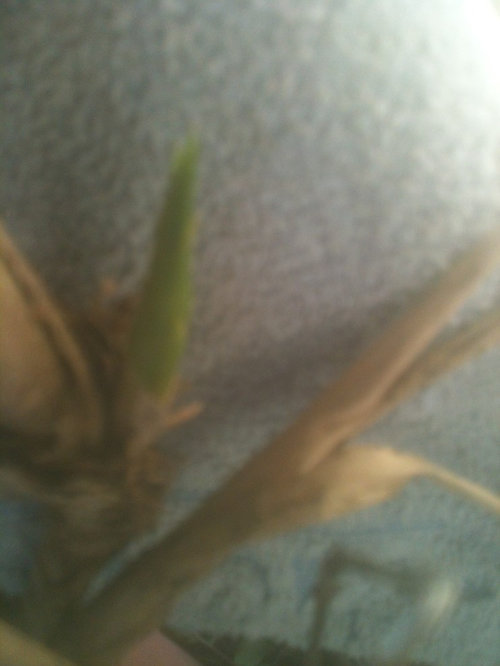
I just found a Bromeliad putting out new green growth after I thought the plant was dead....so there's hope yet.

Sorry for the bad picture.....I need an new IPhone!

Happy Gardening, Jeannie :)

Comments (8)

  • 8 years ago

    I was thinking about covering some of the browned bromeliads in peat moss (at the bottom of stems and where they branched off) to see if others will put out a pups. Any suggestions if that might work.....Or will it just rot it if it were to have had some chance (as yours did in your mulch pile)?

    Thanks, Jeannie

  • 8 years ago

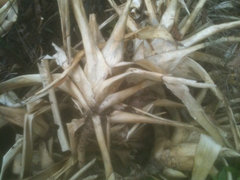
    This is what remains of one that I had for years (purchased for $10 as a small pup) and I am hoping for it to pup out on one of the browned ones!

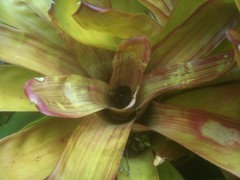
    Picture of one last summer....

    Happy Gardening, Jeannie :)

  • 8 years ago

    Hi everyone.

    Jeanie - In my experience I have found live Sphagnum Moss much better than Peat Moss for the purpose you describe. This maybe because it is a living plant with anti-fungal properties whereas Sphagnum Peat Moss is not.

    Live Sphagnum Moss can be bought sealed in plastic bags and once opened and exposed to sunlight will green up and continue to grow, unlike the dried form that comes compressed in bricks.

    Sphagnum Peat Moss (Peat Moss) on the other hand is completely different and is no longer a living thing.

    I have used Sphagnum Moss successfully with many different types of plants over many years for promoting new roots on cuttings or plants that have had the bases damaged. It is said to have anti-fungal properties which is probably why cuttings don't rot when grown in it. Just plant it in the Sphagnum as you would in normal potting mix, just covering the bottom part of the plant where the pups emerge from.

    Different Products

    Sphagnum Moss and Sphagnum Peat Moss (commonly known as “Peat Moss”) are often confused as the same thing. In fact, they are two different parts of the same plant, but the impact of their use is very different.

    Sphagnum Moss is a plant that grows on the surface of soil or a swamp. It thrives in wet climates where it is carefully harvested to ensure regeneration of bogs in which it grows, this cycle can take 6 or more years.

    Peat Moss, is formed by the layer of decaying, water-saturated sphagnum moss that has sunk below the surface and has formed over thousands of years. Although peat moss can be found in potting soils in nearly every gardening center in the world, harvesting Peat Moss is not sustainable as it takes thousands of years for Peat Moss to develop, and harvesting, requires digging up the bogs destroying the potential for its regeneration.

    Properties of Sphagnum Moss compared to those of Peat Moss

    Sphagnum Moss:

    • Neutral pH
    • Water-retention
    • Pliable and soft growing as a growing material
    • Long-fibered
    • Pure moss (no other plant material)
    • Used as a seed-starter; to line baskets; for growing orchids; strike cuttings and used to wrap around cut areas of plants when air-layering.

    Sphagnum Peat Moss:

    • Is acidic and high in tannins
    • Can hold up to 70% water
    • Is naturally compacted and sold compressed into bales and bricks.
    • Contains a mixture of organic materials, including moss, decaying plant matter, and dead insects
    • Is used in potting mixes and garden soils

    Based on what I have found over the years, I would suggest you try live Sphagnum Moss in preference to Peat Moss and hopefully, if your plants can be resurrected this will do the trick.

    All the best, Nev.

    Jeannies_Garden (Tx 9a) thanked splinter1804
  • 8 years ago

    Thanks for all the info.....I'm finding more of my Bromeliads putting out a new pup or two :) I have yet to do anything with them, so I may just let nature do it's thing and the ones I'm meant to have will put out more pups.

    Thanks, Jeannie :)

  • 8 years ago

    Jeannie - Here's something
    else I think is worth considering in the resurrection of your brom’s. Although
    the plants you initially thought were beyond help due to cold damage have
    proved they can still "bounce back". Now because the mother plants
    were damaged by the cold they don't have as much nourishment to pass on to
    their pups as they normally would and we need to look at ways in which to supplement
    this nourishment.

    To do this we can provide a
    little suitable fertiliser, but first we have to decide on the best method of
    application whether it’s putting it in the mix, adding a slow release
    fertiliser to the top of the mix or providing it in liquid form (foliar
    fertilising).

    Because the pups don’t have
    roots to take up any fertiliser in the potting mix, foliar fertilising is the
    only option. The other benefits are, it is instantly absorbed through the
    foliage and you have complete control over its application.

    Like all fertilisers, there
    are so many different types on the market they will really confuse you, so
    firstly you need to think about what you want the fertiliser to do. All good
    fertilisers will have what's known as an N:P:K ratio printed on the package.

    This N:P:K is an acronym which defines the percentages of
    the three main ingredients, Nitrogen Phosphorus and Potassium, each of which
    has a different function.

    Nitrogen (N) – nitrogen is largely responsible for the
    growth of leaves on the plant.

    Phosphorus (P) – Phosphorus is responsible for root
    growth, flower and fruit development.

    Potassium (K) – Potassium helps the
    overall functions of the “total” plant perform correctly.

    An easy way to remember what
    each of these nutrients do, is to remember this little memory Jogger: “Up, down
    and all around”

    UP = NITROGEN which primarily promotes
    UP growth (above the ground) such as
    foliage.

    DOWN = PHOSPOROUS is mainly responsible
    for DOWN growth (below the ground)
    i.e. root growth

    ALL AROUND = POTASSIUM is generally
    responsible for ALL AROUND growth i.e.
    the (total growth) of the plant including flowers and fruiting.

    In your case you need a
    fertiliser which is reasonably balanced and not especially high in any single ingredient
    and for this you could seek advice from a horticulturalist at your local
    nursery.

    To understand it more fully go
    to the site below:

    https://www.gardeningknowhow.com/garden-how-to/soil-fertilizers/fertilizer-numbers-npk.htm

    Now for the most important part
    and that is the strength and frequency which the fertiliser is applied.

    An old nurseryman told me many
    years ago that the secret to success was to feed seedlings and young plants “little
    and often”. He likened it to “feeding a baby” and said you wouldn’t give a baby
    a “one off” meal of steak; instead you give it several meals of milk.

    So following this recommendation,
    in your case the preferred fertiliser application would be “foliar fertilising”
    at a weaker strength than recommended, and applied more often than recommended.

    Generally this is defined as
    follows: If the recommendation is for one teaspoon of fertiliser mixed in one
    gallon of water and applied monthly you could give it in the following proportions:

    Half teaspoon of fertiliser in
    one gallon of water applied each two weeks, or better still, one quarter
    teaspoon of fertiliser in one gallon of water applied once each week.

    No matter what method or rate you
    choose. It’s always wise to water in between each feed as this will flush off
    any accumulation of salts from the fertiliser.

    I hope this is of some help.

    All the best, Nev

    Jeannies_Garden (Tx 9a) thanked splinter1804
  • 8 years ago

    Thanks so much for all the information!

    I have an earthworm factory setup, so I use earthworm tea (put in a spray bottle) and spray the pups.....it's seems to help some :)

    I also started using a tomato fertilizer at 1/4 strength (I use on seedlings of several plants) and I have been watering the mother plant even though it is/was brown. I thought it wouldn't hurt to try and get more of my Bromeliads to pup out. I had over 20 different types. Luckily not all of them froze.

    Thanks again, Jeannie :)

  • 8 years ago

    Hi Everyone.

    Jeannie - It seems you're doing everything right already and didn't really need my suggestions. Anyway, keep up the good work and I hope your pups continue to grow into nice big healthy plants for you.

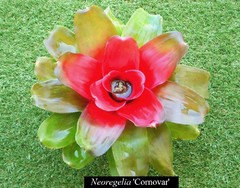
    Just to add a bit of colour to Easter I'm posting a few pic's of some of my own hybrids I've recently registered on the B.C.R.

    Neoregelia 'Cornovar'

    I don't know what's wrong here but I seem to only be able to load one picture.

    Anyway, Happy Easter.

    All the best, Nev.

Sponsored
NME Builders LLC
Average rating: 5 out of 5 stars2 Reviews
Remodeling Company in New Albany, Ohio