Software
Houzz Logo Print
cercis47

Panic in my Perennial Bed

8 years ago
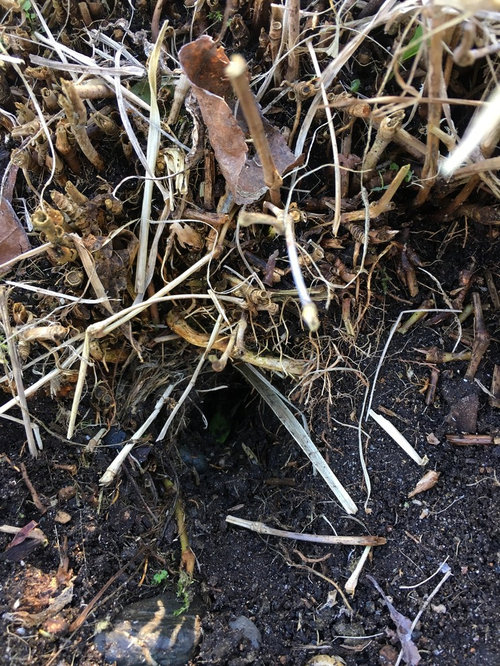


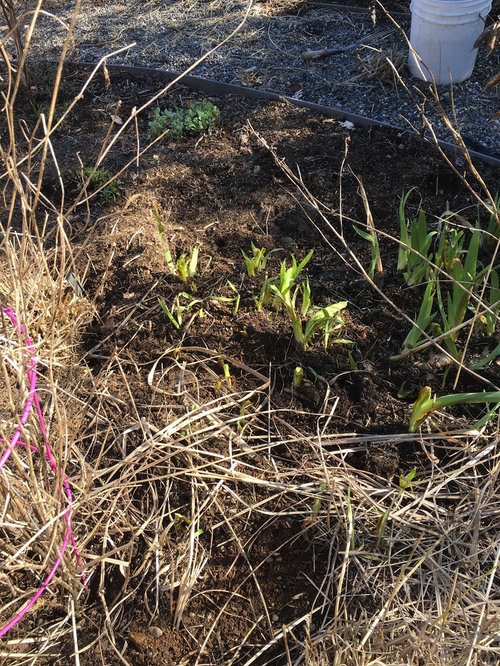
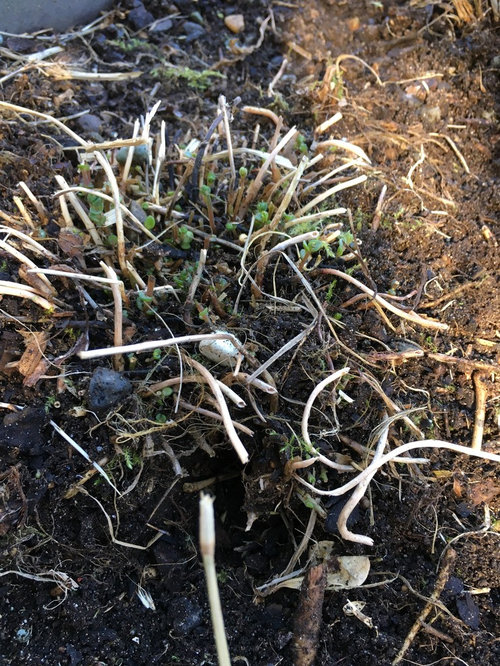
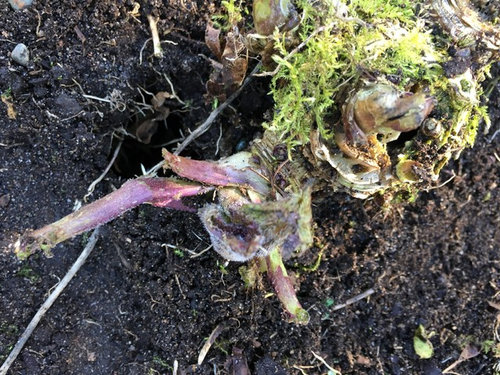
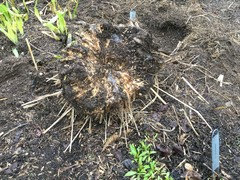
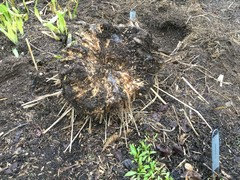
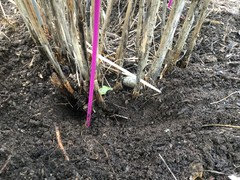
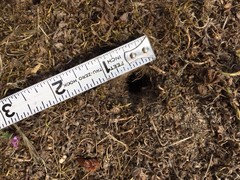
Enclosing photos of what I found today clearing out my perennial bed from the wInter mess. Whatever is doing the damage has focused on the grasses and nearby perennials. One large grass has been entirely dug out. Dirt has been piled around the area from the digging. We live rurally and I have been gardening here for 30 years without any real serious pests (we are fenced for rabbits). Moles? Voles? Any ideas? Will try to add photos.


Comments (27)

  • 8 years ago

    Look like Chipmunks to me.

  • 8 years ago

    What part of the country are you in? If it's voles then the plants are probably missing most of their roots and will come up out of the ground if you give them a little tug.

    Does the plant in the last photo have a top that's chewed? I only know NE pests like voles, moles, and chipmunks and I don't think it's moles since they don't eat plants.

  • 8 years ago
    last modified: 8 years ago

    What diameter is the hole? I find size difficult to judge from photos. Have you seen chipmunks around? IME vole holes tend to be smaller than chipmunks' and are either grooves in the soil surface about the diameter of a mouse or tunnels an inch or three below the surface, depending on the vole species. I only rarely see voles, even though I have a lot of them, but chipmunks are more bold. Some plants eels more effected by voles. They like nesting in my Siberian iris and tunnel into hostas, though they've never killed one of my hostas which are large and old, just reduced their vigor temporarily.

  • 8 years ago
    last modified: 8 years ago

    We have both voles and (for the last five or so years) apparently one chipmunk. Over time, the only noticeable associated damage/loss in our mixed perennial beds has been a loss of spring bulbs. Voles, at least, can mine these out over winter.

    The excavations of the chipmunk are certainly more noticeable than those of the voles and I'm also aware that they might sometimes be part of a tripping hazard. Still, I don't believe that our perennials plants have come to any harm.

    Chipmunks can be quite territorial and we've seen chipmunks spacing each other out. They can also be quite harmful to other wildlife, such as fledgling birds. I'm therefore wondering whether the chipmunk is holding the size of the vole population down.

    Whatever the case, I feel neither of them do much damage (except for loss of spring bulbs) to the garden. Perhaps from the point of view of aerating our soil and releasing nutrients to the soil through tunnelling (reported for voles) they do provide some benefit to our plants.

  • 8 years ago

    thank you for your feedback. Will answer your questions first.

    we live on Whidbey Island outside of Seattle. We are pretty much surrounded by pasture land, lots of tall grass etc.

    i have noticed vole holes in our lawn and our cat used to leave them at the door for us when she was alive but I have pretty extensive gardens and never noticed this kind of damage before (and I am in the garden daily). We also have chippies and squirrels but I don’t notice them unless they get into the bird feeders. What about field rats?

    The holes are about 1-1.5 inches across. See photo.

    The molinia Skyracer is the photo I am including. It was sitting in its place but below ground level. It lifted out easily as all it’s roots are gone! The other photo is a quite large Baptisia (with pink stake). It is still attached but sunken as well. I can feel where the little devils have tunnelled underneath it.

    We put out 11 traps last night baited with peanut butter and cheese. Nothing this morning......

    i don’t think the are moles as there is no discernible mole hill in the vicinity around the new holes.

    I probably should add that we were away for 6 weeks January/February so there could have been a pestorama out there without us!

    Still appreciating any help.


  • 8 years ago

    "We are pretty much surrounded by pasture land, lots of tall grass etc." This is a pretty good description of my garden's setting as well.

    Your damage sounds and looks like what in my garden is vole nests. They look too small to be rat nests, though I occasionally find winter mice nests. Were there sort of mounds or concentration of matted or shredded plant material concentrated by the holes? I don't think that they are chipmunk holes since I wouldn't expect chipmunks to eat plant roots that way. In my garden the pine or woodland voles (Microtus pinetorum) are the tunneling species and do the most damage, having eaten several plants' roots to the point of leaving nothing but wilting top growth that lifts right out of the ground. I've lost numerous dogwoods, Daphne, Dianthus, and clematis especially. Lilacs, Thuja, Hydrangea, and holly seem relatively immune to damage and some plants such as Siberian iris seem to regrow fast enough to recover from whatever has been eaten. Meadow voles (Microtus pennsylvanicus) make surface-level runways though they mostly live in burrows and sometimes winter in ground-level nests in protected spots such as at the base of your plants. They also do damage, but to my observation aren't quite as likely to eat every root on a plant. I don't know if on the west coast you have either of those two types or your species are different. I don't worry about all plants, but the ones that experience tells me are vole favorites now get planted in wire or plastic mesh cylinders, 1/4" openings. I start with a 3' strip of mesh, 8" high to create the cylinders, and place them with about 1"-2" above the soil level. This usually turns the voles aside as they travel at the soil surface under the snow. I have tried hot pepper slurry, castor oil, and diluted urine, all things that were suggested to discourage voles, but the mesh cylinders are working best in my garden.

  • 8 years ago

    "If it's voles then the plants are probably missing most of their roots and will come up out of the ground if you give them a little tug"

    Well I think we solved that one.

    Good luck. They're a terrible pest and difficult to control. NHBabs covered most of the best options, peanut butter should be a decent bait, but the voles prefer to tunnel under mulch, snow, or just below the surface of the soil in order to stay out of sight. I've opened a tunnel, placed a trap, covered with a board and caught several.... and it didn't make much of a difference. This might be a good time to consider a new cat, some shelters here need homes for feral cats which have been spayed or neutered yet still need a place to live. Of course a cat won't be picky about what it kills.

    Plastic nursery pots with the bottoms cut out are a little easier or cheaper than mesh, but don't allow roots to spread sideways. Some people have success with soil additives such as voebloc or other expanded shale soil conditioners like Epsoma Soil Perfector and permatill. Castor oil sprays, or gravel 'moats' which the voles cannot dig through also can work. A nice loose mulch is exactly what they love, so less of that... eventually I just found it easier to move lol

  • 8 years ago

    Cercis, try putting an upside-down pot over the trap, making sure there is an easy entry, via their tunnel, or propped up a bit with a stick or rock. I've caught many, many voles that way. Covering, keeps other critters from the bait, and I think it makes the voles feel safe while investigating the goodies.

  • 8 years ago
    last modified: 8 years ago

    It's funny how voles seem to be a real problem in some gardens, but not in others.

    We have lots of voles. I've seen tunnelling as the snow melts and occasionally meet one while working within perennial bed during the growing season. Much of this whole area is rapidly shrinking farmland.

    The most obvious evidence of the presence of lots of voles around here is their migrating into basements; apparently through holes left unsealed by home builders when they removed the retort rods subsequent to pouring the concrete for foundations.

    Other than non-poisonous spring bulbs, I've never noticed any significant damage attributable to voles in any of the mixed perennial beds I've installed and maintained.

  • 8 years ago

    Voles love roots,

  • 8 years ago

    Sigh, well this townie has never had such a rude awakening in her life, as when she started country gardening. Every thing, at every level, eats my poor plants - deer, rabbits, voles, squirrels, caterpillars...never have I scrabbled up such a steep learning curve (cliff, more like). Only this week, my autumn dreams of hundreds of alliums, vanished into chewed and emaciated tufts of pitiful stalk...600 of them!

    Just gonna stick to narcissus, frits and erythroniums.

  • 8 years ago
    last modified: 8 years ago

    Sympathies, Camps. I had read that Alliums were fairly immune to being eaten by mammals, but the voles have eaten quite a range of them in my gardens, ranging from edibles like onions, leeks, or garlic to ornamentals like my Globemasters, so obviously the voles don't read the same garden info that I do. Daffodils and Colchicums have both been immune in my garden.

  • 8 years ago

    So sorry to hear Camp.

    Reminds me of when the deer ate all of my (anxiously waiting to bloom) Phlox. I sure remember how that felt....

    600 alliums? I can’t imagine...I would have cried!


  • 8 years ago

    Oh NO camps! How positively low brow,

  • 8 years ago

    OMG. 600?! The planting alone....I would have cried and said very bad words.

  • 8 years ago

    Sorry to hear, Camp.

  • 8 years ago

    It was my fault for putting all my eggs in one basket. I am working my way through all the spring possibles but usually try 2 or 3 a year. £ years ago,I had a year of little blue bulbs, but only the robust scilla bifolia has returned with any degree of vigour (although I have avoided muscari). Crocus, leucojum and ornithogalum were fails while the expensive gamble on crown imperials and dog tooth viiolets has paid off handsomely (although the even more spendy martagons were mobbed by lily beetle). Gladioli byzantinus is looking promising but I am not pinning many hopes on anemone blanda or nemorosa (although I have read that they are slow). Same same with perennials and shrubs

    The thing with bulb planting is timing. That autumn day when I went slightly out of control, committing nearly all the garden budget on an orgy of allium desire...and even the laborious effort (in stony, rooty soil) of planting - all in the distant past. By the time bulb blooming rolls around, I am getting to grips with biennials and starting another wave of seed sowing. Always something new coming down the pipe.

    But yeah, I did swear (a lot).

    People who have to share a space with other creatures (bearing in mind that some humans are the worst of the lot), what plants are proving to have a bit more resilience against the animal onslaught? Sandy, alkaline, seasonally shady.

  • 8 years ago

    Voles are not really a big problem in western Washington - we have them but they tend not be hugely numerous nor do they do much damage. I have gardened here all my life - I am a professional gardener - and I have only seen vole damage once. And that was from tunneling more than from consuming roots etc. And my cat - a great hunter - has never brought me any voles. But he has brought me countless gophers....and I believe that's what is causing the damage on the OP's plants. But either voles or gophers, the only effective way to control is by trapping. Or having a very enthusiastic cat hunter!!

  • 8 years ago

    Skunks just shredded all the cardboard and newspaper in my new lasagna bed looking for grubs. What a mess!

  • 8 years ago

    Thank you all for your comments and suggestions. I have to laugh (and cry) reading all of your experiences with these critters.

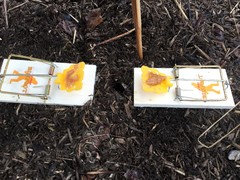
    An update: We set out our traps on the entrance holes - several mouse traps in each baited with apple and with birdseed sprinkled about and covered with plastic pots with holes covered. No takers. But also no new holes. I did dig up the area that was decimated (Molinia grass and Baptisia) and raked it so could see if there was any new activity. So far, so good. But after reading all of your comments, I am not totally optimistic. Living rurally does have its benefits and its problems for sure.

    I think this must be the universe telling me to finally get moving on replacing some of my labor intensive perennial beds with shrubs! (although I could hardly ask for two more accommodating plants than Molinia and Baptisia, if only they had destroyed the thuggish Phlox and Amsonia Blue Ice!!!).

  • 8 years ago
    last modified: 8 years ago

    IME both Phlox and Amsonia are fairly resistant. Shrubs in my garden that you might consider avoiding since the voles lovethem enough to have killed them include Cornus, Weigela, Daphne, and Pieris.

  • 8 years ago

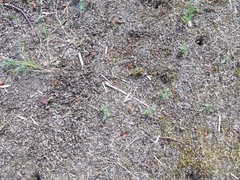
    Since our Vole vs ? Episode this winter, we now notice there are areas of the lawn which look like desert with these holes. It was never a lush lawn but really is just dirt now. Here are photos of the area with the multiple holes and a closeup of the hole. Mich easier to see than in the perennial bed. Do you recognize this as vole work? Holes are about 1 inch as shown.


  • 8 years ago

    I was just out in the lawn stomping vole tunnels and holes today. Yours look similar.

    cercis47 thanked NHBabs z4b-5a NH
  • 8 years ago

    Does stomping work or is it just cathartic?

  • 8 years ago
    last modified: 8 years ago

    It doesn’t get rid of the voles, and it is cathartic, but I do it because it puts any remaining roots back in contact with soil and it makes it more difficult for the voles to get around if I have collapsed their tunnels. I have also more than once had a vole go shooting out the far end of a tunnel in a panic. Quite gratifying, even if it doesn’t squash any. Mostly I do it in the late fall, however, because if I do it right before the soil freezes, they don’t have time to redig all their tunnels, so I end up with less winter root damage.

  • 8 years ago

    Hey that's a good idea. I have moles in my lawn and I never thought of stomping before the first hard freeze.

    You could always try the Bill Murray/Caddyshack method. Handle explosives at your own risk though. :-D