

The Perfect Pro-Style Range.
If you could design the perfect pro style range, what would you include and exclude. What features are must haves and what are annoying features you'd leave out. Just wondering :)
Comments (54)
 8 years agolast modified: 8 years ago
Bluestar and Wolf both fall short. A Wolf AG with open burners would likely be my first choice. Fortunately that's rumored to be on their product roadmap for next year.
Second would be a Bluestar RNB with at least one 25k burner. And ideally an improved thermostatic griddle (more even heat across the surface and maybe a bit tighter tolerance on the temp range like holding to within +/- 15-20° from set point). I believe their oven is comparable to Wolf but if not then an improved oven. And a solid kick plate rather than the unappealing (for a home kitchen) vented one.
The ladder racks in the smaller ovens should allow for standard chaffer pans to slide in (E.G., like pro ovens). The larger oven should allow for standard baking sheets to slide in (E.G., like pro ovens). For BS their ladder racks stick out about 1/8" too far for either pan to work.
On both I'd like the option of a 36" oven in the 48" or 60" range.
BTW, there's a reason that you see thermostatic flat-tops and griddles (and plancha's) in restaurants and the kitchen's of chefs - they work. A griddle placed across burners has very uneven heat across its surface and it is impossible to maintain an even temp set point. A good thermostatic griddle turns on/off every couple of minutes to maintain and even temp, who wants to try to do that manually with two burners?
 8 years agolast modified: 8 years ago
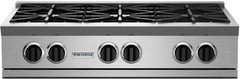
To be "perfect" as you said, it wouldn't be a range. It would be a Bluestar open-burner 36" rangetop, paired with a separate electric wall oven. I would just have the 6 burners on the 36" rangetop, no griddle; for my style of cooking, the 6 burners, with one being Bluestar's wok-well, is all I need. Also, a 36" width provides more landing space than a 30" width.
I'd not want a 48" or 60" width due to the enormous and expensive task of exhausting that. The 36" width allows the exhaust hood requirements to be do-able/almost-affordable (relatively - it'll still be quite expensive) for all those btus.
I am still researching the wall ovens.
Related Professionals
Salina Kitchen & Bathroom Designers · Cody Kitchen & Bathroom Designers · Ardmore Bathroom Remodelers · Sugar Land Bathroom Remodelers · Wilmington Kitchen Remodelers · Alexandria Kitchen Remodelers · Virginia Beach Interior Designers & Decorators · Amherst Interior Designers & Decorators · Webster Interior Designers & Decorators · Coldwater Interior Designers & Decorators · Minneapolis Interior Designers & Decorators · Plymouth Architects & Building Designers · El Dorado Kitchen & Bathroom Designers · Evansville Kitchen & Bathroom Designers · Carlsbad Kitchen & Bathroom Designers- 8 years ago
Good point. But you are getting in to the realm of perfect kitchen. In our case we currently have an all gas range (36" Wolf) + Miele electric wall oven. Each serves its purpose. For instance, the gas oven (moist) is better for breads, the electric (dry) for cakes.
- 8 years agolast modified: 8 years ago
"A Wolf AG with open burners would likely be my first choice. Fortunately that's rumored to be on their product roadmap for next year."
Opaone - how interesting! Had not heard that. Any more info that you might have?
Though I very much prefer Bluestar's cast iron top to the stainless steel top that Wolf is likely to have even in a new open-burner model.
- 8 years agolast modified: 8 years ago
Suzyq53 - nope, you've been drinking the range manufacturers' marketing Kool-Aid. (jk, no offense meant). When sealed burners came onto the market, the way to convince people they needed to throw away their perfectly good open burner ranges and buy new was to tell them the sealed burner is easier to clean. But a sealed burner means that anything that spills or boils over is burned into the cooktop unless you can quickly move the pan aside and, despite everything being burning hot, wipe it up. An open burner means spills and boilovers drip straight through to the drip pan underneath, which you line with aluminum foil and throw away. Show me a sealed burner range that doesn't have a kinda icky burn-in ring around the burner. If you can find one, it means the homeowner has been diligent with the toothpicks, scrubbies and razor blades in order to get that out, but that means the top is likely scratched in that effort.
- 8 years ago
I would kill for BS's cast iron burners right now. I've got a Viking AG with porcelain plates. What a PITA. To each his own. I find the open burners to be very easy to maintain.
 8 years ago
I had open burner Viking Pro at my old house. It took me forever to really clean it. So many parts. Now I have Thermador Pro closed. Easy peasy. Just spray and wipe. I never clean anything when its hot.
Rich Kalsi
Original Author8 years agoWhat do you all think of American Range or Capital or the new Dacor Modernist?
- 8 years ago
I would take a good look at Miele. The overall quality of the design and the attention to detail on all of the features and function to the thoughtfulness put into the shipping is absolutely amazing. They have made the expense of a premium cook top worth the investment. The the cook top is great and matches up with all of the other gas cooktops that are out there - however the oven is the greatest surprise of the unit, if not the kitchen.. We bought the dual fuel model. The oven is electric has features that blow your mind and help you create the absolute best meals. The unit gets plumbed with water during install (like a refrigerator) and it will add steam (if you like) during the cooking process. The meats (chicken/steaks/loins/chops etc.) have all come out perfectly cooked, moist and tender. And the most important part of it all.. it's easy to use. The range digitally controls the steam and the convection based on what you're cooking. It's honestly amazing and it's under-sold by all of the appliance stores out there. We had an idea that the range had a couple extra bells and whistles but using it everyday we really appreciate what a well designed and thoughtful product they created. Now the refrigerator and the dishwasher are good too but the range is well worth the investment.
 8 years agoThe perfect cooktop in my kitchen would make my dinner and then it up. LOL. I have a Wolf gas burner. Induction also has pluses especially if you have small children.
Rich Kalsi
Original Author8 years agoIsn't it disingenuous to tout Blue Star ranges above average when the majority of their burners are 15K Btus and only one or two at 22K Btus? Saw them at Friedman's Appliances recently and wasn't impressed. Also the ranges look horrible compared to Miele, Dacor, and Thermador. Has anyone tried Caliber range? Anybody know anything about them? Seem new.
- 8 years ago
You need a variety of burners. Most people only need one or two of the highest BTU burners; for pan frying, sauté, wok or boiling water faster than their neighbor. You also need at least one low BTU simmer burner.
We do a lot of cooking and entertaining including a couple of 30-40 person sit-down dinners each year. We are getting a 48" w/ 4 burners and 24" griddle/flat-top. Burners will be two 25k, one 15k and one 9k. Likely Bluestar RNB.
BTW, one additional desire from BS and Wolf; split the 24" griddle controls front & back instead of left & right. This is much better for all uses but particularly when used as a flat-top when having the back @ maybe 130°f for keeping sauces and stuff warm and then the front off so that all of the heat and pans are towards the back.
 PRO8 years agolast modified: 8 years ago
GE MONOGRAM. Most features for the $$$$ , incredible reliability no service issues, all burners simmer or 18, 000 BTU, and more......more. : ) great machine. Have NO client who does not LOVE IT. Not one. Including the sealed burners, and super easy clean up grates etc. Great oven.... nothing in it you don't want, and everything you do. Including an oven that will hold a catering size cookie sheet.
- 8 years agolast modified: 8 years ago
"Also the ranges look horrible compared to Miele, Dacor, and Thermador."
That's in the eye of the beholder. Many people prefer Bluestar's minimal restaurant look with no electronics. The ranges you mention are also good looking, but it is an entirely different style, and depends what you like.
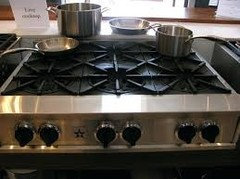
The cast iron top of the Bluestar slays me.
- 8 years ago
A lot depends on what people have been exposed to. If someone has never experienced anything better then that GE Monogram is probably quite fine. If their cooking is boiling water for noodles and occasionally scrambling some eggs then it will do as well. Actually, a good chef can likely produce some great meals on it.
OTOH, 18k is not enough to properly pan fry, sauté or wok so if you want to do those then you'll need a bit more burner. Some people think the heat coming up around the pan edges of sealed burner ranges is normal when it is not with a good star or similar shaped open burner that does much better at applying the heat to the bottom of the pan and does so more evenly.
It's similar for griddles/flat-tops. People will think a burner top griddle is great until they get to use a good thermostatic for a bit and then their opinion changes.
Rich Kalsi
Original Author8 years agoOpaone, what if every burner could go high BYU’s and low simmer. Wouldn’t that be preferable to a Range with a variety of different burners? I don’t like remembering what size burner is what BTU and designed for what purpose? Anyway, we’re talking Wish List here. What is the Ideal Range not just what someone likes or the best of what is currently available. It’s like when someone asked me what is my ideal sports car and I said Porsche handling, Bugatti power, Aston Martin Style appeal/sophistication, Ferrari interior, etc. Thoughts?
- 8 years agolast modified: 8 years ago
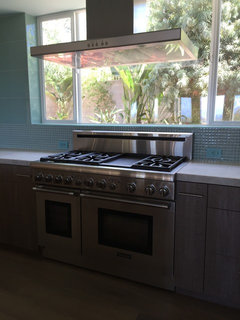
Here's my Thermador Pro Harmony. Cast iron grates. Closed gas burners. Electric ovens. High power front left burners with extra low simmer. No burnt on ring around the burners. No electronics.
- 8 years ago
@Gothicworks, I'd rather have Tesla power but otherwise yes. :-)
Ideally then, yes I'd prefer that all burners do it all from a very low simmer to 33k. And while we're dreaming, I'd want to also be able to control the diameter of the burner used so only a small bit for a small saucer with wider pattern for large pots. :-) In reality I'm not sure that it's possible for a single burner to do it all?
Rich Kalsi
Original Author8 years agoAnything besides a good burner? Griddles and grills sizes, top configurations? What about ovens?
- 8 years ago
If you are dreaming about the perfect range, this is an excellent article written by Nathan Myhrvold(Modernist Cuisine) for IEEE Spectrum about ovens.
https://spectrum.ieee.org/consumer-electronics/gadgets/nathan-myhrvolds-recipe-for-a-better-ovenI would not have a range because I would want to pick components and I like the oven on the wall.
I would have star burners like BS star, that are all the same but you could add additional length to the rays as your pan gets bigger. This would be sensed automatically. This could be great for a paella. Simmer goes to 250 BTUs, maybe 25K on the high side.One super wok burner module designed like a real wok burner that could swap out for a regular burner.
Oven.-Electric so you can control humidity. There is a misperception that because the heat source is dry in an electric oven, then the electric oven is "dry". Myhrvold notes in his article above that most humidity in an oven comes from food cooking and because you don't need the ventilation you do with gas, it holds onto moisture. Gas ovens vent any products of conbustion(water) and humidity from food out because the heat goes through the oven. This becomes a problem if you want to add steam while baking bread. You could use gas if the heat went around the oven chamber instead of through it. To control humidity, I would have steam injectors and control of humidity from lowest possible to 95% in small increments. I would have ventilation, assisted when necessary to remove humidity or drop temperature from the oven chamber, vented outside. It would also have the ability to be open, closed or open, fan assisted.
Control of convection fans 0-fast in small increments. I have no idea how many cubic feet of air they can move now. The fans would also be designed to mix the air without a continuous breeze in one direction maybe by moving or reversing periodically, some movement of the fan(s) themselves or baffles.
-I would stiil have modes like roast and bake to direct heat.
There are some commercial ovens that have some measure of these controls now and combi ovens are a step in that direction.
-I would have stainless steel sides that slide out for cleaning or replacement. Bottom would be removable to have an open element when needed.
-Fast preheat.
Easy to plug in/out computer module if necessary to change for about $30. Module would tolerate heat and moisture.
Self clean that works and oven built to withstand it. Racks can stay in.
Lighting that is easily replaceable and lights all racks, even when full.
Of of course these appliances would come in beautiful colors, in vitreous enamel that tolerates heat and abuse.
Adjustable broiler, size and intensity. - 8 years ago
Griddles or French top
I really like the idea of modules that can swap out. With the true built in griddles, you lose at least two burners which might be ok with 48" or a 60" range but would provide more of a challenge for many cooks on a 30" or 36" range so they turn to an add on griddle.
"A griddle placed across burners has very uneven heat across its surface and it is impossible to maintain an even temp set point. A good thermostatic griddle turns on/off every couple of minutes to maintain and even temp, who wants to try to do that manually with two burners?"
How is this different from cooking over a single burner with a big pan? Being attached or not, look at how a griddle works. You have three different issues here.-Even temperature across the surface.
Just like cooking over a single burner you have two places to make this happen. You can either make the heat source well dispersed and evenly applied to the bottom of the surface, as Wolf attempts to do in their griddle with the infrared heat source. They still say on their website though not to expect to it to heat evenly. The BS star burner applies heat more evenly to the bottom of a pan of it is properly sized to the burner. The other option is to choose a cooking surface that conducts heat very well so the temperature is even. I have a Royal industries thick aluminum overlay that not only heats evenly over a round burner but allows a much larger cooking area with the same 2 burners than a built in because of its better conduction of heat. I use it if I need to grill a boatload of sandwiches. Many ranges are behind on this to begin with because they use rolled steel that does not conduct heat all that well, so hot spots. What if they used copper in some way?
-Maintaining an even replacement of heat to maintain surface temperature.
By definition when when the heat source oscillates on and off you have a greater difference in temperature than you do with a continuous heat source. This is one thing people do not like about conventional electric burners or even Thermador simmer burners. No one is turning burners on and off to maintain a certain number of BTUs because the burners are adjustable through a big range of heat whether you use it on a pan or a griddle. To do so would make it more uneven. The pan as it heats reaches a balance of heat coming in and going out of the pan so does come to temperature. The fluctuations in temperature using a thermostat probably don't make that much difference though but are not a benefit.
The biggest drop in temperature probably comes when you add food. Most people using a regular burner for pan or griddle might turn the heat up higher than what they anticipate needing and then maybe down when food is applied. Even with a thermostat, it depends on where the temperature sensor is on the griddle. If you drop a steak and it is away from the sensor, it will take awhile before the heat makes its way away from the sensor so it can kick the burner on. This would work better if the griddle is aluminum, which some are. Wolf is 1/2" rolled steel so it does provide a heat reservoir but it would take awhile for it to respond to the cooling in one spot.
-maintaining a specific temperature. The real advantage with a thermostat is that you can walk in and flip it in to 350F and you will get the same thing time after time. I think restaurants are looking for consistency and repetition so that the griddle temperature is a known thing. The griddle stays on all day. I am pretty used to looking at the flame or even looking at the mark on the burner control whether for a pan or griddle so that works well for me. Also I like the immediate response when turning my griddle up or down. Steel especially the thick ones, take longer. They also have thick surfaces that take awhile to heat up. I tend to use mine at different temperatures. I can purposefully make back different from the front.
But this is about what griddles could be. If evenness is important, built ins could be made to have a web of sensors in the cooking surface and be over a grid of small burners that could come on when needed for each area of the griddle. Maybe you could control it in a zoned way with higher BTUs than what you currently have on built ins.
You can buy plug in countertop griddles that work very well for some applications but they are not perceived in the same light as "restaurant" style griddles. To me cooks are so diverse, in what they want or need. Even the idea of what is a "pro" can be someone else's "con".
There are a couple of European ranges that have French top overlays.
 8 years ago
Speaking of wishlists for ranges, my ultimate goal was to build a kitchen around a 48" bluestar RNB with 25k burners across the entire front row. That range is now sitting in my garage waiting for the rest of my remodel to catch up! Was not a fan of the platinum due to the gimmicky "power oven" that constantly fights the laws of thermodynamics for the sake of being different. I am just an amateur chef who likes cooking for groups, but I do have a bit of commercial experience working on a line from a few years back. That experience really changed my perspective on what the possibilities were when you had access to pro level equipment. The vast majority of home cooks will never know and/or will never care.
 8 years ago
by pro-style, i would assume we are talking for residential use. a Bluestar or Monogram or anything else will likely fit the bill. lol at some comments here like 33k btu for wok cooking. ideally I'd want 45k! Ain't going to happen!
- 8 years agolast modified: 8 years ago
"-There is a misperception that because the heat source is dry in an electric oven, then the electric oven is "dry". Myhrvold notes in his article above that most humidity in an oven comes from food cooking and because you don't need the ventilation you do with gas, it holds onto moisture. Gas ovens vent any products of conbustion(water) and humidity from food out because the heat goes through the oven."
I'm not sure that's accurate. I think every culinary school teaches that gas ovens provide a moist environment and electric ovens a dry environment. I think every chef and baker will tell you the same thing based on their experience. To Nathan's theory, given the amount of moisture produced from gas combustion I don't think there is any way you could exhaust enough moisture to come anywhere close to the dry environment of electric without also cooling the oven down to near room temp.
That said, an electric oven with a steam/humidity system (combi) can closely replicate the moist environment of gas ovens which is why they were invented in the first place and newer ones have learned new tricks that allow for tight control of the heat and moisture levels in ways that are impossible with gas and that allow chef's to do new things. Combi's are different from gas and in some ways better but I'm not sure they're even yet a replacement.
- 8 years ago
Griddles.
Agree about the evenness. The best I've seen are water or oil based—typically I think an aluminum base + water or oil + steel top. I think these are quite expensive to produce, though I might be tempted to pay if it was offered. Steel is iron+carbon so different types of steel will be better or worse than cast iron. I think a steel fry pan actually has more iron than a cast iron pan. My Matfer steel pan is my overwhelming favorite I think. I do think that the thicker steel that Wolf uses is much better than Bluestar. I started some comparisons and need to finish one of these days.
The primary purpose of a thermostat is to maintain as even a temp as possible as food items are added and removed. Whether pancakes or burgers you want the temp to remain be as consistent as possible. When you ladle batter on the surface will cool down quickly so you want it to immediately heat up until just over the set temp and then turn off until it falls a bit. You can know to always turn the burners on each time you add food but how do you know when to turn them off so that you don't overheat? Or when to turn them on again? And who really wants to deal with that?
- 8 years ago
Just because something has been said for years by a lot of chefs or manufacturers, or taught in culinary school not make it true. Here is an example of total lack of understanding of what convection is.
Many times they note a particular outcome like meat browning better in a gas oven but draw the wrong conclusion about the reason why. It is the level of knowledge at a given time. Here are a couple of things taught and believed by many chefs even now. These things have been debunked.
"Basting will make it moist" or its variation "lay it fat side up so it will baste and keep it moist"
"sear it to lock in the juices"
Google kitchen myths and look for the ones debunked by science.
Read about the Maillard reaction. Note how many people say gas is better for roasting and browning. Many attribute this to the supposed moisture of gas but when you understand that you need to evaporate moisture in order for the surface temperature to get high enough for the Maillard and other reactions take place, that would not make sense. This is why you have to evaporate water off of the surface of a steak to get it to crust or even evaporate it off of your stir fry.
"I don't think there is any way you could exhaust enough moisture to come anywhere close to the dry environment of electric without also cooling the oven down to near room temp."
Go over to Fresh Loaf and they talk about the inability to keep added steam in a gas oven. For baking bread. That makes me think just normal products of combustion would be easily vented out. Also moisture from cooking. That is what the vents were designed to do. They have all kinds of methods to try and prevent that loss of moisture from blocking off the vents to running steam generators down the vent. You are assuming electric ovens are dry but electric ovens don't have near as much venting so humidity from what you are cooking is held. If Nathan Myhrvold says water is released in cooking, he is not some schlep by guessing and by gollying his way through, making stuff up. His credentials vvvv
http://modernistcuisine.com/about-modernist-cuisine/about-the-founder/
Added steam is also held.
No a combi oven is not a replacement for gas at all, even if somebody thought they were replicating gas when they designed. I had not heard that that is why they invented it.
The amounts of humidity are relative. No one oven is 100% humidity and no one oven is zero. It varies by what you have in it in addition to how well it is ventilated. I have read it is also effected by ambient humidity.
I too believed what had been conventional wisdom for a long time but when I started reading the science behind what happens in baking and roasting that has come out in the last few years, it didn't add up.
Griddle, I don't make pancakes much but would just leave the temp alone when adding them. With the aluminum, it reheats quickly and stays at equilibrium. I sometimes make hamburgers and might adjust down a little after they have been on a minute or two.This is an interesting article about different materials used in cookware.
http://www.cookingforengineers.com/article/120/Common-Materials-of-Cookware/print - 8 years agolast modified: 8 years ago
We just use the griddle for quesidillas, toasting buns and grilled sandwiches.
Rich Kalsi
Original Author8 years agoWho among you are electro-mechanical engineers with experience in thermal dynamics? There is lots of technical info being thrown out. But I am not sure it is fact or just opinion couched in techno-speak? Anyway, my main point for starting this thread is to figure out what is missing from what the major appliance manufacturers are offering that is not meeting people's needs. I am getting some of that info, but afraid not to the degree I was hoping. Any comments on Grills on indoor ranges or the broilers in the ovens? Thanks...
- 8 years agolast modified: 8 years ago
I'm not an engineer, but have been cooking for many year on every kind of stove. I do prefer gas burners, but can cook on anything. We do our grilling outside year around. Don't want the splatter and smoke inside even with mega-exhaust We have huge Viking gas grill that can cook mass quantities, smoke and rotisserie. I don't use my broiler for raw meat.
- 8 years ago
"by pro-style, i would assume we are talking for residential use"
It is an effort by manufacturers to bring some features(higher BTUs, uncapped burners, open burner trays, more room front to back and looks) of commercial appliances into the residential kitchen but with more safety and refinement than a commercial range. Not all prostyle ranges have all of the features.
"a Bluestar or Monogram or anything else will likely fit the bill."
That may be true for some but this is an appliance forum so we differentiate, correlate and appreciate the differences in these appliances and how it applies to cooking. We are not going to buy an appliance that will "likely" do. If you have to ask what prostyle is, which is fine because not everybody knows, you might want to withhold establishing an opinion until you understand a little more about what makes a BS very different from a 5 Star. For people that are interested, they can find a range that best suits their style of cooking. It doesn't mean you can't cook on any of them but there will be one or two that will fascilitate what you want to do. I get that some people's eyes glaze over though and they don't care. Some people buy on cost, looks, ease of cleaning or brand. It's all in what is important to you.
"lol at some comments here like 33k btu for wok cooking. ideally I'd want 45k! Ain't going to happen!"
The 33K is just an arbitrary number, higher than the typical 19-23K. You are limited on how much you can have without it being built to accommodate very high BTUs and approved by your insurance company. You can easily get 45K and more outside and the cost is reasonable. Some people do have a real wok burner built in too.
- 8 years ago
opaone-
If you are putting in a 48" cooktop, will you be putting in a 48" hood as well?
- 8 years agolast modified: 8 years ago
Pro-style nowadays is induction for the cooktop and combi for the oven. 21st century.
- 8 years agolast modified: 8 years ago
33k is standard for commercial ranges (I think Wolf is 30k though). If you use one a bit you get use to it.
"opaone-If you are putting in a 48" cooktop, will you be putting in a 48" hood as well?"
Yes, we're doing a 48" range. Hood open aperture will likely be 58" wide x 30" (60" x 31" exterior) deep and with a large open volume to contain effluent. Much quieter and more effective than consumer hoods.
"Pro-style nowadays is induction for the cooktop and combi for the oven. 21st century."
:-) Maybe. We looked at induction with an electric griddle/flat-top. If you cook a lot then there is a considerable bit of effort to switch from gas to induction in both pan replacement and technique. I talked to a number of people who've tried both and nearly all still prefer cooking on gas including a couple who are energy efficiency snobs (induction is likely 'greener'). Not sure how much of that is that its tough to teach an old dog new tricks. Similar for gas ovens though most, like us, will have both gas and combi ovens as they each have their benefits.
There is still also some concern about the impact of induction exposure on people's health.
- 8 years agolast modified: 8 years ago
How high above the cooktop will it go? Do you know what type of hood you will use?
- 8 years ago
"Who among you are electro-mechanical engineers with experience in thermal dynamics?"
We used to have some engineers here and we have had at least one engineer that was from a manufacturer comment here. You don't have to have an engineering degree though to be able to read, understand and learn from what they write. There are other areas of expertise that are helpful in these discussions too and I have found that some of the engineers that design appliances don't understand all that much about cooking. We've all had a little experience in thermodynamics if you cook.
"There is lots of technical info being thrown out. But I am not sure it is fact or just opinion couched in techno-speak?"
What specifically are you referring to?Most things said on a forum are considered opinion but may or may not be backed up with facts or at least a plausible argument. Like anything you read, even scholarly papers, you have to read it and decide if you think it makes sense. I try to post background articles that have been helpful to me from time to time that are geared to cooks like the one on cookware above but it gets repetitive to do that with every post.
"Anyway, my main point for starting this thread is to figure out what is missing from what the major appliance manufacturers are offering that is not meeting people's needs. I am getting some of that info, but afraid not to the degree I was hoping."
What do you think is missing?We all cook differently. I would like to have control of the variables and take an active role in the process but there are maybe some here who just want to put the food in the oven and have it sense what it is and cook it.
- 8 years agolast modified: 8 years ago
I moved. Different house. Had to leave her behind. The new owner would have been pissed to find a hole instead of a BS. New house had a Viking.
- 8 years ago
“I think I understand where your confusion is.”
Nice try, but I’m not confused.
"What you said here, that you apparently got from the Fresh Loaf forum, is considerably different from your numerous statements that gas ovens are not a more moist environment than electric. The key is 'added' steam.”Nope, not different at all. If you have enough airflow through that oven to clear all that added steam, what do you think that same air flow is doing to the water from combustion during regular baking/roasting?
(1)”A standard electric oven is a very dry environment. There is nothing to produce moisture. If you put a food item in it then that food is cooking in a very dry environment. (2)That food itself does contain moisture and being in a dry environment some of that moisture will be lost to dissipating in to the surrounding dry environment.”
Your statement part 2 contradicts part 1. If Nathan Myhrvold, the physicist from Modernist Cuisine, cited above were to be believed, food contributes quite a bit of moisture. Part 2 means the humidity goes up.
”Yes, some moisture is being exhausted by the exhaust fan that a gas oven has (and that most electric ovens do not) but since moisture is being constantly generated by gas combustion then even with exhausting it you still have a considerable amount of moisture still in the oven cavity.”
Are you saying that gas ovens have an exhaust fans pulling air through them??? You might want to research that a little more.
To make your case, you could try to find a way to gather some supporting data for your argument. You can find several different ways to calculate how much moisture is released by the combustion of gas. You can guess at how much water is released from food and look at the airflow through the oven. None of these things, even if you attempted to provide them, is proof in and of itself.
What is the evidence for one or the other being drying superficially to what is cooking? Humidity is a part of this but so is air movement. How is cooking different in each type of oven? What are the observations of cooks that we can tie to what we know about the chemistry of cooking?
The strongest evidence of drying in a gas oven is the many the reports of cooks, that gas browns better.
You have to get rid of superficial water(drying) so that surface temperature can rise so the Maillard reaction can take place. It is the same thing with a steak to get the crust. It is the reason you don’t want your stir fry steaming. When I read about the Maillard reaction and look at what people report, it makes me rethink that previous line of thought that had been based strictly on the fuel source for so many years and failed to take the oven as a whole into consideration. If you read and understand about the Maillard and other browning reactions and draw a different conclusion, please share how you think it works.
Many bakers want a bread crust that is the result of steam being added at the beginnng because the steam promotes starch gelatinization of the crust. Then they want the steam to leave so it can brown. Notice I did not say a good or bad crust but a specific type of crust. The bakers over on Fresh Loaf aren’t seeing the results of that steaming in a gas oven unless they go to more effort(cloche, pan with lava rocks and water, make shift steam injectors etc). I have seen reports of cooks moving from electric to gas that their cakes don’t rise as well. The general principle is that less available water inhibits starch gelatinization, so the rise. I have seen complaints of steam building up in electric ovens when baking cakes. I even read of bakers that turned the convection on and popped the oven door open of an electric oven for a brief time to let steam escape and to fascilitate browning during the second half of baking.For me to understand more about the results you are getting with bread baking, be more specific about how you get steam in the oven and for how long. How specifically do the crusts differ?
- 8 years ago
"Pro-style nowadays is induction for the cooktop and combi for the oven. 21st century."
- Damn how I hate these smug blanket statements that are simply opinion blasted out constantly by some here to back up their their own narrow viewpoint. Plenty of 21st Century chefs prefer fire and choose gas for their home. I was in the temp home of a pro chef three weeks ago who's in the process of building. Naturally I asked him about his kitchen direction, and after his builder set him straight about the code challenges with bringing in commercial kitchen appliances we talked details. Even though he uses gas and induction at work, and will have to bring in propane (no NG service), he is going with a gas (propane) range or range top. He went into all of the typical rational/advantages you would expect to hear for gas, but he also understands the advantages of induction - using both 6/7 days a week, 12 hour a day.
So let's not just automatically jump to induction being the right choice for everyone. Induction is a fantastic option, has distinct advantages, is overall safer, can't replace everything gas can do, comes with tech concerns, but does not match everyone's cooking style.
Rich Kalsi
Original Author8 years agoCan someone rank these ranges from best to worst? Wolf, Viking, Blue Star, Capital, American, Dacor, Monogram, and finally the new ranges coming out from Caliber, Signature Kitchens, and Thor? The good, the bad, the ugly?
- PRO8 years agolast modified: 8 years ago
I am wondering what in heck you could simmer, sear, grill, saute, boil, broil or fry, roast or bake....... That wouldn't have a wonderful result, or be a fantastic cooking/baking experience on a GE MONOGRAM. I em serious. What exactly? Because I can not imagine after the rave reviews from serious cooking clients what in heck that would be.I can think of nothing more enjoyable than this machine, other than one that went to the market for you daily.......: ) and self stirred when needed.
- 8 years agolast modified: 8 years ago
@Velentino, based on what criteria? Best for cooking anything? Best for cooking most things? Reliability? Cost? Best value? Aesthetics? Cachet? Burners, Griddle, oven, or all?
Bluestar (and Capital?) has the best burners assuming you choose an open burner model and this is why most people choose Bluestar. Wolf has the best griddle. The blue oven in the Wolf dual-fuel was (or is?) a significant reliability problem. The Bluestar Platinum oven is apparently not very even. Anecdotally the all gas Wolf, Bluestar RNB & RCS and Capital ovens are close to each other in performance.
That said, for many people an all gas GE monogram could be 100% sufficient and all they'll ever need. You will not be able to sear or pan-fry on its 16k open burners as well as on the Bluestar 23k burners which likewise might not give as good results as a 33k commercial. When you are cooking you will get a lot more heat in your face due to its burner designs pushing heat out to the sides than with an open star shaped burner that puts more heat directly to the bottom of the pan. You likely waste more gas cooking on sealed burners than on open burners.
A good pro chef could cook gobs of wonderful meals on a Monogram but they'd likely not include meals that required high heat recovery techniques and they'd not be happy with how much heat was in their face vs the pan.
The 48" monogram has only a 12" griddle, not 24". We use our griddle as a flat-top and will use that space far more than two more burners. And, it's more versatile than the burners since it can do what the burners do as well as griddle/flat-top.
On the other hand, I assume it costs considerable less so likely a much better value for those who don't need or want to pay for better burners or larger griddle?
There are many items that for me are not worth as much as they are to others so while my neighbor may spend $1000 on something and be very glad he did, I'll buy the $700 version and be quite happy and content as well.
We all have to prioritize what what for us is the best value. And we should never forget the value of not being in debt. My wife and I decided when we married that we would never carry any debt for anything except our house and it was a 720 sq ft post-WWII bungalow until we could afford more. This meant some really really lean first years and somewhat lean middle years. We didn't have all of the toys that some of our friends had, but we didn't have the worries of debt and that was worth much more to us.
--------
BTW, one more feature for a perfect pro-style range. Ability to slightly raise the back end of the griddle so that it is slightly sloped (for grease to run off, etc.) like a commercial flat-top.
- 8 years ago
"Can someone rank these ranges from best to worst?"
This is very subjective. One of the continuous themes of this forum is that there is no one "best". You can have avid fans of one brand that try to claim "best" but it depends on how you cook, your cookware and how you use your oven. You would have to look at the different aspects of the burners as cooks have different needs and preferences.
Shape-star vs ring vs triple ring What shape gets heat to the middle if you stirfry a lot?
capped vs uncapped
BTUs high and low
Preference of open vs sealed burner tray for cleaning
Is an electric oven important or do you want gas? Will you need an oven big enough to hold catering trays? How do you use your broiler? Would you use the ability to control direction of heat or speed of the fans in some ovens or even the control of humidity of a combi oven. Combi ovens don't come in a range yet and you left off Thermador which does allow for steam injection. There is a lot already written about these subjects in great detail.
Even within a brand, some models will be more suitable than others, BS has 4 very distinct models.
Even if one model A was best for 90% of cooks, you might be the one for whom model B is best. You might prefer A but can't get service in your area or the company provides no service to begin with. Some ranges are easier to service yourself than others. My recommendation would be no range-pick out each component.
"I am wondering what in heck you could simmer, sear, grill, saute, boil, broil or fry, roast or bake....... That wouldn't have a wonderful result, or be a fantastic cooking/baking experience on a GE MONOGRAM. I em serious. What exactly? ....I can think of nothing more enjoyable than this machine, other than one that went to the market for you daily.......: ) and self stirred when needed."You might be able to do something with a particular range, but is it the best choice? Just to compare one area, here are the BS star burners (American Performer are similar)compared to the monogram. This shows the advantage when using a wok, where you want centralized, high heat. BS is uncapped so the heat goes straight up, has higher BTUs and the star burner has burner ports closer to the middle. The flame on the BS goes out from the rays of the star keeping it more under the pan. The capped monogram burner flares to a larger diameter as the heat goes up.

Another example might be someone who uses cast iron pans would benefit from the star burner for greater dispersal of heat over the bottom of the pan.
There are so many options in ranges that you just cannot make the assumption that one is best in all circumstances.
- 8 years ago
I just moved from a house with a BS star burner to a house with a Viking round burner. The Viking is an older all gas unit with open burners. I have to be very careful about the flame reaching up the sides of the pans of the Viking due to the shape of the burner and flame dispersal. I imagine the GE will be very similar in flame pattern.
If you really like to cook, I think the BS range top is well worth the extra expense.
 8 years ago
Me personally? 36" Capital Open Burner Self Cleaning Range with 6 burners. 25K Btu on 5 burners and 8K Btu on the back left burner. Rotisserie in the oven. I grill outside, but if I wanted to, Webstaurant Store carries add-on griddles and grills that go over the open burners. Workhorse. Would also have a Miele XXL Combi-Steam Oven and a GE Advantium 240V speed cook oven. I've looked at BS - don't like the way they finish the units. Viking Range is a great marketing company, but a poor product and engineering company (and their owners, Middleby Corp. found out the hard way). DCS/Monogram/Dacor/American Range are OK. Thermador and Miele are good, but parts are VERY expensive.



opaone