Software
Houzz Logo Print
rossnagl

Backyard Disaster

8 years ago
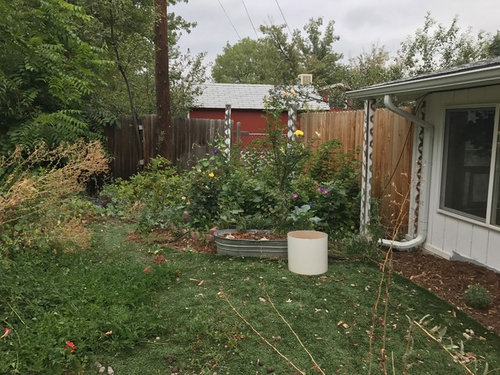
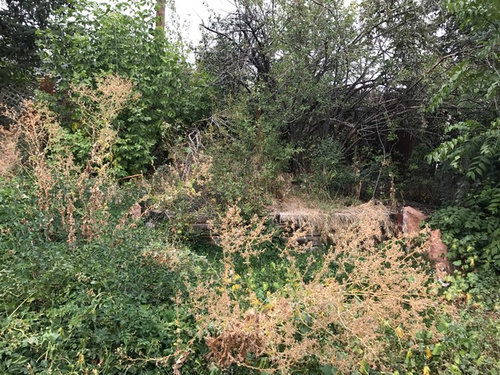
So the frontyard is under control. Thanks to you all for the suggestions and advice. But that leaves me no excuse but to start the backyard. It is a HUGE disaster. It’s so bad I’m having someone come in to demo and pull up the trees, artificual turf, concrete, all types of rock and toss the fallen down fence instead of doing it myself. BUT before I start planting and putting it back in what I’m sure will be grand form...I need advice.


We inherited a yard of weeds, morning glory that won’t die, choke cherry offshoots everywhere, tree if heaven (is that right?) and some kind of grass (not crab grass). What kind of prep do I do? Do I have to use chemicals (id prefer not to with a new baby)? Do I “summer fallow”? Do I pay to scrape it down and bring in new topsoi? Am I going to fight this forever (let me down easy!)?


Comments (10)

  • 8 years ago

    You think I should save some of it? I was just going to save the big coniferous trees and pull out/cut/scrape everything else and start from scratch. I’m just worried that if I don’t use heavy duty chemicals or get all the roots it’ll all just keep coming back with runners or offshoots and be really hard to maintain?

  • 8 years ago
    last modified: 8 years ago

    It's hard to see what you have going on other than everything is really crowded. You could try cutting everything you don't want to the ground, dig some things out if necessary and then smoother with cardboard, newspaper and mulch. Wait 3 to 6 months before the next phase.

    Is there an irrigation system?

  • 8 years ago

    I agree with Greg, you do have something to work with. I'd opt for a milder approach of identifying what you like and might want to keep and what you know has to go, but it sounds like you already have. It's your yard, do what pleases you!

    Is the person doing the demo a landscaper or just a guy with a bobcat? If it's someone in the trade, maybe they can make some suggestions. Do you know if there are underground plumbing, electrical, phone or cable lines? I'd start there. I'm linking who to contact to id any underground lines.

    Colorado utility locater

    One thing to consider is the roots of your conifer trees. A scraper could damage/kill the roots of the conifers. Depending on the size and age of the trees, the root zone could be 3 times the width of the tree. Most tree roots are in the top 18 inches of soil. I'd have the demo guy lay down plywood or something over at least 10 feet surrounding each tree, a no go zone to protect them.

    Barb

    Alyssa Schear thanked treebarb Z5 Denver
  • 8 years ago

    Hmm. So other than the 3 large trees that were likely planted when the house was built, the rest seem to be either too close to the fence, under power lines, or the choke cherries that take over my yard. The three trees are even at risk of Xcel showing up one day and lopping them off. There was a plum tree that was amazing one year but it got damaged by a late storm and is right where I need to grade the slope to get water to run away from the house. I’ll take your advice and try harder to identify the rest.

    I ran locates on the yard when we got possession and everything in the backyard is overhead along the top of the slope/property line. They’ll impact what I can plant for privacy trees which I’m really bummed about. We’ll have to refresh locates right before they start work. Maybe you can give me some ideas but I was initially thinking either dwarf which won’t grow up to the lines or something like a lilac that could get cut back and still rebound.

    Thank goodness you mentioned protecting the roots! It definitely did not even cross my mind which would have been a HUGE bummer. Now that I’m aware I can accommodate as they are on the side of the slope that doesn’t need to be regraded. They can pull out the rock etc without disturbing.

    I have quotes coming from landscapers and more of a laborer crew both. I will be here supervising because I’ve been in construction too long to trust anyone.

    Thanks for saving those trees! I’d have killed them if it wasn’t for your post.


  • 8 years ago

    We overhauled our yard 2.5 years ago, and we discovered that our soil is SUPER hard clay. We got tons of topsoil put in, pretty much anywhere I thought I might grow flowers or trees, and then a thin layer on top of everything. It was pricey but it ended up being a really good move. I can tell just by looking at my plants which areas were amended by my landscaper, and which areas I added afterwards. If your soil is in better shape this may not be something you need to worry about, but if I were gardening from scratch on the soil the yard started with, I probably wouldn’t love gardening as much as I do.

    Alyssa Schear thanked Faith
  • 8 years ago
    last modified: 8 years ago

    rossnagl, my experience has been with reclaiming ground for vegetable gardens, not a pleasant backyard with lawn grass and hardscape from what looks like chaos.

    Oh, it was pretty bad. From best to worse: A place with 5 large trees and a honeysuckle bush within 50' but the weeds had been suppressed for a few years before I got there. I tried to maintain that but the previous location of a dirt road, the tree roots just a short distance below the tilled surface soil, and the shade through most of the day - all that, made it difficult. However, I'd had a little experience by then.

    I never allowed the weeds, bushes and tree roots to reclaim about 8 to 10" of soil and I chose my annual plants carefully to grow in the shade. The nature of the shade was of help. It was north of a hill so the ground had no sun until about May. Then, there was some afternoon bright spots that would sweep across every day. That helped dry foliage after my sprinklers had run. Most important, the tree shade didn't begin to cover the ground until about 10am. If we can choose time for sunlight, I think preference has to be given to morning sun. It was the domain of pines, a tamarack and the hemlock but I had a nice little shade garden for almost 20 years.

    Garden #2 was also tilled before I got there. Shade was only a problem at one end, the east side. I could only grow something at some distance from tall bushes so left that area mostly for my "activities." Pounding feet suppressed the weeds in a good way. The weeds hadn't been suppressed in the other areas of this ground, about 35' by 35'. Neglect had allowed Quackgrass and Bindweed to take over! I turned the entire area into annual flower beds and did hand to hand combat with them in the 4' beds. In the 2' paths, the sprayer killed them with round-up. I once tried mulch in paths between perennial beds. I don't suggest either the perennials or the mulch in such narrow paths. (What, 2' is narrow?!) Bindweed, especially, will easily travel under mulch from bed to bed, perennial to perennial ..! Conscientious spraying and pulling kills both bindweed and quackgrass.

    Finally, I once turned an alley into a little garden! Yep. Young and foolish ... It had long, low garages on either side but a southern exposure. The owner of the next lot north had built a fence across the alley. It was okay with me! I used the ground immediate beside the 2 garages for paths and the center strip for a 3rd path. Yep, I turned the route of decades of tires into 2, 3' wide beds! Believe it or not, the biggest task wasn't digging out the ruts to a good, growing depth that spring. No, it was not recognizing the dark bindweed roots that I left in the ground!. It took me 3 years to get that mess outta there! Then, about a year later, I moved ...

    Steve, Wishing You the Best

    Alyssa Schear thanked digit (ID/WA, border)
  • 8 years ago

    So Steve after all your experience and knowing that I have a whole backyard of bind weed, some kind of never ending morning glory, quack grass, tree of heaven, choke cherry... The current “grass” is artificial grass. Should I:

    1) just go ahead and plant the area and start engaging in years of hand to hand combat

    2) take a year to try to get what I can under control and plant and mulch next year

    3) bite the bullet and spray

    And this isn’t garden talk but I was planning to use native grasses from seed but will sod be better to smother what I can at the bottom of the slope?

  • 8 years ago

    Oh ya Faith this whole yard is clay. The one thing in Colorado I’m not as fond of. I am constantly trying to improve my garden area that is done and amended the heck out of the front yard. It’s going to be tougher to do on this slope plus it’s going to feed my weed/sucker problem but...I think I’m going to do it anyway. Because like you said I’ll regret it if I don’t.

  • 8 years ago
    last modified: 8 years ago

    I think that identifying your allies is important. Native grasses seem like a good idea but they may not have occupied every square foot of that ground in the past. Why not? Local landscapers and Cooperative Extension people should be able to help with building your team.

    Right now, invasives have control. They came uninvited. Or, misguided "settlers" did things like sprinkled bindweed seed between rows of newly planted fruit trees for ground cover ... Sheesh! We can wish it had not happened but only persistence and better choices will create the environment you are hoping for.

    I don't think a backyard is too much for a single gardener to tend but you are really doing the right thing by seeking advice. However, all gardening is local, right there, at-hand. If you were 800 miles to the NW and had glacial till for soil, I could probably be of more help than saying that plant ally choices will be important and that it will have to be very hands-on for several seasons. It's likely that all of the current cast of invasives have to go.

    Steve

    Alyssa Schear thanked digit (ID/WA, border)