Software
Houzz Logo Print
mutajen

Shade garden suggestions

8 years ago
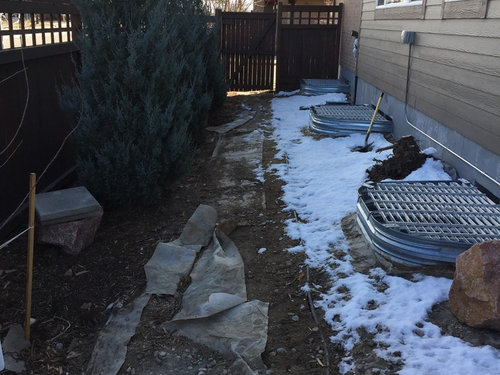
I'm landscaping the North side yard of our house - moved in September and it was all river rock and 3 skinny junipers. I have a pinterest board going with plants I want in yellows, blues and purples - lots of short to medium things (heucheras, brunneras, columbines, plumbago, lamium, bugleweed) but I need some taller plants for against the house. What are everyone's favorite shade plants for Colorado? Bonus points for fragrance or edibility!


Comments (6)

  • 8 years ago

    Well, my absolute favorite are hostas. There are a million different types and they bloom too. Bleeding hearts do well in shade but only bloom for a short time. Astillbe although they are finicky for me. Hardy ferns are pretty, I have several types. Ligularia are tall with spiky yellow flowers. I can't think of anything for the shade that is edible.

  • 8 years ago

    Technically hostas are edible. I've never tried them, but the first shoots that come up in spring are supposed to taste like asparagus. Ooh, ligularia are cool, I just looked them up, thank you! Do they need a ton of water?

  • 8 years ago

    You are absolutely right, hostas are edible. I've even seen recipes for them. I don't have any ligularia so I can't comment with personal experience on their water requirements. The internet says they don't like to dry out. But I've read that about other plants before that do fine. The north side of my house has: hostas, some iris (they do ok in the shade), bleeding heart, ferns, creeping jenny, myrtle (aka common periwinkle). There is absolutely no irrigation source there. No sprinklers or drip. Occasionally I will spray the area with the hose in the hotter, drier times of the summer. But all of those things do just fine.

  • 8 years ago
    last modified: 8 years ago

    Hi Mutajen,

    Here is a “collection” of comments about different possible shade plants! It’s just Scattered Thoughts, so there’s no real rhyme or reason in how I’ve listed the info! It IS, more or less, listed with the taller ones on top—more or less! (I "rearranged" the order that these are listed AFTER typing all the individual comments, so some "comments" refer to things you haven't read yet! You'll see what I mean when you read it!!!)

    A favorite tall one of mine is Thalictrum!

    T. aquilegifolium has clusters of “purple fluff.” 3-4’ tall – doesn’t bloom for a very long time, but is pretty when it is blooming. Foliage looks ok after blooming for a while, but it gradually “deteriorates” over summer, and since I cut it off as it starts to look bad, I eventually wind up with them cut all the way down to the ground! This one reseeds and I give them away at swaps when I find them! Might have a couple at the Fall Swap if (probably) more come up this summer!

    This one is a Big Time favorite of mine! T. rochebrunianum! Starts blooming in mid-late summer and keeps blooming pretty much till frost! Instead of the purple fluff, this one has actual tiny flowers in loose, airy clusters that “dance” on the ends of the stems! (I think there’s another species that has “actual flowers,” but I’m not sure what it is!)

    Aruncus dioicus – about 4’ – mine tends toward chlorotic—somewhat yellow leaves! But
    then mine is planted in HEAVY clay, and I’ve never gotten around to digging it up and replanting it with better soil! – there are other species, I believe, that are somewhat taller.

    I almost forgot this one! It’s a favorite of mine! It doesn’t bloom long, but google Trollius, globe flower! There are some different species—I like them all! About 2’ or so – yellow or orange, both very showy and pretty! Another “bog” plant (see Astilbe below! Told you there was no rhyme or reason!), but will do ok with “normal shade watering!” (also see below!) They start out as small “globes,” and open somewhat, but still stay mostly in a “ball” shape. They’re so unique that I think they’re really cool!

    Digitalis – different species. I’ve never had any luck getting these to grow past the first year! Most species are short-lived or biennial, there are a few that are considered to be reliably hardy, but I haven’t had any luck with them either! (Clay!) I LOVE the flowers! The different species vary in height and color.

    Old fashioned bleeding heart, Dicentra spectabilis, 24-36”, has already been mentioned, but be aware that they bloom very early and then, when it gets hot out, the whole plant goes dormant till the following spring. So, nothing at all in that spot for mid summer to fall. ALSO, if it likes its growing conditions, it can be invasive! (Mine is in, yep, HEAVY clay, and has “stayed put” for years!) If planted near hosta, they will pretty much “take up” the “empty space” as the Dicentra goes dormant!

    Everblooming bleeding heart, Dicentra Formosa, but this one is shorter than “old fashioned,” AND the hearts aren’t “as perfect” as the “old fashioned!” It does continue to bloom somewhat all summer!

    Bergenia – large, leathery leaves that are evergreen to semi-evergreen. Depending on the
    weather, some of them can turn a bright red-orange in fall, and stay that way till they get too beat up over winter! Spikes of pink flowers in spring. 18-24”

    A couple tall ones I don’t have but would like to have some day!

    Cimicifuga (might be Actaea now!) – C. simplex is my favorite, 40”, but there’s also the taller C. ramosa, or C. racemosa.

    Filipendula, queen of the prairie – most are around 3’ tall, but there are a couple species that are up to 4-5’ tall

    Anemone sylvestris, windflower – spring blooming anemone. 12-18” – this one does spread and could be considered to be invasive I think, but they seem to spread very close to the surface, so I’ve never had any major problem containing them—and they’re way too pretty when they’re blooming to NOT have them!

    All of the Geraniums—but some of them are crazy invasive, so research them well before you plant them!

    One geranium that will not spread like crazy is Geranium dalmaticum ‘Compact Rose’. I don’t know that you’d find ‘Compact Rose’ specifically, but look for G. dalmaticum to be
    SAFE! It “enlarges” some every year, but can easily be “contained” by (easily) digging out around the edges if it’s going where you don’t want it! I MAY have a couple of them at the Spring Swap—but not positive about that yet!

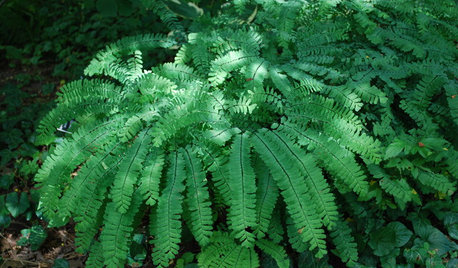
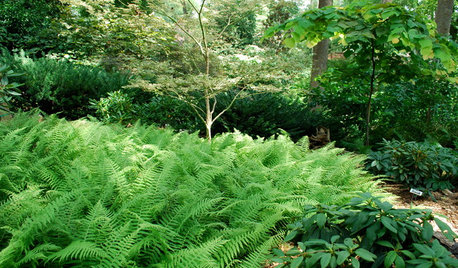
    I love ferns! I love the contrast of the foliage with the “other” perennials! A couple easy and good ones to start with would be Japanese Painted Fern, Athyrium niponicum, silvery-gray with reddish stems (some varieties more than others), and Autumn Fern, Dryopteris erythrosora. The new, developing fronds on the Autumn Fern are bronzy-red—hence the name! Autumn Fern is also semi-evergreen, so there is ”something there” over winter—heavy snows will knock them down, and when it “looks bad” I just cut it down and wait till spring again! Some ferns are incredibly invasive, so, again, be sure you check them out before planting them!

    Primula, I believe all of them but not sure about that, are shade plants! Very short, but there are some really cool species/varieties! As an example google Primula vialii! I don’t have it, but hope to some day! Also check out Primula denticulata, Drumstick Primula! Then there’s just plain old ordinary primroses—mine are in full bloom—and sometimes bloom most of the winter!

    I recommend getting a pack of forget-me-not seeds (Myosotis) and scattering them in a couple different places. Mark where they are so you know it’s not weeds coming up. They’re short-lived, so what you do is wait for them to bloom and drop seeds, and then cut/pull out the plants that are done for the year and let new ones come up for the following year! They’re short, and have light, airy, “happy” clusters of tiny sky-blue flowers that live in and among anything else you have. The “first” seeds you plant will wind up, in a year or two, coming up all over the place! They have very shallow roots so they don’t interfere with anything else. If they “go” somewhere where you don’t want them, they’re VERY easy to pull out! (What I do when the current year's plants are done blooming is to cut the top of the plant off right at the surface of the soil—leaving the roots to decompose in the soil, adding organic matter!)

    Of the things you mentioned (on your list or already planted?) I recommend nixing the Plumbago! It’s incredibly invasive! The stuff can be really pretty, especially in fall when it can have both the blue flowers AND red foliage at the same time—but are you sure you want to spend the rest of your life trying to get rid of it again? Sinking it in a pot won’t work! I’ve seen the roots of very small plants coming out of the bottom of gallon pots—and rooting into the ground where the pots were sitting!

    None of these have Big Showy Flowers! No “daisies!” If there were shade plants like that—I’d have them!

    I don’t believe any of these are fragrant—not sure about the two tall ones I listed that I don’t have yet! Aquilegia chrysantha IS fragrant—but it also reseeds PROLIFICALLY! On RMG it’s knows as “Skybird’s Columbine” because I’ve given so many of them away at swaps! I don’t think I’ll have any this time, but it’s possible somebody else might bring seedlings for some to the swap! It’s yellow, BTW, and 3-4’ tall! It RESEEDS PROLIFICALLY!!!

    I don’t eat my “ornamental” plants—I prefer to look at them!—so I don’t have any comments on that topic! :-)

    Most of your shade plants will probably do ok without much watering, but they will definitely do better if they’re watered more often! Shade plants "naturally" grow in cooler, moister areas. They’ll look better, they’ll grow better—and both you and the plants will be happier.

    Comments about other things you or somebody else mentioned above!

    Astilbe are amazing—when they’re in bloom! When I sold these things they’d come in from
    California in full bloom, and we’d sell them immediately—but—I never knew of anybody here in Colorado that ever got them to bloom again! I’m sure there are some people, but all the people I ran into wanted to know how to get them to bloom after they had bought
    and planted them! Astilbe can actually be grown in—loves!—BOGGY conditions, and as near as I could ever figure out, it needs to stay WET in both summer AND winter to be happy enough to bloom. For that reason I’ve never tried it! But the flowers are spectacular!

    I’ve never grown these so it may not be “fair” for me to comment, but when I’ve seen Ligularia blooming in pots I was never that impressed with the flowers. That was in POTS, and I’ve never seen them growing in the ground! I googled them and there are certainly some very pretty pictures there! When we were selling them it tended to be with more of an emphasis that they were “foliage” plants—they have large leaves, and that the flowers were more “secondary.” Let me repeat, I’ve never grown them! If you do decide to grow some I’d appreciate it if you’d come back at some point and give us your impression of them, along with the species—they vary a lot!

    On the north side of my house I have several different hosta, the two Thalictrums, the Aruncus, Trollius, Brunnera, ferns, almost forgot this, Polygonatum ‘Variegatum’, Solomon’s Seal, short foliage plant!, bleeding heart, hardy cyclamen (a whole different story I don’t have time for!), Bergenia, Primula (ordinary!), Brunnera ‘Looking Glass’, Geranium dalmaticum, Anemone sylvestris, some alpine (runnerless) strawberries—and LOTS of forget-me-nots! There’s some other misc. things out there, but nothing TALL or fragrant—or EDIBLE!

    As usually happens when I come here to post, it takes a LOT longer than I was “planning!” I need to get outside and get some more plants in pots for the swap and to take with me on my Spring Trip! Was planning to post what I’ll be bringing to the swap, but I guess that will have to wait till tomorrow—when it’s COLD outside!

    Since houzz took over and continues to have the Big Nasty Popup, I don’t post here much anymore, but I’ll try to keep an eye out in case you have any specific questions about any of the above.

    Happy garden planning,

    Skybird

    EDITED TO CORRECT all the formatting that was LOST when I copied/pasted this from Word! ANOTHER reason to not post on houzz!!! Don't know if I got all the lines reformatted to look right again, but I tried!

    Looks like I missed a couple lines! Deal with it! I don't have time to try to fix the rest of it!

  • 8 years ago

    Thanks Skybird! That was a lot! And exactly what I was hoping for with this post - new things I haven't tried before. The thalictrum is perfect, I'm putting that in the back in 2 places, and Actaea and columbines and ostrich ferns (edible!) other places. I've grown tall yellow columbine before and was planning on putting in seeds, but mine have never been fragrant. Will look for Chrysantha specifically. I totally agree on the Forget-me-not seeds, they glow in the shade. I've never had trouble with plumbago being invasive, it spreads but I've used it in tough spots and never had trouble keeping it contained. But I like it enough that I'm usually happy when it spreads. I've never had much luck with foxgloves or delphiniums but planning on giving both another shot. Thanks for all the ideas!

  • 8 years ago
    last modified: 8 years ago

    Hi Mutagen,

    Yes, you need to get A. chrysantha specifically to get the fragrant one! I discovered them one time, many years ago, when I was at DBG and smelled "something in the air!" It was incredibly "sweet," and I loved it so I roamed around until I figured out where it was coming from! Turned out they had a HUGE patch of A. chrysantha! Here at home with only a couple plants, I have to go up to it and sniff the flowers--and--sometimes they're fragrant, and sometimes very little or not at all! For years I've been trying to find a "pattern" of when they're fragrant, and haven't figured it out yet! It's not a particular time of day (like chocolate flowers), and sometimes I've wondered if it had something to do with barometric pressure--but nothing seems really consistent! If you were to allow a large patch to develop I'm sure you could smell them--at times!--just by being near them. With just a plant or two you'll probably need to sniff the flowers up close and personal! Watch for aphids on any columbine--and they're easily destroyed with "dish washing soap water spray!" If you decide to come to the swap I could bring you a packet of seeds--or if you live close enough to somebody who's gonna be there that could bring them home for you! From seed, you'd get them started this year and have a small, but blooming plant next year--full size the following year! After that you'll have an endless supply of seedlings coming up--everywhere!

    Just a Heads UP! The Ostrich Ferns may have edible fiddles, BUT, they're one of the VERY invasive ferns, so think about it carefully before you decide for sure to plant them.

    I'm surprised you haven't had any trouble with Plumbago! That's one I'm scared of enough that I won't put it in!

    Glad I could help with a few suggestions,

    Skybird